Tirefour Castle: A Late Iron Age Broch on Lismore
Site at a Glance
- Popularity
- Low
- Country
- United Kingdom
- Primary era
- Iron Age
- Eras represented
- Iron Age, Medieval
- Civilizations
- Unclassified
- Site type
- Military
- Remains
- Tower
On this page13 sections
History
Tirefour Castle, also known as Tirefour Broch, is a probable late Iron Age broch on Lismore in the United Kingdom. A broch is a prehistoric Scottish stone-built tower generally associated with the Iron Age. Tirefour’s construction is estimated to date from about 500 BCE to the beginning of the Common Era.
Late Iron Age and Roman-period use
The tower was occupied during the Roman period in Britain. Its use continued into the Middle Ages, making Tirefour a site with evidence of activity across several historical periods.
Medieval occupation and later traditions
Medieval occupation extended into the eighth century and the eleventh or twelfth century. A Norse, or medieval Scandinavian, cultural presence is among the evidence for the site’s later use.
The name Tirfuir has been interpreted as Gaelic for cold land. A nineteenth-century proposal instead connected it with words meaning tower and help and safety. Local tradition holds that Tirfuir was the island’s name before Saint Moluag, an early Christian missionary and saint associated with Scotland, renamed it Lismore. Tirefour is protected as a Scheduled Monument, a legally protected archaeological or historic site in Scotland.
Remains
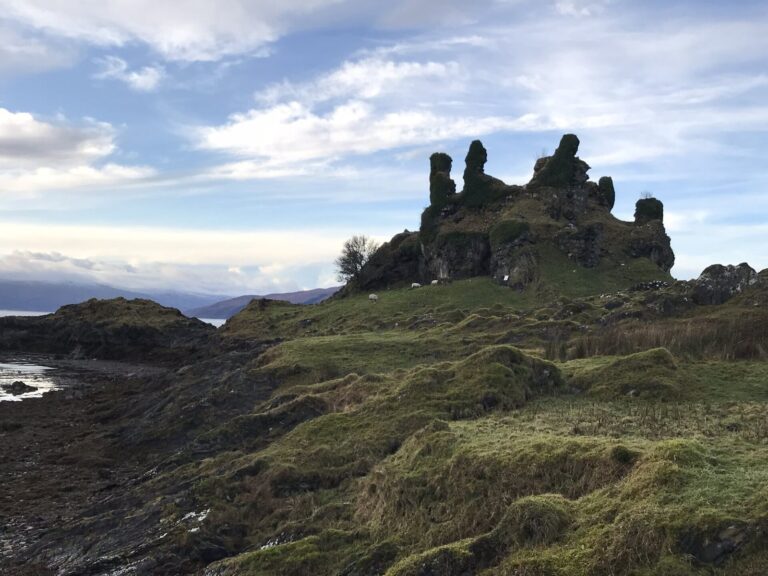
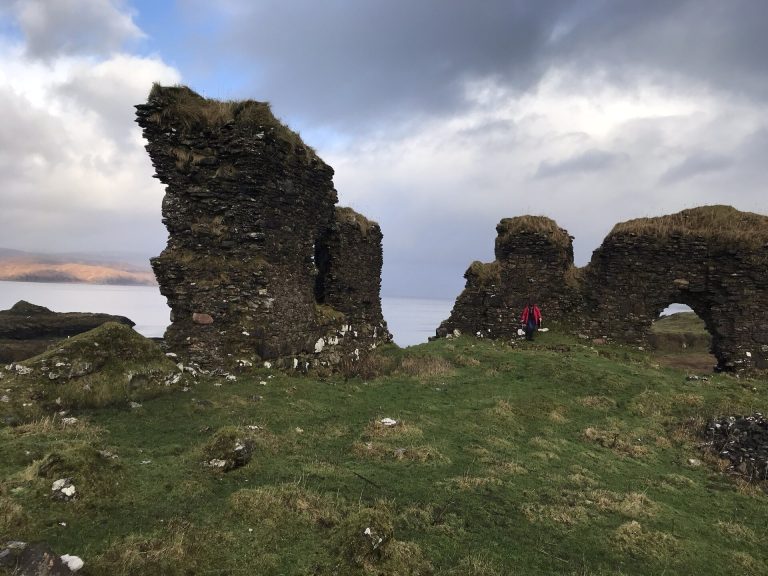
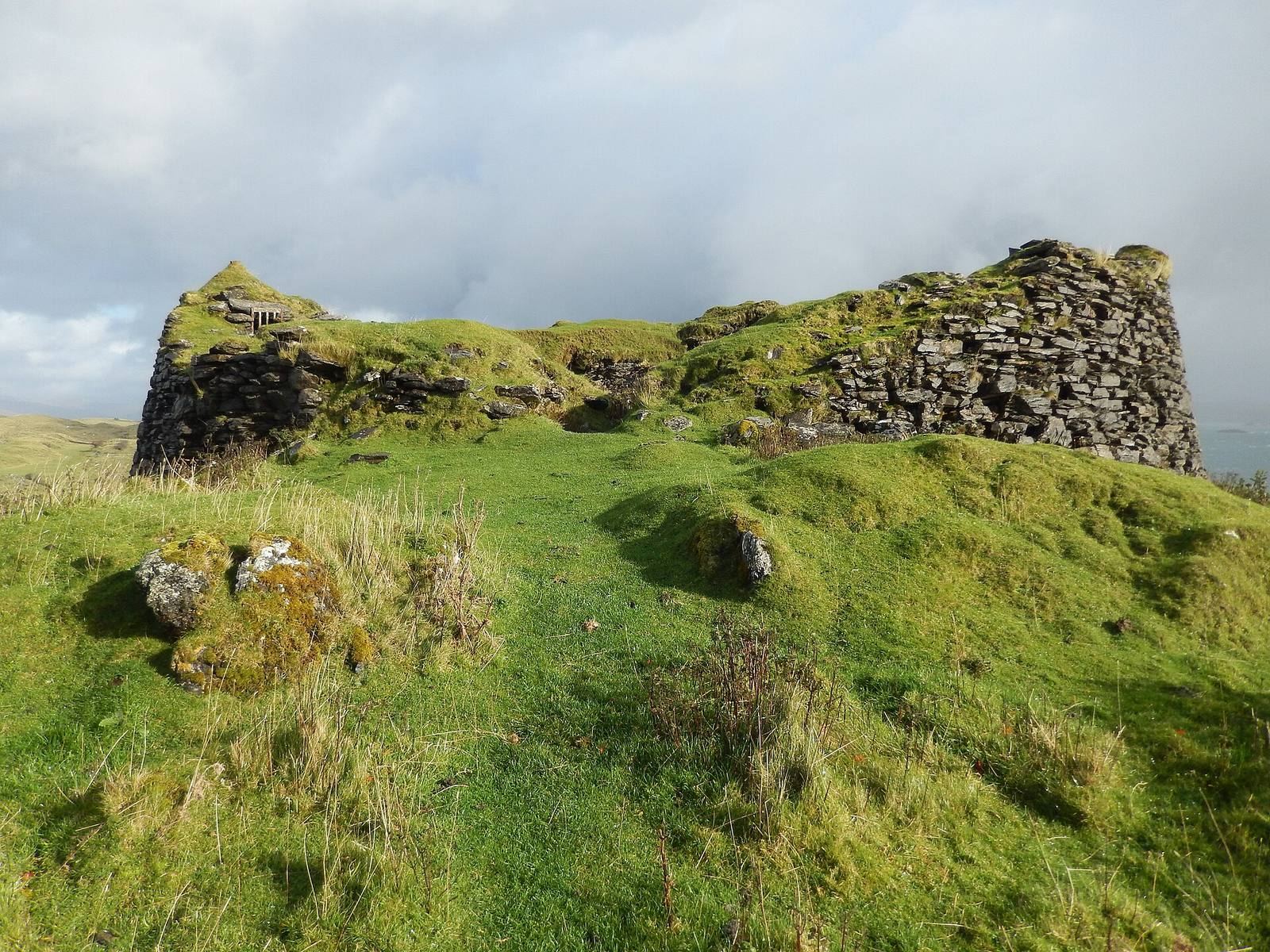
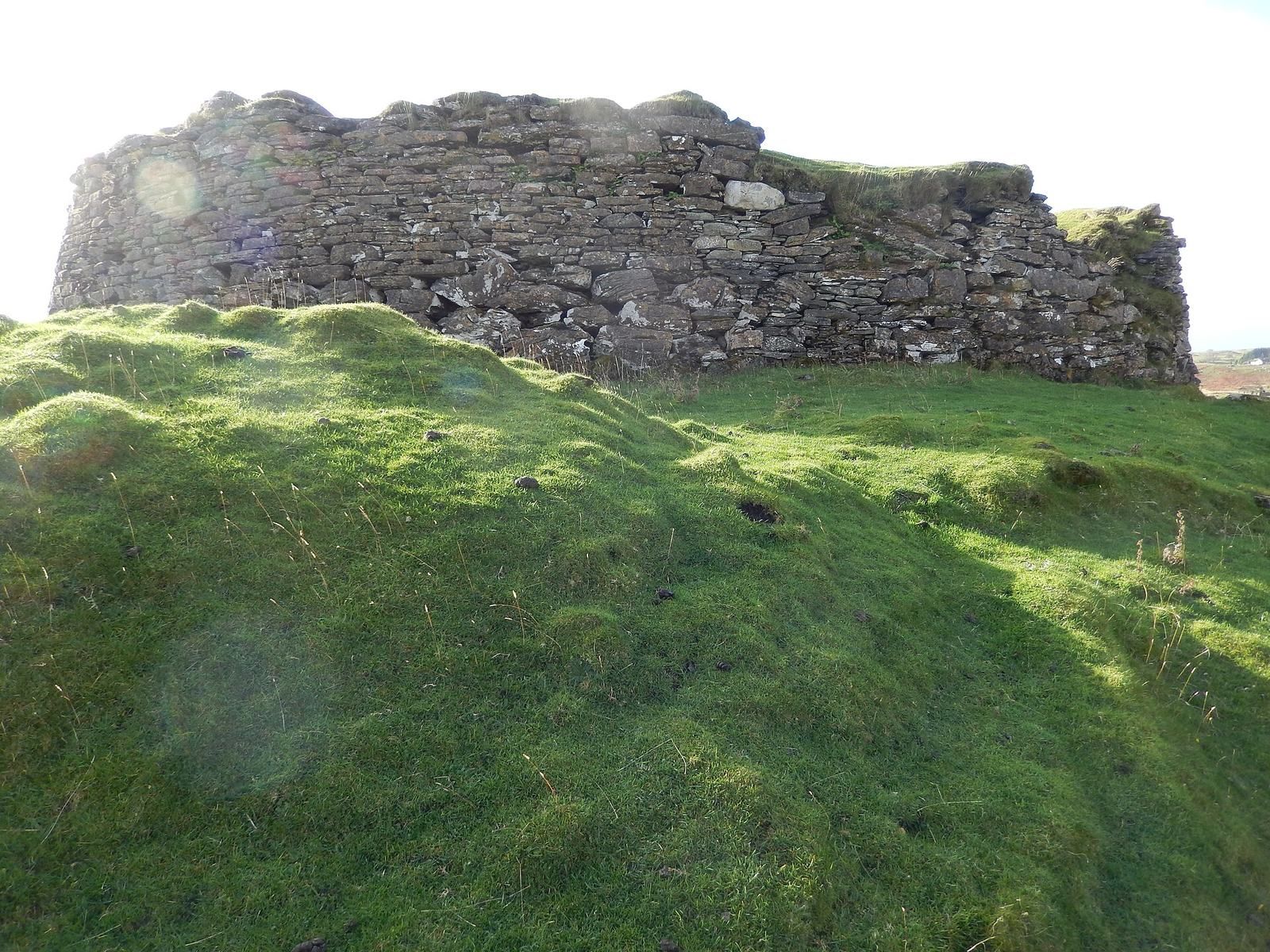
The remains include a nearly circular, dry-stone broch on a ridge, traces of two outer defensive walls and a nearby rectangular building. The tower’s lower storey is formed by its massive stone walls.
Setting and outer defenses
Ridge setting
The broch stands on a rocky height on Lismore’s east coast, along a long limestone ridge about 4 km north of Achnacroish. Steep slopes border the ridge to the northwest and southeast. The southeastern slope descends to a gently rolling plateau that ends at a steep cliff, while the site is most readily approached from the northeast and southwest. In clear weather, Ben Nevis lies to the north, Ben Cruachan to the east and the Paps of Jura to the south.
Outer walls
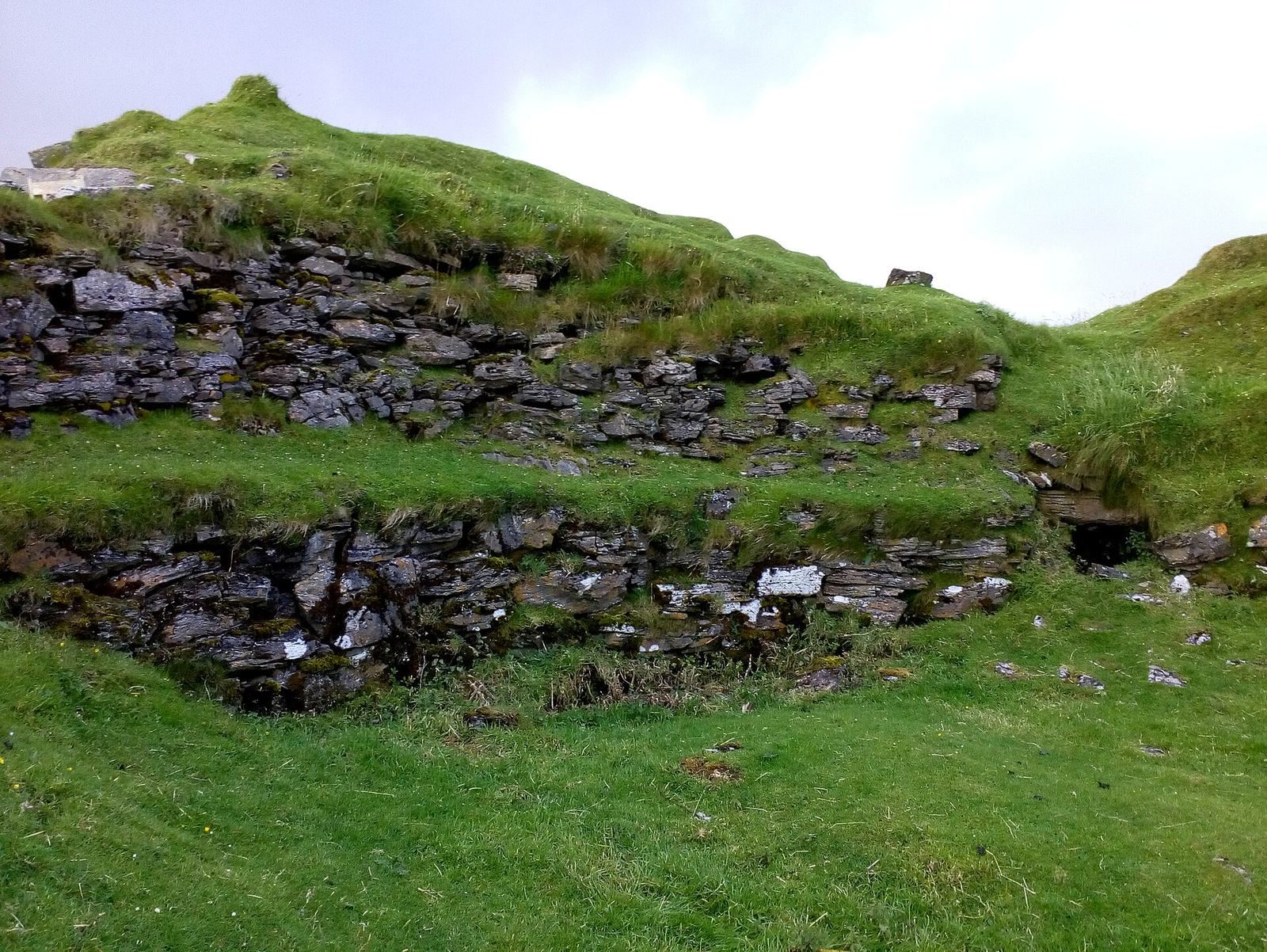
Traces of two walls cross the ridge, adding protection on its northeastern and southwestern sides. At its base, the southwestern wall is about 3 m thick and tapers to a height of roughly 1.1 m. An opening in this wall aligns with the broch entrance.
Broch structure
Plan and stone walls
The broch’s plan is almost circular, with an internal diameter of about 12.2 m. Its lower storey has a dry-stone wall approximately 4.5 m thick. The walls average around 3 m high and reach 4.9 m at the southeast corner. The tower may originally have risen to about 15 m.
Interior ledge and wall galleries
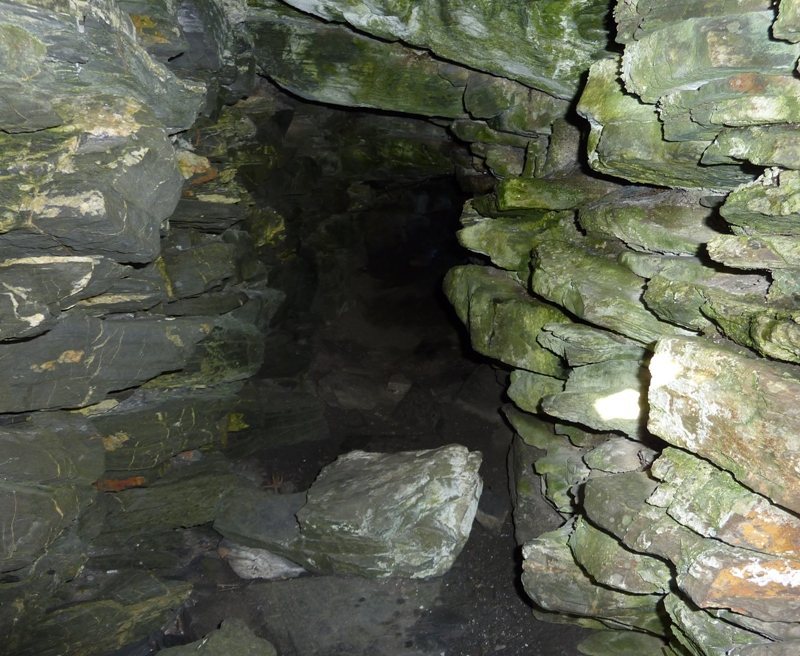
A stone ledge projects into the interior about 2.5 m above the original floor. It is approximately 60 cm wide and survives around three-quarters of the inner circumference; a wooden platform may have rested on it. Passages within the walls are visible on the northwest and eastern sides at about the same height. They measure roughly 61 cm wide and 107 cm high. The northwest passage extends about 7 m, and flat stones form the ceilings. These passages also helped stabilize the structure.
Entrance and floor-level opening
The entrance lies on the west-southwest side and is about 1.4 m wide. Earth partly fills the interior to a depth of at least 1 m, and rubble from the walls is scattered across it. Beneath the earth on the north side, at the level of the original floor, is an opening about 1 m wide. It was discovered in 2010 and probably led to a chamber within the wall or to a staircase.
Associated remains and finds
Building and archaeological finds
A rectangular building in the Norse style stands near the broch. Finds from Tirefour include an enamelled Roman brooch from the tower’s foundation layer, which may have been placed there as an offering to the gods before construction began. Other objects include a decorative pin dated to the eighth century and a Norse pin and rivets from the eleventh or twelfth century. Tirefour is among the best-preserved brochs in the region.