Takht-e Rostam: A Buddhist Rock-Cut Monastery and Stupa in Afghanistan
Site at a Glance
- Rating
- 4.4
- Popularity
- Very Low
- Country
- Afghanistan
- Primary era
- Classical
- Eras represented
- Classical
- Civilizations
- Unclassified
- Site type
- Religious
- Remains
- Monastery
On this page7 sections
History
Takht-e Rostam is an archaeological site in Afghanistan near Aybak, the capital of Samangan Province, about 2 kilometres south of the town and north of the passes of the Hindu Kush. The surviving rock-cut Buddhist monastery and stupa date from the 3rd–4th centuries CE, when the region belonged to the Kushano-Sasanian kingdom, a state that combined Kushan political traditions with Sasanian Iranian influence. The site has also been described as approximately 3,500 years old and as an important surviving monument associated with a Zoroastrian period.
The Buddhist complex
Takht-e Rostam originally functioned as a Buddhist monastery and stupa. Worshippers used its rooms as temples or shrines, placed images within them, and gathered there for religious practice. The complex represents an early stage in the development of Buddhist architecture in Afghanistan through its combination of a hilltop monastery and a stupa cut from the rock.
After the Muslim conquests of Afghanistan, the monastery no longer served its original religious purpose. A hoard of coins from the Ghaznavid period, when a medieval Muslim dynasty ruled parts of Afghanistan and neighbouring regions, was later found accidentally in one of the caves. The discovery reflects the continued use of the cavities for storing or concealing valuable objects.
Rostam in Persian tradition
The site was eventually incorporated into Persian mythology. In Ferdowsi’s 10th-century Shahnameh, a major Persian epic recounting the legendary and historical past of Iran, Rostam travels to the kingdom of Samangan and stays at the palace of its king at Takht-e Rostam. Rostam is the epic’s principal heroic figure, while Sohrab is his son.
Takht-e Rostam and its associated caves are now approximately 25 percent ruined. The Afghan government renovated the site in 2021, while the main rock monument still requires further restoration.
Remains
Rock-cut monastery
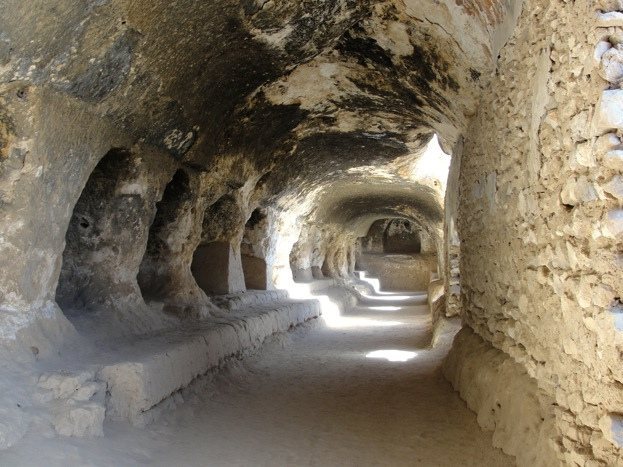
The monastery is arranged on and around a hill, with numerous caves and rooms carved from limestone bedrock. Five rooms form part of the complex, including two used for sacred purposes. One sacred chamber has a domed ceiling decorated with a complex lotus-leaf relief. Traces of sculpture and image-making remain visible on the walls, preserving evidence of the importance of sculptural art during the Buddhist period.
Stupa and hill caves
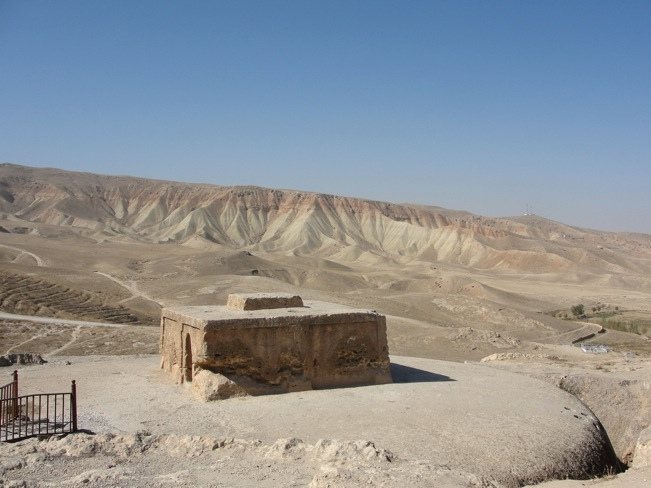
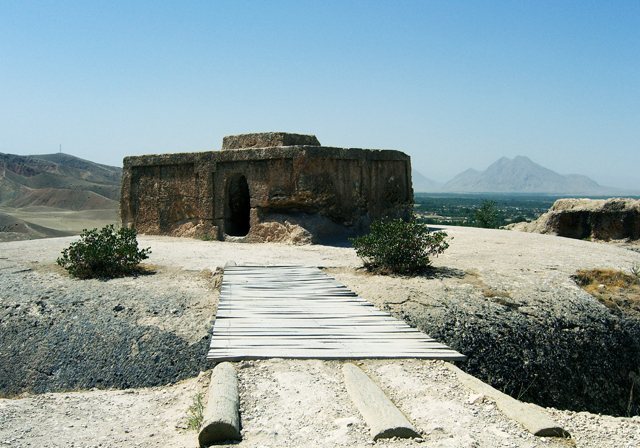
A stupa, a Buddhist mound-shaped monument associated with sacred relics, meditation, and religious practice, stands on a nearby hill. Its summit retains a harmika, the small square element placed at the top of some stupas. Rough additional caves surround the base of the hill, extending the complex beyond the principal monastic rooms.
Rostam’s Ball and storage cavities
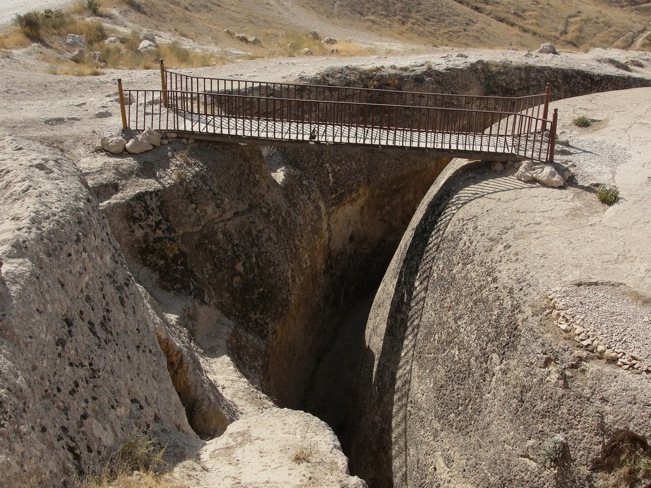
The rock formation known as “Rostam’s Ball” has a circumference of approximately 85 metres. The rock monument contains cavities used to store or conceal valuable objects and coins. Together with the surrounding caves and rooms, these spaces form the surviving physical setting of the monastery and its associated religious features. The monument and caves are partly ruined, and continued restoration is needed to preserve the carved complex.