Stone Circles of Junapani: Prehistoric Megalithic Burial Monuments
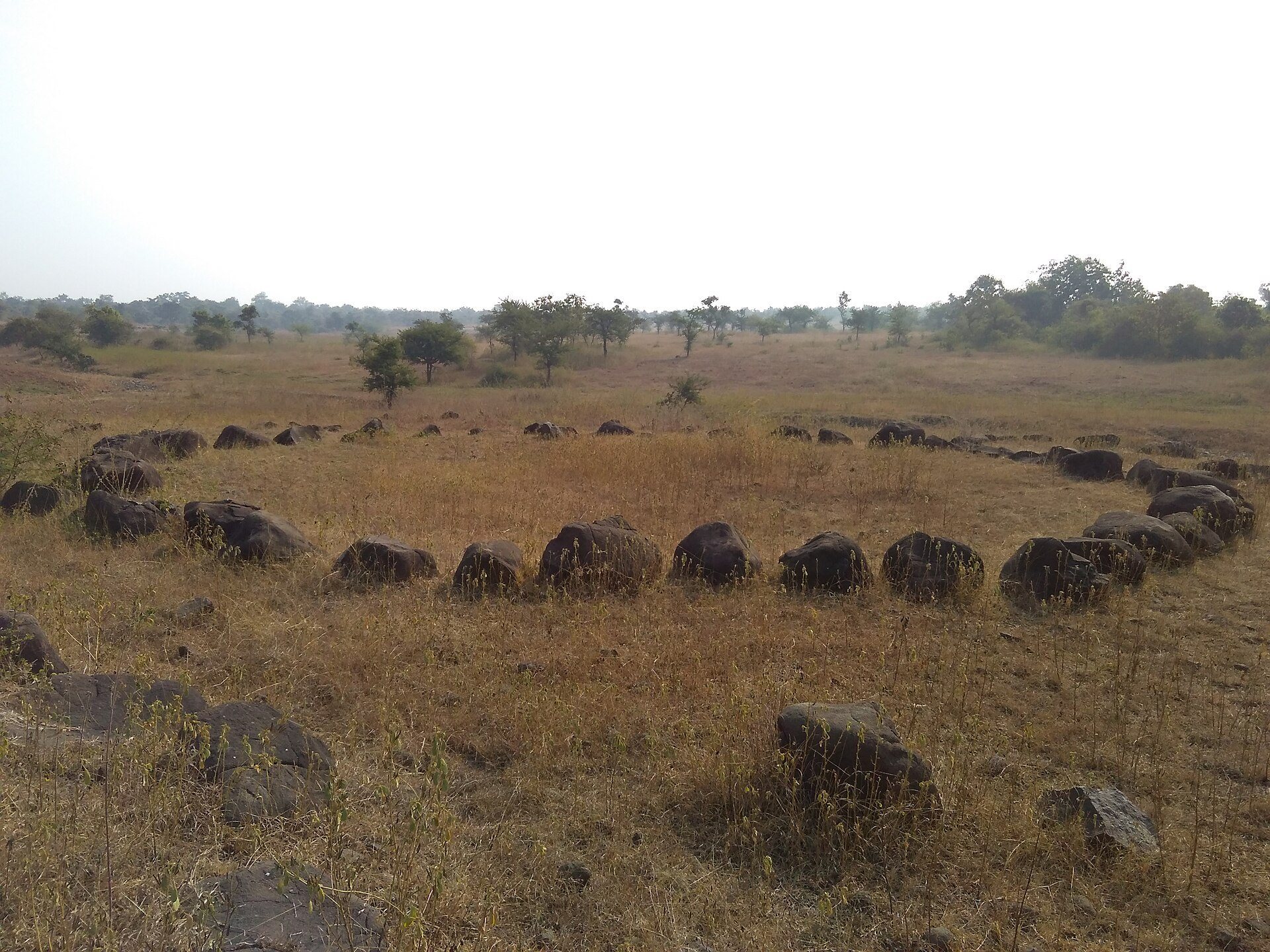
Site at a Glance
- Rating
- 3.9
- Popularity
- Very Low
- Country
- India
- Primary era
- Iron Age
- Eras represented
- Iron Age, Classical
- Civilizations
- Unclassified
- Site type
- Burial
- Remains
- Necropolis
On this page6 sections
History
The Stone Circles of Junapani are prehistoric megalithic burial monuments near Nagpur in Maharashtra, India, dating broadly from about 1000 BC to AD 300. A megalith is a monument made with one or more large stones. About 300 circles have been noted around Junapani, and approximately 150 have been studied and documented, making the site the second-largest megalithic site among the 51 sites identified around the Nagpur region and the 89 sites recorded in Vidarbha.
Prehistoric burial landscape
The monuments belong to local communities associated with different clans. The wider region was inhabited from about 1000 BC and has remained inhabited into the present. Junapani formed part of an important north-south corridor through India, while its burial circles remained distinct from the menhirs, dolmens, and other burial and non-burial megalithic constructions known from South India.
Excavation and interpretation
J. H. Rivett-Carnac first excavated the stone circles and reported on them in 1879. Excavation work involving B. K. Thapar was carried out in 1961, followed by an Archaeological Survey of India excavation in 1962 that uncovered three circles. The Archaeological Survey of India, India’s central government agency for archaeological research and monument protection, designates the structures as monuments of national importance.
Later studies by the Tata Institute of Fundamental Research included mapping the circles and examining whether their cup-marked stones were connected with the astronomy or cosmology of the communities that created them. The institute also funded further research. The orientations of some marked stones have prompted a tentative interpretation involving positions in the sky, seasonal weather changes, and especially the end of the monsoon.
Remains
Junapani is an uninhabited burial site occupying a small area about 10 kilometres northwest of Nagpur in the Vidarbha region of central India. Its sepulchral megaliths, structures associated with burial or human remains, form the northern fringe of central India’s megalithic distribution. The circles are grouped near riverbanks and generally consist of cairns, deliberate heaps or mounds of stones built over or around burials. They are usually several metres in diameter. Mapping covered 56 circles, most of which were in good preservation.
Cup-marked stones
Cup-marked stones occupy specific positions within some of the circles. A cup mark is a small hollow deliberately pecked or carved into stone. Such marks were recorded on 20 circles, including seven in which marks occur on the sides of the stones. Individual marks measure several centimetres across or along their carved surfaces.
The marks occur in groups arranged as parallel lines or sequences set at right angles. These patterns may form straight lines or cross-like shapes, with the lines aligned radially or tangentially within or around the circles. Their angular arrangements form three clusters. The recorded orientations are 118, 208, and 334 degrees relative to north. These positions may have indicated the rising or setting of particular stars or seasonal changes, but that astronomical interpretation remains uncertain.
Burial goods and archaeological finds
Excavated circles contained human remains and funerary objects. Pottery includes red-painted vessels, some carrying megalithic graffiti symbols, together with micaceous red ware and coarse red ware. Black-and-red pottery has also been found, including bowl-like vessels decorated with linear black paintings. Heaps of sticky black clay occurred around the funerary finds.
Iron objects from the circles include daggers, flat axes with cross-ring fasteners, hoes, rings, bracelets, horse bits, long-bladed chisels, and pointed tongs that may have been fitted with a wooden handle. These objects indicate the use of iron at Junapani. One circle produced a copper bell with an iron tongue, while a stone pestle has also been reported from the site. B. K. Thapar found Middle Stone Age tools at Junapani. An animal skeleton belonging to the horse family was recovered during the excavations as well.