St Nectan’s Church, Hartland: A Gothic Parish Church in Stoke
Site at a Glance
- Rating
- 4.6
- Popularity
- Medium
- Country
- United Kingdom
- Primary era
- Medieval
- Eras represented
- Medieval, Early Modern
- Civilizations
- English
- Site type
- Religious
- Remains
- Church
On this page12 sections
History
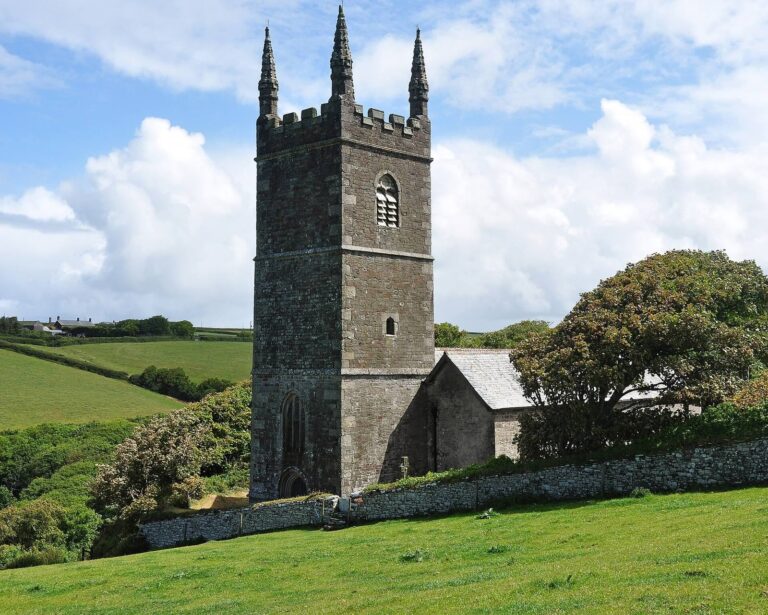
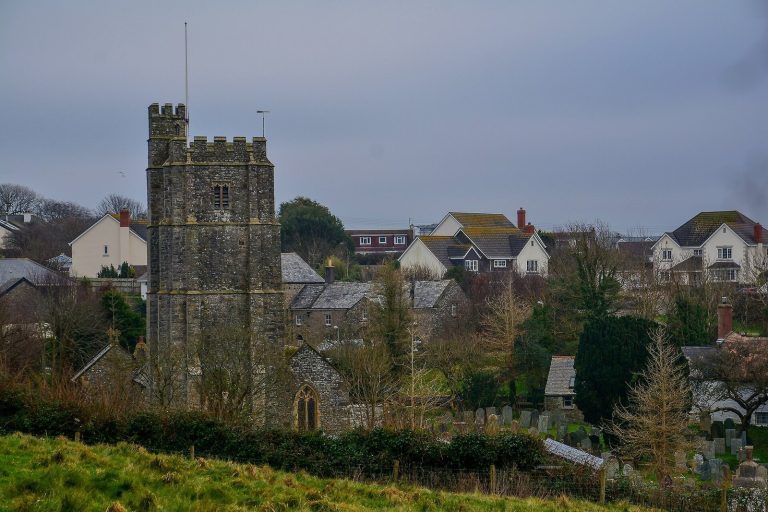
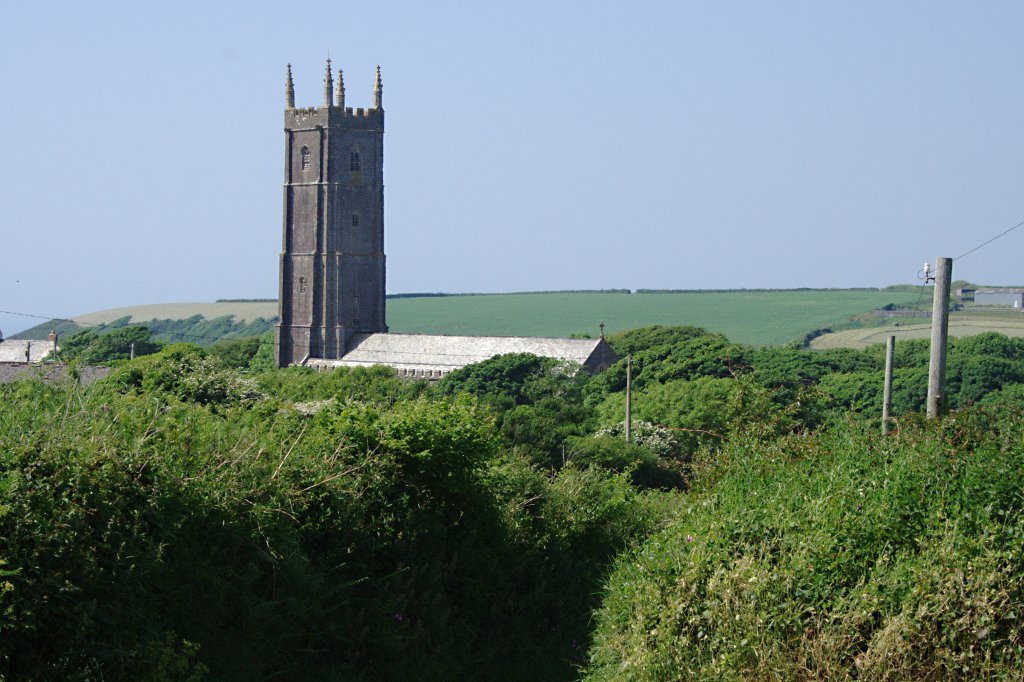
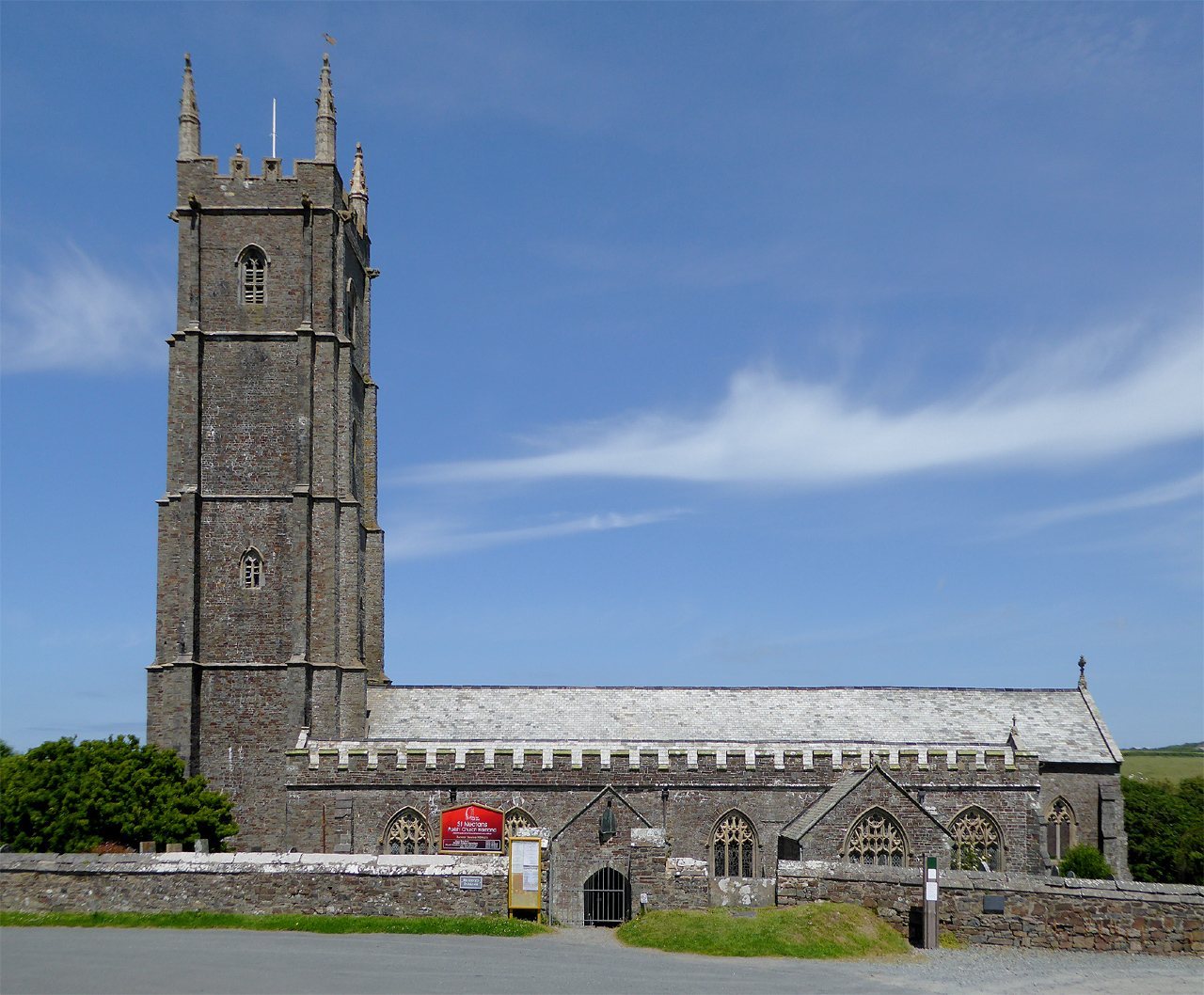
St Nectan’s Church, Hartland, is a Gothic parish church in the hamlet of Stoke, about 1.5 miles west of Hartland, in the United Kingdom. Built of stone and rubble, it is believed to date from about 1360 and serves Hartland’s parish.
Early foundation and religious change
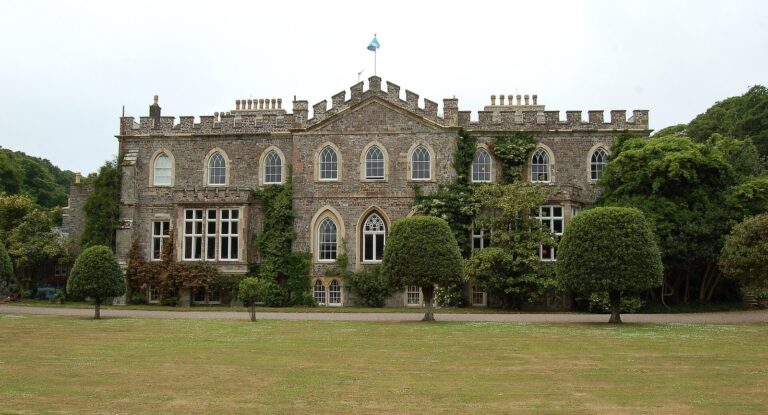
The first recorded church here was a collegiate church founded around 1050 by Gytha, Countess of Wessex. It was served by twelve secular canons, clergy attached to a church who were not members of a religious order. One tradition says Gytha established it in thanks for her husband’s survival of a storm at sea. Another, regarded as more persuasive, links the foundation to her husband Godwin, Earl of Wessex and holder of the royal manor of Harton.
In the twelfth century, the collegiate church was superseded by a house of Augustinian regulars at Hartland Abbey. These religious members followed the communal Rule of St Augustine, a religious rule associated with the early Christian bishop and theologian Augustine of Hippo.
Dedication and parish life
The church is dedicated to St Nectan, a Celtic hermit and missionary associated with early Christian sites in southwest Britain, South Wales and Ireland during the fifth and sixth centuries. A well near the church is reputed to mark the place of his hermitage.
St Nectan’s is a Church of England parish church in the Broad Church tradition, which allows a wide range of theological views and worship practices. Its ecclesiastical administration falls within the Province of Canterbury and Diocese of Exeter, in Barnstaple Archdeaconry and Hartland Deanery. The parish is part of the Hartland Coast Team. The churchyard is the burial place of children’s writer Mary Norton (1903–1992).
Remains
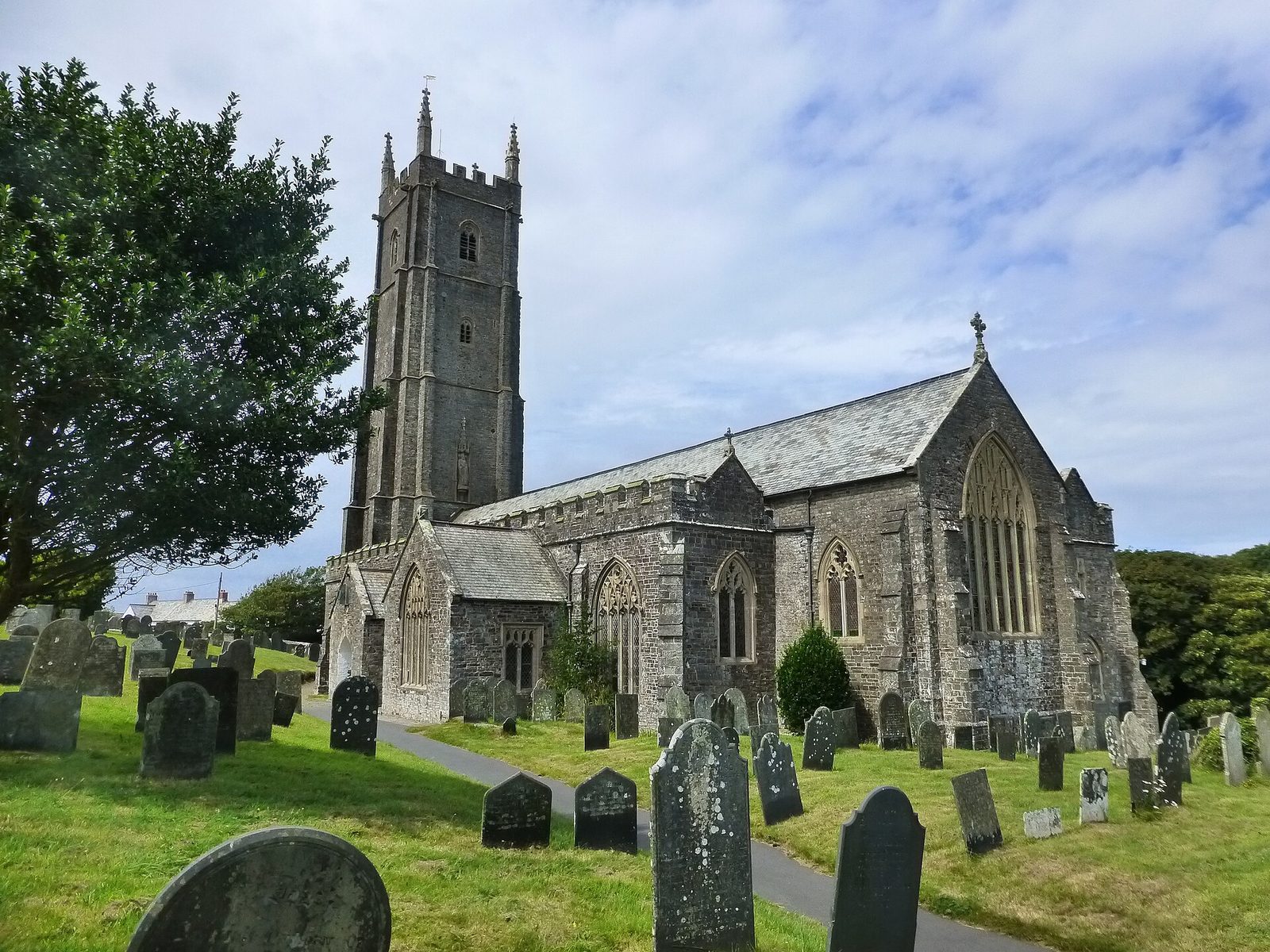
The church is a 137-foot-long stone-and-rubble building with a stated capacity of 600. Its surviving features include a later tower, medieval interior fittings, monuments and stained glass associated with the parish’s history.
Church and tower
Church and font
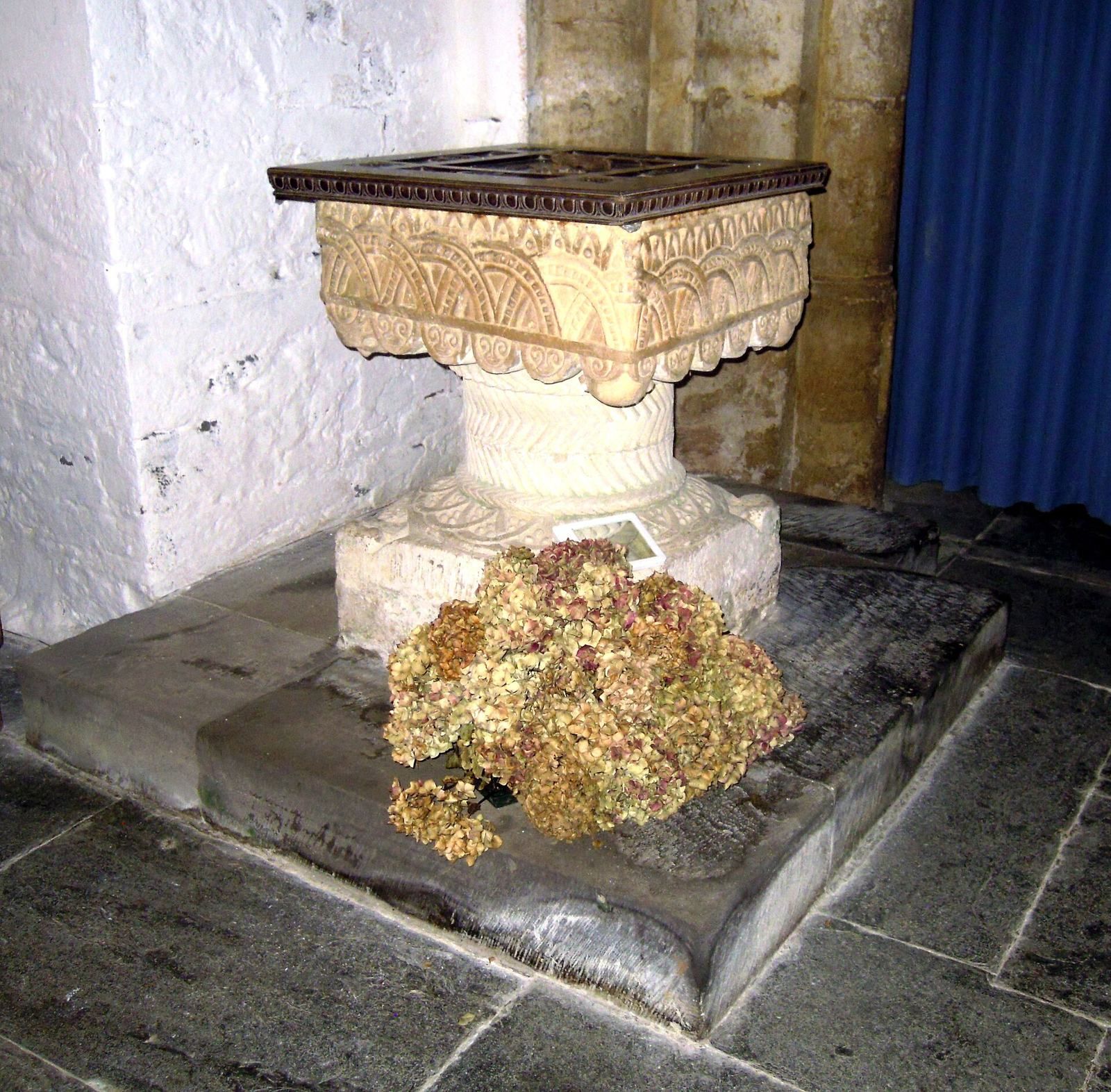
The present church replaced an earlier building on the site. Its font is the only surviving remnant of that predecessor. The font is Norman, a form of English Romanesque architecture that developed after the Norman Conquest, and is thought to date from around 1170. It is a basin used for baptism.
Tower and bells
The tower was built about sixty years after the rest of the church. Rising in four stages to 128 feet, it is described as the highest in Devon and has served for centuries as a landmark for sailors at sea. Its arch is now open; it once held a musicians’ gallery where fiddles, double bass, flute and clarinet were played during services. The tower contains six bells cast by John Taylor & Co. in nearby Buckland Brewer. Together they weigh nearly three tons and were last rehung in 1952.
Interior features and memorials
Rood screen
The rood screen, a partition separating the main worship space from the chancel, dates from 1450. It has eleven bays and measures 45 feet 6 inches long, 12 feet 6 inches high and 5 feet 10 inches wide at the top. The organ and seating were once placed on it.
Roofs and pews
The church retains old wagon roofs, timber ceilings with a curved, barrel-like profile, and a plain set of pews, most of which date from the sixteenth century.
Monuments
The monuments include an elaborate medieval tomb chest, a small brass dated 1610, and a metal-inlaid lid from a churchyard tomb dated 1618.
Stained glass
Five windows by Caroline Townshend and Joan Howson depict the parish’s history. Christopher Webb made the main east window and the tower window. At least two windows are by Alfred Beer: the south window in the sanctuary and the east window in the chancel chapel. Glass removed from the south window of the chancel chapel has also been retained and may be Beer’s work.