St John the Baptist and St Mary’s Church in Stiffkey: A Norfolk Parish Church
Site at a Glance
- Popularity
- Medium
- Country
- United Kingdom
- Primary era
- Medieval
- Eras represented
- Medieval, Early Modern, Modern
- Civilizations
- British, English
- Site type
- Religious
- Remains
- Church
On this page10 sections
History
Parish history
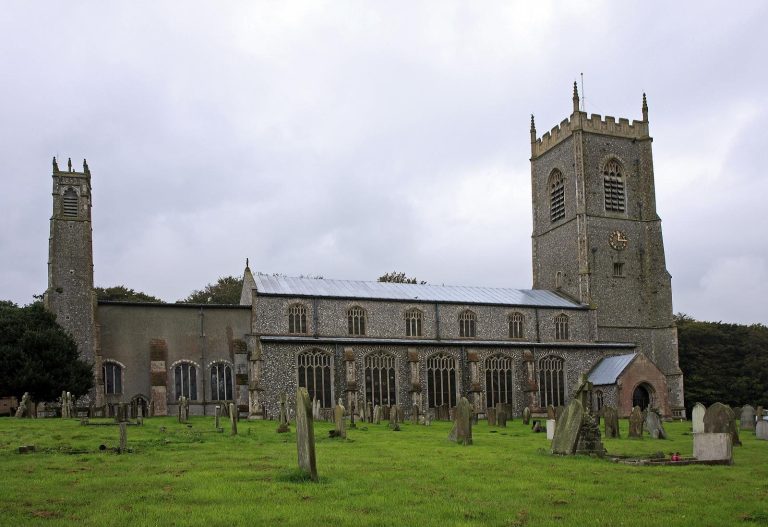
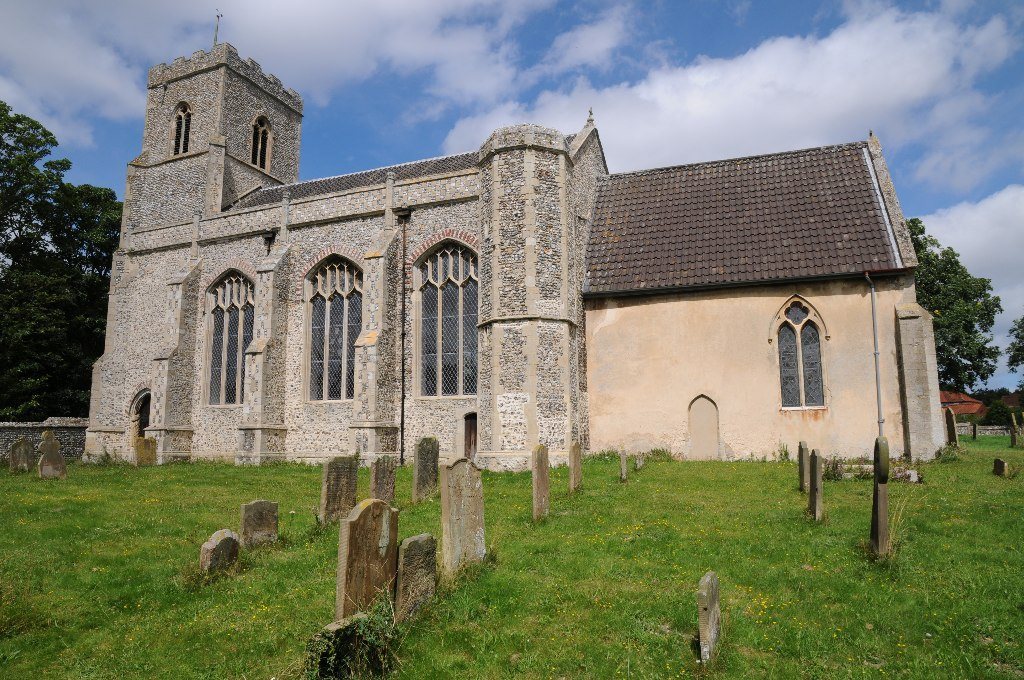
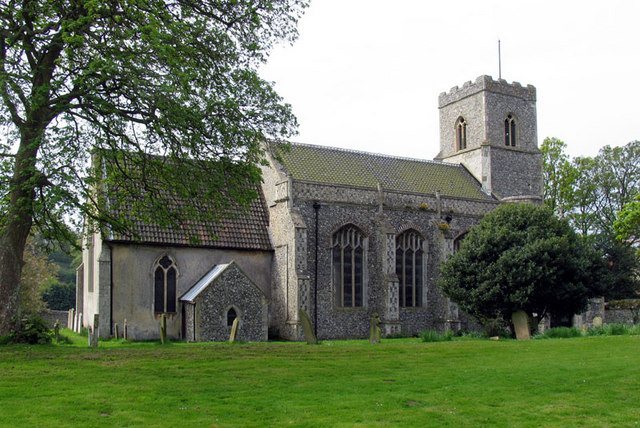
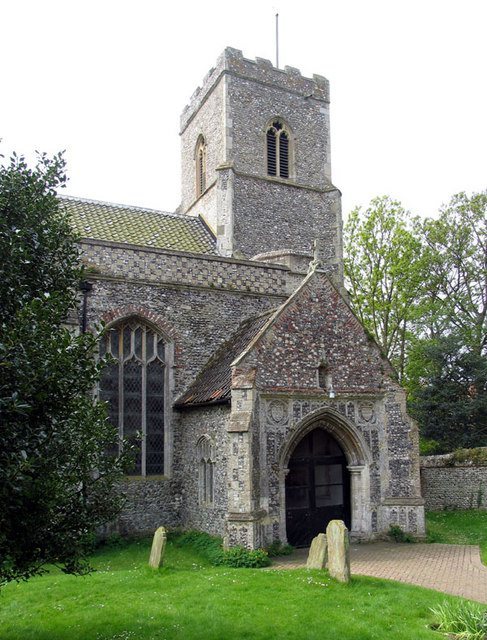
St John the Baptist and St Mary’s Church is the parish church of Stiffkey, Norfolk, United Kingdom. Much of the building is Perpendicular, a late phase of English Gothic architecture. Its chancel dates to the late 13th or early 14th century, while the west tower and charnel, a place associated with storing human bones, are earlier. The church is dedicated to St John the Baptist, a Christian preacher associated with baptizing Jesus, and the Virgin Mary, the mother of Jesus. This double dedication recalls the former presence of two churches in the churchyard. St Mary’s was deconsecrated and abandoned in 1563, after which St John’s took the name it bears today.
The parish was joined with All Saints, Morston, in 1769. Further consolidations followed in 1972, with St Andrew and St Mary, Langham Episcopi, and in 1976, with All Saints, Cockthorpe, and Binham Priory. In 2003, St Mary, Gunthorpe, All Saints, Bale, St Andrew, Field Dalling, St Margaret, Saxlingham, and All Saints, Sharrington, were also brought together with Stiffkey. The resulting Benefice of Stiffkey (St John and St Mary) and Bale grouped parish responsibilities under a shared ecclesiastical office. The church is listed at Grade I, England’s highest category for buildings of exceptional interest.
Rectors and parish life
The rectors included Theophilus Lowe, who served from 1736 to 1769 and, from 1749 to 1769, also held a canon’s office at Windsor. A canon is a member of the clergy of a cathedral or collegiate church. Lord Frederick Townshend was rector from 1792 until his death in 1836. Judged insane, he lived from 1806 at Hadham Palace, then an asylum, while curates led services in Stiffkey. Later rectors included George Townshend Hudson (1842–1845) and Eugene Sweny (1883–1906).
Harold Davidson was rector from 1906 to 1932. He spent Mondays through Saturdays in London ministering to young women whom he sought to help, including prostitutes. His work prompted a dispute with Morston’s churchwarden and a complaint to the Bishop of Norwich. In 1932, an ecclesiastical court, known as a consistory court, found Davidson guilty on five counts of immorality, and the bishop removed him from clerical status. Davidson returned to performing on stage and presented a Daniel in the lions’ den act in Skegness. A lion attacked him, and he died from his injuries; he was buried in Stiffkey’s churchyard. Charles Harold Fitch became rector in 1932 and served until 1942. Subsequent rectors included Victor Thomas South Jagg (1946–1955) and Cecil Howard Dunstan Cullingford (1968–1971).
Remains
Church fabric and interior
The church combines earlier fabric with a largely Perpendicular structure. Its west tower and charnel predate the nave, which has four bays, or structural divisions, and a decorative flushwork parapet made with flint and stone set level with the surrounding surface. The chancel, the eastern part of the church around the altar, belongs to the late 13th or early 14th century. Rood stairs survive on the south side of the nave; they once provided access to a loft above the screen separating the chancel from the rest of the church.
Monuments and furnishings
Nathaniel Bacon monument
A wall monument to Nathaniel Bacon dates from before 1615. Its sculptor may have been Maximilian Colt, an English artist active around the late 16th and early 17th centuries, though the attribution is uncertain.
War memorial
The church’s war memorial is a wall tablet depicting Calvary, the place of Jesus’s crucifixion and, in art, a scene of that event. Davidson commissioned the memorial.
Organ
The Positive Organ Company made the church’s organ. The firm, active from 1898 to 1941, generally produced compact instruments with one keyboard, designed to be movable and suitable for small churches. Williamson & Hyatt of Trunch, Norfolk, rebuilt the organ in 1954.
Churchyard
Burials in the churchyard include Aubrey Buxton, Baron Buxton of Alsa (1918–2009), and his first wife Pamela (1922–1983). Eugene Sweny (1837–1906) is commemorated by a large stone Celtic cross, whose ring surrounds the crossing of its arms. Davidson’s grave bears the inscription “Priest.”