Shizhaishan Site: A Dian Burial Complex in Yunnan
Site at a Glance
- Popularity
- Medium
- Country
- China
- Primary era
- Bronze Age
- Eras represented
- Stone Age, Bronze Age, Classical, Modern
- Civilizations
- Han
- Site type
- Burial
- Remains
- Necropolis
On this page16 sections
History
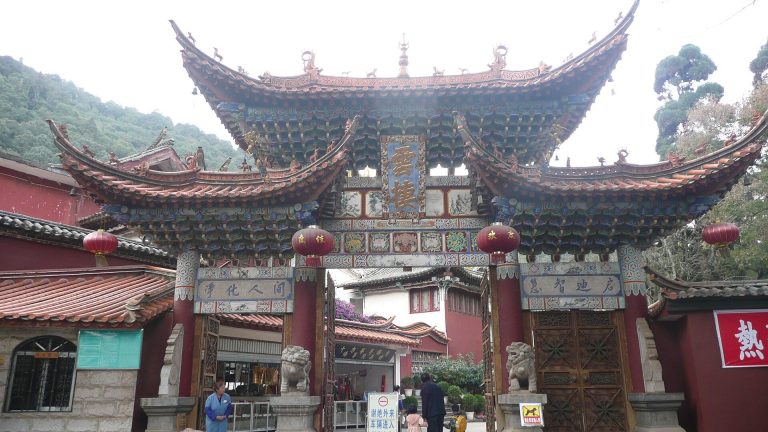
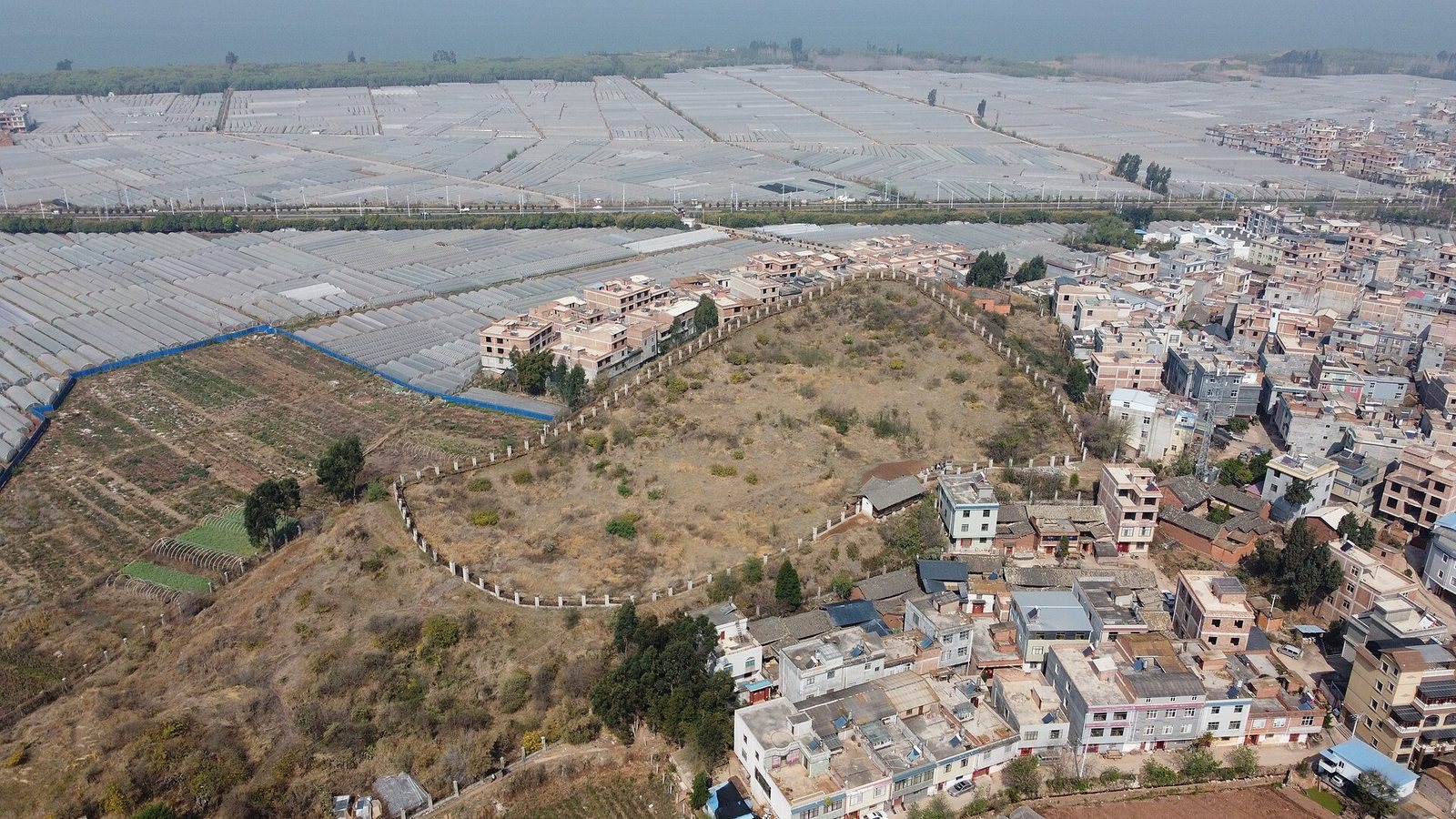
The Shizhaishan site is a cemetery and archaeological complex on a hill south of Shizhai Village in Jinning District, Kunming, Yunnan, China. It is associated with Dian, an ancient state centered on the Dianchi region. The site includes a Neolithic shell midden, a deposit of discarded shells, and Bronze Age tombs. The cemetery’s burials may date from the early Warring States period (475 to 221 BCE) to before AD 57, spanning the Western Han and early Eastern Han dynasties.
Early community and the rise of Dian
The earliest burial phase may reach back to the early Warring States period. Its graves suggest that the cemetery initially served a wider community, with an early Dian ruler possibly acting as a chief or alliance leader. The burial tradition later changed as Dian’s ruling family and people associated with them began to use the cemetery.
Grave groups are divided into early, middle, and late phases, based on their dates, size, structure, and funerary goods. The early group includes 35 small graves and eight larger ones. The larger tombs may have held rulers and their relatives, while the smaller graves may have belonged to community members or retainers. This pattern has helped distinguish the cemetery’s possible communal beginnings from its later use by Dian’s ruling class.
Dian and Han-era phases
The middle phase, dated from 175 BCE to before 48 BCE, is associated with a period of Dian strength and prosperity. It includes six graves with substantial grave goods and nine especially large, richly equipped tombs. The larger burials are interpreted as those of the ruling family and its officials. Grave 6 has been identified as a possible king’s tomb, though it is not the cemetery’s largest and other royal burials remain possible. Smaller middle-period graves may have belonged to people close to the king, including officials or military leaders.
Changes in grave goods indicate increasingly frequent contact with the Han world. Middle-period burials contain iron and objects made from both copper and iron, as well as Han-style mirrors, crossbow parts, and coins. In the late phase, burial forms increasingly resemble those used in central China, while local ornaments and bronze drums also change in form and decoration.
The late phase begins around 48 BCE and may continue to before AD 57. It is divided into two stages, from the middle to late Western Han and from the late Western Han into the early Eastern Han. Its graves include 25 small tombs and three larger ones. Their reduced quantities of Dian-style objects and the growing influence of Han burial practices have been connected with the establishment of Yizhou Commandery, a Han administrative district, in the Dianchi region. This change accompanied the loss of Dian’s earlier political independence. The larger late tombs may have belonged to Dian royal descendants serving the Han or to newer local leaders; the smaller ones may have held displaced members of the Dian elite or other local people.
Excavation and protection
Interest in the site grew after an antiques dealer brought bronze objects to the Yunnan Provincial Museum in 1953. The following year, a museum staff member connected them with bronzes found in Jinning during the Second Sino-Japanese War, the 1937 to 1945 conflict between China and Japan. A museum investigation in October 1954 identified Shizhaishan as their place of origin. In March 1955, archaeologist Sun Taichu and two museum staff members carried out the first test excavation. Over 21 days, they excavated 204.3 square metres and cleared 19 tombs, recovering more than 3,100 grave goods.
The Yunnan Provincial Museum excavated the site again from November 1956 to January 1957, uncovering 20 pit tombs and finding nearly ten more that had already been damaged. The discoveries provided important evidence about Dian society. A third excavation took place in the winter of 1958. Finds resembling objects from Changsha pointed to contact between the Dianchi region and Chu, an ancient Chinese state and cultural tradition. In 1960, a joint team excavated 16 more graves along the eastern edge of the hill. Their finds helped clarify the cemetery’s extent and differences in burial status across its areas.
A rescue excavation in May and June 1996 cleared 36 graves and recovered more than 300 objects. Its small early graves prompted archaeologists to reconsider the cemetery’s development, supporting the view that it may first have served an ordinary community before Dian’s ruling group used it. The work also showed that earlier investigations had not covered the entire cemetery.
Protection has varied over time. Local commune officials helped safeguard the hill from 1955 to 1965, but disturbance grew during the Cultural Revolution, a period of political upheaval from 1966 to 1976. Renewed government protection began in 1983, with an initial protected area and controls on nearby development. Looting continued, including a serious episode in 1995 that ended after police arrested more than 30 people. Modern graves on the hill were removed in 2005. A protection plan and survey followed in 2009, protective infrastructure was completed in 2010, and a monitoring system was installed in 2013.
The protected area covers 32,910 square metres, including an 18,419-square-metre zone under the strictest protection, and the whole hill is designated a key protection area. The cemetery became a provincial cultural relic protection unit in 1965 and a Major Historical and Cultural Site Protected at the National Level in 2001. In 2021 it was included among China’s major archaeological discoveries of the past century and on the national list of major archaeological sites for 2021 to 2025. The Shizhaishan Archaeological Site Park entered a national project list in December 2022.
Remains
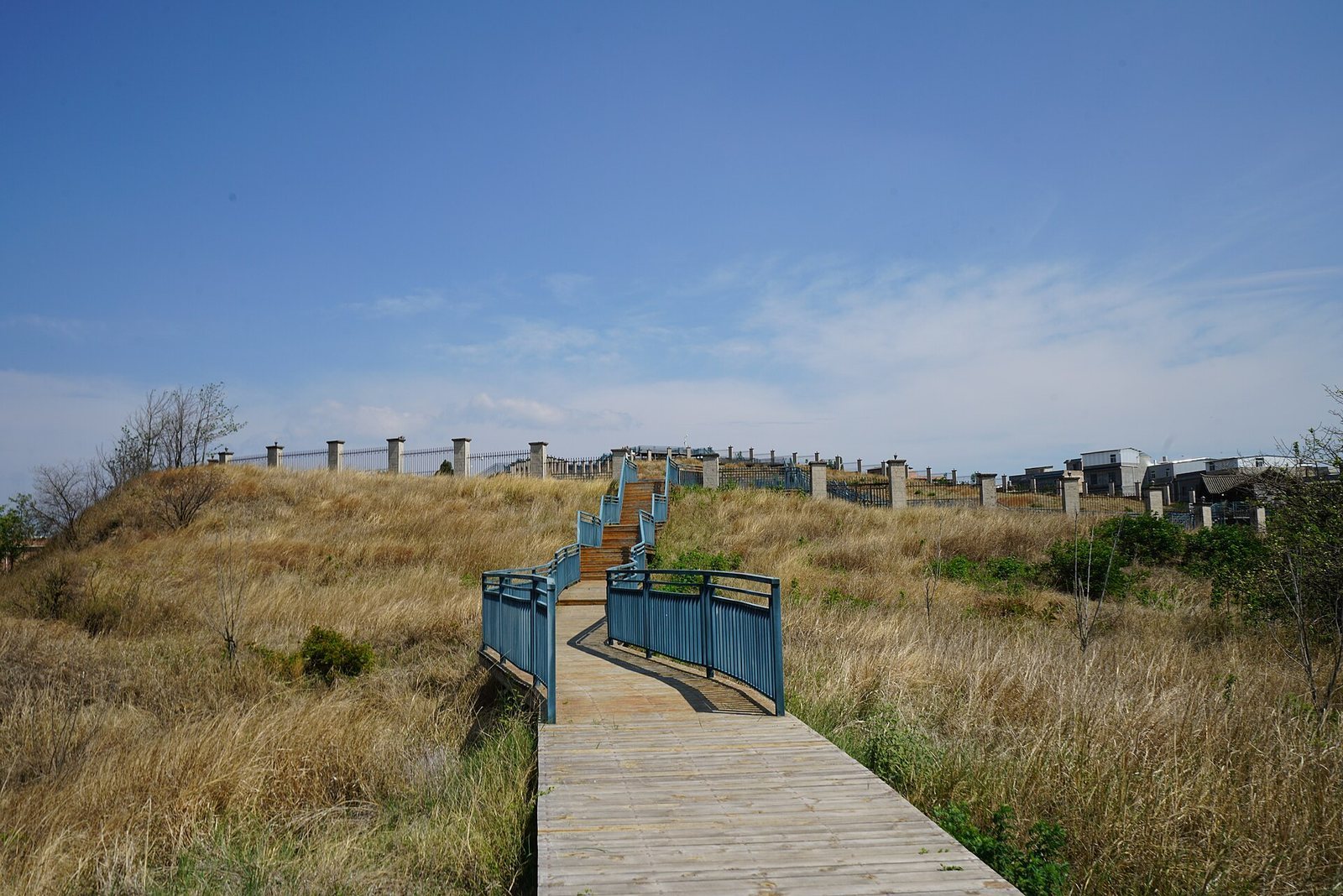
The cemetery occupies Shizhaishan, a hill on the eastern shore of Dianchi Lake, at an elevation of 1,919 metres. The hill extends about 500 metres from north to south and reaches up to 200 metres across, widening near its middle. Its western slope is steep, while the eastern side descends more gently. Graves generally run east to west and are grouped by period, extending downhill from the summit.
Hill and burial layout
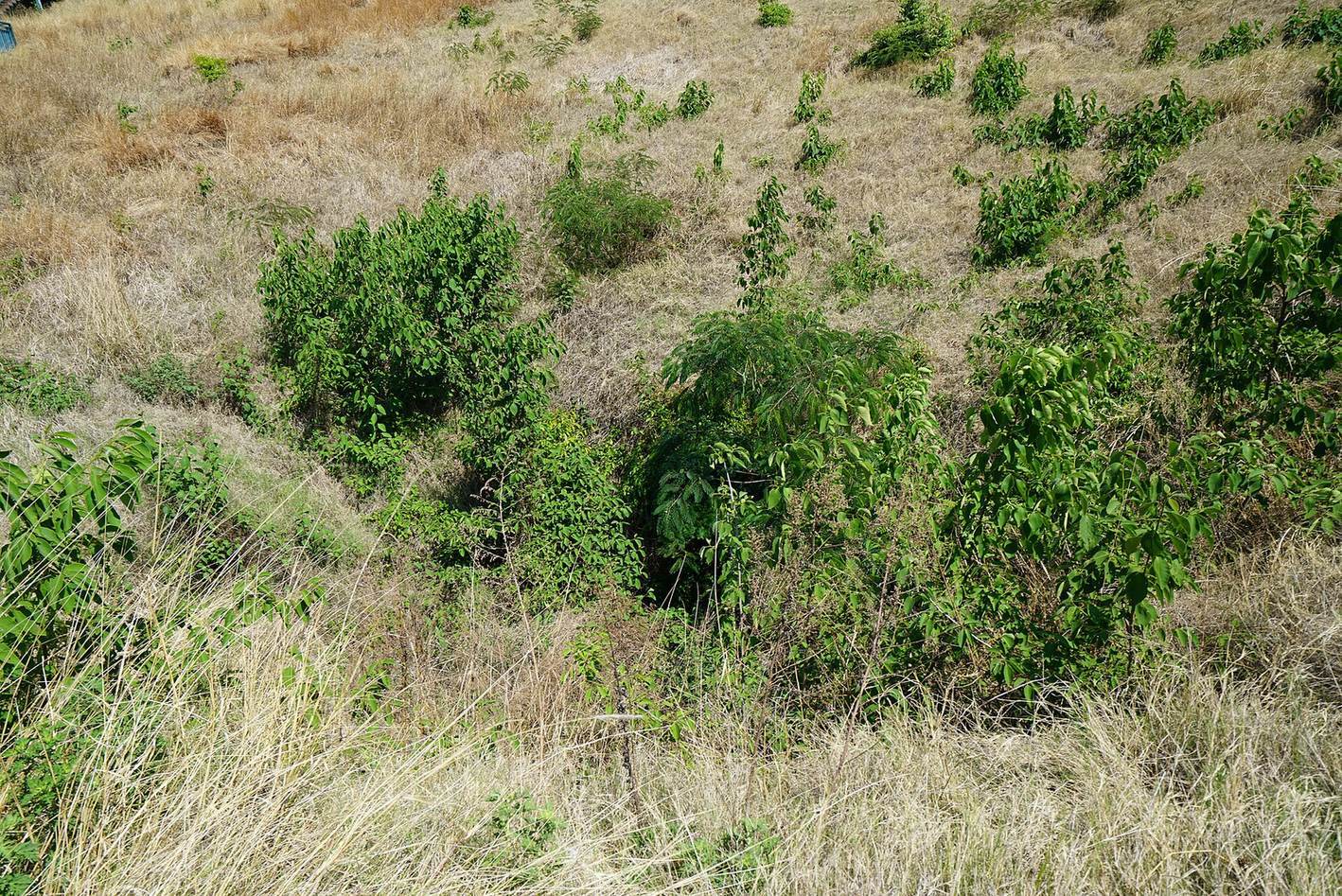
The form of the tombs reflects the ground beneath them. On the western slope, shallow graves often follow the natural contours of the rock. Some larger examples were made more regular with timber boards against the rock walls, a treatment visible in grave 6. The eastern side has deeper soil, allowing larger, more regular pits, usually dug by hand.
Smaller graves are generally about 2 metres long, 1 metre wide, and 0.5 to 1 metre deep. Larger, more regular tombs are commonly 3 to 4 metres long, 2 to 3 metres wide, and 2 to 2.85 metres deep; a few exceed 5 metres in length and 4 metres in width. Some graves have charcoal at the bottom, which helped limit damp and decay. Excavations also found traces of lacquer from coffins.
Burials include bodies laid out on their backs, face-down burials, bodies with bent limbs, graves with severed limbs, and cases where bones were rearranged after death. Some tombs contain overlapping or multiple skeletons. In the small graves excavated in 1996, bodies laid out on their backs were most common; many graves had no coffin or other burial equipment, and their modest goods were usually not arranged in a fixed pattern.
Selected tombs and burial finds
Grave 40
Grave 40 preserves an undisturbed burial in which the body was placed face down. About 30 grave goods remained with it. The preservation of this burial and its accompanying objects has led to the suggestion that this position may have held ritual meaning. The significance of other unusual burial practices remains uncertain.
Grave 6 and the seal of the King of Dian
The intact gold seal found in grave 6 weighs 90 grams and measures 2.4 centimetres on each side. Its body is 0.7 centimetres thick, and its coiled-snake handle rises 2 centimetres. Four characters in clerical script, a formal writing style, are cut into its base. Whether the Han court granted the seal to the King of Dian, possibly under Emperor Wu, has been debated, though many later scholars have supported that interpretation.
Grave 23
Grave 23, the best-preserved tomb from the 1958 excavation, is a nearly rectangular pit measuring 5.4 metres east to west, 4.7 metres north to south, and 1.85 metres deep. Its even walls show signs of strengthening by fire. Three worked stones inside may have supported grave goods or a coffin. Objects were placed in groups around the tomb: a handled three-legged vessel stood to the west, while traces of a wooden shell container and scattered shells lay to the north. To the east, two red lacquer tables faced one another with ear-cups arranged in rows. Nearby were lacquer trays, an ear-cup containing chicken and dog bones, bronze vessels, and other objects.
The tomb held two lacquer tables, each 68 by 41 centimetres, along with 30 ear-cups, six trays with gilt-bronze knobs, and three lacquer boxes. Its bronze goods included mirrors, lamps, bracelets, and several kinds of vessels. Earrings and lacquer boxes have contributed to the suggestion that the deceased was a woman.
Grave 71
Grave 71 was largely intact, with slight disturbance from a later Ming-period grave. Its opening measured 3.9 by 2.85 metres, and its base measured 3.04 by 1.94 metres at a depth of 1.89 to 2.14 metres. The 224 grave goods were arranged in three levels, mainly in the southern part. Weapons, including bronze swords and several iron swords, occupied the upper level; beads and other ornaments lay mostly in the middle; and long-handled weapons and production tools were placed in the lower southern area. A bronze figure holding an umbrella and a shell container were among the objects placed to the west.
Bronze objects and containers
Bronze drums
More than 20 bronze drums from the cemetery share a recognizable form, with a full upper body, a narrower waist, and a low foot. Their height can reach about 70 percent of their width. Two pairs of narrow, flat handles with braided patterns sit where the upper body meets the waist. A sharp-rayed sun appears at the centre of the drumhead, sometimes surrounded by rings. Other decoration includes dotted and sawtooth patterns and images of birds, people, land animals, and aquatic creatures. Drums with this combination of features are classified as Shizhaishan-type bronze drums.
Cowrie-shell containers
The cemetery yielded 34 shell containers, vessels for storing cowrie shells. The total reaches 51 when bronze drums holding cowries are counted as well. The containers include waisted cylinders, drum-shaped forms, and other shapes. Many cylindrical examples have three feet and a lid decorated with people or animals. Scenes include oath-taking and groups of oxen. Some drum-shaped containers were made by adapting damaged bronze drums, replacing the drumhead with a newly cast lid while retaining much of the original decoration. Examples depict human sacrifice at a pillar or at a drum.
Other forms include a container from grave 18 decorated with seven oxen, with a rounded upper body and a square lower body, and a washbasin-shaped example from grave 13 whose lid is wider than its body. Finds came from graves dating from the early Western Han or earlier through later Han-era phases. Together, these objects provide evidence of changing vessel forms and decoration over time.
Bronze figures
Eleven bronze figures, six depicting men and five women, were generally placed on drums or drum-shaped shell containers. The figures kneel or crouch and hold umbrellas with both hands, and details of their clothing were carefully rendered. Some have a solid cast lump on the back to keep them upright, a feature once mistakenly interpreted as a sign of disability.
Belt ornaments and other grave goods
The cemetery has yielded 4,288 objects, including many small gold beads and gold-foil ornaments, as well as agate, jade, and turquoise beads, bronze mirrors, lacquer boxes, and Western Han-style coins. Finds from the second excavation included 225 bronze production tools and 1,060 bronze weapons, alongside iron tools and weapons. Thirty-five gold scabbards from graves 3, 4, 12, and 13 were associated mainly with swords that had iron blades.
Many bronze belt ornaments have raised human or animal figures, or geometric designs made with small malachite beads. A rectangular fitting on the back attached each piece to a belt. The collection includes 130 round examples, 36 rectangular ones, and 63 of irregular or other shapes. Many were made with recesses for inlaid stones, which were fixed with adhesive and polished; some recesses include small holes for excess adhesive. Other irregular ornaments show carving and gilding.