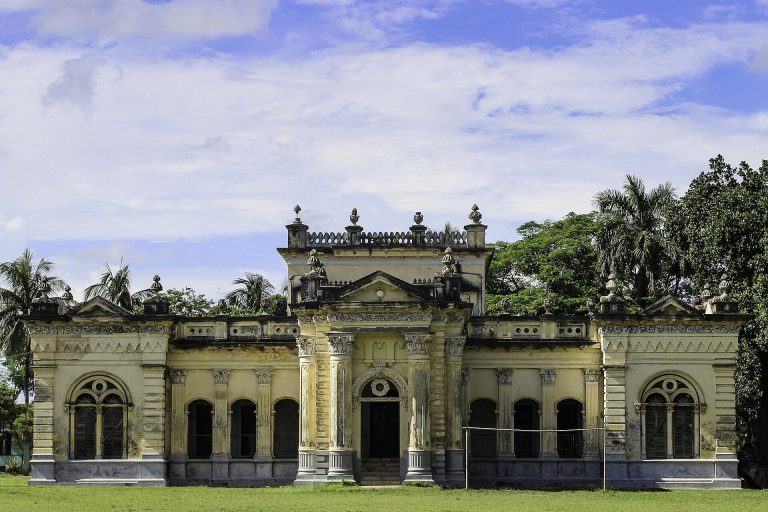
Shahzadpur Kachharibari: Tagore Family Residence and Revenue Office
Site at a Glance
- Rating
- 4.3
- Popularity
- High
- Country
- Bangladesh
- Primary era
- Modern
- Eras represented
- Modern
- Civilizations
- British
- Site type
- Domestic
- Remains
- Manor House
On this page8 sections
History
The Tagore estate
Shahzadpur Kachharibari is the Tagore family’s ancestral residence and estate revenue office in Shahjadpur, Bangladesh. Before it became the family’s property, the building belonged to indigo planters. Dwarkanath Tagore, Rabindranath’s grandfather, gained rights as a zamindar, a landholder responsible for collecting an estate’s revenue, in the region in 1807 and administered them himself. The Shahzadpur estate was auctioned in 1840, when the Tagore family acquired it for 13 taka and 10 annas. Dwarkanath bought the first house from the British in 1842.
Rabindranath Tagore at Shahzadpur
Rabindranath Tagore came to Shahzadpur around 1889 to manage the estate, a responsibility he held until 1901. He stayed there in connection with this work from 1890 to 1896, seven years in all, and often returned later in the nineteenth century to get away from his busier life.
Shahzadpur inspired a substantial body of Tagore’s writing. He began Gitanjali there, the collection that later brought him the Nobel Prize in Literature, and created Ratan, the central character of The Postmaster. His works associated with the town include Sonar Tori, poems in Vaishnava devotional traditions centered on Vishnu and his avatars, and Two Birds, Moon in the Sky, The Prize, The Heart, Jamuna, Chitra, and Chaitali. Twenty-eight poems in Chaitali and 38 letters in Chhinnapatra are associated with Shahzadpur. He also wrote the play Bishorjon and works including In Winter and Spring, City Music, Golapguchchho, Meyeli Chhara, and Panchabhooter Diary. In a letter to his niece Indira Debi, he described Shahzadpur as inspiring him to write more than any other place.
Museum and memorial
After Bangladesh became independent in 1971, the government established the building as a museum and memorial, bringing together Tagore’s artworks for display. His birthday is celebrated at the mansion each year. Around 2012, some parts had been restored while others remained in urgent need of repair; substantial repair work may also have been underway.
Remains
Mansion and museum collections
Building
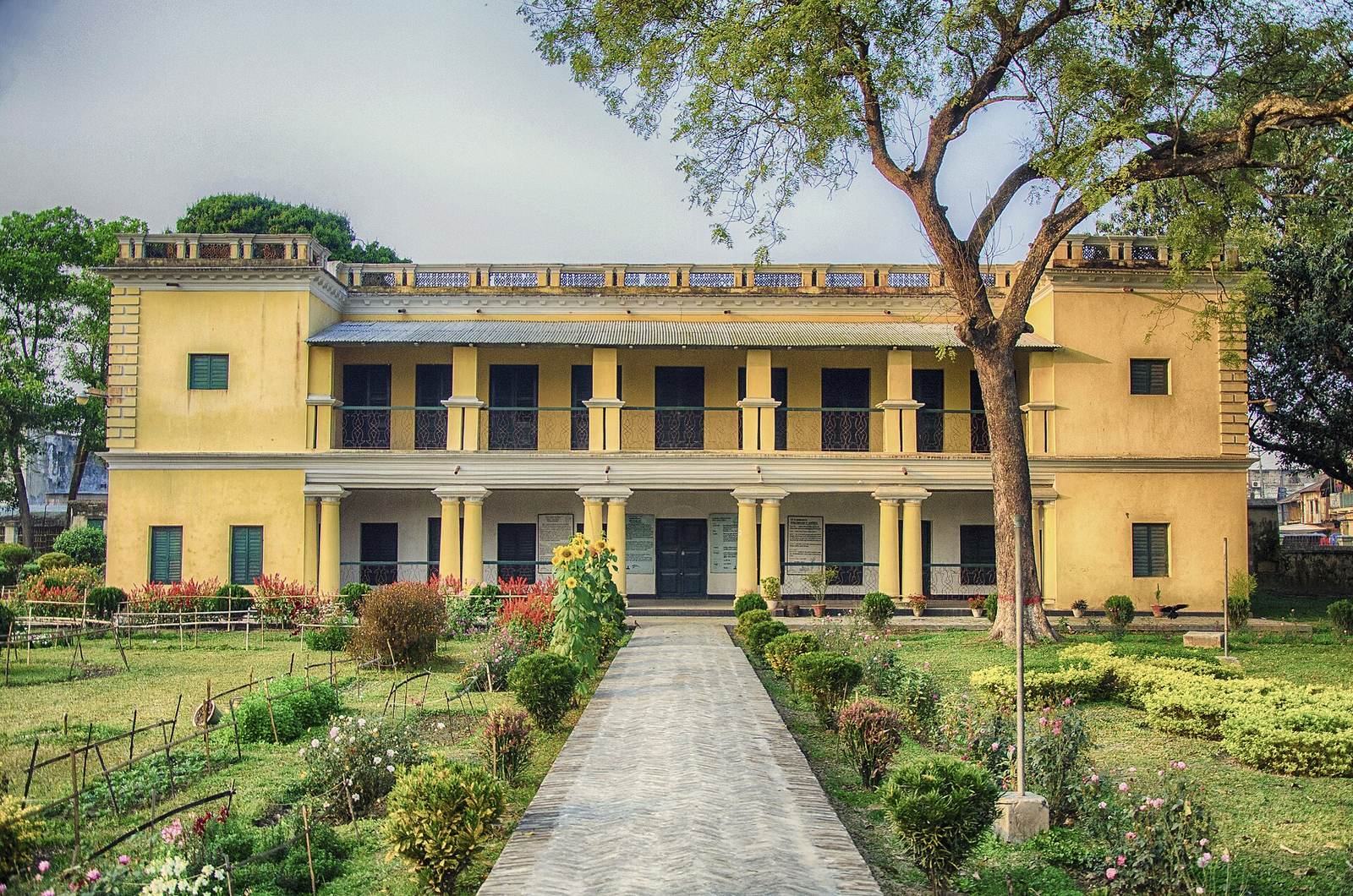
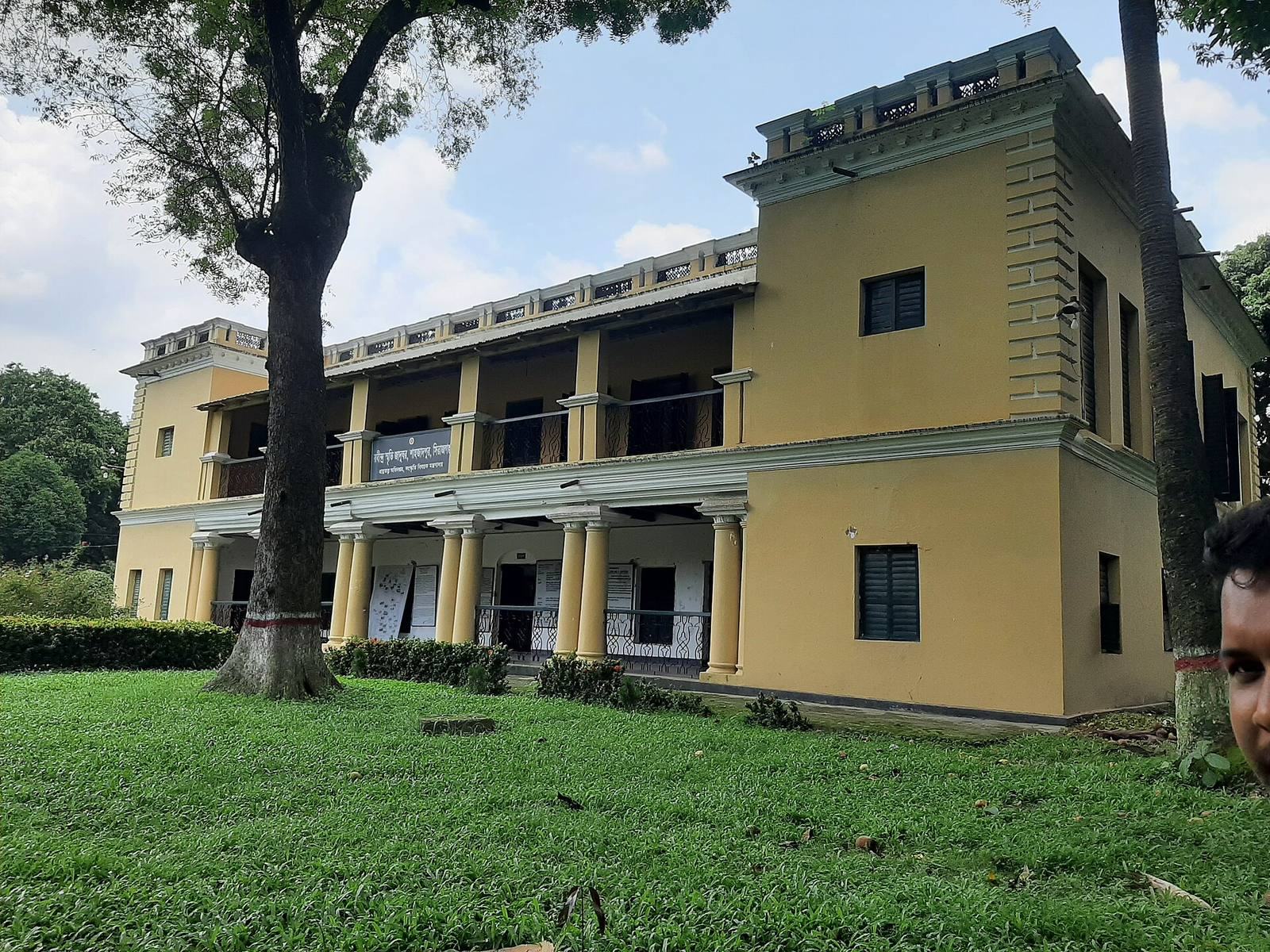
The mansion is a two-storey building. Room totals vary among descriptions, with figures of one, seven, or sixteen; the sixteen-room count includes rooms on both floors.
Museum displays
Images show Tagore from childhood to his deathbed and in roles including poet, artist, zamindar, and friend of farmers. The museum also preserves artworks and belongings associated with him. These include shoes, wooden sandals, a piano, a harmonium, two speedboats, a pontoon, a palanquin made for eight bearers, wooden chairs, a tea table, a sofa set, an armchair, and a bed.