Shahr-e Zuhak, Bamyan: A Historic Fortified Settlement in Afghanistan
Site at a Glance
- Rating
- 4.8
- Popularity
- Very Low
- Country
- Afghanistan
- Primary era
- Medieval
- Eras represented
- Medieval
- Civilizations
- Ghaznavid, Ghurid
- Site type
- Military
- Remains
- Fort
On this page7 sections
History
Shahr-e Zuhak, Bamyan, is a historic fortified settlement in Afghanistan’s Bamyan Valley, founded by the Hephthalites between AD 500 and 600 during late antiquity, around the period when the Bamyan Buddhas were carved. It was later strengthened under the Ghaznavid and Ghurid dynasties, forming part of the valley’s cultural landscape and archaeological remains.
Hephthalite and Islamic Periods
The Hephthalites were a powerful Central Asian polity that controlled parts of Afghanistan and neighboring regions during late antiquity. The settlement was later fortified during the Islamic period by the Ghaznavids and Ghurids, successive dynasties that ruled much of Afghanistan and surrounding areas from approximately the tenth to the early thirteenth centuries.
Under Ghurid rule from 1155 to 1212, Bamyan became an important center of an extensive empire, and Shahr-e Zuhak was strengthened to protect the valley. After the Ghurids declined, Bamyan and the fortress came under the northern Khwarazmian Empire, the major power that controlled the region at that time.
The Mongol Siege and Destruction
In the early 1220s, during the Mongol invasion of the Khwarazmian Empire, the army of Genghis Khan destroyed and plundered the fortress during the Siege of Bamyan. Genghis Khan was the founder and first great khan of the Mongol Empire. His grandson Mutukan was reportedly killed by an arrow fired from the fortress, after which the Mongols massacred inhabitants throughout the valley, including approximately 3,000 people associated with the fortress.
The name “Red City” is explained in two preserved ways. It may refer to the massacre, or it may describe the red rocks and valleys around the ruins. After the destruction, the city remained without settlement for at least four decades. Although the settlement was later rebuilt, the fortress itself stayed in ruins and was not reconstructed over its destroyed remains.
Local Tradition and Historical Memory
Local Hazara traditions identify the fortress as the residence of a powerful ruler named Zahhak. In one legend, Zahhak kept two human-eating snakes on his shoulders. A local man eventually attacked him, consumed his brain, and disappeared in the valley near the palace. The figure recalls Zahhak, a legendary tyrant in Persian mythology commonly depicted with two snakes on his shoulders.
Remains
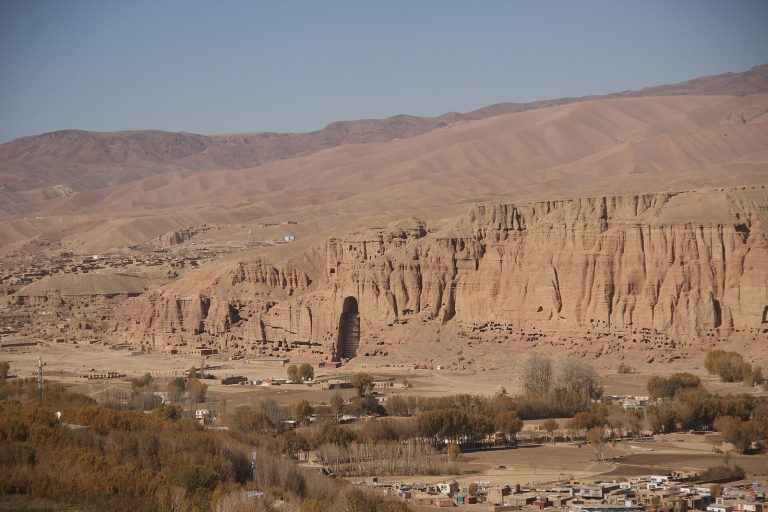
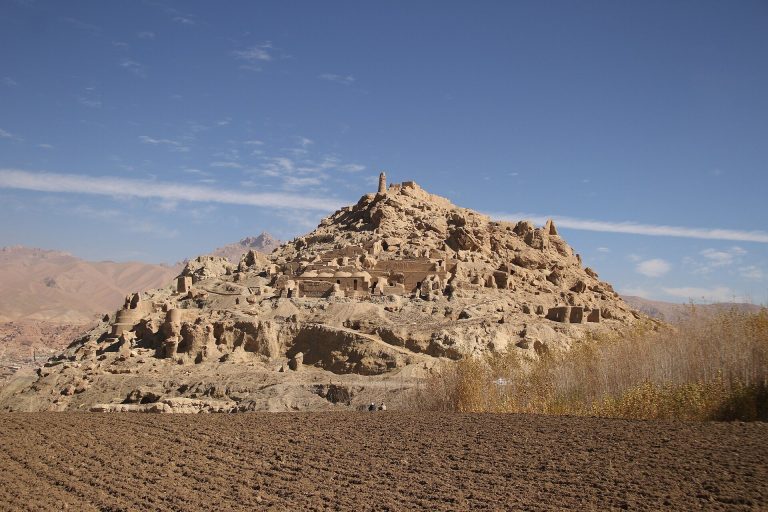
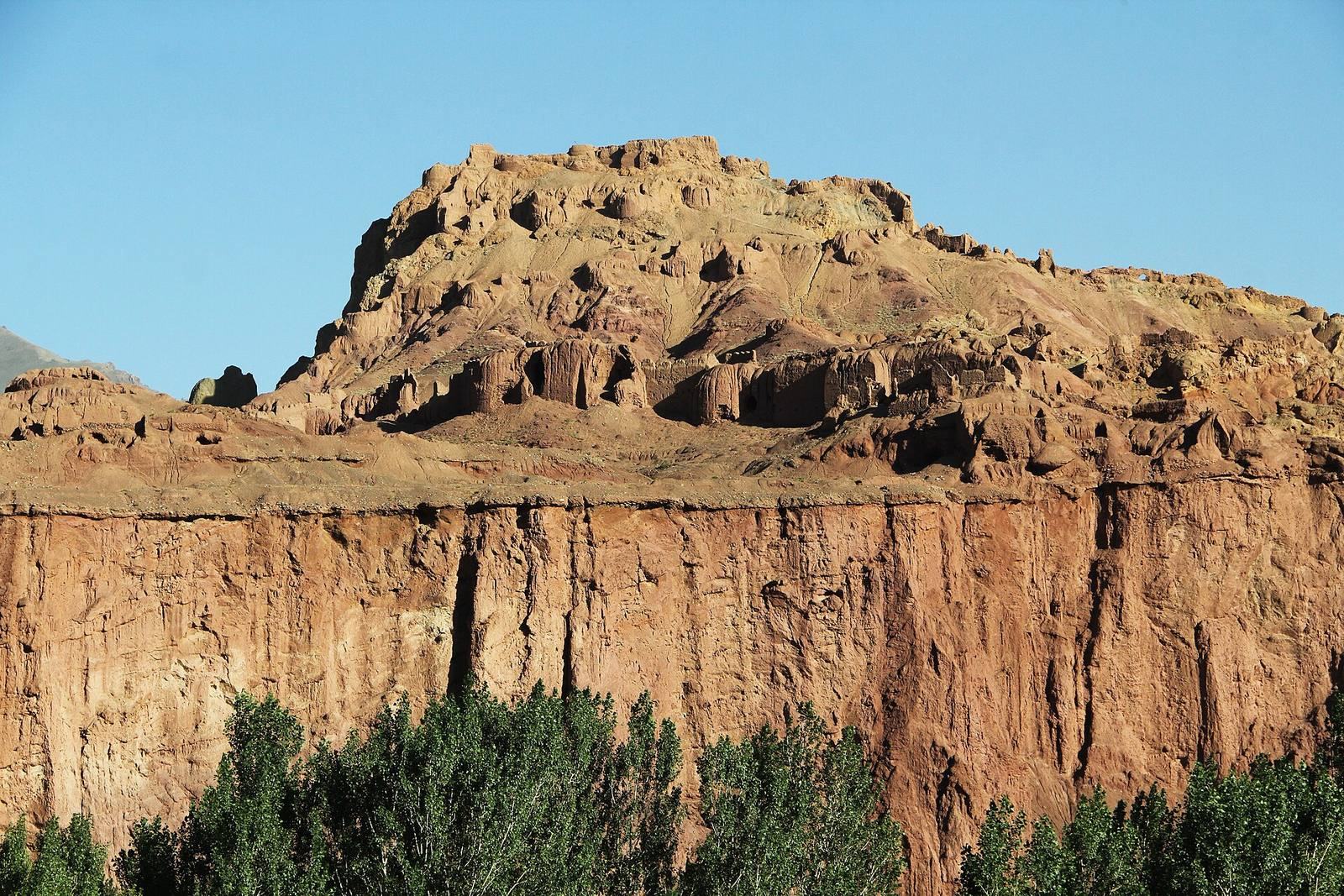
Shahr-e Zuhak occupies a high hill above the Tagaw Valley at the eastern end of the Bamyan Valley, above the confluence of the Kunduz and Kalu Ganga rivers. The ruins lie approximately 15 kilometres east of the historic cliff face containing the Buddhist archaeological remains. The fortified area extends about 400 metres in length and 225 metres in width, with the hill rising approximately 350 feet above the surrounding valley landscape.
Fortress Layout
The stronghold was built or enlarged to control and protect the Bamyan Valley, which formed part of a route linking Europe with India and China. The citadel occupied the hill’s highest point and was enclosed by three additional tiers of walls. This arrangement placed the central fortified area above successive defensive boundaries.
Ramparts and Watchtowers
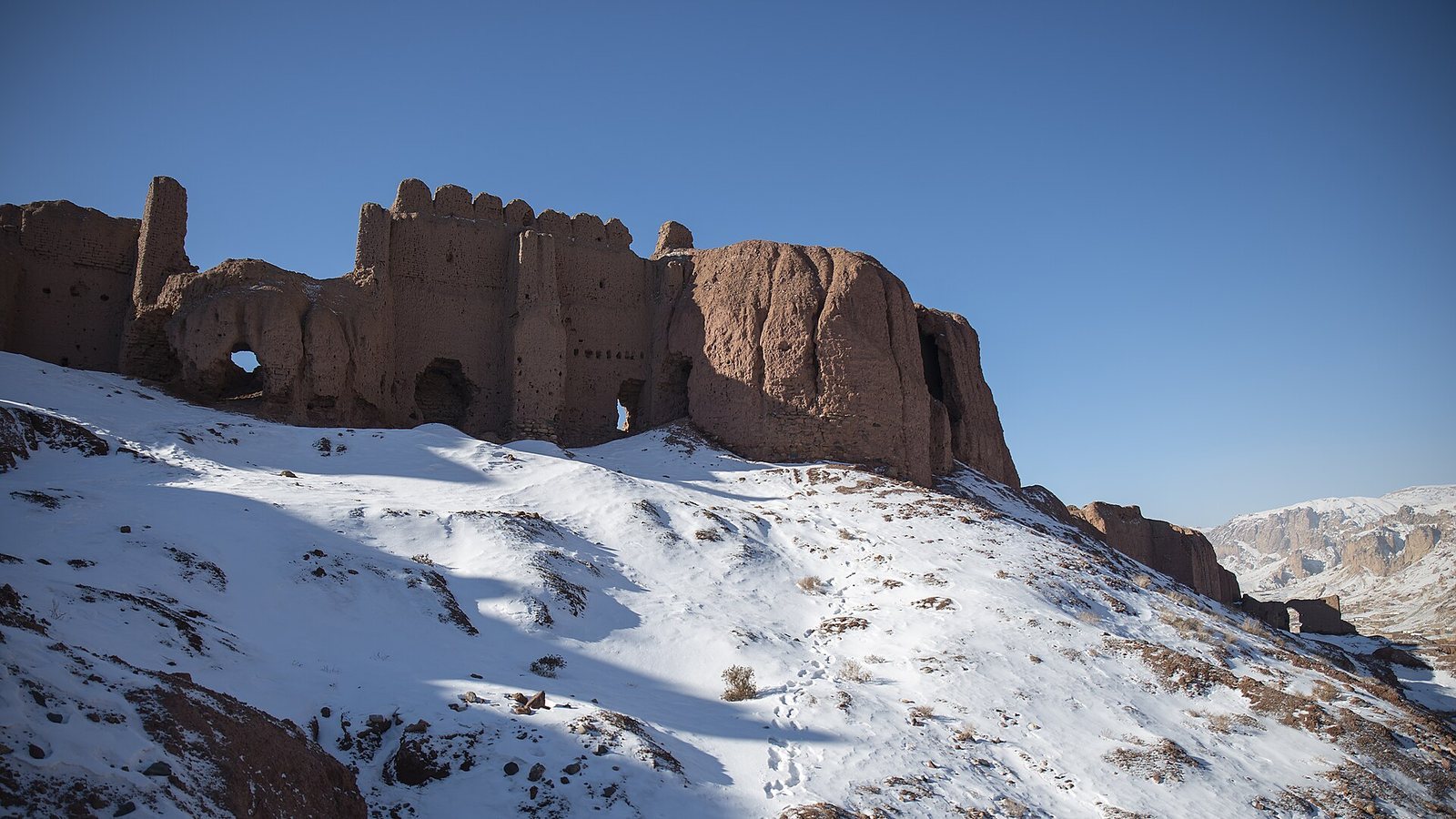
Ramparts followed the steep cliffs bordering the site and included several watchtowers. Some of these towers still stand. The ruins are built from unbaked brick, and prolonged exposure, limited conservation, and damage associated with more recent periods of war have caused many structures to collapse. Other remains remain vulnerable to further collapse.