Schloss Arff: A Former Water Castle and Aristocratic Retreat
Site at a Glance
- Popularity
- High
- Country
- Germany
- Primary era
- Early Modern
- Eras represented
- Early Modern
- Civilizations
- Electorate of Cologne, Holy Roman Empire
- Site type
- Domestic
- Remains
- Castle
On this page8 sections
History
Early family and estate
The name Schloss Arff comes from the Knights van der Arffe, first recorded in 1362. In 1572, Albrecht von Baexen acquired the estate through his marriage to Catharina von der Arff. The earlier buildings were destroyed during the Cologne War of 1583–1586, a conflict over the rule and religious direction of the Electorate of Cologne.
Rebuilding and later ownership
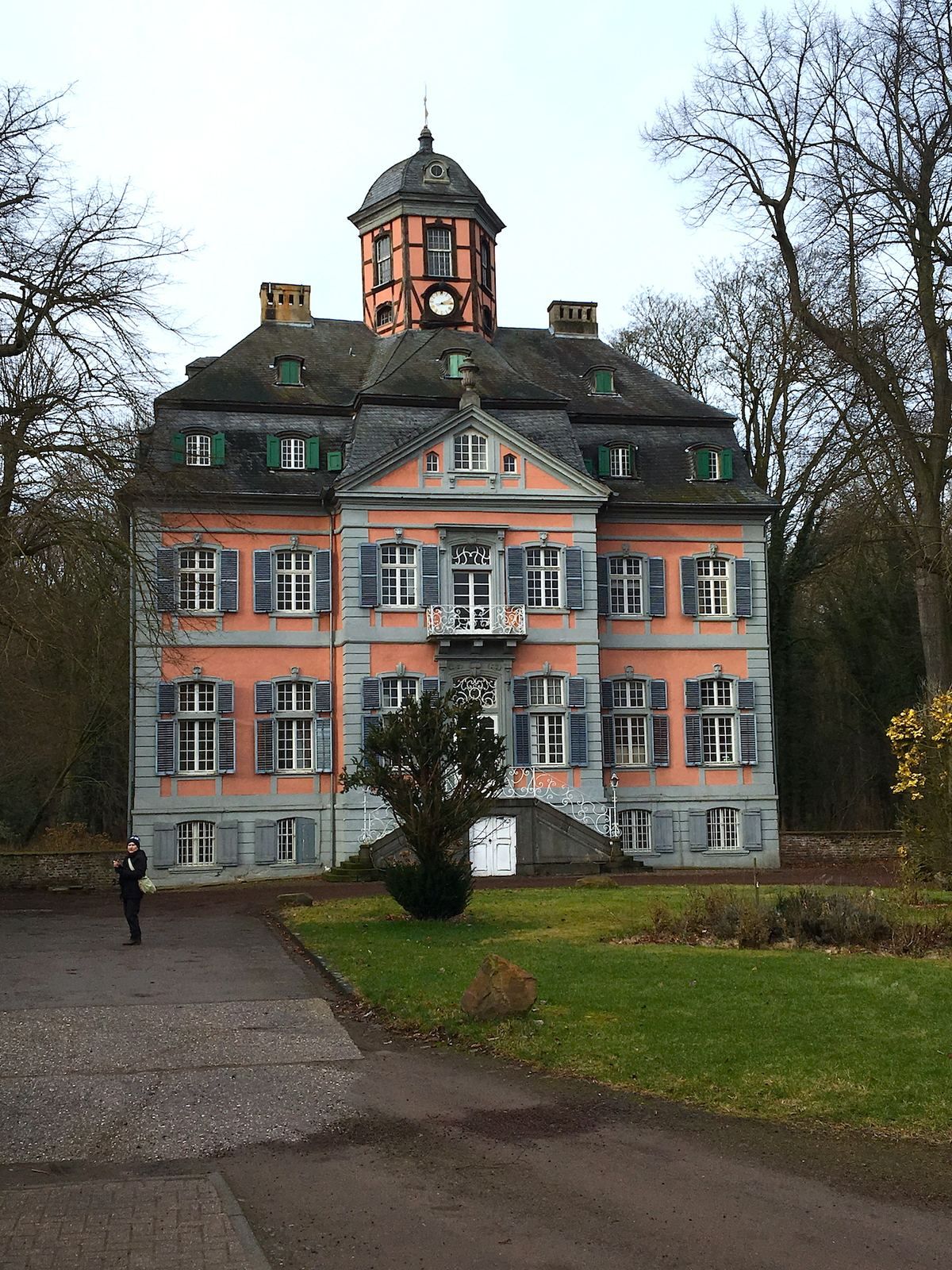
Adam von Blittersdorf sold the estate to the von Buschmann family in 1750, and they commissioned the present castle, built between 1750 and 1755 as a country retreat for aristocratic leisure. In 1803, the estate passed to the von Geyr zu Schweppenburg family.
After Christoph von Geyr zu Schweppenburg died, his heirs sold the castle in 2015 to his niece Caroline and her husband, Friedhelm von Landsberg-Velen. It has since been used for weddings and other events.
Remains
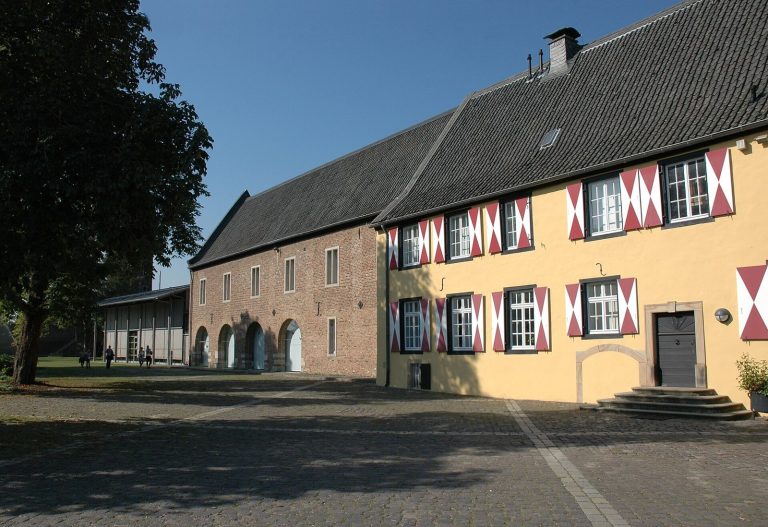
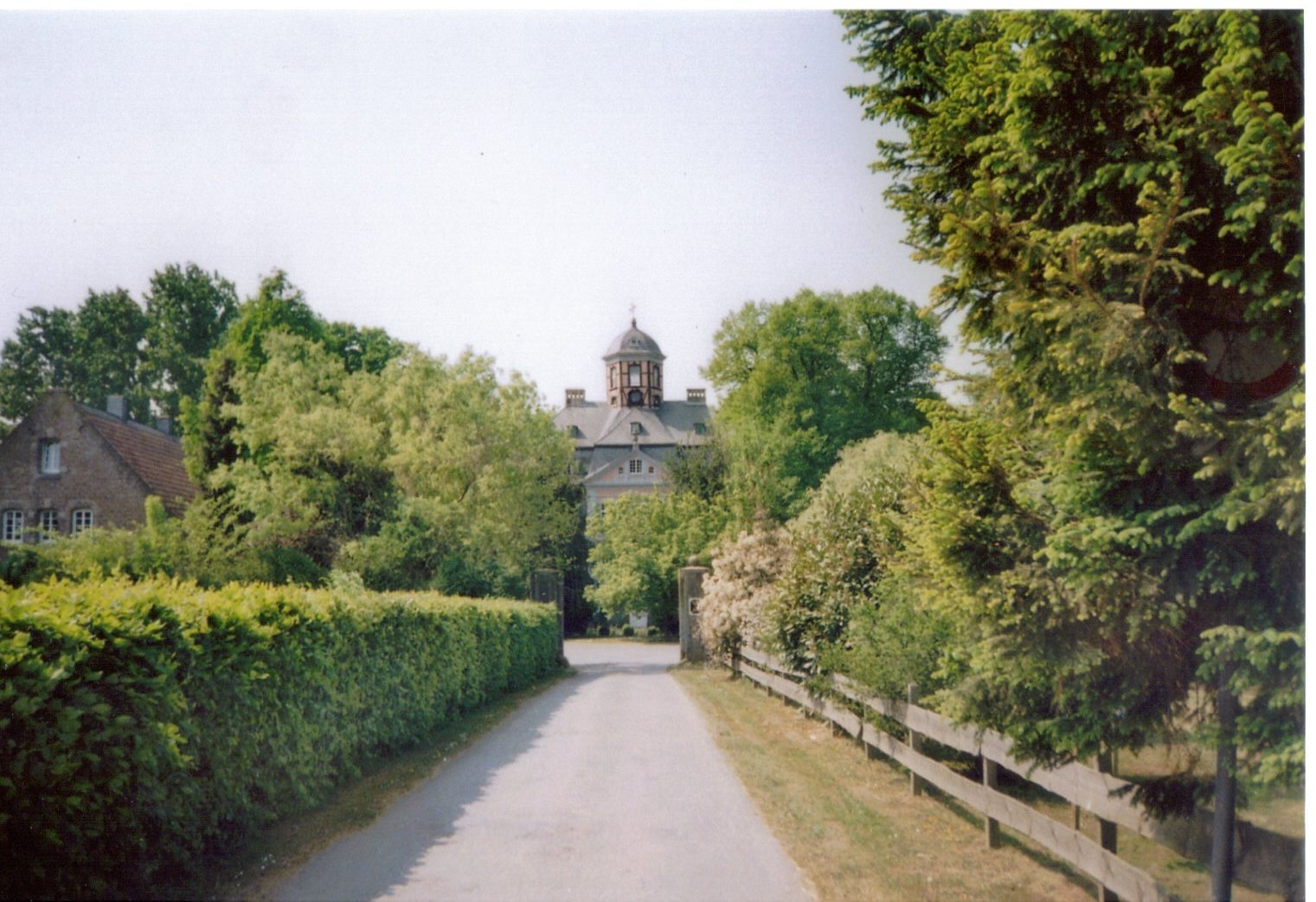
Schloss Arff is arranged around an enclosed courtyard, with a separate garden divided into two parts. The manor house follows the design of Schloss Falkenlust in simplified form.
Buildings and grounds
Courtyard buildings
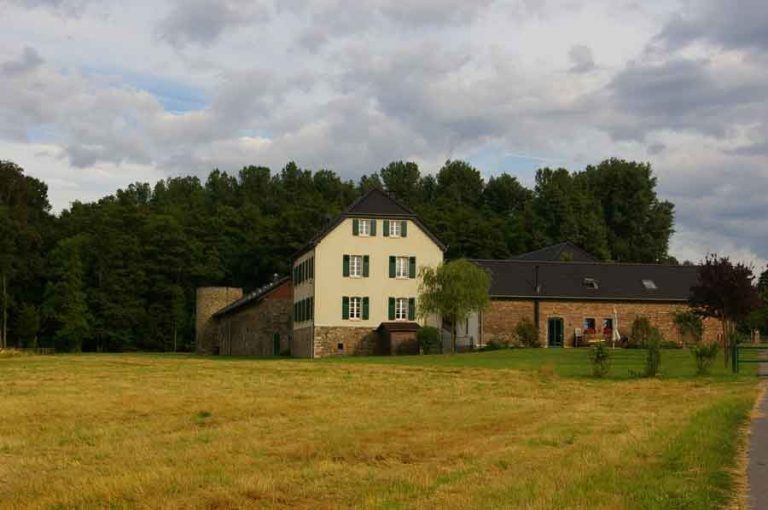
The main building, an outer court, two parallel farm buildings, and the manor house together enclose the castle courtyard. Their arrangement forms the core of the estate complex.
Manor house
The manor house is attributed to Michel Leveilly, a French architect active in the Rhineland during the eighteenth century. Schloss Arff’s construction was probably also commissioned from him. The manor house repeats the design of Schloss Falkenlust at Brühl in a simplified form; Falkenlust belongs to a UNESCO World Heritage property.
Garden and former moat
The garden is divided into two parts. A moat once surrounded it and was fed by springs that have since dried up.