Santa Maria della Concezione in Campo Marzio: A Church and Monastery in Rome
Site at a Glance
- Popularity
- Medium
- Country
- Italy
- Primary era
- Early Modern
- Eras represented
- Early Modern
- Civilizations
- Papal States
- Site type
- Religious
- Remains
- Church
On this page11 sections
History
Santa Maria della Concezione in Campo Marzio is a church in Rome, Italy, associated with an early monastery and a later role in Syriac Catholic worship. Abbess Chiarina Colonna commissioned a new church here in 1562–64.
Traditional origins and early monastery
Tradition connects the monastery’s beginnings with the eighth-century Byzantine Iconoclast controversy, a dispute over religious images between opponents of their use and those who defended them. Nuns fleeing Constantinople, following a monastic tradition associated with Basil of Caesarea, were said to have been settled here by Pope Zachary. They supposedly founded a monastery and a chapel dedicated to the Virgin Mary. An adjoining chapel held relics brought by the nuns, including the body of Gregory of Nazianzus, a fourth-century theologian and bishop later honored as a saint and Church Father.
A charter dated 6 October 937 in the Regestum Sublacense names the monastery, providing its earliest known written reference.
The sixteenth-century church
Colonna’s church was dedicated to the Virgin Mary and connected with the earlier chapel and the chapel associated with St Gregory. The new building made Gregory’s remains more accessible to worshippers while allowing the monastic community greater privacy. His body was transferred to St Peter’s Basilica in 1580.
Seventeenth-century rebuilding
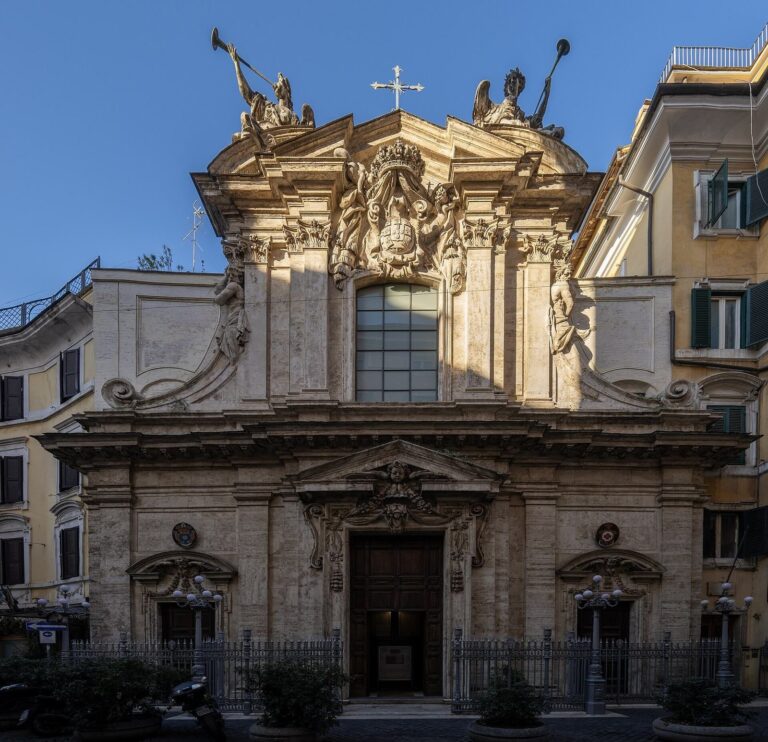
During the seventeenth century, the monastery was enlarged and reorganized, with the work completed by about 1660. The sixteenth-century church was later completely rebuilt at the direction of Abbess Maria Olimpia Pani.
Suppression and later religious role
During the Napoleonic occupation of Rome, the monastery was suppressed. The church was deconsecrated and used as a lottery office, then reopened for public worship in 1816.
Today, the church serves as Rome’s national church for Syriac Catholics and is also described as the national church for Syria. It follows the West Syriac liturgical tradition associated with Antioch, and houses the representative of the Syriac Catholic Patriarchate of Antioch to the Holy See.
Remains
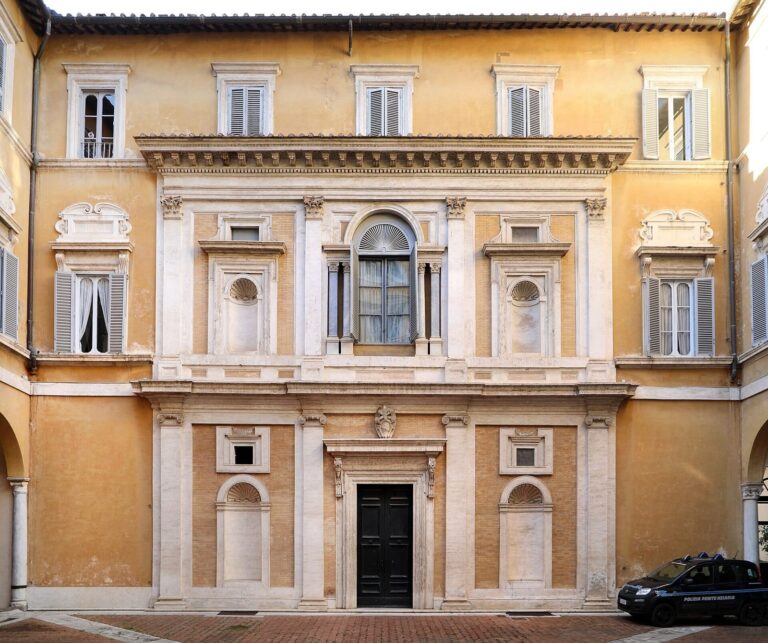
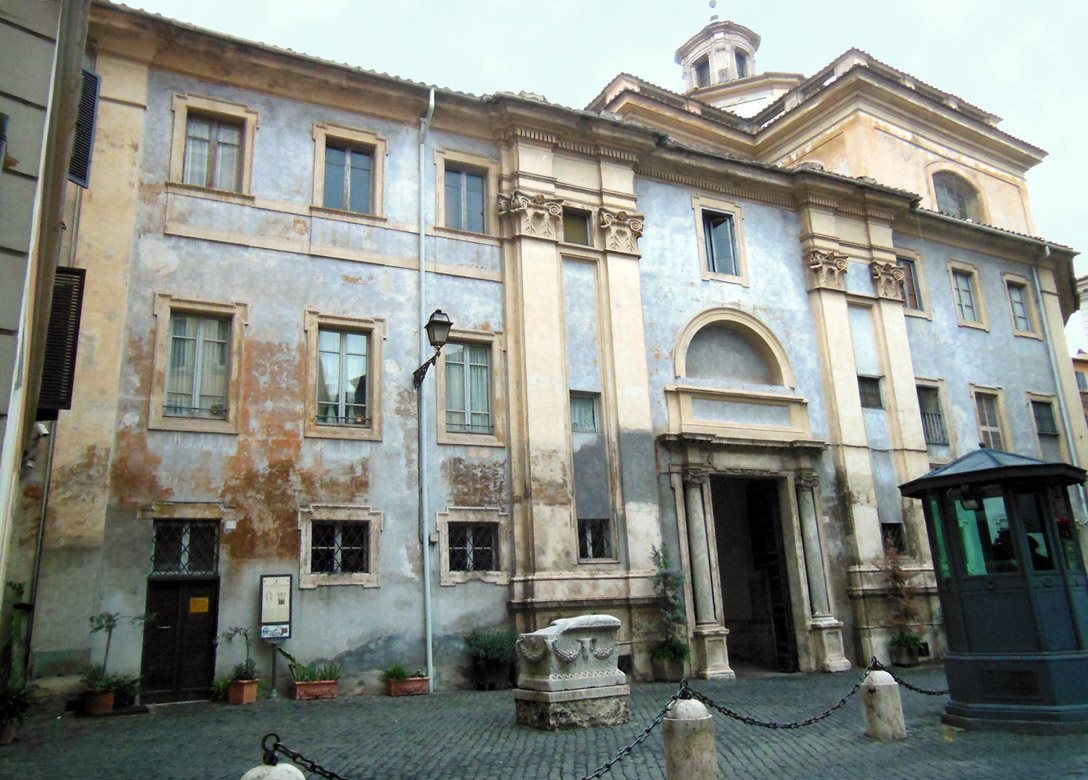
The surviving complex combines the church with an inner monastery courtyard in front of its façade. Its present church plan and the courtyard preserve distinct features of the site’s architectural history.
Church and monastery architecture
Church plan and dome
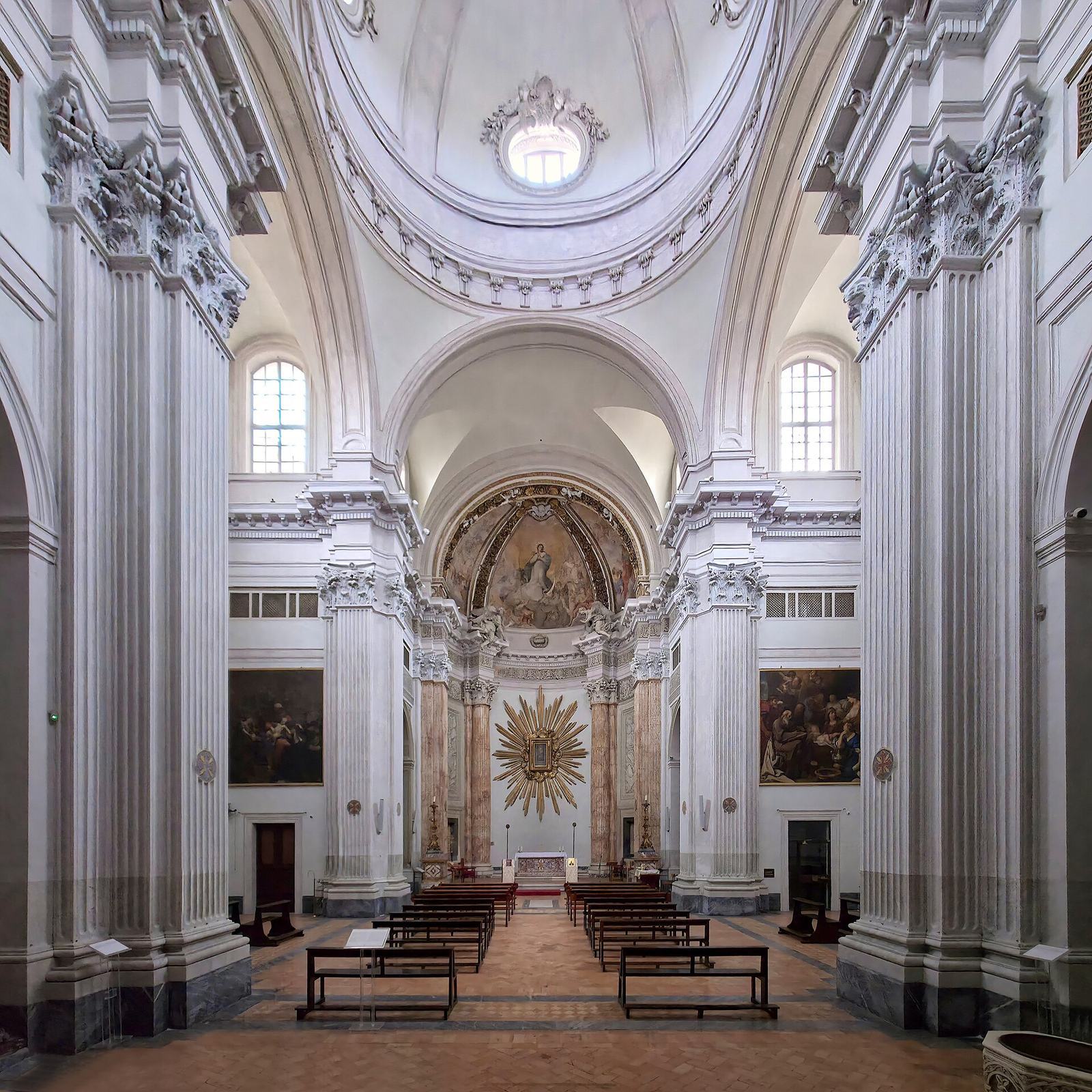
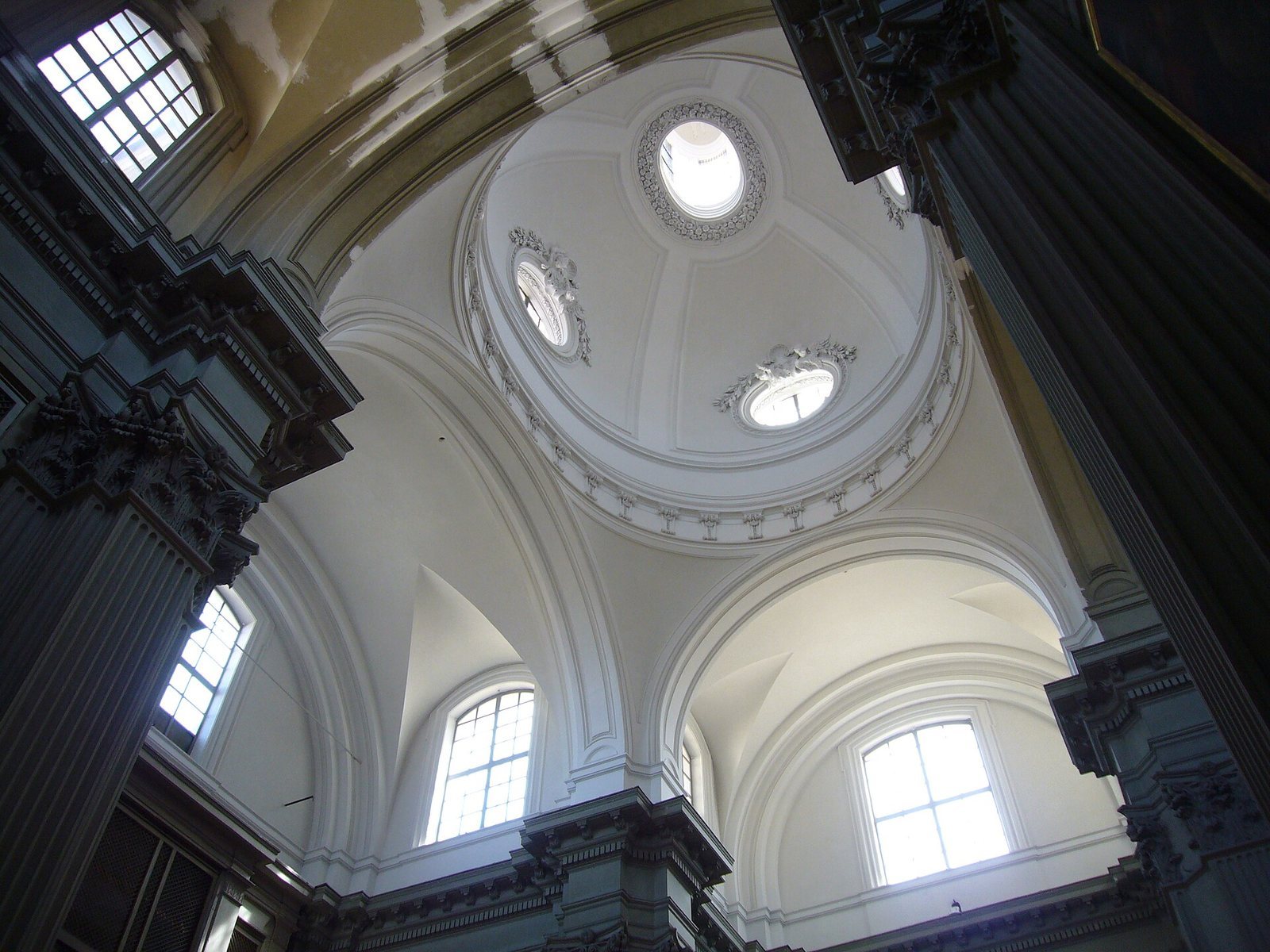
The present church has a Greek-cross plan, a cross-shaped arrangement around a central crossing, with one main arm extended lengthwise. An oval dome rises above the crossing on a large supporting drum pierced by four circular openings. A small roof structure, or lantern, crowns the dome.
Monastery courtyard
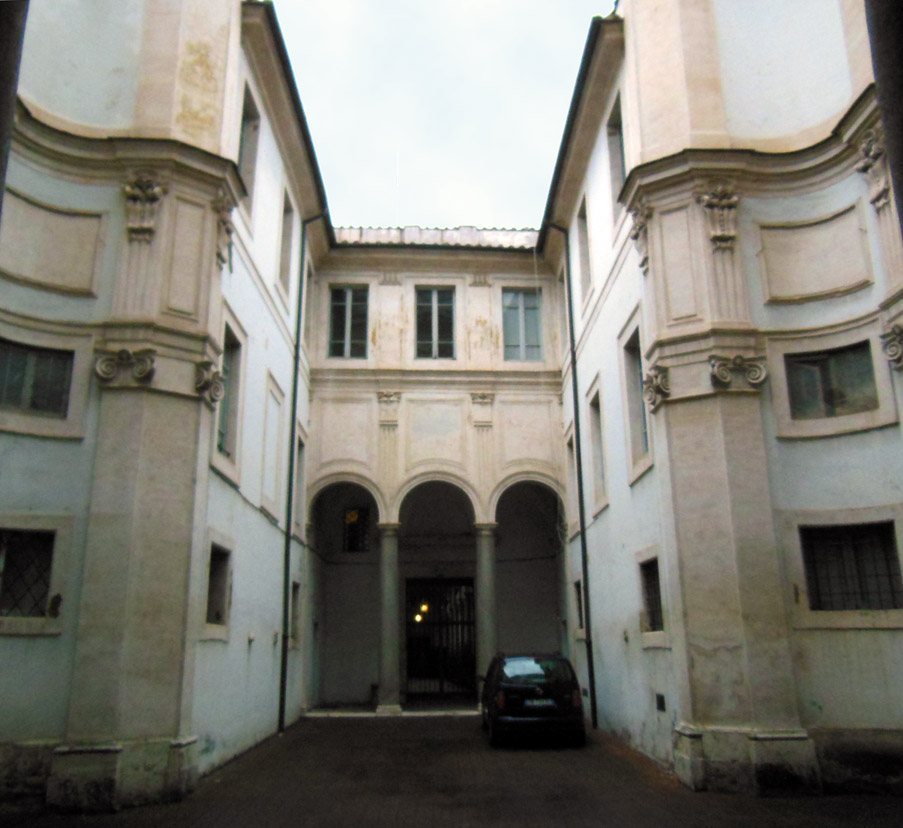
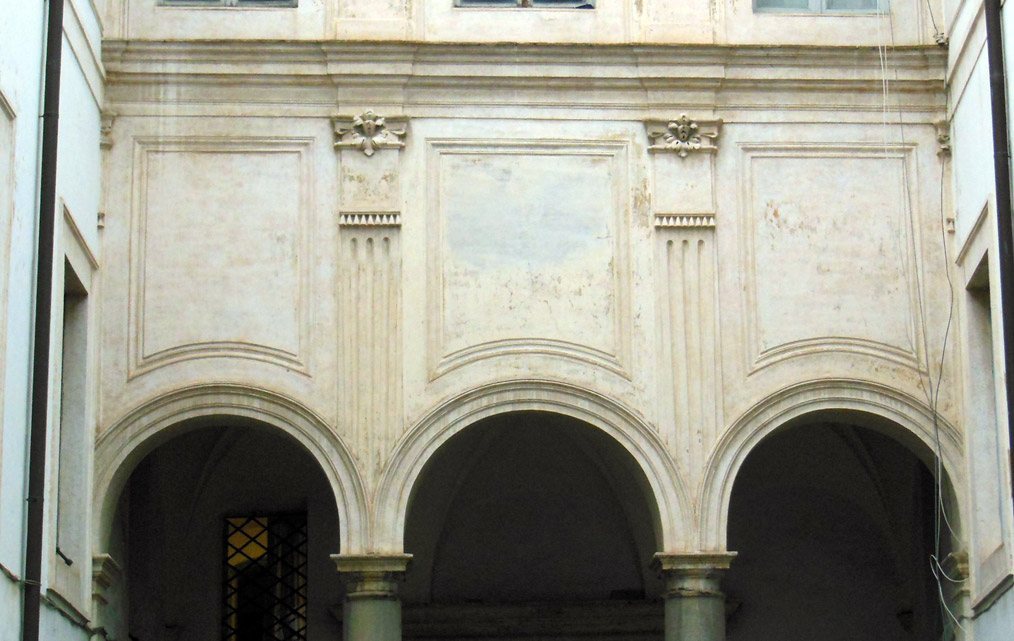
The courtyard faces Piazza Campo Marzio and stands before the church façade. It is entered from the side through a portico with three arches. A stone inscription urges women to cleanse their consciences as carefully as they wash their clothes.
Interior paintings and images
The church preserves The Deposition of Christ by Baccio Ciarpi, dated to the second decade of the seventeenth century and already present in the earlier church. Lazzaro Baldi’s canvases depict episodes from the life of Saint Benedict and date to 1685–88; paintings by Luigi Garzi date to 1686–87. Around 1730, Placido Costanzi painted a fresco on the semi-dome of the apse, the church’s curved sanctuary end. A panel depicting the Birth of the Virgin, dated to about 1660 and attributed to Plautilla Bricci, is in the first chapel on the right. The high altar holds a twelfth- or thirteenth-century image called the Advocate Madonna, a title presenting Mary as an intercessor.
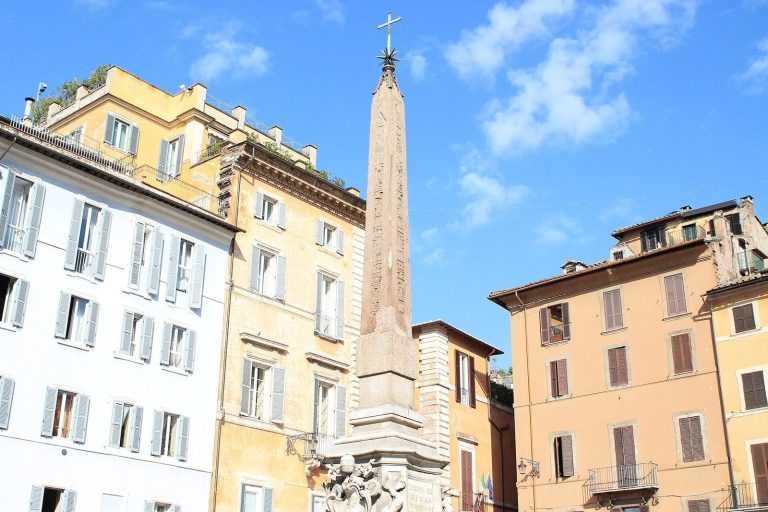
Roman column
Excavations for the monastery’s expansion uncovered a Roman column in 1777. In 1856 it was re-erected in Piazza di Spagna as the base of a statue of the Immaculate Conception. The monument commemorates Pope Pius IX’s definition of the Immaculate Conception as Catholic dogma in 1854, the teaching that Mary was preserved from original sin from the moment of her conception.