San Matteo Church: The Parish Church of Borghetto Santo Spirito
Site at a Glance
- Popularity
- Very Low
- Country
- Italy
- Primary era
- Early Modern
- Eras represented
- Medieval, Early Modern, Modern
- Civilizations
- Genoese, Italian
- Site type
- Religious
- Remains
- Church
On this page12 sections
History
San Matteo Church is a Roman Catholic church in Borghetto Santo Spirito, Italy, and the town’s oldest church. Dedicated to Saint Matthew, it serves as a parish church within the Vicariate of Loano, a regional grouping of parishes, in the Diocese of Albenga-Imperia, an area of church administration overseen by a bishop.
Foundation and the present church
The first parish church was built near the end of the thirteenth century, as the Commune of Albenga established a new borough at Borghetto. The settlement’s foundation began in 1288, and the church was completed around the close of that century.
As the population increased, a larger church was needed. Work on the present building began on 11 October 1621, and Bishop Pier Francesco Costa consecrated it in early October 1643. The church’s bells, dedicated to the Lord and Saint Matthew, were blessed at the ceremony. On the previous day, the organ had been inaugurated and a statue of Our Lady of the Guard crowned. Local families paid for chapels and their decoration, and in return could choose each chapel’s saint or religious dedication.
Later changes and conservation
A new main altar was completed in 1715. The building’s structure then remained largely unchanged, although its façade was embellished in 1902 with support from Santiago Marexiano and a design by Giovanni Richinotti. Bombing during the Second World War damaged the church and destroyed its earlier stained-glass windows. Repairs followed, and replacement windows were made in 1950.
In 1978, conservators cleaned the Finale-stone columns by removing their plaster covering. From 1991 to 1993, work restored and cleaned the frescoes and interior decoration, and included repainting the façade. The church was declared a property of cultural interest on 1 March 2012.
Remains
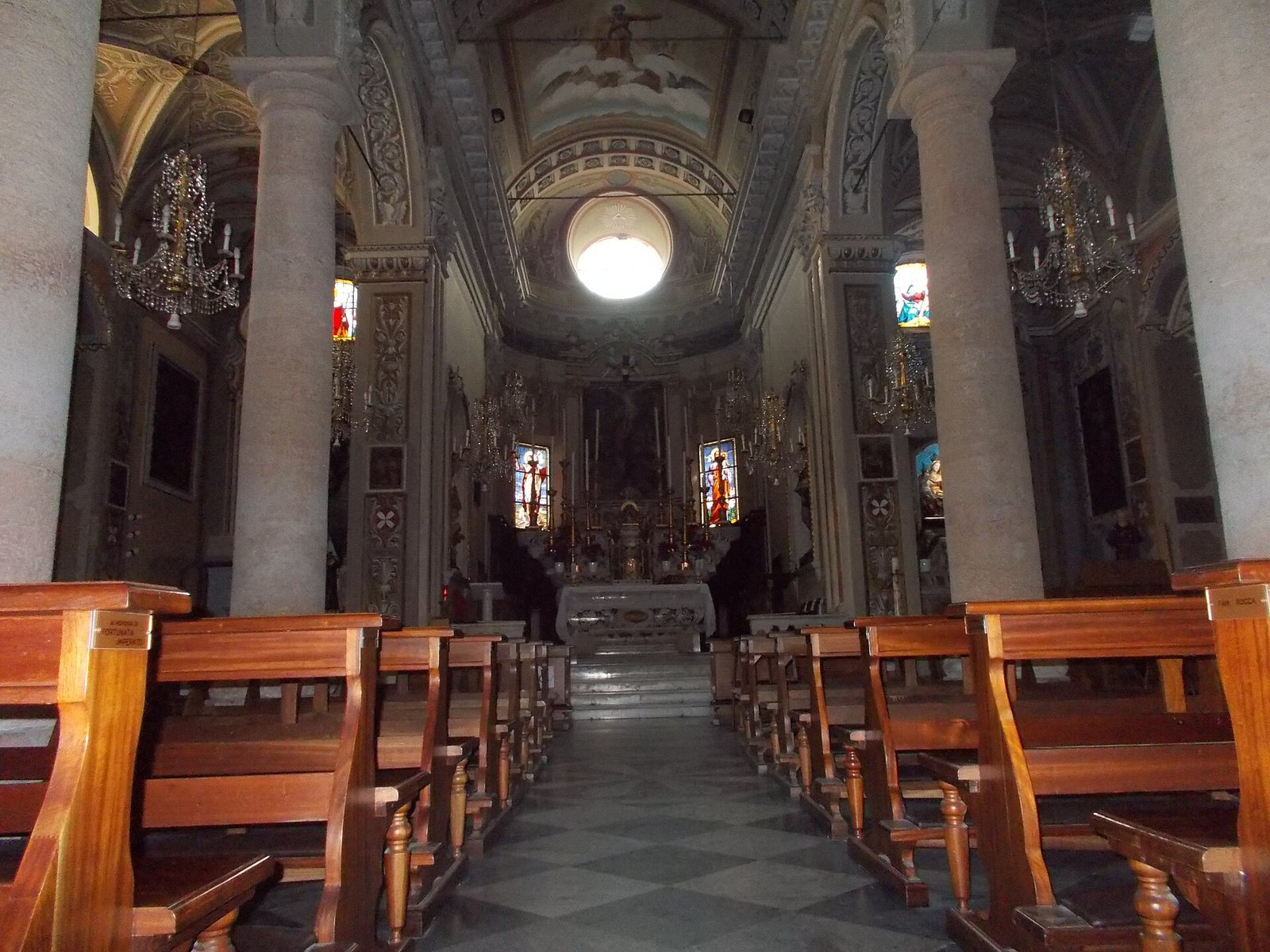
The church is arranged around a central aisle and two side aisles, divided by two rows of stone columns. All three aisles have barrel vaults, continuous arched ceilings shaped like the length of a cylinder. A checkerboard floor of black and white marble slabs replaced the original slate flooring.
Exterior
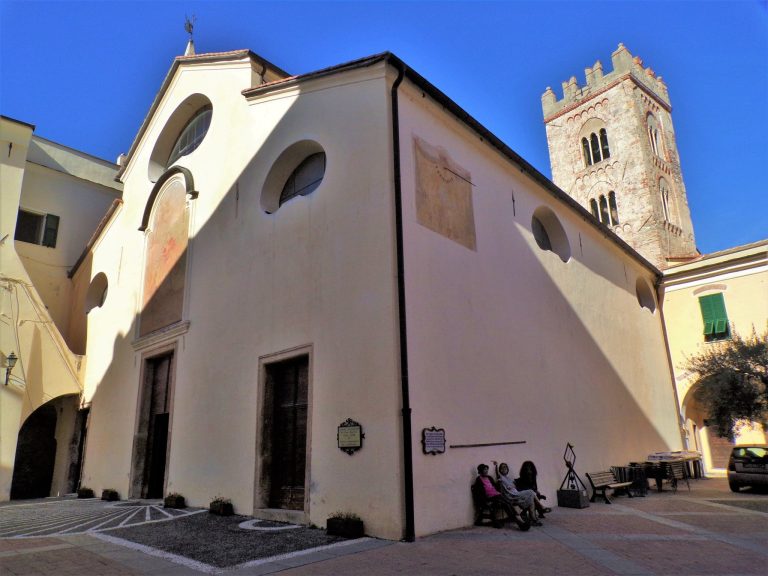
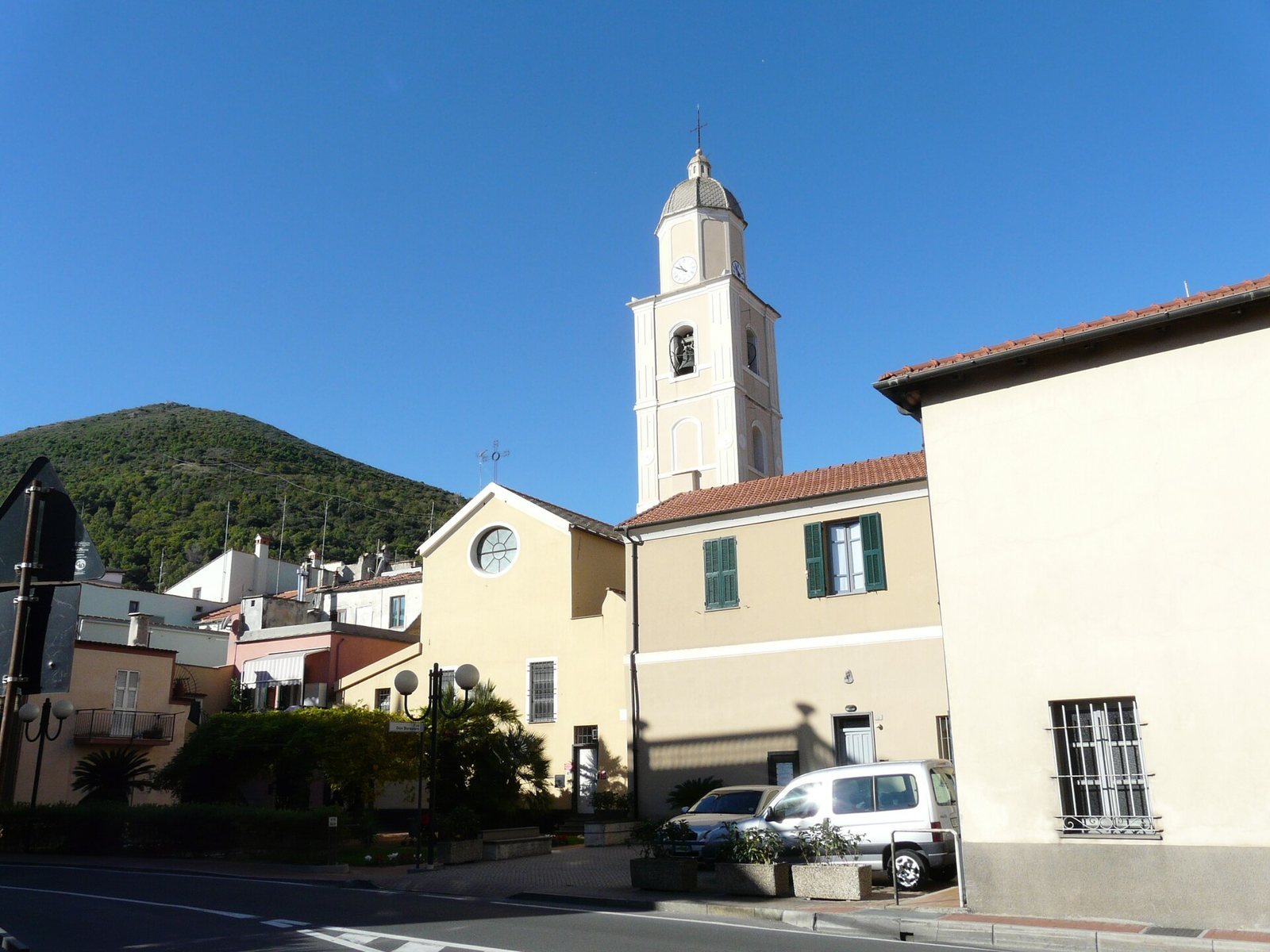
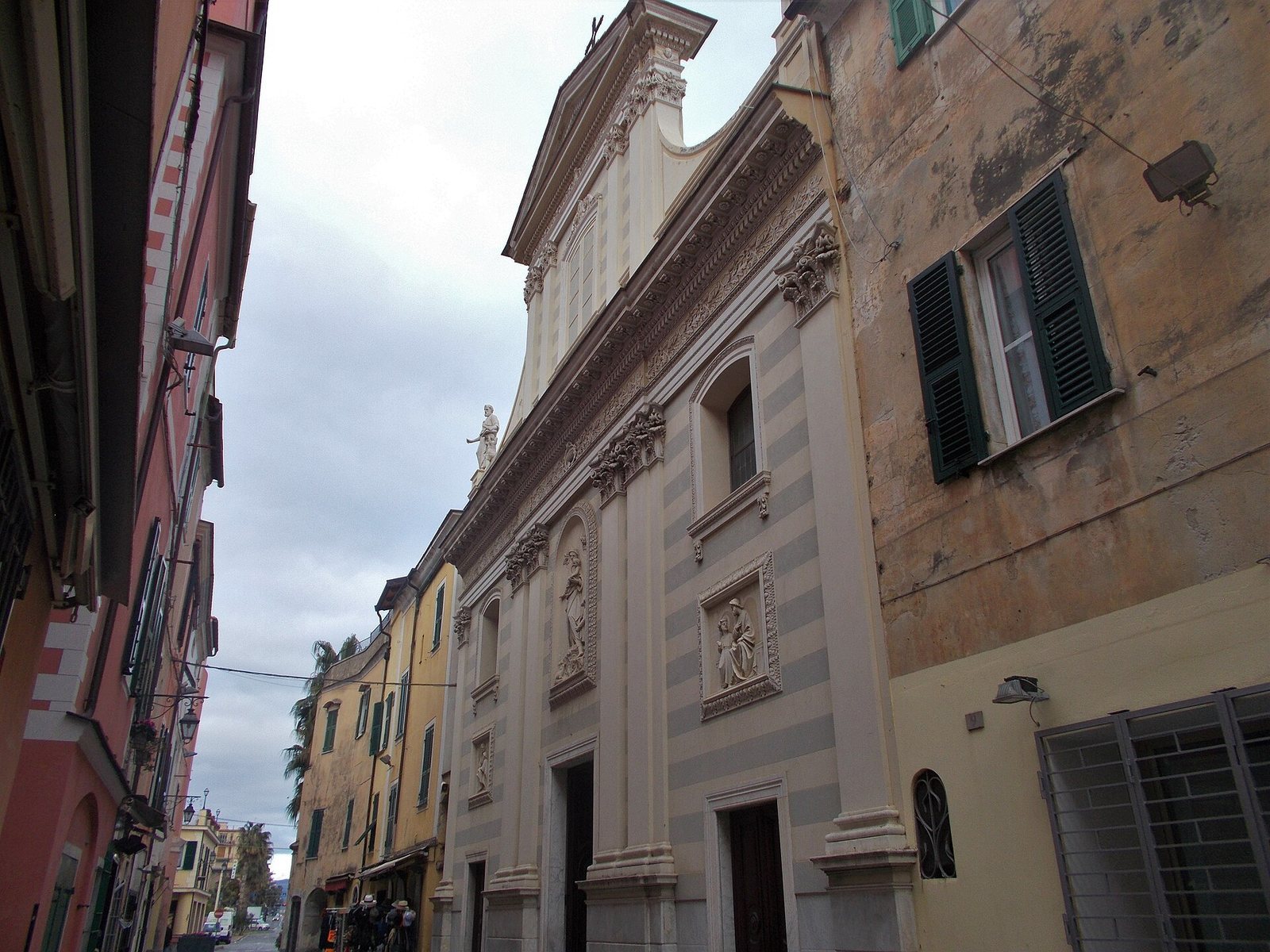
Standing on Via Roma in Borghetto’s historic centre, the church occupies approximately the position of its late-thirteenth-century predecessor. Its broad, light-coloured façade is divided into three sections corresponding to the interior aisles. Four decorative columns that do not stand free, topped with ornate Corinthian capitals, support a prominent cornice. A higher set of similar columns frames a triangular pediment, crowned by a cross and flanked by two statues. Three carved panels above the portals show the Madonna of the Guard in the centre, with Saint Joseph and Saint Anne on either side. Openings in the side walls admit daylight. A narrow lane runs along the left side; at the rear, windows and a small rose window face a chapel dedicated to Don Burastero. A small rectory behind the church was first intended as a place for prayer and later served as the seat of the Confraternity of the White Capes, a lay religious association. The bell tower stands on the left toward the rear. The central aisle has a slate roof, while the side aisles have a later covering of roof tiles.
Interior and furnishings
Main altar and choir
The raised main altar stands at the far end of the central aisle, set apart by two small balustrades. It is made of white Carrara marble inlaid with marbles of other colours. Behind it are wooden choir stalls made in the early nineteenth century by the Perasso workshop of Loano. The central seat is flanked by five seats on each side. Wooden statues stand in niches beside the altar: Saint Mary Magdalene, by Genoese sculptor Paolo Olivari, on the left, and Saint Matthew, from the workshop of Anton Maria Maragliano, on the right.
Paintings and stained glass
Giuseppe Badaracco’s painting of the Martyrdom of Saint Matthew, dated 1644, is in the apse, the area at the end of the church where the main altar stands. His Martyrdom of Saint Agatha is in the chapel at the end of the right aisle, and his other works in the church include the Miracle of the Mule, an episode from the life of Saint Anthony of Padua. The chapel of Our Lady of the Angels contains a painting dated 1655 of the Madonna and Child with Saints Peter, Erasmus, and Anthony the Abbot. It shows Borghetto in the seventeenth century, when medieval walls enclosed the settlement. The painting originally came from a chapel of Our Lady of the Angels in the Cazasse district. Frescoes cover the central vault, including one showing Borghetto’s coat of arms. The church also has fourteen small paintings of the Stations of the Cross, a sequence of devotional images recalling events on Jesus’s journey to his crucifixion.
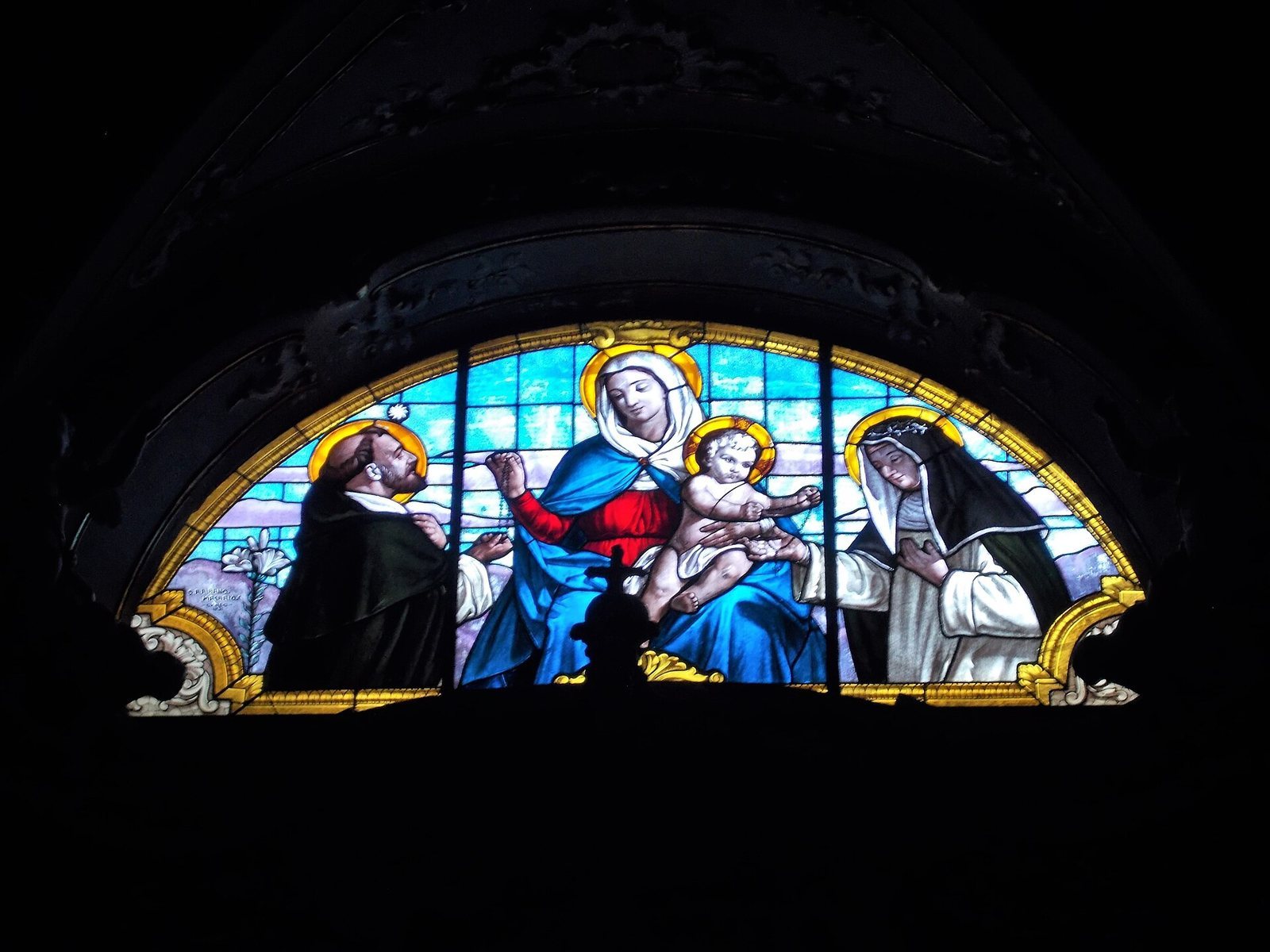
Six stained-glass windows depict subjects including Saint John the Baptist, Saint Joseph with the Child Jesus, the Madonna of the Rosary, Saint Augustine, and Our Lady of the Guard. The window in the chapel of Our Lady of the Guard also includes an old depiction of Borghetto.
Chapels of the left aisle
Near the entrance to the left aisle are a confessional and a plaque dedicated to Don Domenico Borastero. Farther along, the chapel of Saint Lucy and the Infant Jesus of Prague contains a copy of the devotional statue of Jesus as a child and a large painting of Saint Lucy by an unknown artist. The chapel of Saint Anthony of Padua has a statue of the saint and a small arched stained-glass window dedicated to Saint Augustine. A statue of the Sacred Heart stands in the chapel dedicated to that devotion. Beside the main altar, the chapel of Our Lady of the Angels was built in 1928 with donations from the Reale and Pareto families. Alongside Badaracco’s painting, it contains another painting and a statue of Christ.
Chapels of the right aisle
A holy-water basin and a fresco dedicated to the Lord stand near the entrance to the right aisle. Its first chapel is dedicated to Saint Anne and contains a statue of her. The chapel of Our Lady of the Guard took its present form in 1894 following a donation from Bianca Marexiano, a widow, and holds a statue of the Madonna. Built in 1907 with donations from the Brescian and Re families, the chapel of the Immaculate Conception contains a statue of that dedication. At the far end, the largest and most richly decorated chapel is dedicated to Our Lady of the Rosary. It has a statue of the Madonna and an arched stained-glass window dedicated to her.
Organ
The organ stands above the main entrance, at the opposite end of the central aisle from the altar. An instrument by an unknown builder was installed in 1628 and replaced in 1643 by one made by Giovanni Oltrachino of Pavia. A Gandini organ from Varese followed in 1928. The present instrument, the church’s fourth, was built by Beniamino Giribaldi of Montegrazie and inaugurated on 24 February 1996, when Bishop Mario Oliveti blessed it. It has 1,116 pipes, including 41 wooden and 1,075 metal pipes. Thirty-three tin pipes form its façade in three groups. The instrument has two keyboards with 54 keys in total, 25 stops, and a fully mechanical action.
Sacristy
A doorway to the right of the main altar leads to the sacristy, a room used to prepare for services and store religious objects. Its walls are covered with carved walnut panels made by an unknown artist in the early eighteenth century. The panels have spiderweb and geometric patterns and follow a Genoese style.