San Martino: A Medieval Catholic Church in Italy
Site at a Glance
- Popularity
- Very Low
- Country
- Italy
- Primary era
- Medieval
- Eras represented
- Medieval, Early Modern, Modern
- Civilizations
- Unclassified
- Site type
- Religious
- Remains
- Church
On this page11 sections
History
San Martino is a Catholic church in Italy, dedicated to Martin of Tours, a fourth-century Christian bishop widely venerated as a saint. Its history is tied to Pastine, where it served a community connected to medieval routes and changing parish boundaries. The church was rebuilt beginning in 1315 and later joined with other churches as their parish arrangements changed.
Pastine in the twelfth and thirteenth centuries
In April 1123, the prior of Ponzano transferred land in Pastine’s parish community to Passignano Abbey. The chapel at Pastine was subordinate to the parish church of Sant’Appiano. Pastine lay on a route linking the Via Cassia, an ancient Roman road leading toward Rome, with the Via Francigena, a medieval pilgrimage and travel route to Rome. It belonged to the district of Semifonte, a medieval settlement and territory in Tuscany’s Val d’Elsa.
On 7 April 1202, eighteen household heads from Pastine swore allegiance to Florence. On 15 August 1260, Zerbino Iacopi, acting for the community, promised eighteen staia of grain to support the Florentine army campaigning at Montalcino. A staio was a measure of capacity whose value varied by place. Soon after the Battle of Montaperti that year, Ghibelline troops, aligned with imperial authority, looted both the church and the village.
By the late thirteenth century, the church was called Pasnana. Its tithes amounted to two lire and four soldi between 1276 and 1303. Its rector, Priest Costo, attended the Florentine synod on 3 April 1286 and remained in office on 30 August 1308.
Rebuilding and changing parish ties
On 1 April 1315, Costo borrowed money in his own name to pay for a new bell. Rebuilding of the church began that year. By the middle of the fourteenth century, it belonged to the municipality of Linari.
In the fifteenth century, Santa Maria a Poneta was joined to San Martino because Santa Maria had too few parishioners. The Serragli family held the church’s patronage from 1548. On 18 January 1589, San Jacopo a Magliano was annexed to San Martino. An inventory made after the annexation listed an altar, a bell tower with two bells, and a cemetery in front of the church.
Damage, restoration, and later use
During an apostolic visitation on 25 May 1639, both the church and its rectory were found in ruins. Later restoration work was funded by the Torrigiani family, the church’s new patrons. A new altar was consecrated on 15 July 1794.
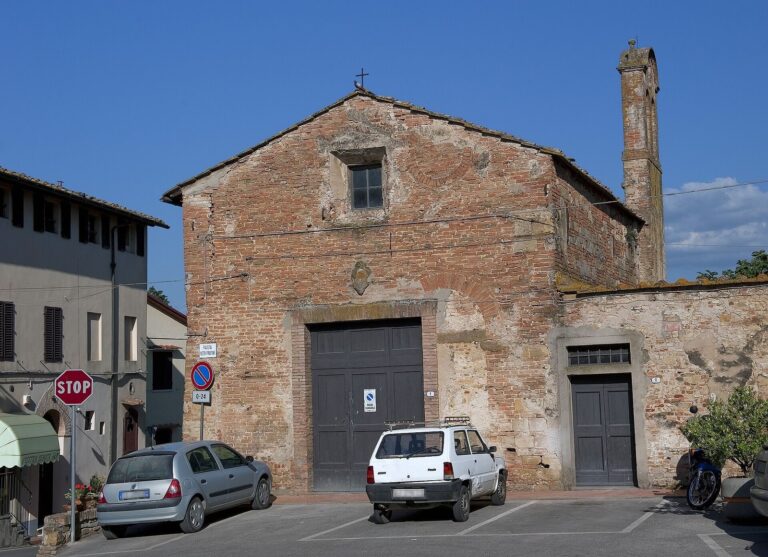
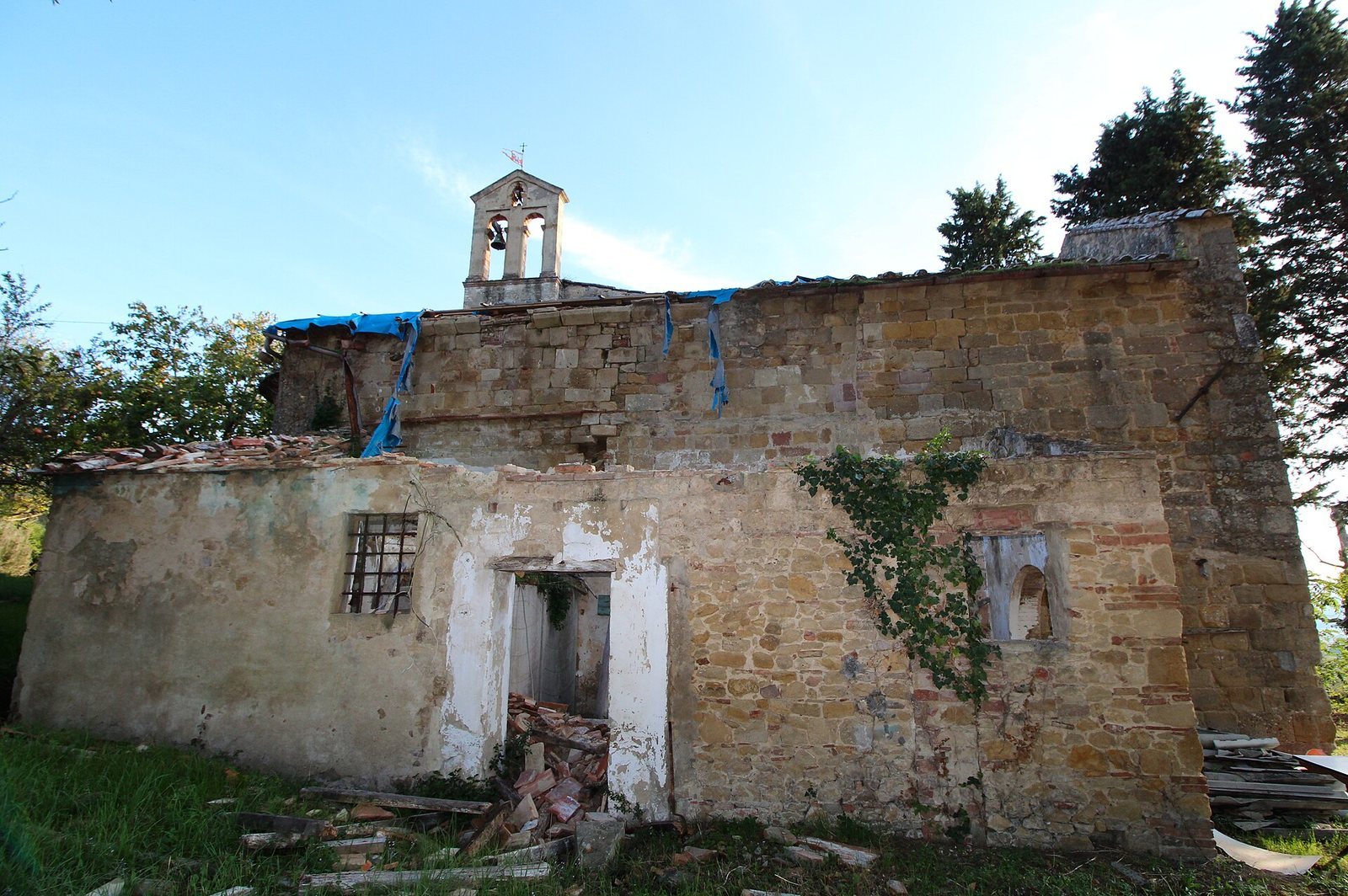
San Martino belonged to the Archdiocese of Florence. In 1986 it ceased to function as a separate church and was joined with the church of Vico d’Elsa. The building is now used for agricultural storage.
Remains
Layout and exterior
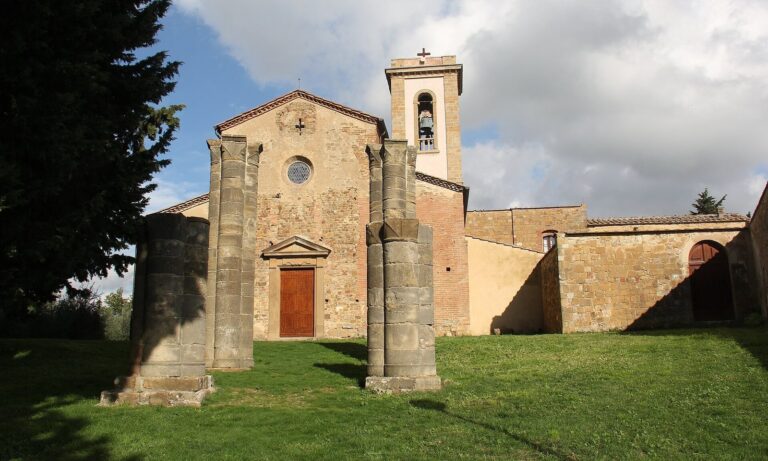
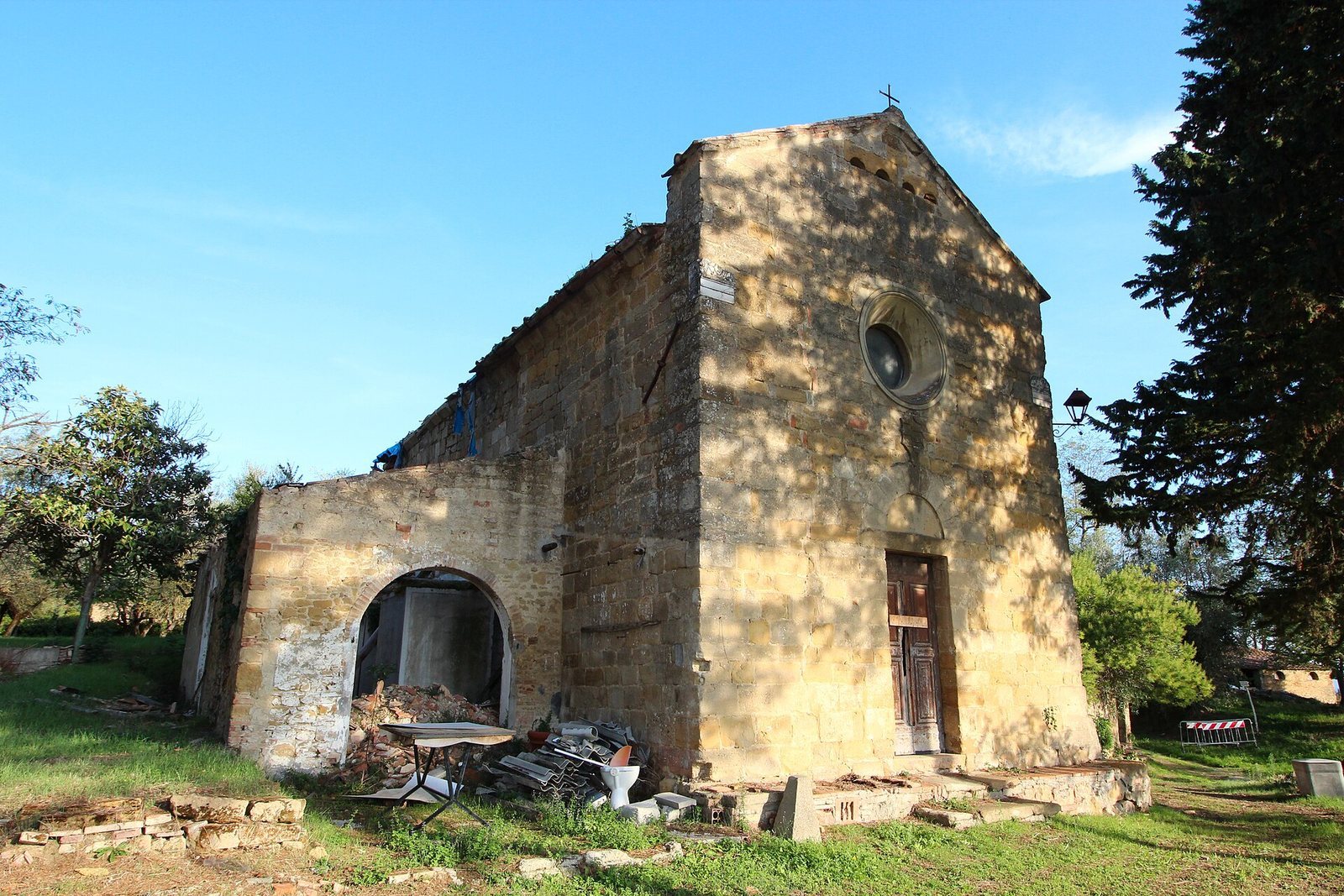
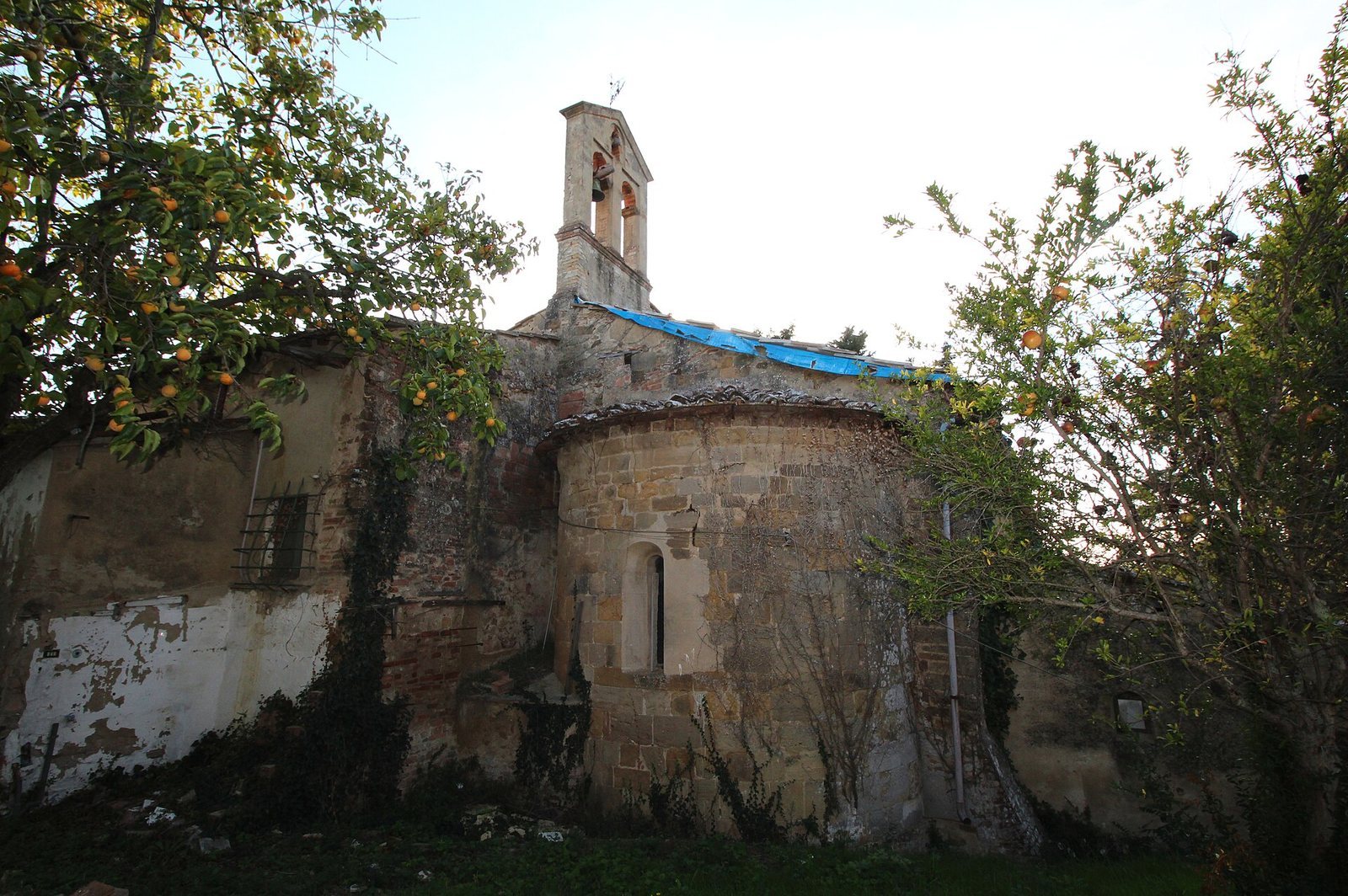
The church has a rectangular hall beneath a roof and ends in an apse, the usually rounded end of a church. Its exterior combines an apparently original portal and medieval Romanesque elements, a style associated with rounded arches, with later changes to the façade and wall surfaces.
Façade
The gabled façade rises above the roofline. Its portal appears to retain its original form, with a lintel made from a single stone and a curved panel beneath a round arch. Above it is a two-light window, divided into two openings and decorated with two late-Romanesque fragments. The moldings that follow the window arch can be seen from both inside and outside. The window was reshaped in the fourteenth century, when the façade’s inward-curving crown was also made. A concrete circular window now replaces a window installed at the end of the sixteenth century. The Serragli family’s coat of arms remains visible on the façade.
Side walls and apse
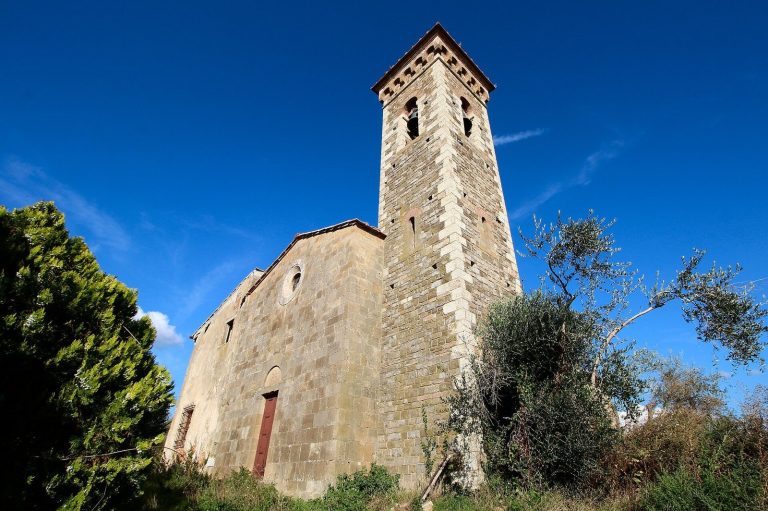
Later buildings cover much of the side walls. Exposed sections show gray and golden sandstone blocks laid in parallel horizontal courses, a concave-profiled cornice, and marks of structural damage. Traces of plaster from the later Baroque style remain on the walls. The apse’s exterior is crowned with small carved terracotta blocks, or corbels, bearing human-like motifs.
Interior and associated artwork
Interior
The interior was plastered in the eighteenth century and has a timber-truss roof supported by a framework of wooden beams. A single-opening window of neo-Romanesque date, a revival of Romanesque forms, opens in the apse vault.
Madonna and Child
A fifteenth-century painting of the Madonna and Child from San Martino is now held in the Museum of Sacred Art in Certaldo. It is attributed to the painter known as Pseudo-Ambrogio di Baldese, an art-historical name for an artist whose identity is not securely established, and probably to Lippo di Andrea, a Florentine painter active around the late fourteenth and early fifteenth centuries.