San Crisogono: An Early Christian Basilica in Rome


Site at a Glance
- Rating
- 4.6
- Popularity
- Medium
- Country
- Italy
- Primary era
- Early Modern
- External website
- Open
- Eras represented
- Classical, Medieval, Early Modern
- Civilizations
- Papal States, Roman
- Site type
- Religious
- Remains
- Basilica
On this page14 sections
History
San Crisogono is an early Christian church in Rome, Italy, probably founded in the fourth century during the pontificate of Pope Sylvester I, whose episcopate lasted from 314 to 335. The present basilica combines a Baroque interior with a Romanesque campanile, while its long history includes early parish organization, medieval monastic use, and continuing service under the Trinitarian Order. Dedicated to Saint Chrysogonus of Aquileia, it is one of Rome’s oldest parish churches and has held the status of a cardinal titular church since early Christianity.
Early foundation and medieval development
The church’s first documented mention comes from the signatures of the Roman Synod of 499, where it appears as Titulus Chrysogoni. A titular church is a Roman church assigned to a cardinal priest as a symbolic title and ecclesiastical responsibility. San Crisogono is traditionally regarded as one of Rome’s first parish churches.
Saint Chrysogonus was martyred at Aquileia, probably during the persecution of the emperor Diocletian, and was buried and venerated there. His cult reached Rome at an early date. The dedication may have come from an otherwise unknown founder named Chrysogonus, or the church may have been dedicated to the martyr from its foundation. The reason cannot be established with certainty.
In 731, Pope Gregory III restored San Crisogono and founded a monastery dedicated to Saints Stephen, Laurence, and Chrysogonus. Its first monks followed the Byzantine rite. During the tenth century, Benedictines acquired the premises and added frescoes illustrating episodes from the life of Benedict of Nursia. Other early medieval paintings in the church date from the eighth to the eleventh century.
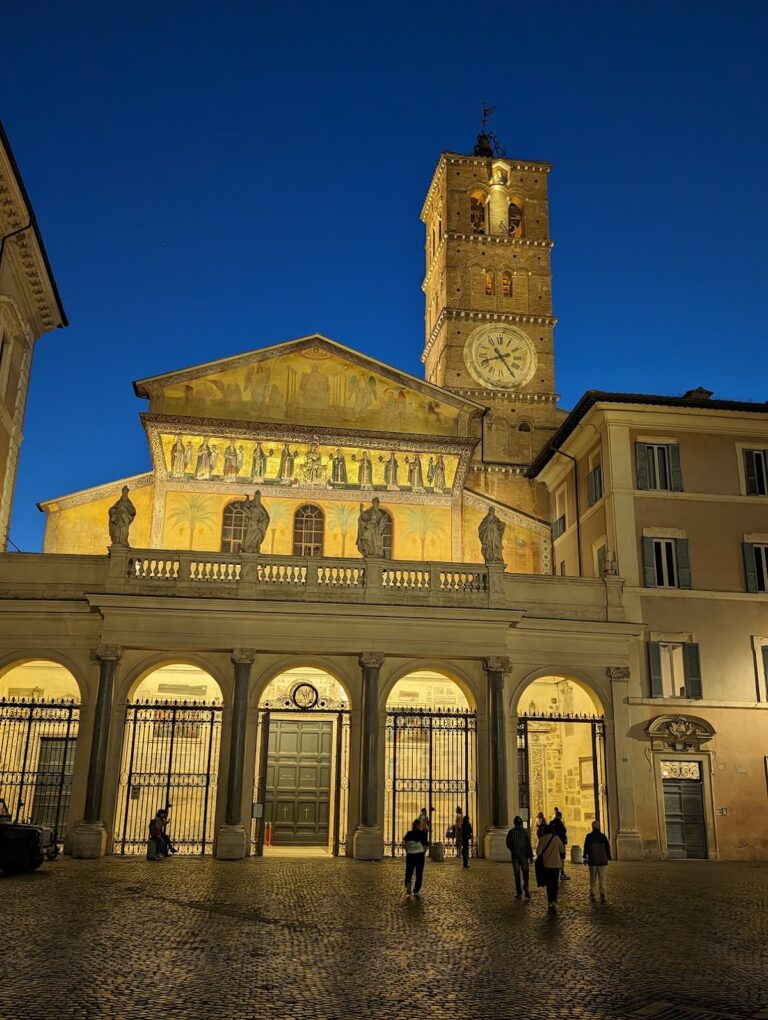
The church was rebuilt in the 1120s, a project traditionally associated with Cardinal Giovanni da Crema. The twelfth-century rebuilding gave San Crisogono its campanile and established the structural basis on which later work was carried out. The high altar also dates from 1127.
Reconstruction and changing communities
San Crisogono was reconstructed again in 1626 by Giovanni Battista Soria under the patronage of Cardinal Scipione Caffarelli-Borghese. This rebuilding created much of the church’s present Baroque character while retaining the earlier campanile and elements of the medieval basilica. A further renovation took place in the mid-1860s, shortly after the church was placed in the care of the Trinitarian Order.
The Trinitarian Order is a Catholic religious order founded to support the redemption and liberation of captives. San Crisogono remains its monastic church and general curia, and members of the order continue to serve it. It is also an active parish of the Roman Rite and holds the status of a minor basilica, a papal designation granted to churches because of their liturgical or historical importance.
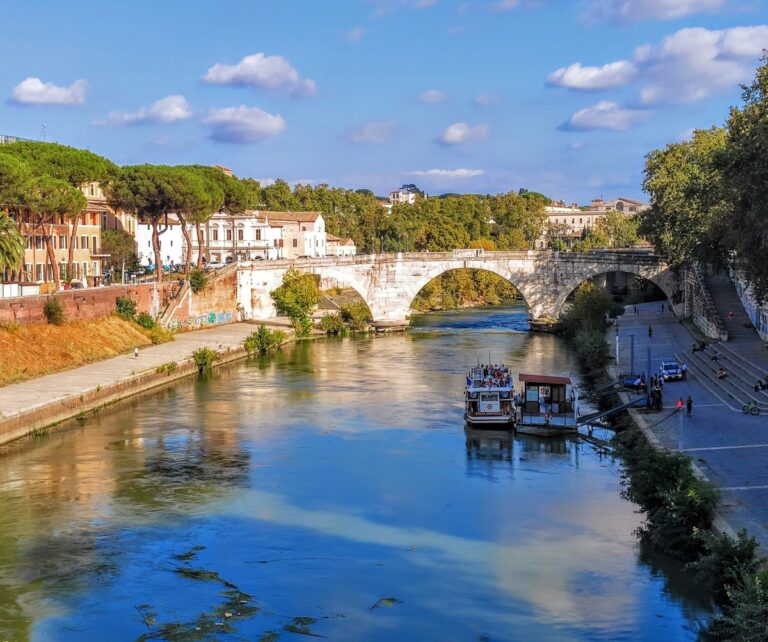
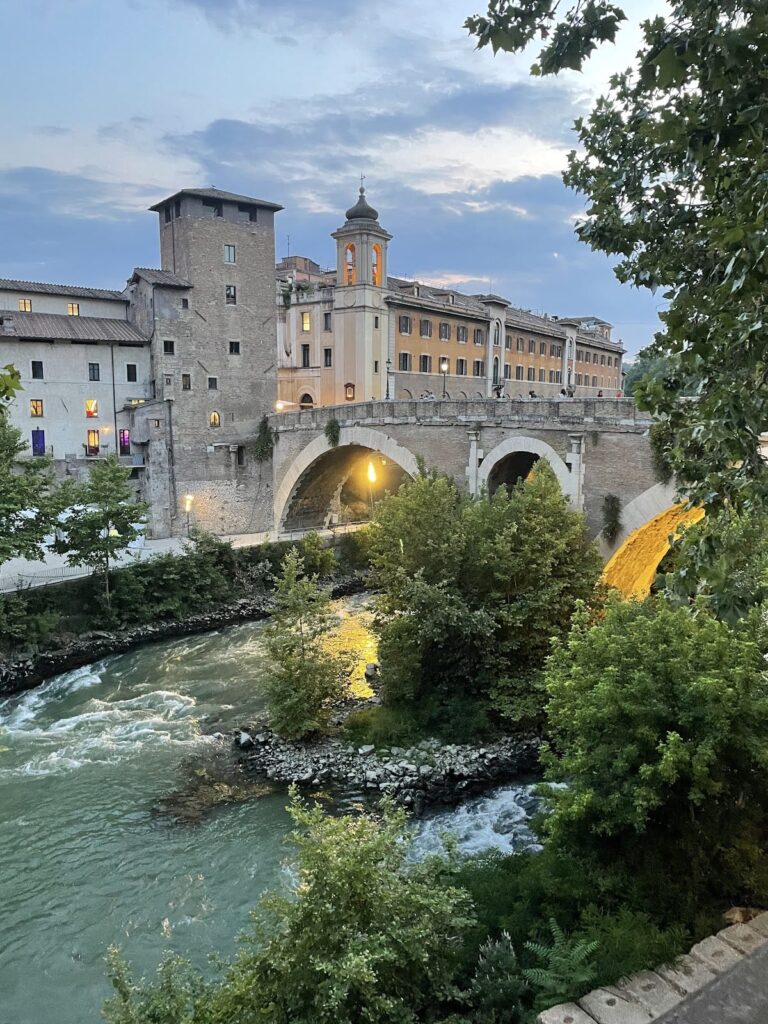
For centuries, the basilica served as the national church of Sardinians and Corsicans living in Rome. From the sixteenth century, Corsican immigrants settled around the Tiber Island and in Trastevere between the port of Ripa Grande and San Crisogono. Several commanders of the Corsican Guard, a papal militia active from the fifteenth to the seventeenth century, were buried inside the church.
Modern investigation and continuing religious use
Excavations beneath the sacristy began in 1907 under L. Manfredini and C. Piccolini, followed by further archaeological investigation. This work brought the early church and earlier Roman houses beneath the basilica into clearer view. Inscriptions found at San Crisogono, which record aspects of its history, were collected and published by Vincenzo Forcella.
Among the church’s former cardinal priests was Vincenzo Gioacchino Raffaele Luigi Pecci, who held the title from 1853 to 1878 before being elected Pope Leo XIII in 1878. San Crisogono continues to participate in Rome’s traditional Lenten stational liturgy. Its dedication day and the feast of Saint Chrysogonus are observed on 24 November, when those attending Mass may receive a plenary indulgence.
Remains
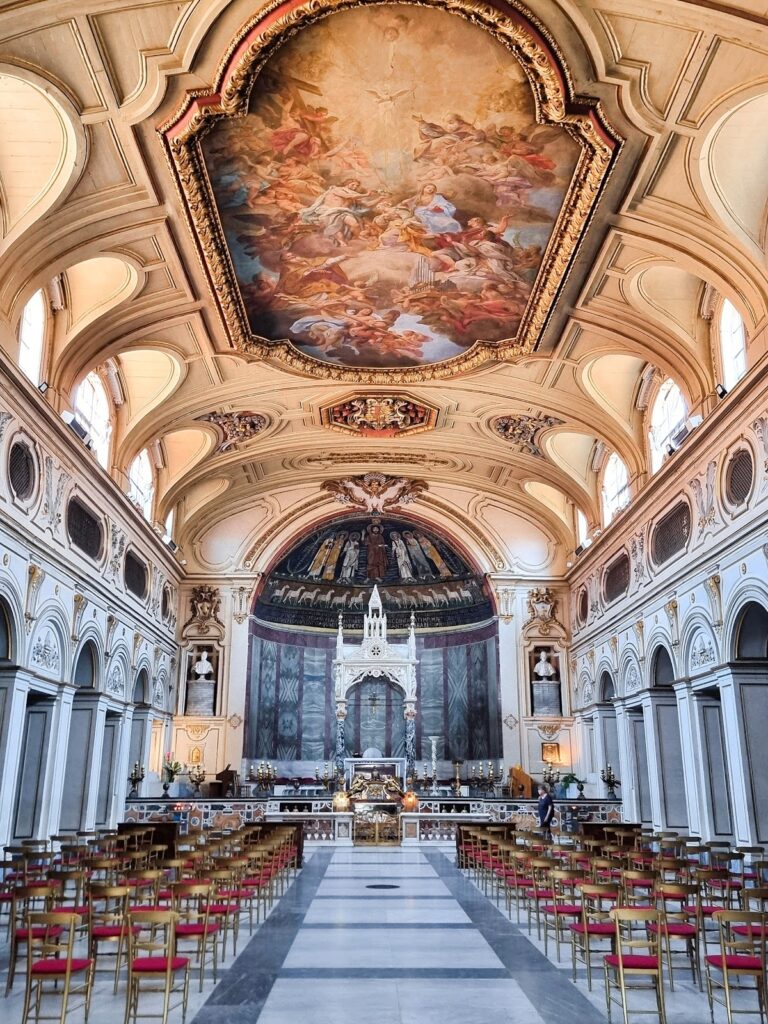
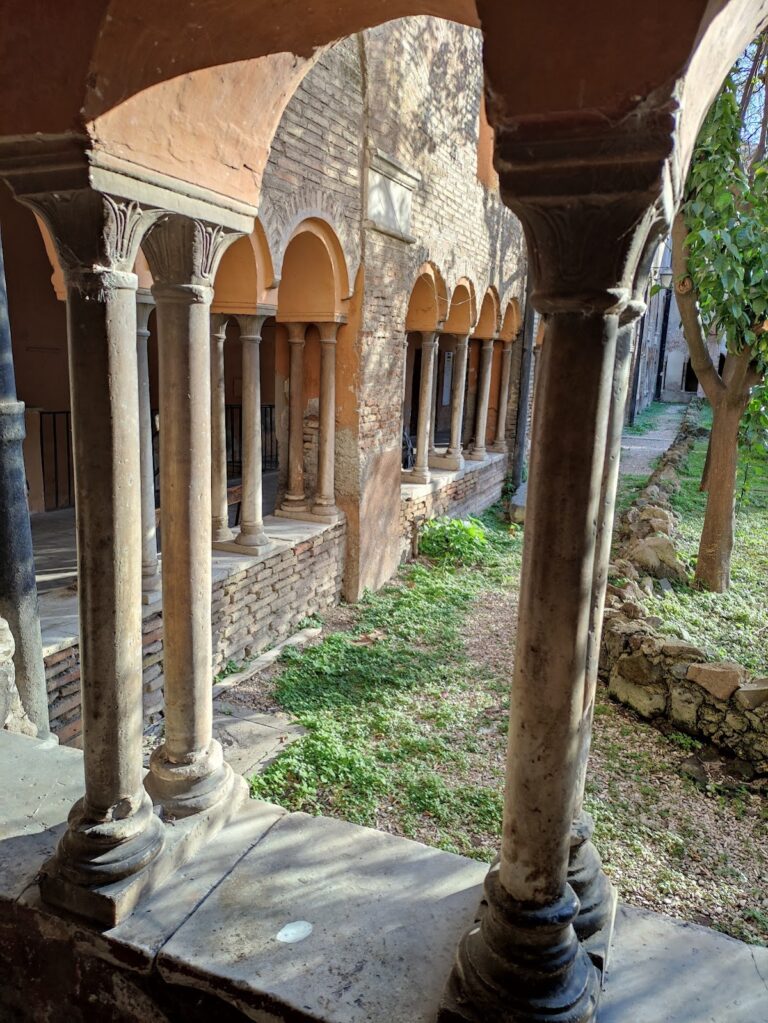
San Crisogono presents a three-aisled basilican plan with a Baroque interior set within the footprint of the medieval church. Two rows of granite Ionic columns divide the nave, and the floor is covered with Cosmatesque pavement, a medieval Roman technique that forms geometric patterns from small pieces of colored stone and glass. The twelfth-century campanile survives beside the rebuilt church, linking the present structure to the reconstruction of the 1120s.
Facade and basilican interior
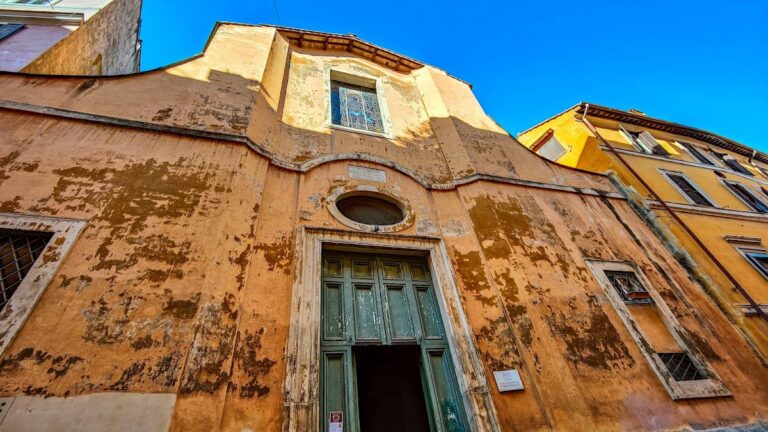
The principal facade was rebuilt in 1626 by Giovanni Battista Soria. Its narthex, a covered entrance gallery, opens outward through four Tuscan-order columns. The columns support a cornice and attic decorated with alternating flame-shaped vases and eagles drawn from the Borghese heraldic emblem. Arched openings at the sides provide further entrances, while the upper level ends in a triangular pediment carrying a relief of cornucopias.
Twenty-two granite columns in the nave are reused antique elements, known as spolia. Above them, the carved and gilded wooden ceiling carries a central painting of the Glory of Saint Chrysogonus by Guercino, the usual name of the Baroque painter Giovanni Francesco Barbieri. The original painting was probably taken to England in the nineteenth century and is associated with Lancaster House in London; the work now set into the ceiling is considered a copy.
Sanctuary and chapels
High altar and apse
The high altar dates from 1127. The presbytery and its ciborium, a canopy erected over an altar, were created by Giovanni Battista Soria and are surrounded by four alabaster columns. The related baldachin is dated either to 1627 or 1641. The sanctuary also contains an eighth-century confessio, a space associated with the veneration of a saint or martyr near a sanctuary or burial place.
The apse contains sixteenth-century frescoes showing the Life of Saint Chrysogonus. Beneath them is a Madonna and Child with Saints Chrysogonus and James, attributed to the twelfth-century school of Pietro Cavallini. The presbytery vault bears a fresco of the Virgin by Giuseppe Cesari.
Nave artworks and memorials
The left side of the nave contains the shrine of Blessed Anna Maria Taigi, who is buried in the habit of a Trinitarian tertiary. Her other belongings are preserved and venerated as relics in the adjacent monastery. Nearby paintings include Aronne Del Vecchio’s Trinitarian Saints in Glory, Giovanni da San Giovanni’s Three Archangels, and Giacinto Gimignani’s Trinity and Angels. The altar painting of the Guardian Angel is by Ludovico Gimignani.
A monument to Cardinal Giovanni Giacomo Millo stands to the left of the entrance and was completed by Carlo Marchionni and Pietro Bracci. The right side of the nave retains fresco fragments, including Saint Frances of Rome and a Crucifixion, attributed to Paolo Guidotti and transferred from the Church of Saints Barbara and Catherine.
Chapel of the Holy Sacrament
The Chapel of the Holy Sacrament, beside the apse, was created in 1627 or 1641 and is attributed to a design by Gian Lorenzo Bernini, the major seventeenth-century Italian sculptor and architect. Its date places it within the period of the basilica’s Baroque reconstruction.
Subterranean remains
Early church and Roman houses
A staircase from the sacristy leads beneath the present basilica, where the remains of the first church and earlier Roman houses survive. The early church may date from the reign of Constantine I, the emperor associated with the legalization of Christianity within the Roman Empire. A semicircular apse is visible below the later building.
Brickwork in the apse area belongs to a relatively high-status private house of the second century. Part of this house was converted into a church in the fourth century. Unlike the present basilica, the early church had a single nave.
Service rooms and basins
Rooms on both sides of the early apse are pastophoria, service chambers commonly placed beside the apse in Eastern Christian churches. The room on the right is thought to have functioned as a diaconium, an early Christian service room associated with the work of deacons. The other may have served as a baptistery or as a room for storing sacred relics.
Several basins were uncovered during excavation, including one cut into the southern wall. Their arrangement may indicate that the building first functioned as a fullonica, a laundry and dye-house, in a commercial district. Another interpretation identifies the southern basin as a baptismal font used after the building became a church. The original purpose of the basins remains uncertain.
Lower church paintings and sarcophagi
The lower church preserves frescoes dating from the eighth to the eleventh century. Their subjects include Pope Sylvester capturing a dragon, Saint Pantaleon healing a blind man, the rescue of Saint Placid, and episodes from the life of Benedict of Nursia. Several late-antique sarcophagi, some decorated with reliefs, are also preserved at the site.
Nearby sites