Saint James Church in Simoradz: A Gothic Parish Church in Poland
Site at a Glance
- Rating
- 4.9
- Popularity
- Very Low
- Country
- Poland
- Primary era
- Medieval
- External website
- Open
- Eras represented
- Medieval, Modern
- Civilizations
- Habsburg, Holy Roman Empire
- Site type
- Religious
- Remains
- Church
On this page8 sections
History
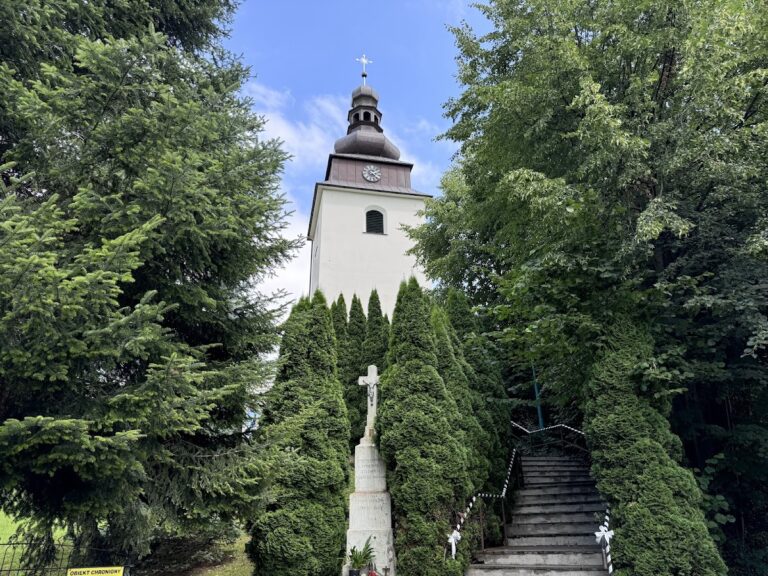
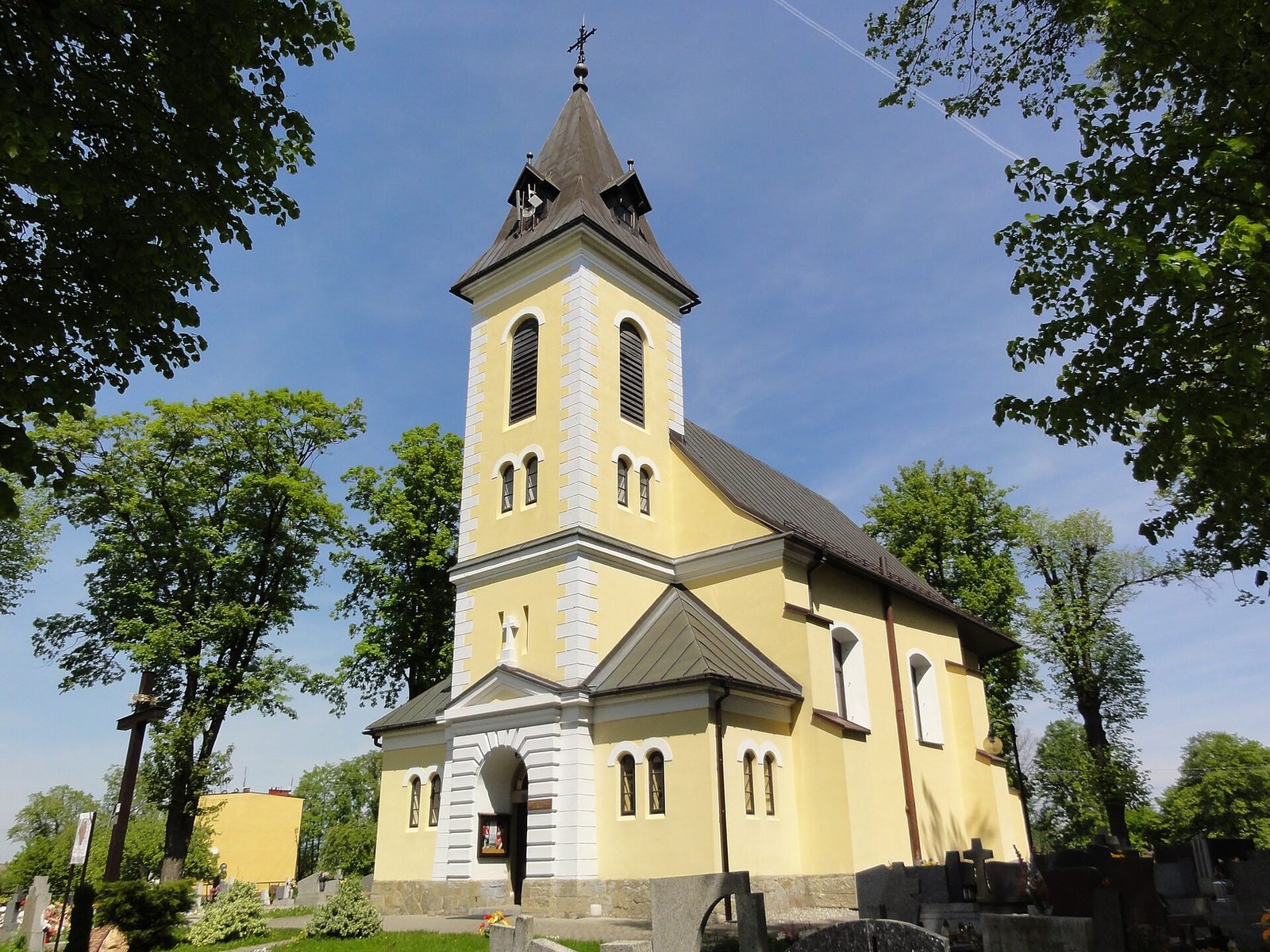
Saint James church in Simoradz is a historic Roman Catholic parish church in Simoradz, Poland, built in the Gothic style around the fifteenth century. Dedicated to Saint James the Greater, one of the Twelve Apostles and traditionally the first apostle to be martyred, it stands at the center of the settlement and serves the parish of Saint James the Apostle. Its liturgical feast is celebrated on 25 July.
Medieval origins
A masonry predecessor probably stood on the site in the thirteenth century. Like the present building, it had a separate belfry. The existing masonry church was erected around the fifteenth century, establishing the medieval structure that later phases would enlarge and repair.
Reformation and Catholic restoration
During the Reformation, the sixteenth-century movement that produced Protestant churches including Lutheranism, Saint James church came into Lutheran possession. It was renovated in 1611. In 1654, Austrian authorities confiscated and closed it as part of the Counter-Reformation, the Catholic response that sought to recover churches and strengthen Catholic institutions.
After its closure, the church was attached to the parish in Dębowiec and later served as a filial church of the parish in Skoczów. Eighteenth-century records describe the building as considerably neglected. It was expanded in 1842, and further repairs followed during the twentieth century. In 1874, Baroque organs were purchased for the church from the parish in Pruchna.
Parish development and conservation
A local ecclesiastical unit was established at the church in 1966, and an independent parish was canonically erected on 27 December of that year. Following 1989, the church underwent a thorough renovation. In recent years, its roof covering was replaced and the building was plastered and painted. Since 2017, it has been a center for the weekly Sunday celebration of Mass in the Extraordinary Form of the Roman Rite, the form celebrated according to the pre-1970 Roman Missal, especially its 1962 edition.
The church entered the register of historic monuments under number A/308/78 on 21 April 1978.
Remains
Gothic building and interior arrangement
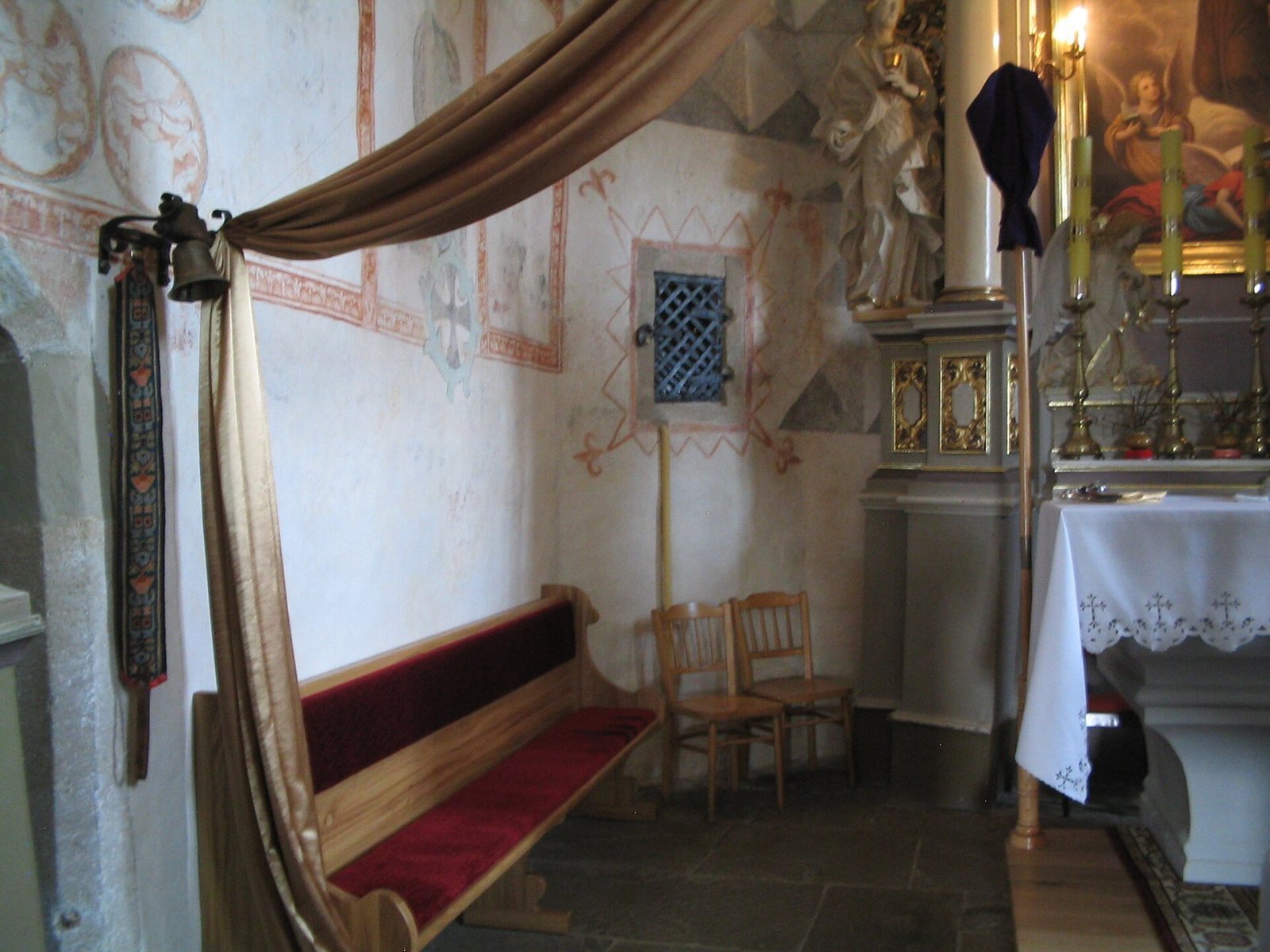
Saint James church is an oriented, single-nave masonry building with a Gothic body and one Neo-Gothic tower. A sacristy adjoins the north side of the presbytery. The interior vaults carry Renaissance polychromy, or painted architectural decoration, showing the four Evangelists and the Virgin Mary with the Child, together with geometric and plant motifs and a Crucifixion scene.
Altars, pulpit, and organ
The church is listed as having four altars, while three Baroque altars are identified in the interior description. The high altar bears an image of Saint James the Apostle, sculptures of Saint John the Baptist and Saint Barbara, and Saint John Nepomuk in its crowning section. The left side altar is dedicated to the Virgin Mary. The right side altar contains Kacper Ociepka’s signed 1764 painting of the conversion of Saul, with an image of Our Lady of Piekary above it.
A Rococo pulpit survives inside the church, with a relief of a dove beneath its canopy. Paintings from the transition between the eighteenth and nineteenth centuries line the interior walls and depict scenes from the Stations of the Cross. The Baroque organs purchased in 1874 form part of the church’s later furnishings.
Medieval paintings and memorial features
During a recent interior renovation, fifteenth-century Gothic polychrome paintings of apostles were discovered in the presbytery. They subsequently underwent two years of conservation. Consecration crosses, known as zacheuszki, were also uncovered. These crosses mark a church consecrated by a bishop.
A carved niche protected by a decorative grille remains in the rear wall of the presbytery. This sacramentarium, a secured built-in niche for preserving the Eucharist, served as a repository for the Blessed Sacrament. Seventeenth-century epitaphs with Old Moravian inscriptions were found beneath the church floor and later set into the presbytery walls. They commemorate the Skoczowski family of Kojkowice at Wilamowice, who then owned Lower Simoradz.