Rooks Nest House: E. M. Forster’s Childhood Home
Site at a Glance
- Popularity
- High
- Country
- United Kingdom
- Primary era
- Early Modern
- Eras represented
- Early Modern
- Civilizations
- English
- Site type
- Domestic
- Remains
- House
On this page9 sections
History
Rooks Nest House is a historic house on the northern edge of Stevenage, United Kingdom, with origins in the 17th century or earlier and a close association with novelist E. M. Forster, who spent his childhood there.
The Howard farm and Wilkinson ownership
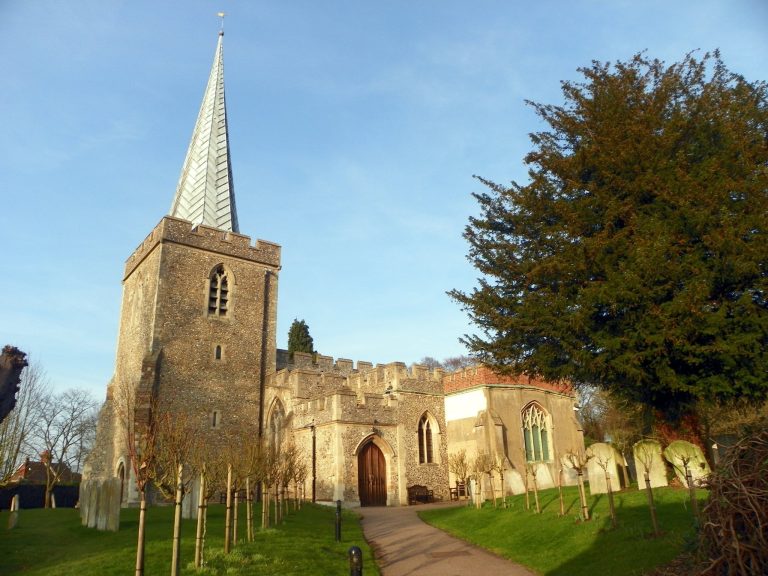
The house was first known as Upper Rooks Nest and was also called Howards, after the family who farmed there. These names distinguished it from neighboring Lower Rooks Nest Farm. The Howards farmed from the house for more than 300 years and owned both farms until the early 18th century, when the Chesfield estate acquired Lower Rooks Nest. The family prospered during the 18th century, but in the following century the small farm became harder to sustain. One Howard’s smallholding failed after poor harvests and competition from inexpensive straw hats imported from China and Japan. Howard family members were baptized, married, and buried at nearby St Nicholas’ Church.
In 1882, a Howard sold the house to Robert Hindley Wilkinson, who already held land in the hamlet as part of the Chesfield estate. The purchase brought the whole hamlet under his ownership. Wilkinson carried out a cursory renovation and changed the house’s name. An 1882 marriage settlement called it “Rooksnest late Howards Farm.” He offered it for rent at £55 a year with four acres of pasture, or £45 without the pasture. When Wilkinson died in 1888, his daughter Caroline Poyntz-Stewart inherited the property.
Forster’s childhood and literary work
From March 1883, the widowed Lily Forster rented the house as a home away from London for herself and her son Morgan, later known as E. M. Forster. She made it her own through decoration and later redecoration, though she never formed strong local ties. At five, Morgan gave the servant girls, aged between 10 and 15, lessons in dancing, geography, and astrology, and played hide-and-seek with them. He grew closely familiar with the house and its rooms.
When Caroline Poyntz-Stewart refused to renew the lease, Lily and her son left unwillingly in 1893 for Tonbridge, where he could attend school as a day pupil. Forster was homesick; he drew a map of the house and garden and wrote a short memoir about Rooks Nest. By 1894, when he was 15, he had also written about Wilkinson, whose treatment of his mother helped shape his dislike of landlords. Forster’s 1910 novel Howards End drew on his childhood home. The Postons, friends of the Forsters, unknowingly provided models for Charles and Ruth Wilcox in the novel.
Lily arranged for a garden boy to play with Morgan each Wednesday. His favorite, a boy called Ansell, inspired Stewart Ansell, a guardian-angel figure in Forster’s novel The Longest Journey (1907). Forster wrote a further tribute, Ansell, in 1903; it appeared in print in 1972. The hamlet’s first borehole, opened in 1885, supplied Stevenage with fresh water, but not to the Forster household. The house had no well, so the family bought drinking water from the Franklin family at Rooks Nest Farm. Running water reached the house later.
The Poston family and Forster Country
Lily Forster’s friend Charles Poston moved with his family to nearby Highfield in 1886. In 1914, his widow Clementine moved into Rooks Nest House with her daughter Elizabeth and son Ralph. Forster later met Elizabeth at a concert at the National Gallery during wartime and became a regular visitor. After Clementine’s death, Elizabeth bought the house and lived there until her own death in 1987. Forster continued visiting into the later 1940s and kept the furniture throughout his life. Composer Malcolm Williamson later occupied the house. He held the title Master of the Queen’s Music, a royal musical appointment, and died in 2003.
Rooks Nest House was designated a Grade I listed building on 30 September 1976. Grade I is England’s highest listed-building grade, for buildings of exceptional interest. Stevenage expanded substantially after its designation as a new town in the 1940s. Open countryside toward Graveley was protected as green belt, land set aside to limit urban development and preserve the landscape around the house.
In 1960, a letter to The Times, signed by literary figures opposing compulsory purchase orders from the Stevenage Development Corporation, called the countryside around the house “Forster Country.” The letter urged the preservation of 200 acres as both a beauty spot and the setting of Howards End; The Guardian also used the name in 1961. Local planners formally named the area Forster Country in 1979, after a campaign by the Friends of the Forster Country. In 1994, the group helped secure an agreement with the government to change the green-belt boundary and protect open land north of Stevenage. As of 2020, housing proposals for the area remained under consideration, while the land northwest and west of the house was the only farmland left in Stevenage.
Remains
The house and its interior
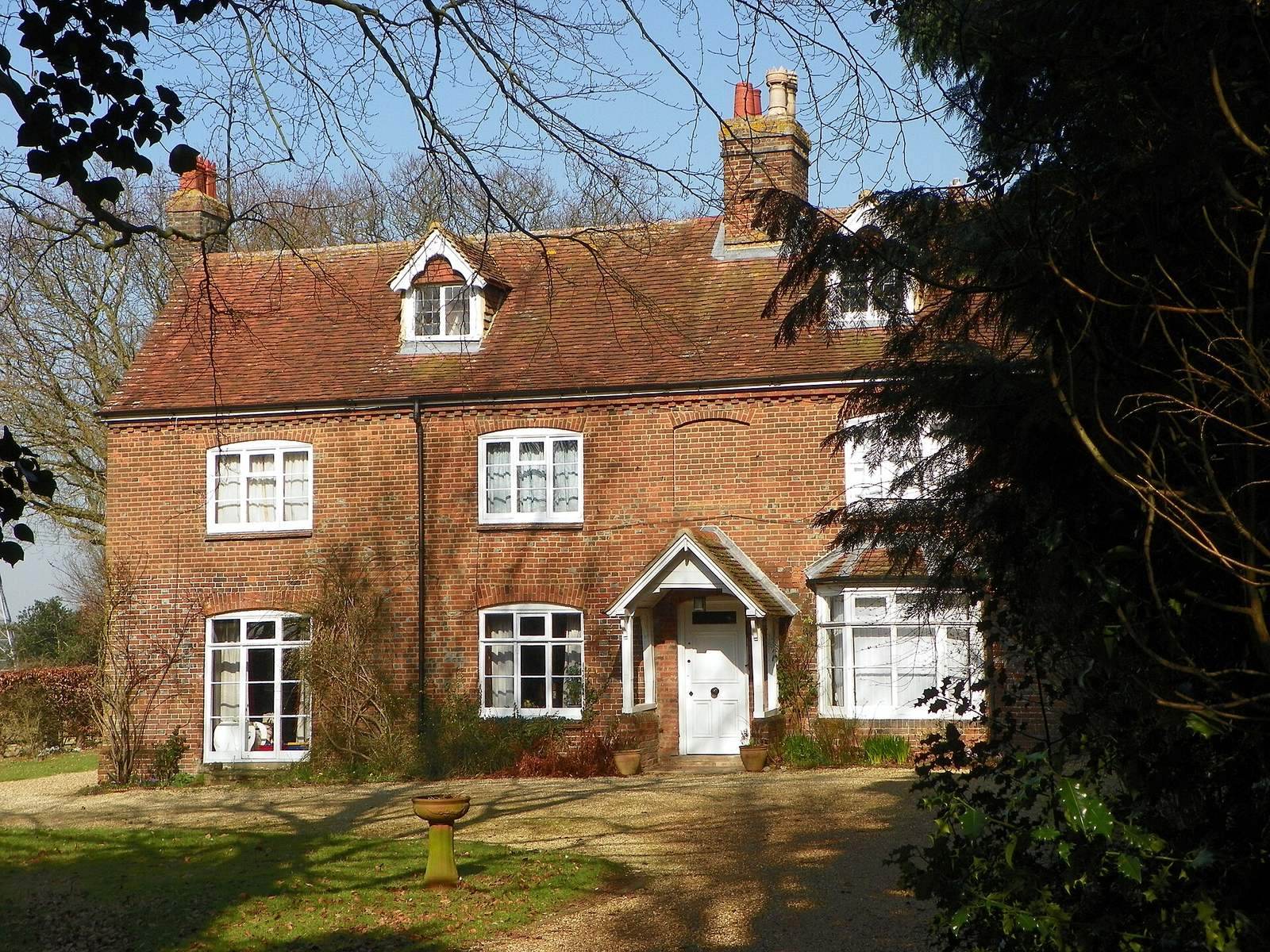
Set on a hill at Stevenage’s northern edge, Rooks Nest House is a two-storey timber-framed building with attics. Its front is faced in red brick, with some grey bricks laid so their short ends show. The house was refronted in the 18th century. A tiled roof covers two dormers, windows that project from the sloping roof, with gabled tops and hinged casement windows. The first floor has three further casement windows beneath shallow-curved arches. At ground level, a similar window sits beside glazed doors on the left and a projecting bay with angled sides on the right. A large chimney stands at the center of the house.
The original thatched roof attracted mice, and some of the thatch remains beneath the later tiles. Inside, timber framing is exposed in some rooms. A supporting horizontal beam, called a bressummer, spans the broad ground-floor fireplace, and the house has 18th-century doors with panels raised at the center. A farm holding of 17 acres remained with the house in 1871.
An 1882 rental advertisement listed a drawing room, dining room, kitchen, hall, scullery, pantry, and larder on the ground floor, with four bedrooms on the first floor, attics, a water closet, and cellars. Lily Forster described two sitting rooms, a large hall, and six bedrooms. In the drawing room, she placed an ornate dark-wood mantelpiece around the fireplace, along with two small black tea tables, a tall bureau flanked by oak bookcases, and a piano opposite the window. She had the room photographed and sent a copy to a family member.
Commemorative features
Exterior plaque
Forster and Elizabeth Poston placed a plaque on the outside wall of the house to commemorate people who had lived there and cared for it.
“Only Connect” sculpture
Carved by Angela Godfrey, a sculpture unveiled beside St Nicholas’ churchyard in 1997 marks Forster’s connection with the area and the entrance to Forster Country. It bears the words “Only Connect” and the fuller inscription “The rainbow bridge that should connect the prose in us with the passion.” The phrase recalls the subtitle of Howards End.