Ram Janmabhoomi: Hindu Sacred Site in Ayodhya
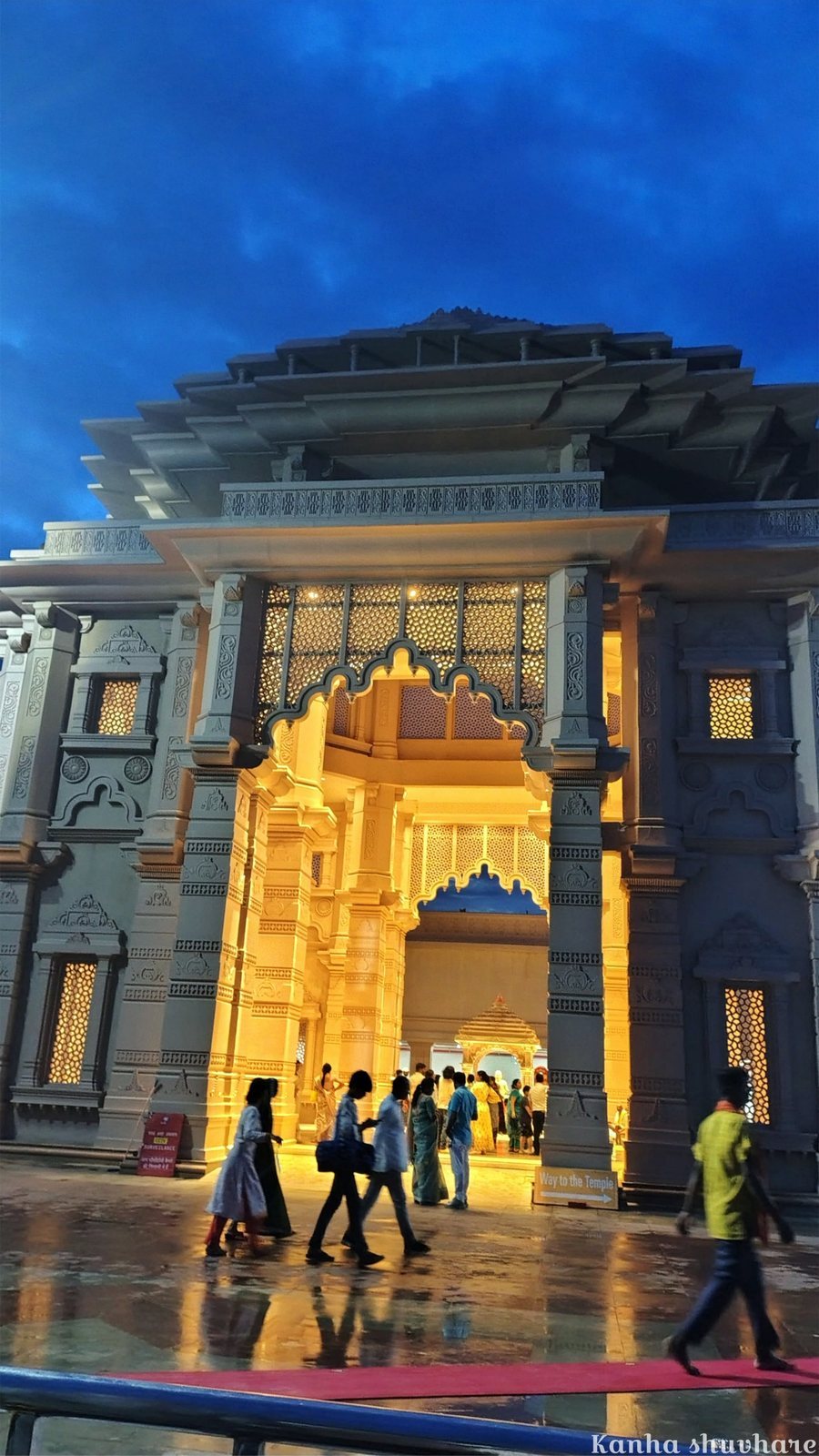
Site at a Glance
- Popularity
- Very High
- Country
- India
- Primary era
- Medieval
- Eras represented
- Medieval, Early Modern, Modern
- Civilizations
- British
- Site type
- Religious
- Remains
- Sanctuary
On this page13 sections
History
Ram Janmabhoomi is a Hindu sacred site in Ayodhya, Uttar Pradesh, India, revered by many Hindus as the birthplace of Rama, an avatar of the god Vishnu. The Ramayana, the Hindu epic recounting Rama’s life, places his birth in Ayodhya beside the Sarayu River, although whether the city described in the epic is the same as modern Ayodhya remains disputed. A mosque commonly dated to 1528–29 stood on the site until its demolition in 1992. It is attributed to Mir Baqi, a commander of Babur, who founded the Mughal Empire and ruled from 1526 to 1530.
Early traditions and competing accounts
Historical accounts describe the area in different ways. In 1611, English traveler William Finch wrote of the ruins of a castle associated with Rama and nearby houses, without mentioning a mosque. Thomas Herbert described an old castle in 1634. A 1717 land purchase by Jai Singh II, a Rajput noble in the Mughal Empire, refers to a mosque.
The belief that Rama’s precise birthplace lay within the grounds where the Babri Masjid stood is attested by the late eighteenth century. Jesuit missionary Joseph Tieffenthaler, who traveled in India and visited Ayodhya in 1766–71, described Hindu worship at a mud platform regarded as Rama’s birthplace. He also noted observances of Ram Navami, the Hindu festival celebrating Rama’s birth, and people walking around the sacred area.
Tieffenthaler attributed the destruction of an earlier structure either to Babur or to Aurangzeb, a later Mughal emperor who ruled from 1658 to 1707. Hindu traditions maintain that a temple stood there before the mosque, but both the temple’s existence and the cause of any earlier destruction remain disputed. A district gazetteer compiled by H. R. Neville in 1870 asserted that Babur had destroyed a Janmasthan temple and built the mosque using material from it, including pillars. Before the 1940s, the mosque was also commonly called Masjid-i-Janmasthan, meaning mosque of the birthplace.
Colonial rule and divided worship
In 1853, armed Hindu ascetics belonging to the Nirmohi Akhara, a Hindu religious institution, occupied the mosque site and claimed it. By 1855, the civil administration had divided the premises between Hindu and Muslim worshippers. The British administration built walls in 1859 to separate the areas assigned to each community.
Attempts to build a temple on a platform were rejected in 1883. In 1885, the Hindu religious leader Raghubar Das brought a court case seeking permission to construct a temple there. The case and later appeals were dismissed, leaving the existing arrangement in place.
During violence in 1934, attackers damaged one of the mosque’s domes. The British administration imposed collective fines on local Hindus and had the mosque repaired at public expense.
Dispute after 1949
On 22 December 1949, Hindu activists placed idols of Rama and Sita inside the mosque. After legal proceedings began, the government treated the site as disputed and restricted access. By 1950, Hindu worship was permitted, but Muslim prayer was not.
In the 1980s, the Vishva Hindu Parishad and other Hindu organizations campaigned for a Rama temple at the site. The locked gates were opened in February 1986, allowing Hindu worshippers to enter for viewing and prayer. A temple foundation ceremony took place in 1989 outside the disputed 2.77-acre area, and the state received court permission to acquire 42.09 acres around it.
In 1990, a procession led by L. K. Advani of the Bharatiya Janata Party, an Indian political party, helped mobilize support for the temple campaign. Confrontations at the site included firing by security forces, and the campaign’s planned action was postponed. In 1992, the Uttar Pradesh government transferred land around the disputed area for the proposed temple. The Supreme Court permitted a symbolic religious service after the state government gave assurances.
On 6 December 1992, Hindu nationalists and temple campaign volunteers known as kar sevaks demolished the Babri Masjid. During the destruction, the mosque’s idols and donation box were moved to a safer place. A temporary temple was begun at the site that evening, and the demolition was followed by widespread Hindu-Muslim violence.
Legal decisions and temple construction
In July 2005, five armed attackers assaulted the site. One person was killed, and four attackers were arrested. In 2009, the Liberhan Commission, established to investigate the 1992 demolition, submitted its report.
In 2010, the Allahabad High Court divided the disputed land among Ram Lalla, the child form of Rama worshipped as an infant deity; the Sunni Waqf Board, an institution concerned with Muslim religious endowments; and the Nirmohi Akhara. The Supreme Court stayed that division in 2011.
On 9 November 2019, the Supreme Court ordered the disputed land transferred to a trust for construction of a Hindu temple and directed the government to provide five acres elsewhere for a mosque. The court found evidence of a large pre-existing structure beneath the mosque, with features suggestive of Hindu religious architecture, but ruled that the archaeological evidence did not establish that the structure had been destroyed to build the mosque. The Archaeological Survey of India’s report identified a tenth-century North Indian-style temple beneath the mosque; the court described the earlier structure as dating to the twelfth century. These were distinct datings and interpretations of the remains.
The government created the Shri Ram Janmabhoomi Teerth Kshetra trust on 5 February 2020. The trust began the temple’s first construction phase in March, and Prime Minister Narendra Modi conducted the foundation-laying ceremony on 5 August 2020. Excavations during temple construction in 2023 uncovered further remains. In 2024, archaeologist B. R. Mani argued that human action had destroyed the underlying structure around the time the mosque was built; the Supreme Court had found the cause of its destruction unproven.
Remains
The site’s physical record includes the former mosque and the worship areas once divided between Hindu and Muslim use, along with platforms, shrines, pillars, and buried architectural remains. The mosque had an interior prayer area beneath a main dome. Its grounds included inner and outer areas used for worship, separated by walls built during British rule. Archaeological investigations and later construction work have also revealed structural pieces and objects from earlier periods.
Former mosque and worship areas
Babri Masjid
The Babri Masjid stood at the disputed site until its demolition in 1992. It had a main dome and an interior prayer space. Hindu worshippers associated the area beneath the dome with a garbhagriha, the innermost sanctuary of a Hindu temple. This was a religious belief about the space, rather than an established physical identification.
Platforms and shrines
A mud-and-lime platform within the grounds was regarded by Hindu worshippers as the birthplace of Rama and his brothers. A late eighteenth-century description gave its dimensions as five inches long, four inches wide, and five inches high. The site also included Ram Chabutra, a platform held to be Rama’s birthplace; a structure identified in Hindu tradition as Sita’s kitchen; and shrines to Hanuman, the deity revered as Rama’s devoted ally. Worshippers regarded the kitchen structure as the place where Sita, Rama’s wife in the Ramayana, prepared food.
Stone pillars
A description based on Tieffenthaler’s observations counted 14 black-stone pillars, 12 inside the mosque and two at its entrance. It also recorded a belief that Hanuman had brought the pillars from Lanka. The Archaeological Survey of India’s 1976–77 survey identified 12 mosque pillars as made from material taken from a Hindu temple. Their bases carried a purna kalasha, an auspicious pot shown with foliage emerging from it. The survey team also found terracotta figures of people and animals.
Buried structures and excavation finds
Excavation beneath the mosque
A court-ordered excavation in 2003 identified more than 50 pillars and remains interpreted as evidence of a substantial earlier religious building. Architectural pieces included parts of a shikhara, a temple’s rising tower; an amalaka, a distinctive element near the top of some North Indian temple towers; and a griva, the neck-like section below it. Excavators also identified a makara pranali, a channel that drained water used to bathe a deity. Its makara, a mythical aquatic creature, was interpreted as referring to the Ganges and sacred river bathing.
The excavation recovered 263 terracotta objects, including figures of deities, people, and women. An inscription known as the Vishnu Hari Shila Phalak was found on two remains and has been cited as circumstantial evidence for a Hindu temple. Other finds included pillar elements, foundations, joints between walls, tombs, platforms, and inscriptions in Devanagari script.
Finds during temple construction
Excavation during construction work in 2023 uncovered further ancient temple material, including idols and pillars.