Pyramid of the Niches: A Temple at El Tajín, Mexico
Site at a Glance
- Popularity
- High
- Country
- Mexico
- Primary era
- Medieval
- Eras represented
- Medieval
- Civilizations
- Totonac
- Site type
- Religious
- Remains
- Temple
On this page7 sections
History
The Pyramid of the Niches is a temple within El Tajín, a pre-Hispanic city in Veracruz, Mexico. El Tajín is associated with the Totonac, an Indigenous people of the Gulf lowlands, and is also described as multiethnic. The city belongs to the Mesoamerican Epiclassic, the period between the Classic and Postclassic eras, although the pyramid’s construction date is uncertain. The structure is described as a sanctuary dedicated either to Quetzalcóatl, a feathered-serpent deity, or to Kukulcán, a related deity in Maya traditions.
Changes under Thirteen Rabbit
One interpretation places the arrival of the local lord Thirteen Rabbit at El Tajín between 800 and 1200. He was presented as Quetzalcóatl’s representative on earth, and his arrival is associated with major changes to the city. New buildings featured niches, stepped-fret designs, and cornices. Earlier buildings in Plaza del Arroyo were altered with paired altars on their upper levels and additional staircases. Thirteen Rabbit may also have reshaped existing parts of the city and used an origin story to legitimize his lineage.
Decline, discovery, and research
After El Tajín declined, local people continued to visit the pyramid and kept jungle growth from covering it. Diego Ruiz found it in 1785 while searching for tobacco fields. Research at the city began in 1924 with funding from the Mexican government. José García Payón took charge of excavations in 1939 and continued the work for about forty years.
In 2008, specialists from Mexico’s National Institute of Anthropology and History proposed that El Tajín’s urban plan corresponded to the eastern hill and symbolically evoked a mountain of sustenance. After four years of interdisciplinary work involving landscape archaeology and iconography, archaeologist Patricia Castillo and archaeoastronomer Stanisław Iwaniszewski began astronomical measurements in 2010. The pyramid forms part of El Tajín’s World Heritage property.
Remains
Form and construction
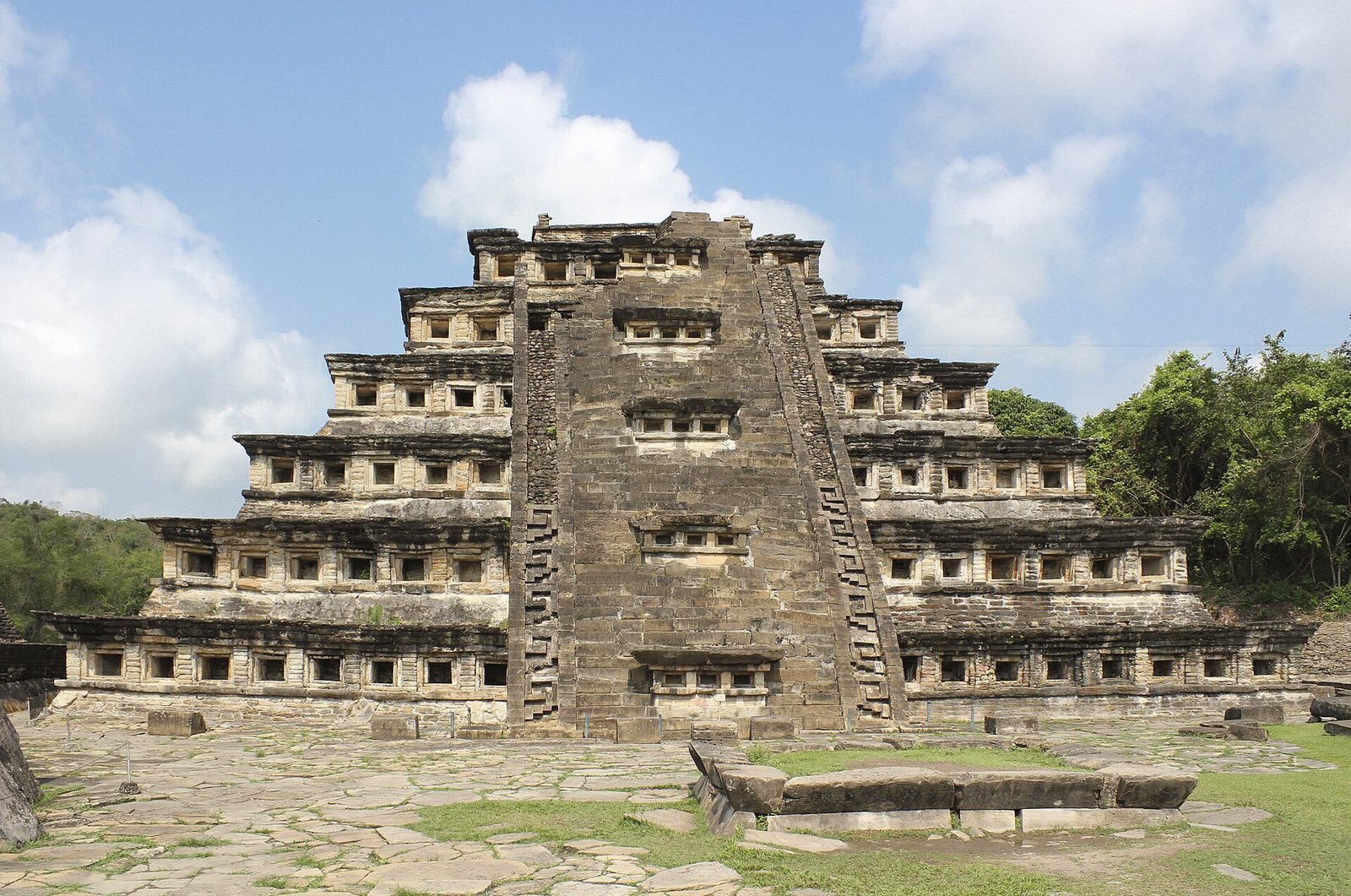
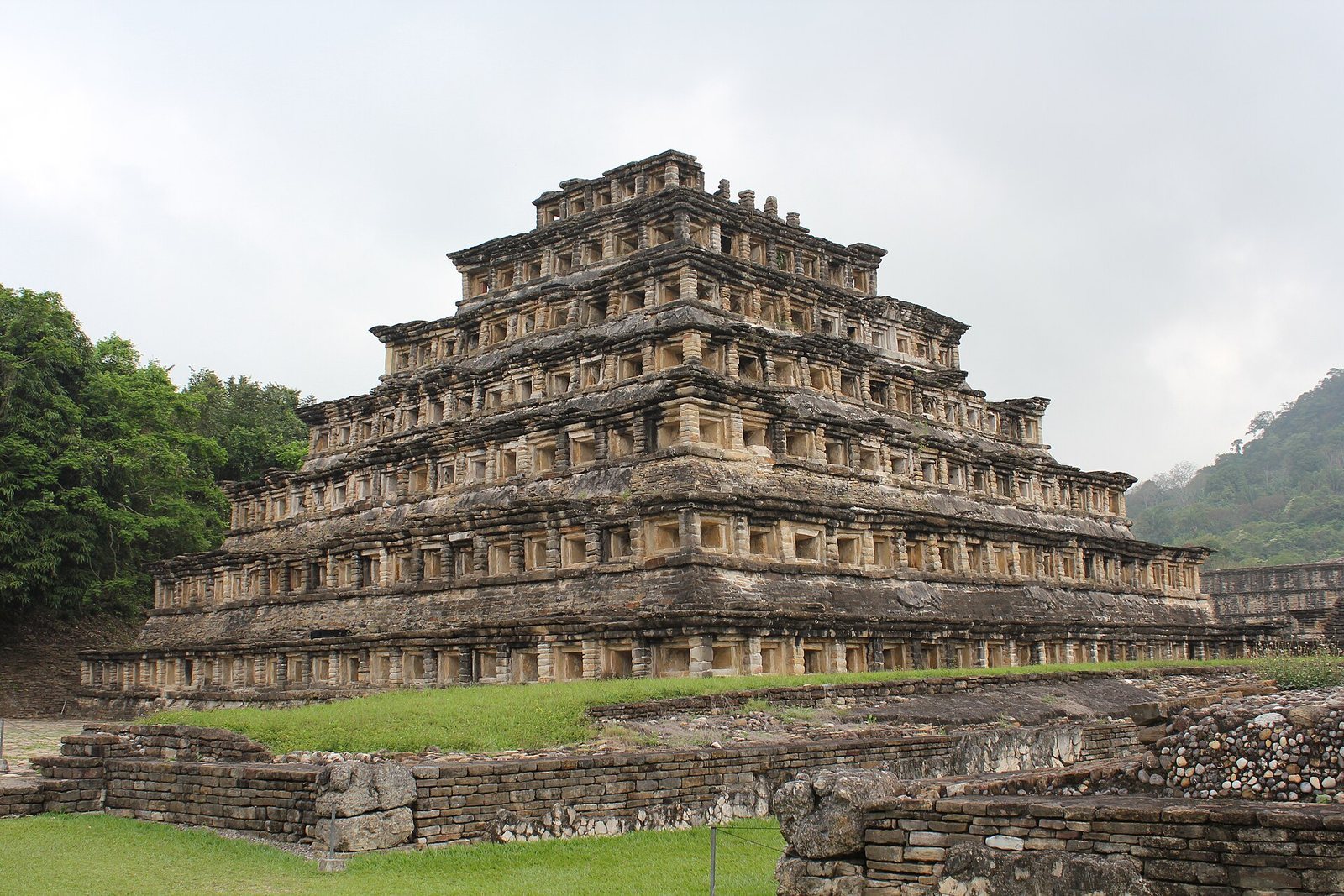
The pyramid has a square footprint, 36 metres on each side, and rises in seven stepped platforms, each about three metres high. Its present height is around 18 metres, and the uppermost platform is badly damaged. An earth core is faced with stone slabs. José García Payón believed the stone was sandstone from near the Cazones River, roughly 35 to 40 kilometres away. The pyramid was painted red after construction, with its niches painted black.
Staircase, niches, and summit
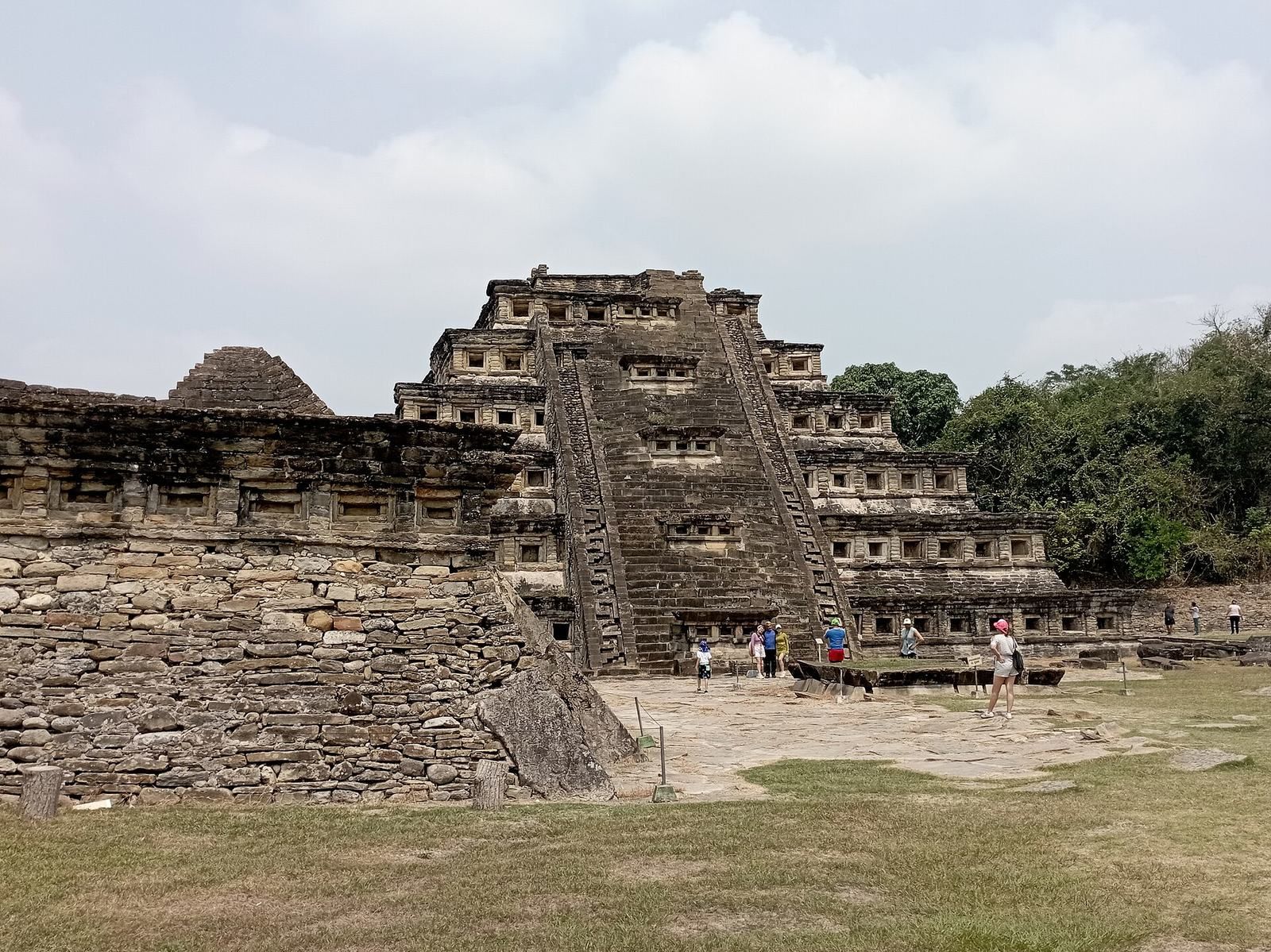
A staircase ascends to the summit. Its flanking wall carries a stepped-fret pattern, a geometric design made from repeated angular lines. Five flat altars along the stairs each contain three smaller niches. The platforms have 365 evenly spaced niches, with additional ones beneath the staircase and along the facade’s central division. The number has been linked to the days of a solar year and the possibility of a calendar. Complex reliefs at the summit portray high-ranking members of the local community.
Landscape and changing light
The pyramid aligns with the Hill of Sustenance to the east. From its rear facade, the structure appears to merge visually with the nearby hill, which is associated with Tonacatepec, a Nahuatl concept of a “mountain of sustenance” linked to provision and abundance. At sunrise in March, sunlight appearing above the hill moves down the pyramid from its highest level toward the base, reaching a new level about once a minute over seven minutes; other buildings remain in shadow during the effect. Similar light-and-shadow changes occur at the seasonal turning points of the year. These observations have been interpreted as evidence of El Tajín’s sacred character. The descending light may also have evoked Quetzalcóatl’s descent, associated with the beginning of sowing and successful harvests.