Portuguese Castle: A Portuguese Fortress on Hormuz Island, Iran
Site at a Glance
- Popularity
- High
- Country
- Iran
- Primary era
- Early Modern
- Eras represented
- Early Modern
- Civilizations
- Portuguese
- Site type
- Military
- Remains
- Fort
On this page7 sections
History
The Portuguese Castle is a fortress on Hormuz Island, Iran, begun by Portuguese commander Afonso de Albuquerque in 1507 and associated with Portuguese colonial and Safavid architectural styles. Hormuz was an important maritime trading center near the entrance to the Persian Gulf, and control of the island gave Portugal influence over regional trade. The castle is one of the last surviving monuments of Portuguese colonial rule in the gulf.
Relocation of Hormuz
Hormuz was also a small kingdom. Its earlier city stood on the Persian Gulf’s northern shore, about 30 miles east of present-day Bandar Abbas. Around 1300, apparently in response to Tatar attacks, the city moved to Gerun Island, identified with Organa of Nearcho.
Portuguese construction and rule
During a temporary Portuguese seizure of the island, Albuquerque put men of every rank to work on the fortress. The demanding labor prompted an officers’ revolt, forcing him to withdraw and leave the work unfinished. After reconquering the island in 1515, he completed the fortress. He first named it the Fort of Our Lady of Victory, using a Christian title for Mary, and then renamed it the Fort of Our Lady of the Immaculate Conception.
Portuguese rule on Hormuz lasted until 1622. Control of the island enabled Portugal to exert influence over trade in the Persian Gulf.
Safavid campaign and capture
Safavid ruler Shah Abbas the Great sought to expel the Portuguese. The Safavids were Iran’s ruling dynasty at the time. Abbas persuaded the British East India Company, an English trading company involved in overseas commerce, to have its ships cooperate with his land forces. English and Iranian forces captured the fortress, ending Portuguese rule on the island.
Remains
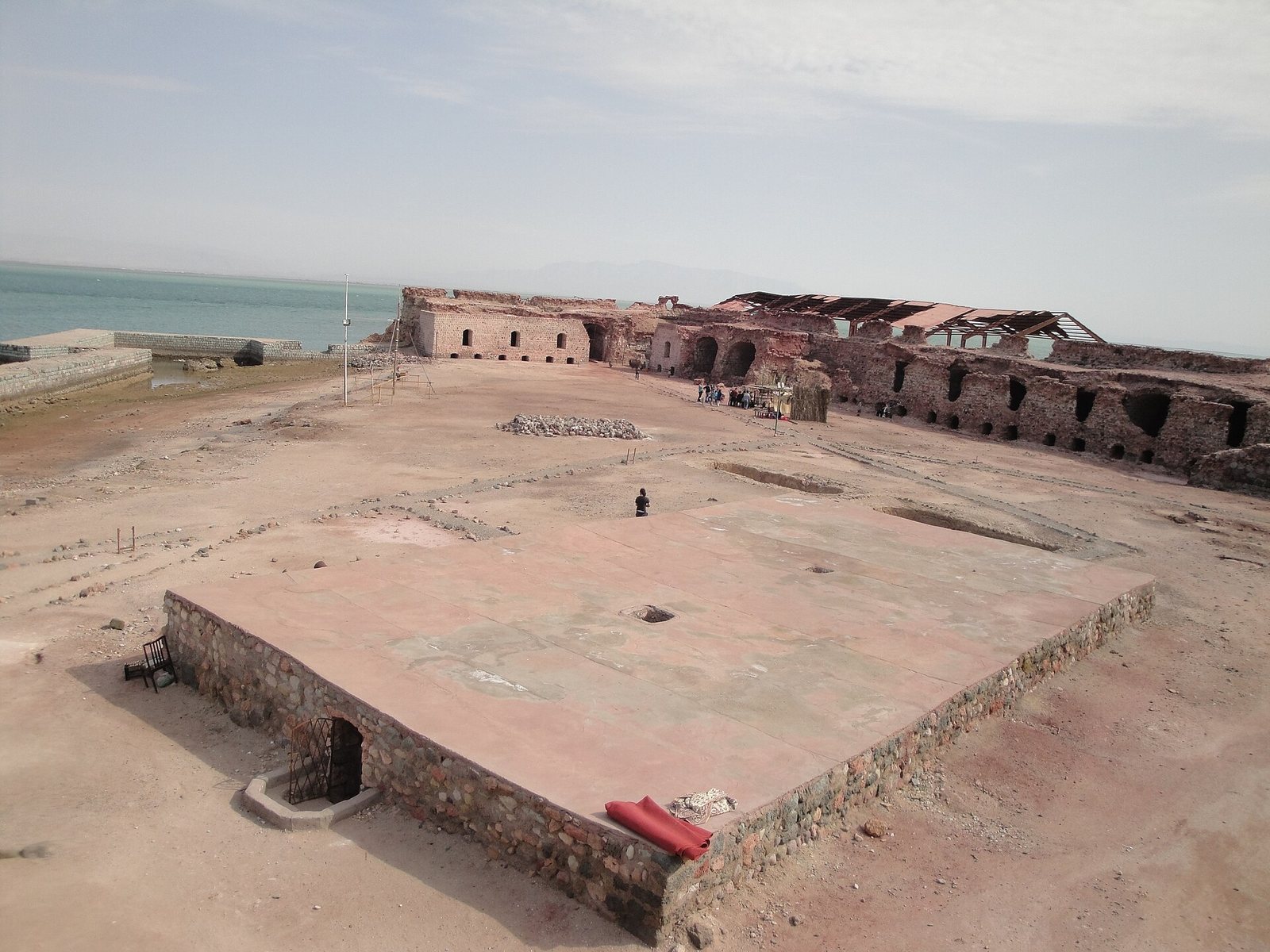
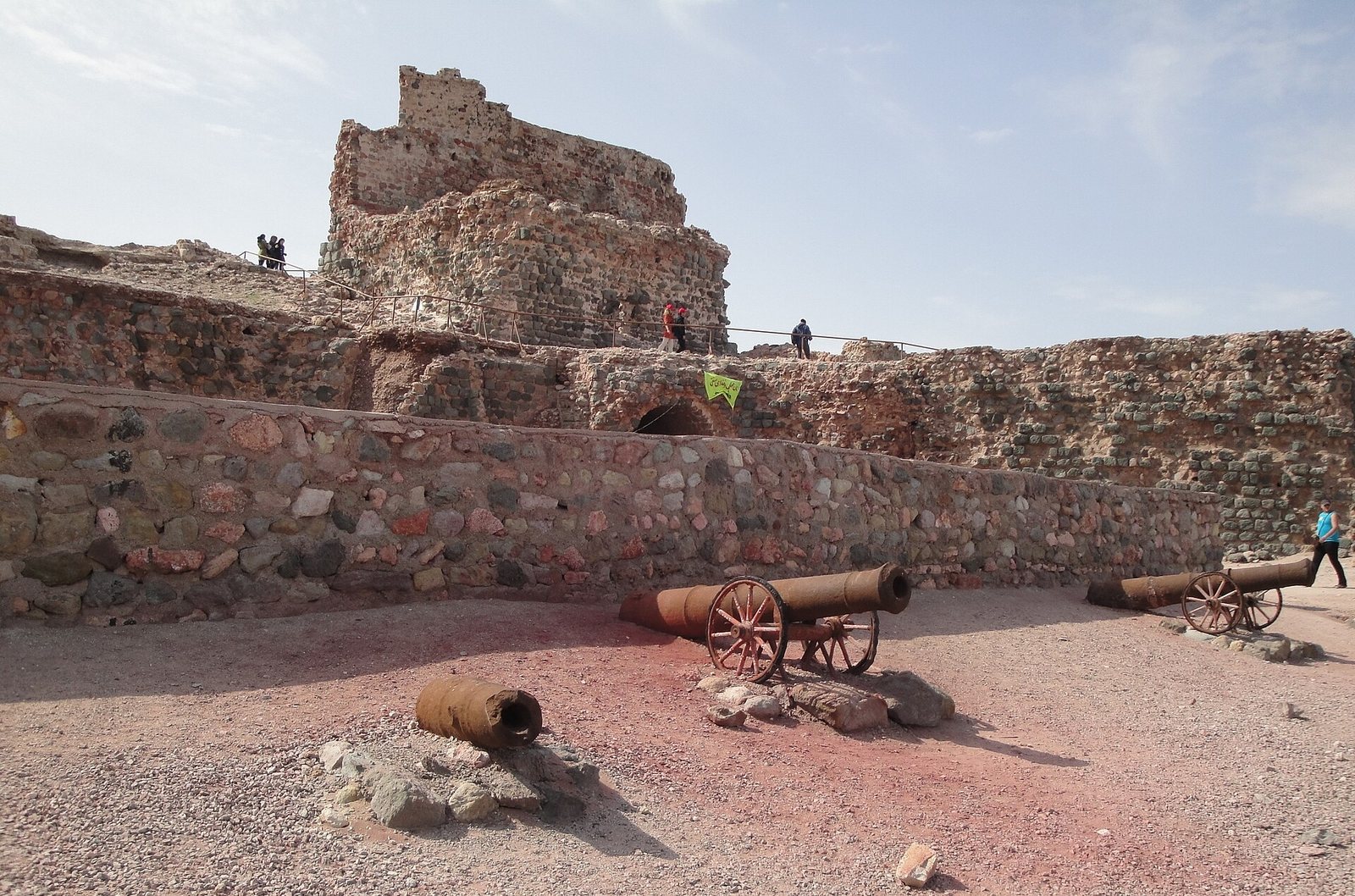
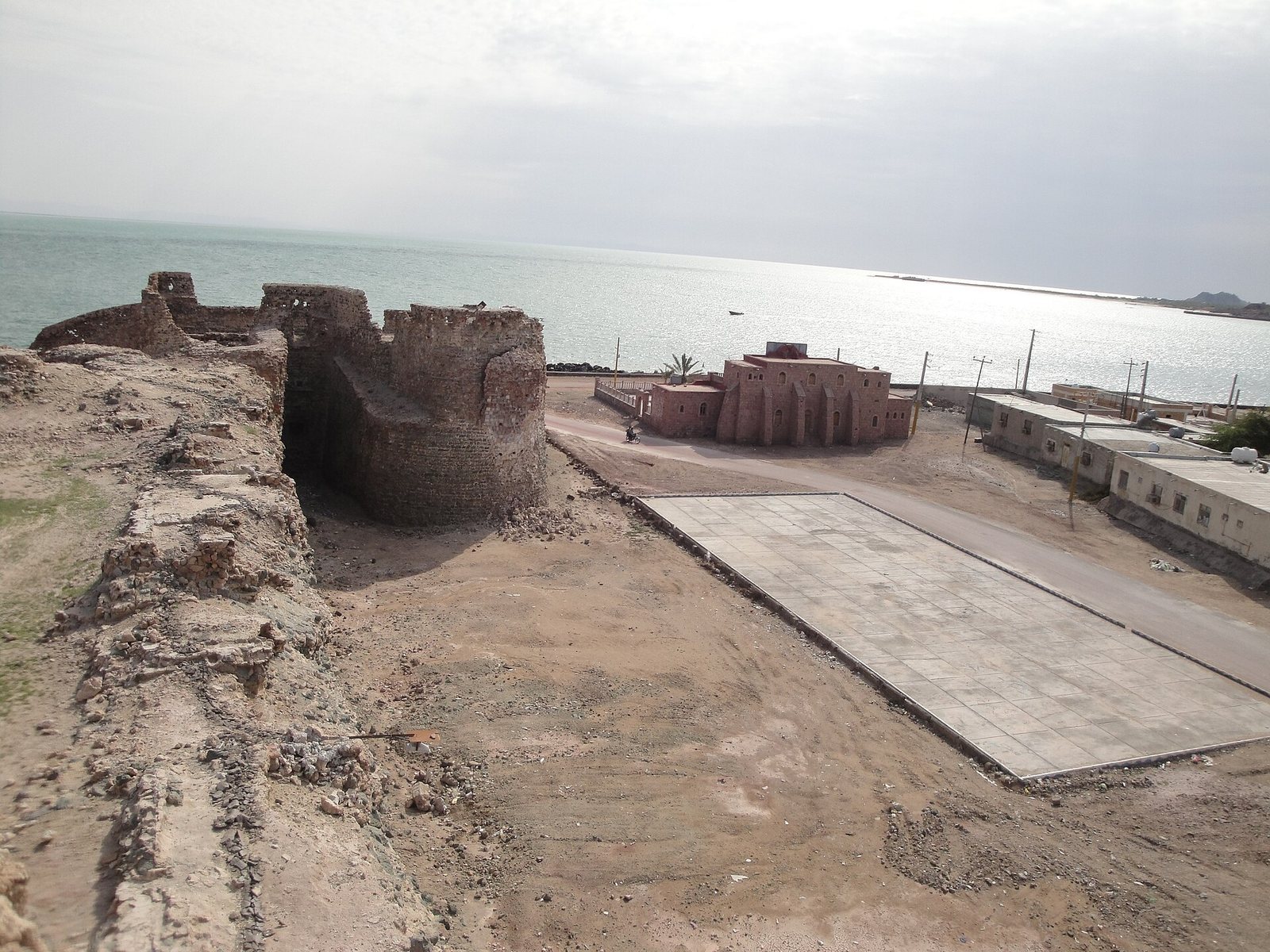
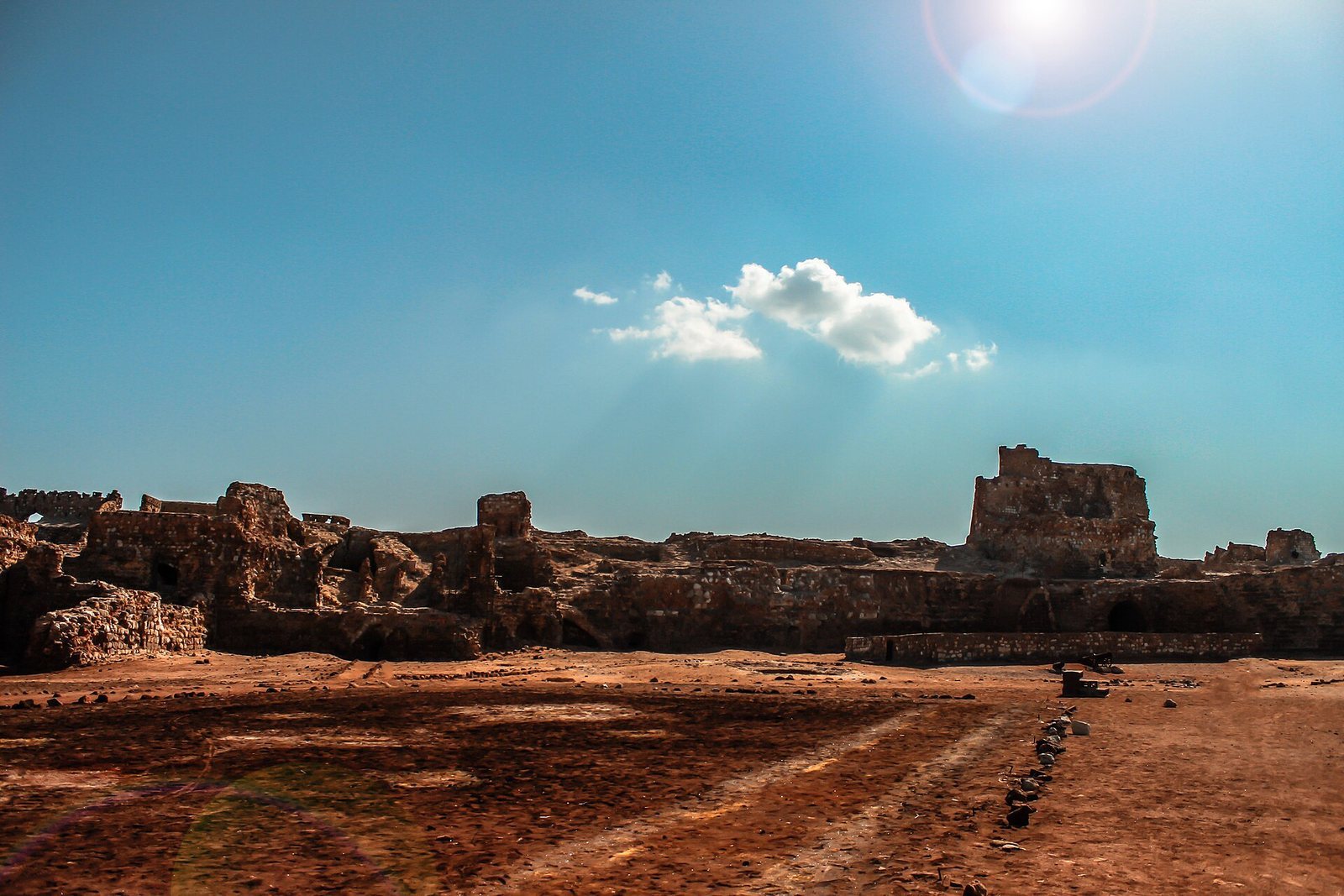
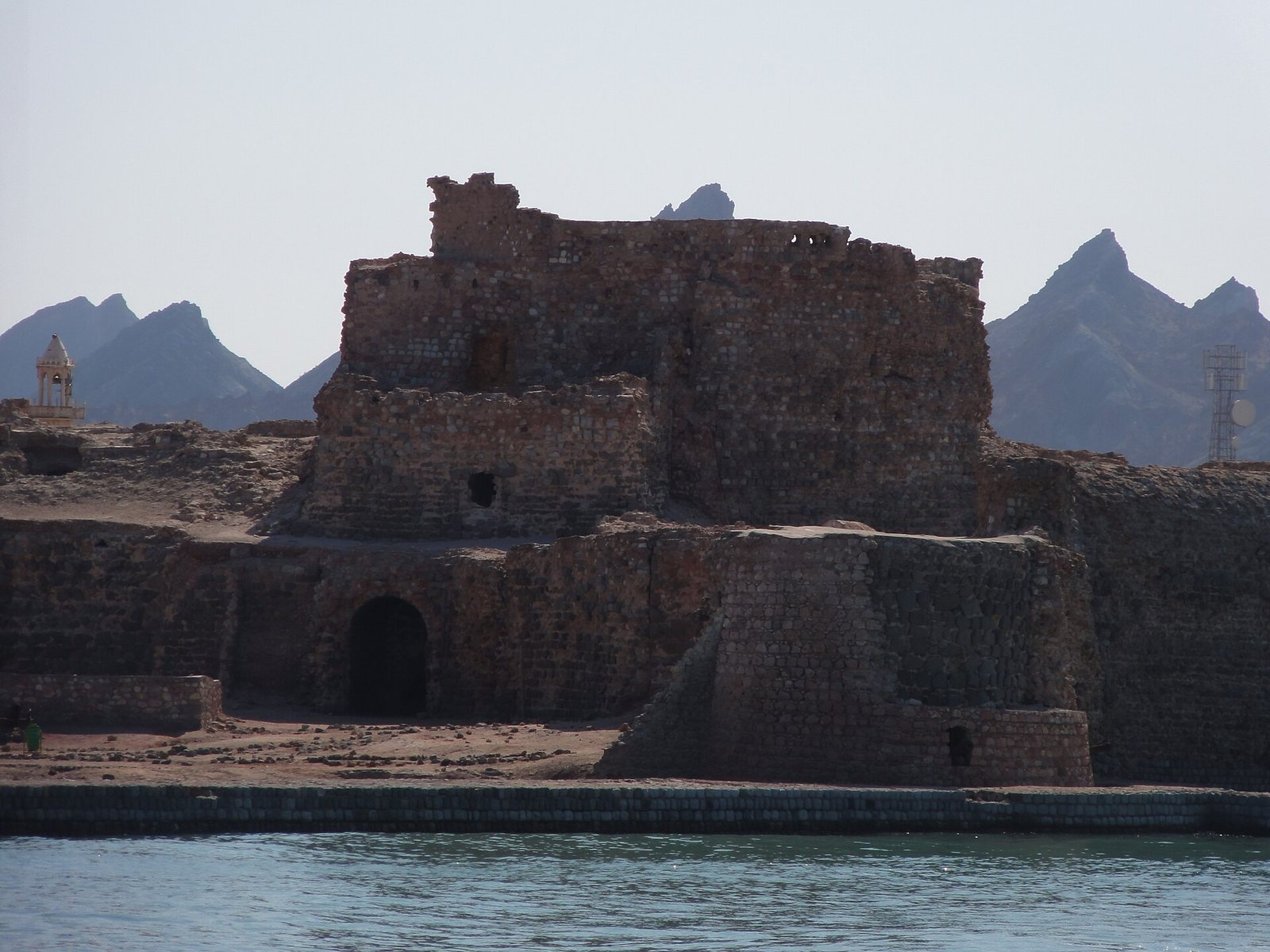
The stone fortress occupies a rocky promontory at the northern end of Hormuz Island, with ruins spread across different levels. Its construction used reddish stone and saruj, a traditional waterproof mortar.
Moat
A moat originally separated the fortress from the rest of the island. Traces of this defensive feature remain.
Outer walls and roof
Most of the roof collapsed long ago. Much of the substantial outer walls’ lower sections remains intact.