Ponte Sanguinario: An Ancient Road Bridge in Spoleto
Site at a Glance
- Popularity
- Medium
- Country
- Italy
- Primary era
- Classical
- Eras represented
- Classical, Modern
- Civilizations
- Italian, Papal States, Roman
- Site type
- Infrastructure
- Remains
- Bridge
On this page7 sections
History
Origins and road connections
Ponte Sanguinario is an ancient road bridge in Spoleto, Italy, built to carry the Via Flaminia across the Tessino. Its construction date is uncertain. It may have been commissioned around 27 BC by Augustus, Rome’s first emperor, as part of a programme to repair neglected bridges. Alternatively, it may date to around 500 BC, when a road was opened in this area. The Via Flaminia was a major Roman road, and the bridge also served a branch that turned left at Spoleto and the Via Pedemontana, which connected the town with Foligno.
River changes and traditions
The Tessino gradually shifted north, and by the late thirteenth century people had redirected it beneath the bridge. The river later changed course again, and the bridge lost its original purpose. Floods and deposits of silt eventually buried it and raised the surrounding street level. Spoleto’s statutes of 1296 refer to the crossing as Ponte San Gregorio.
The origin of the name Ponte Sanguinario is uncertain. One proposed explanation connects it with accounts of Christian persecution in which martyrs were executed near the bridge and their heads thrown into the stream. Another links it to a change in the name Sandapilarius, associated with Porta Sandapilaria at a Roman amphitheatre about 150 metres away. A third possibility is a connection with the Sanguineto, a stream that flows into the Tessino. A tradition about San Ponziano, Spoleto’s patron saint and a Christian martyr, says that he was beheaded on the bridge outside the amphitheatre. His head supposedly reached the site of the church later dedicated to him in three leaps, and a spring began to flow where it touched the ground.
Another legend describes an underground passage from the bridge to the Rocca Albornoziana, a fortress in Spoleto. According to the tale, Lucrezia Borgia used it to meet lovers while she governed the town in the late fifteenth century. The passage remains unexplored.
Rediscovery and conservation
The bridge came to light in 1817 during public works undertaken after the restoration of the Papal States, territories governed by the pope. The projects included plans for an additional bridge over the Tessino, alongside the crossing at Porta Ponzianina. The works were completed in 1820, in time for Francis II’s passage through Spoleto on December 29. He was the last Holy Roman Emperor and ruled the Austrian Empire as Francis I.
Around 1840, local painter and amateur archaeologist Casimiro Pentozzi paid for excavations that exposed one arch and enabled him to survey the bridge. He also arranged for access structures to be built. After sudden ground subsidence in 1896, the municipality bricked up the arch openings for safety. Archaeologist Giuseppe Sordini sought government funding to keep this from obstructing later recovery of the monument; a grant from the Ministry of Public Education enabled necessary work in 1906. The access chamber was restored in 1993.
Remains
Structure and layout
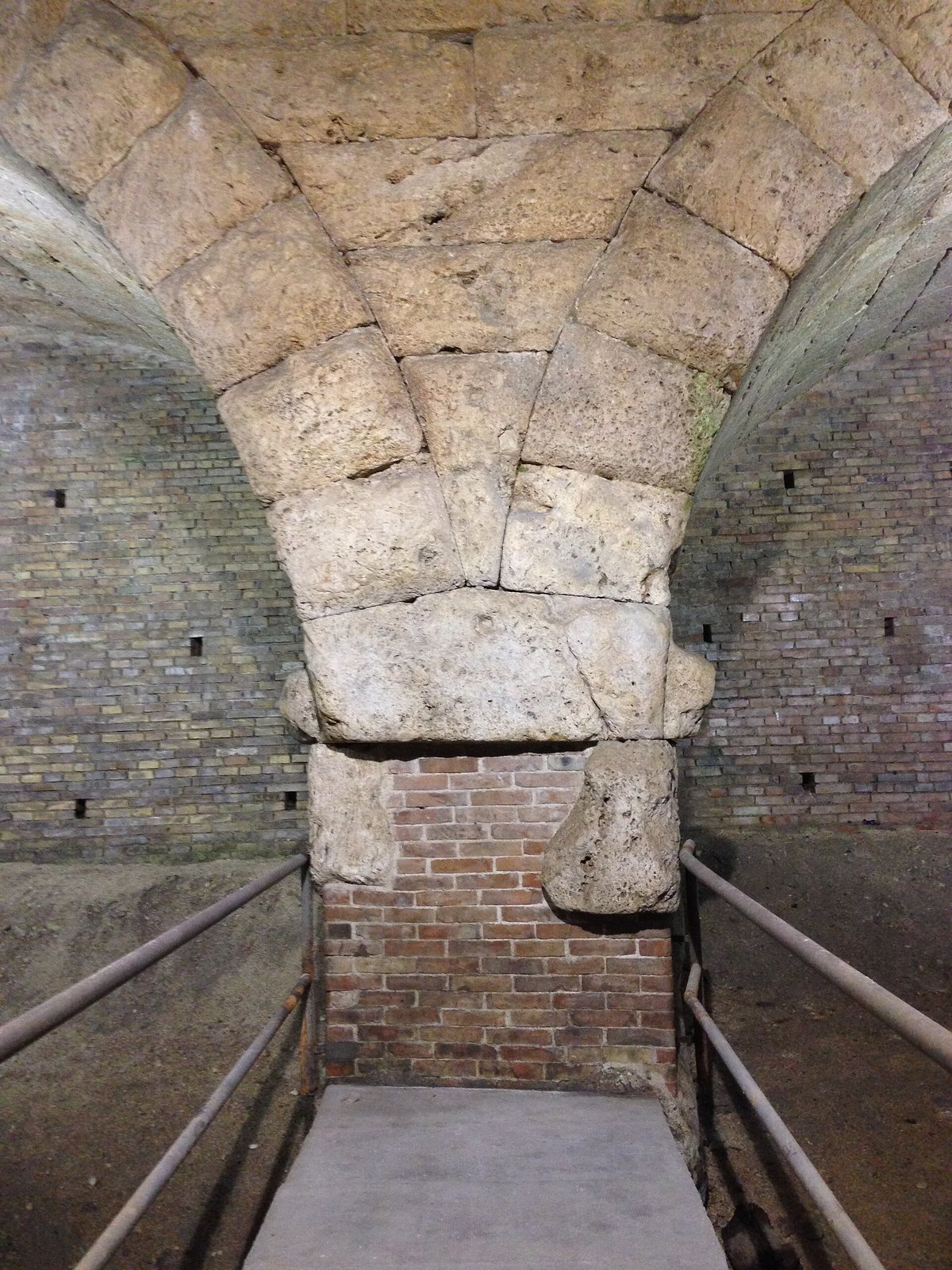
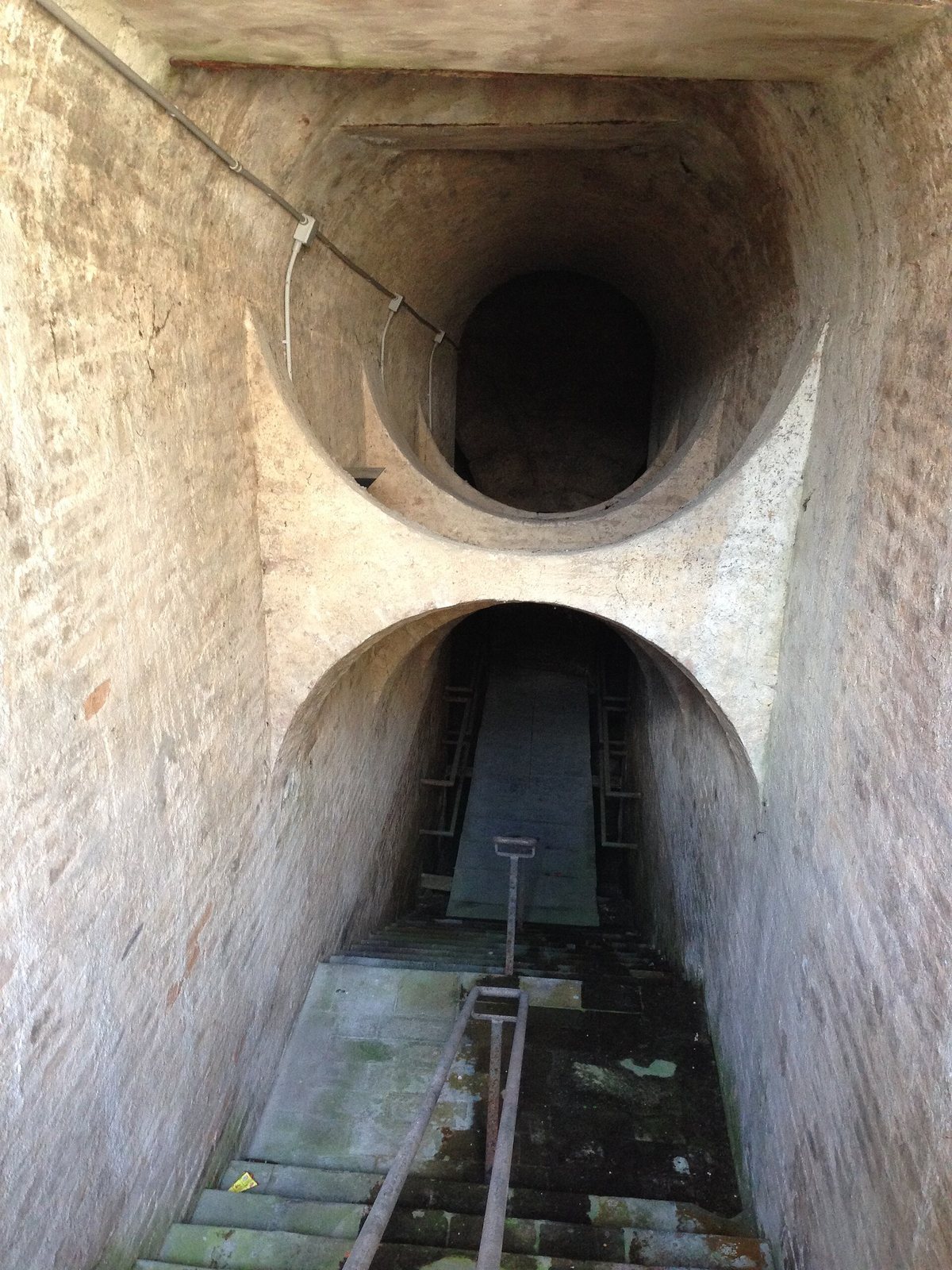
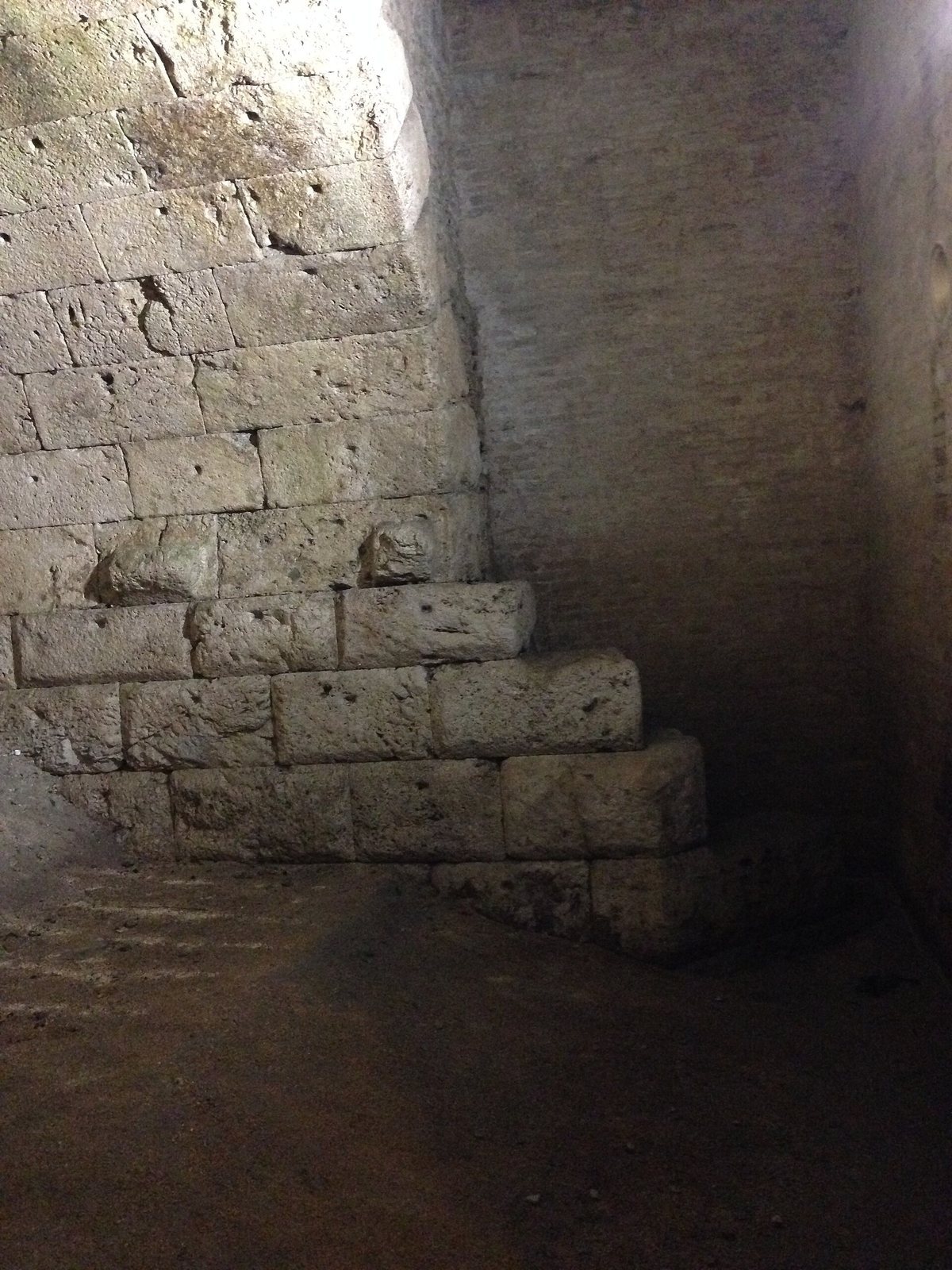
The bridge lies below ground level and is built from large, squared blocks of travertine. It is about 24 metres long, 4.47 metres wide and 8.07 metres high, with three semicircular arches, one of them still buried. The central arch has a chord, or straight span between its ends, of 6.85 metres; the right-hand arch has a chord of 6.26 metres. A passage through the central support helped drain water. The stepped side supports are protected by artificial rockwork or ruins. Two arches were visible in December 2014.
Position and access
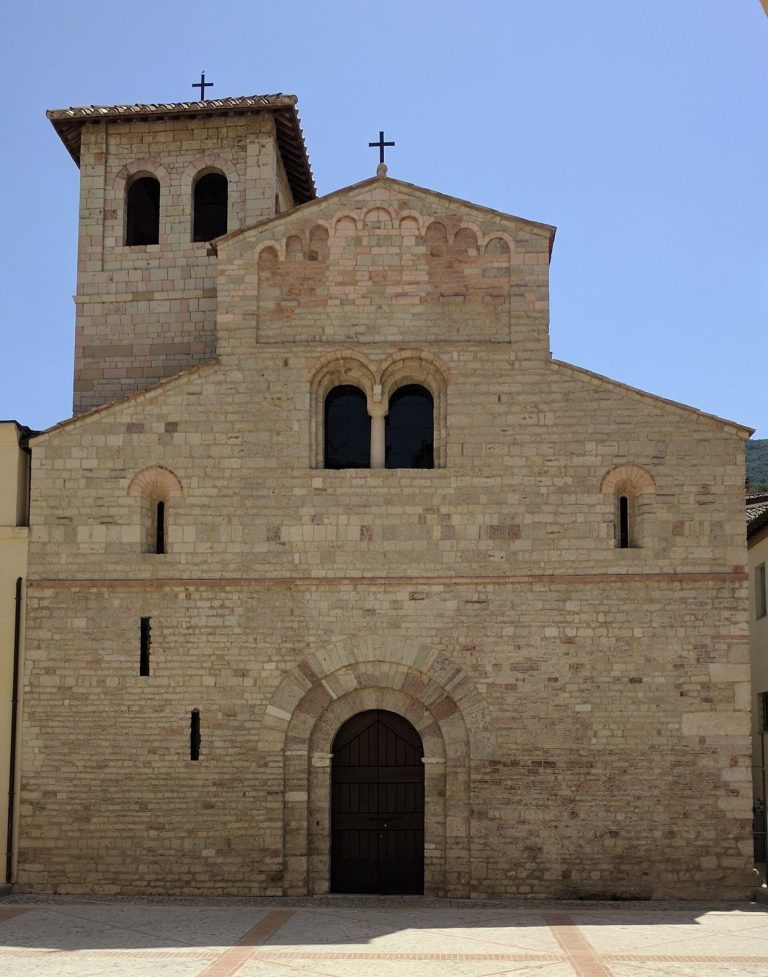
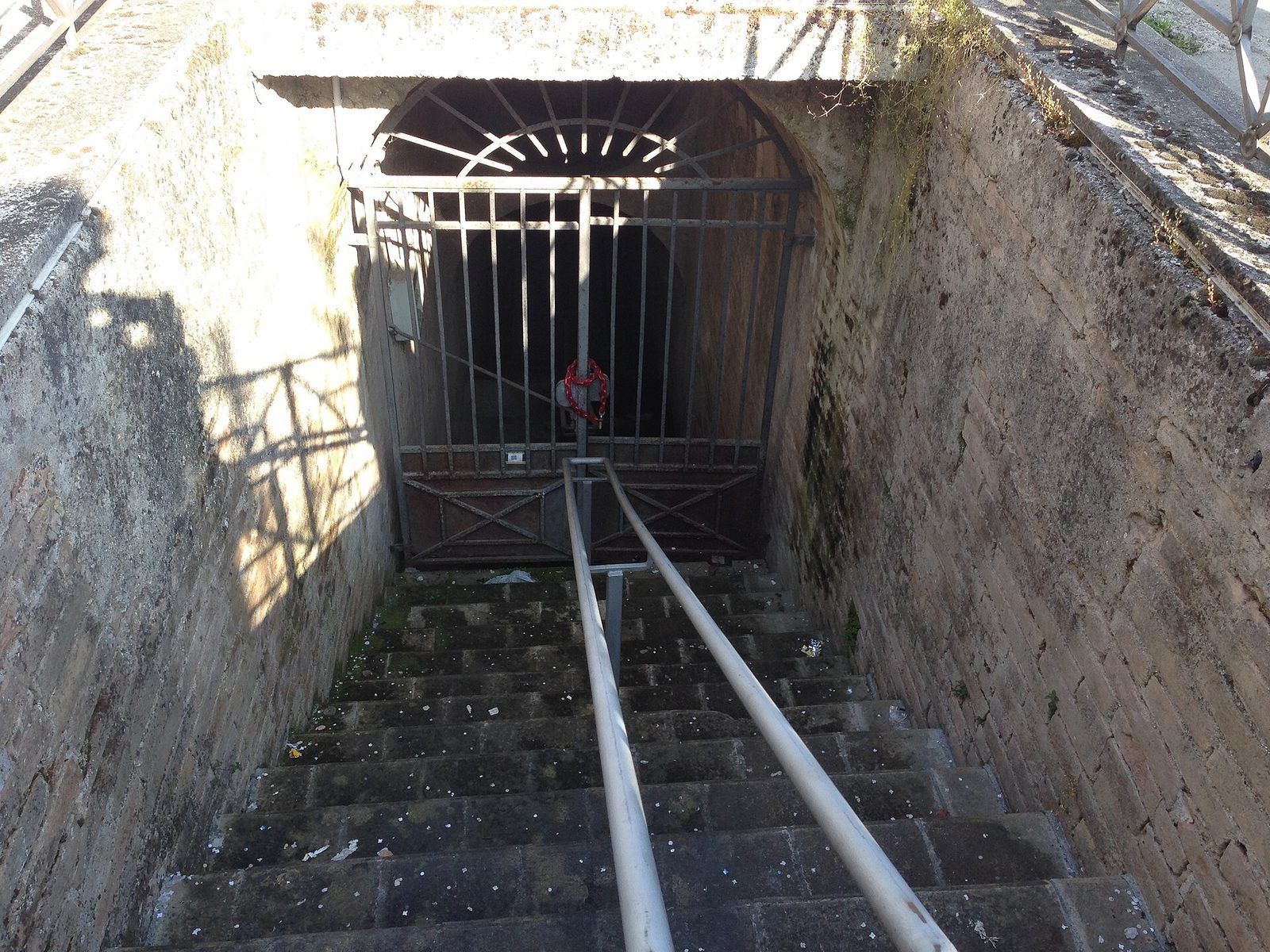
Ponte Sanguinario is underground in the eastern part of Piazza della Vittoria. A short staircase with an iron balustrade descends to it from street level. The bridge is a few metres from Porta Leonina, at the former site of Porta San Gregorio, and from the Basilica of San Gregorio Maggiore. Porta San Gregorio stands above the arch that remains buried.