Shaker Village of Pleasant Hill: A Historic Shaker Community
Site at a Glance
- Popularity
- High
- Country
- United States
- Primary era
- Modern
- Eras represented
- Modern
- Civilizations
- Unclassified
- Site type
- Settlement
- Remains
- Village
On this page14 sections
History
Shaker Village of Pleasant Hill was a Shaker community in the United States, active from 1805 until its dissolution in 1910. Established during the Second Great Awakening, a period of Protestant religious revival in the United States, it grew into a communal settlement supported by farming and manufacturing. The Shakers were a Christian movement whose energetic worship included movement and dancing, which gave them their common name.
Founding and communal life
On January 1, 1805, Lucy Wright, leader of the Shaker Ministry at New Lebanon, a major Shaker community in New York, sent John Meacham, Benjamin Seth Youngs, and Issachar Bates west to extend the movement into Kentucky. After traveling more than 1,000 miles, mostly on foot, they had attracted a small group of converts by August. Many had been influenced by the Cane Ridge Revival, an influential religious revival in Kentucky.
The converts followed Ann Lee, whom Shakers regarded as the second coming of Christ. Born in Manchester, England, in 1736, Lee founded the movement in 1772 after claiming to have experienced a vision in prison. Shakers believed that God was both male and female and that people were brothers and sisters. They therefore considered marriage and having children unnecessary. Couples who joined lived separately; young children and foundlings were raised in a nursery, and children could decide whether to remain in the community when they came of age.
In December 1806, 44 adult converts signed an agreement for mutual support and shared property, then began living on Elisha Thomas’s 140-acre farm. The community’s holdings later expanded to 4,369 acres. By 1812, members lived in East, Center, and West communal families, alongside a North gathering family for prospective converts. On June 2, 1814, 128 Shaker members, known as Believers, signed a formal covenant establishing the community on the model of New Lebanon.
Farming and trade
Pleasant Hill’s members farmed and made goods for sale. By 1816, they regularly transported products by river to cities including New Orleans. They grew broom corn and made flat brooms that sold for more than ordinary brooms. Other goods included dried fruit, garden seeds, and preserves, with production exceeding ten tons in a single year. In 1852, prices for the community’s produce were estimated at about one-third higher than those of other farmers.
The Shakers were also known for livestock and agricultural methods. In 1838, John Bryant sold a pair of Berkshire hogs for $500. During the 1850s, the community kept about 500 cattle and bred imported cows to improve milk production. Members raised Saxony sheep, and Shaker women spun and wove their wool for household use. Selective breeding and scientific farming were part of the community’s agricultural practice.
Conflict and decline
The Shakers formally opposed both violence and slavery, and they bought enslaved people in order to free them. In 1825, as tensions over slavery grew in the surrounding community, a mob attacked Pleasant Hill and destroyed some of its facilities.
During the Civil War, the community’s Union sympathies and its location in the South exposed it to hostility from neighbors and extremist groups. Members fed thousands of soldiers, especially around the Battle of Perryville, depleting the community’s resources; some younger men also left to join the army. The war caused less damage at Pleasant Hill than at the related Shaker community at South Union, Kentucky. Individual members’ views on slavery and the war may have differed, while the community formally maintained Shaker principles.
After the war, departures from the faith and the difficulty of retaining orphans after their indentures ended contributed to falling membership. Poor local residents also sometimes joined during winter without being able to support themselves. The community, once nearly 500 strong, had fewer than half that number by 1875, despite gaining converts from Sweden. Only 34 members remained in 1900.
Dissolution and preservation
The community dissolved in 1910, though elderly Shakers continued to live on the property. Mary Settles (1836–1923), its last surviving Believer, remained until her death. She said that Shaker women had always held equal rights within the communal society. After the dissolution, the property changed hands and took on other uses. The Meeting House served first as an automobile garage and later as a Baptist church.
After World War II, local residents renewed interest in the deteriorating village. Writer and Trappist monk Thomas Merton had written about Pleasant Hill by 1949 and remained interested in it until his death in 1968. In 1961, Lexington-area residents led by Joseph Graves and Earl D. Wallace began preservation efforts. The Friends of Pleasant Hill formed a nonprofit organization in 1964, acquired the site with a federal loan, and began restoration under James Lowry Cogar, formerly the first curator of Colonial Williamsburg. Shaker Village of Pleasant Hill is a National Historic Landmark District and was added to the National Register of Historic Places on November 11, 1971.
Remains
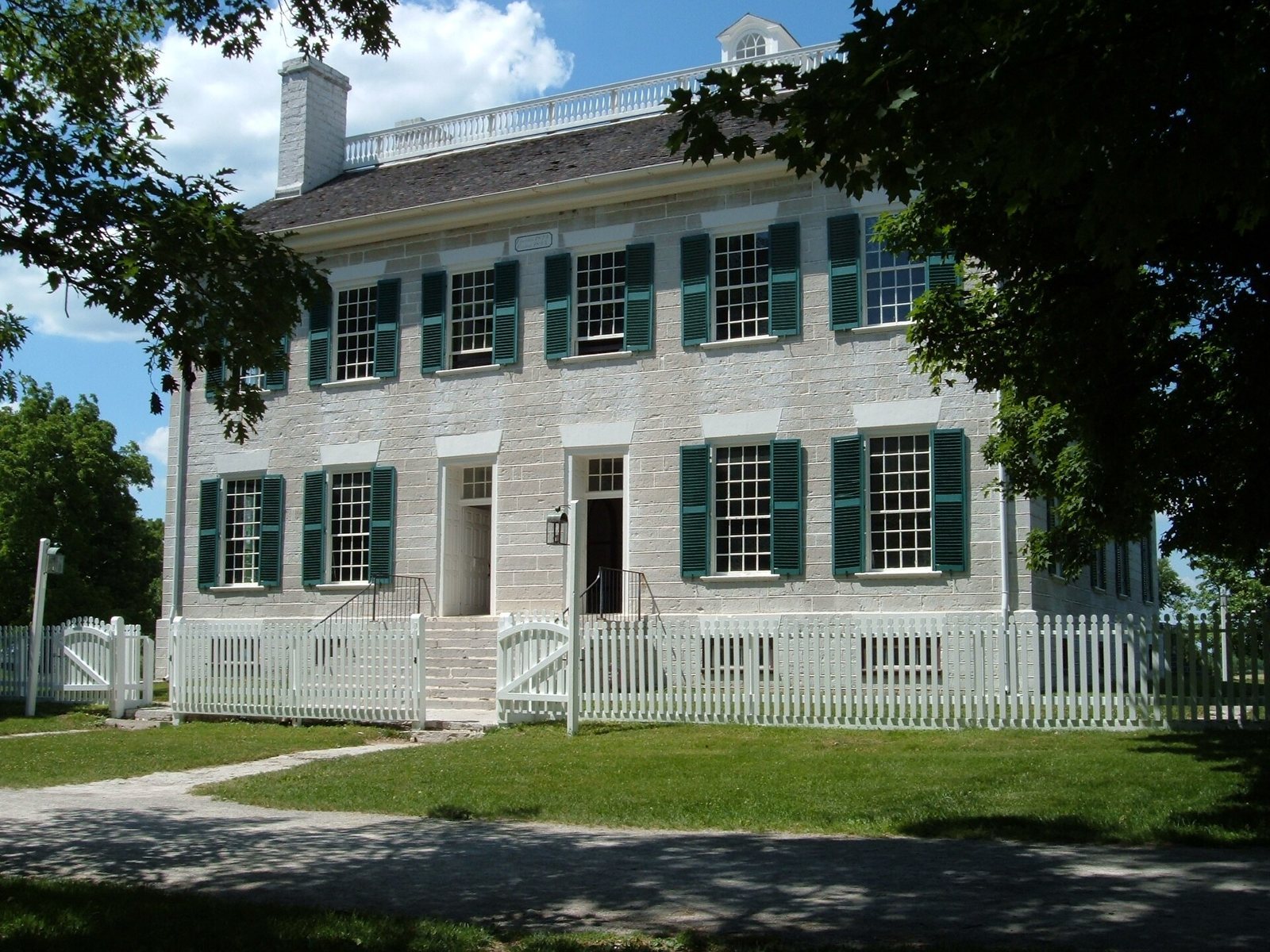
The historic community encompasses 2,800 acres of farmland and 34 original nineteenth-century buildings. By 1825, the village included large stone and brick dwellings and shops, grassy lawns, and stone sidewalks. As the Shakers acquired nearby farms for orchards and fields, they enclosed the land with stone walls. One hired worker spent 12 years building walls and completed 40 miles, at a cost of about $1,000 per mile.
Trustees’ Office
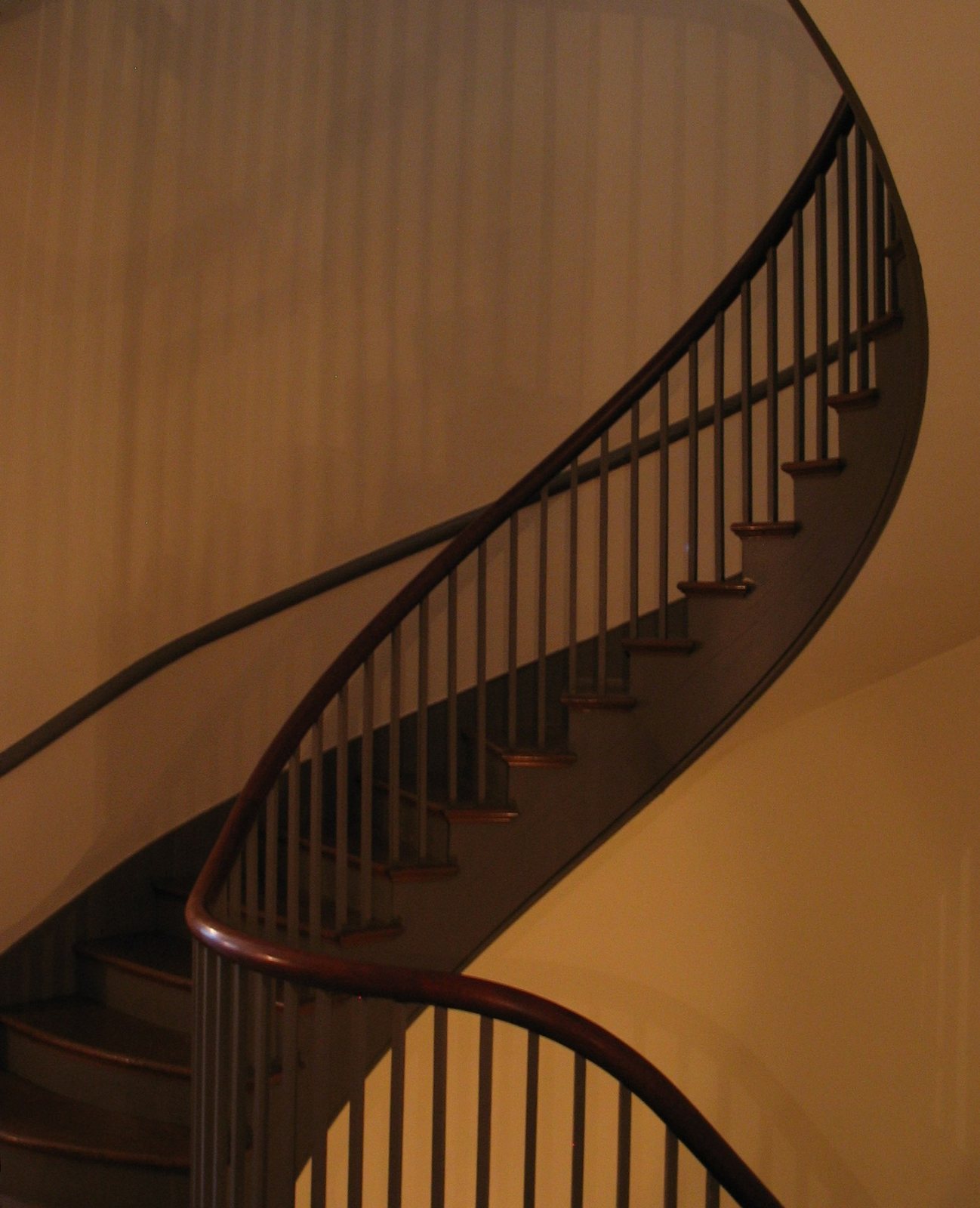
Built in 1805 and designed by architect Micajah Burnett, the Trustees’ Office served as the community’s administrative headquarters and a guest house. In 1959, the building had a double winding staircase rising toward a domed roof. Filtered sunlight entered near a window beside a large Lebanon cedar.
Meeting House
The Meeting House had a wooden floor built to withstand the dancing of several hundred Shaker men and women.
Water and service buildings
Water system
By 1825, Pleasant Hill had a community water system and pumps in its kitchens. In the early 1830s, members built a water tower on high ground. A horse-drawn pump raised water to the tower, and pipes carried it to kitchens, cellars, and wash houses. The system was believed to be the first of its kind in Kentucky.
Wash houses
The wash houses included horse-powered washing machines, part of the community’s system for handling household work.
Agricultural machinery
Mill
The mill used an elevator to move grain to an upper floor and included a mechanical corn sheller.
Barn
One barn had an upper floor for storing grain and hay, a machine for chopping fodder, and a rail system for delivering feed to cattle.