Picture Rock Pass Petroglyphs Site: Prehistoric Rock Carvings in Oregon
Site at a Glance
- Rating
- 4.6
- Popularity
- Low
- Country
- United States
- Primary era
- Stone Age
- Eras represented
- Stone Age
- Civilizations
- Unclassified
- Site type
- Civic
- Remains
- Rock Art
On this page4 sections
History
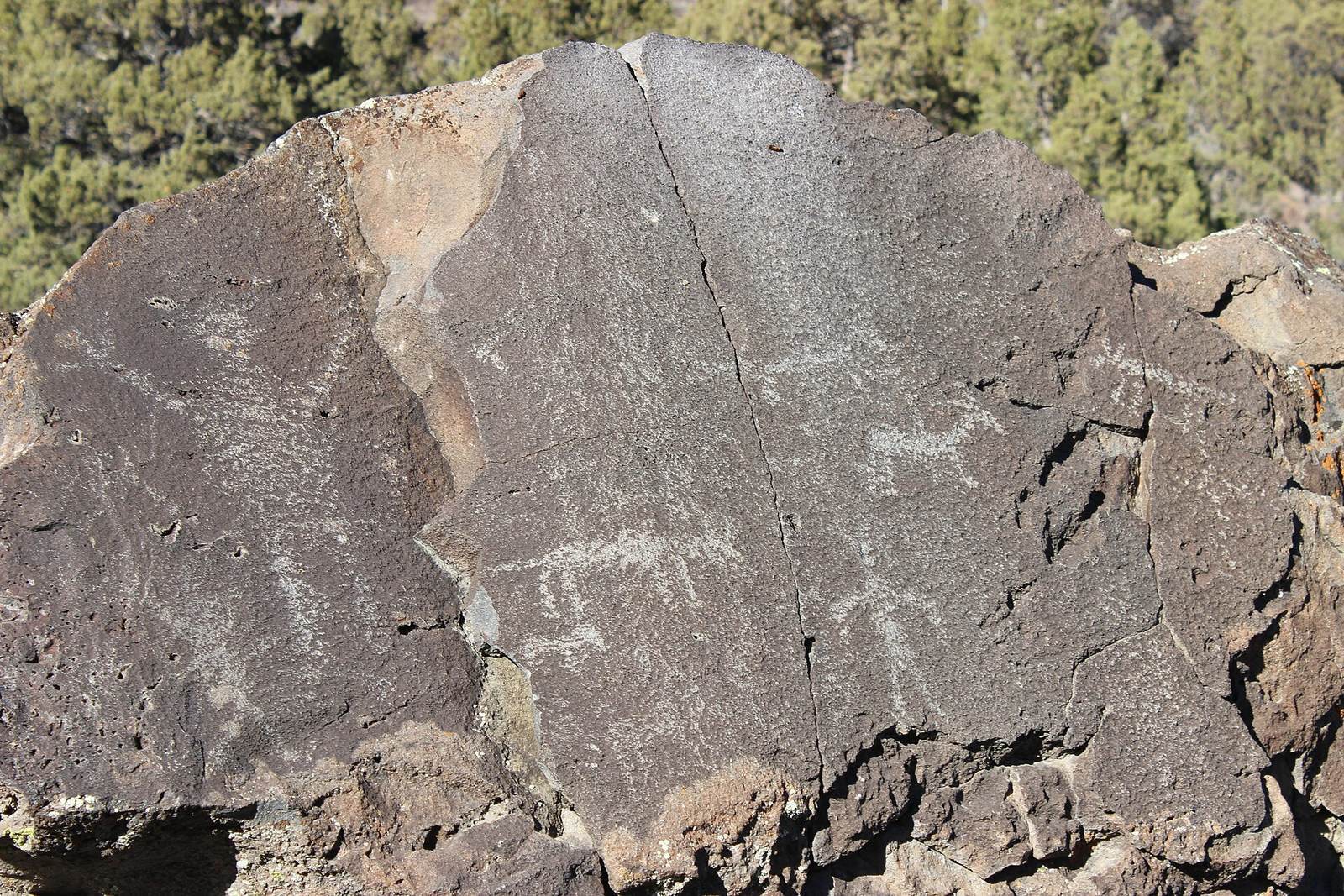
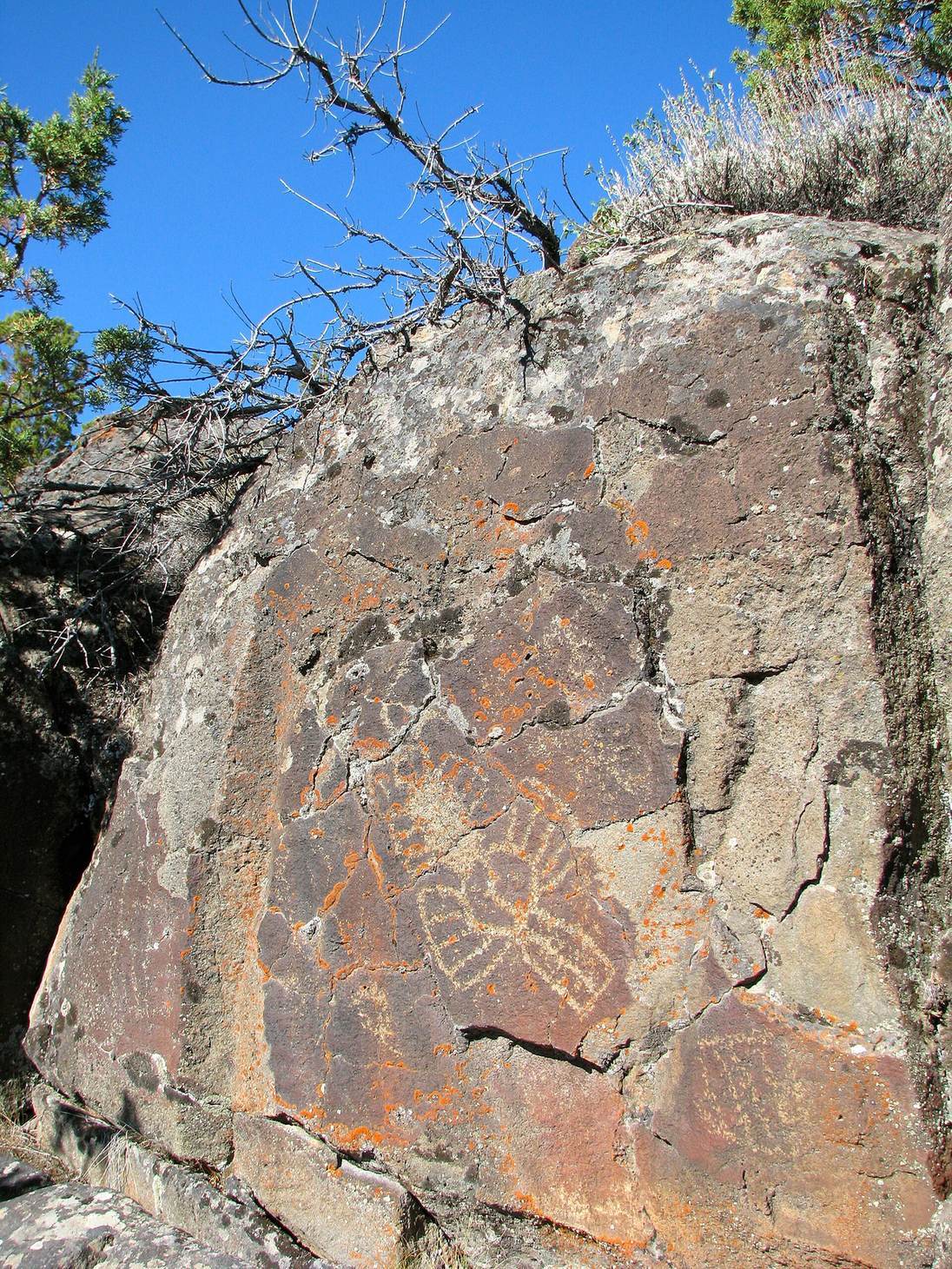
The Picture Rock Pass Petroglyphs Site is a group of prehistoric images carved or scraped into a basalt boulder near the summit of Picture Rock Pass in Lake County, Oregon, United States. Petroglyphs are images made by cutting, pecking, or otherwise marking rock. The carvings’ makers and meaning are unknown, and their possible age spans thousands of years.
Ancient Lakes and Early Human Presence
After the last glaciation, meltwater filled inland basins in what is now south-central Oregon. The resulting lakes included Summer Lake south of the pass and Silver Lake to the north. Marshes and meadows around them supported bison, deer, antelope, mountain sheep, and waterfowl, drawing prehistoric hunters to the area.
The date when people first arrived in south-central Oregon is unknown, but Native Americans lived in the region more than 12,000 years ago. Early inhabitants camped and hunted near the ancient lakes. Clovis-period artifacts from Fort Rock Cave, 29 miles north, and Paisley Caves, 20 miles south, are evidence of early occupation in the wider region.
Possible Dates and Cultural Context
The carvings’ age has not been established. They may date to the Clovis Period, an archaeological period placed 10,000 to 12,000 years ago, or the later Stemmed Point Period, dated to 7,500 to 10,000 years ago. Their likely age range is therefore 7,500 to 12,000 years. The designs’ purpose is also unknown. Possible explanations include hunting ceremonies, markers of routes or territory, stories of myths, commemorations, or imaginative designs.
When white travelers crossed southeastern Oregon in the 1840s, the Yahuskin Band of Northern Paiute lived around Picture Rock Pass. Tenino people from the Warm Springs area of central Oregon and Klamath people from southern Oregon may also have used the area. Given the carvings’ possible age, it is uncertain whether any of these peoples made them.
The site was added to the National Register of Historic Places, the United States’ federal list of properties recognized for historical significance, on August 28, 1975, for its cultural and archaeological value. The Bureau of Land Management, which administers the land, has mapped and photographed the carvings to track their condition. Volunteers from the Archaeological Society of Central Oregon help the agency’s cultural and law-enforcement staff monitor the site.
Remains
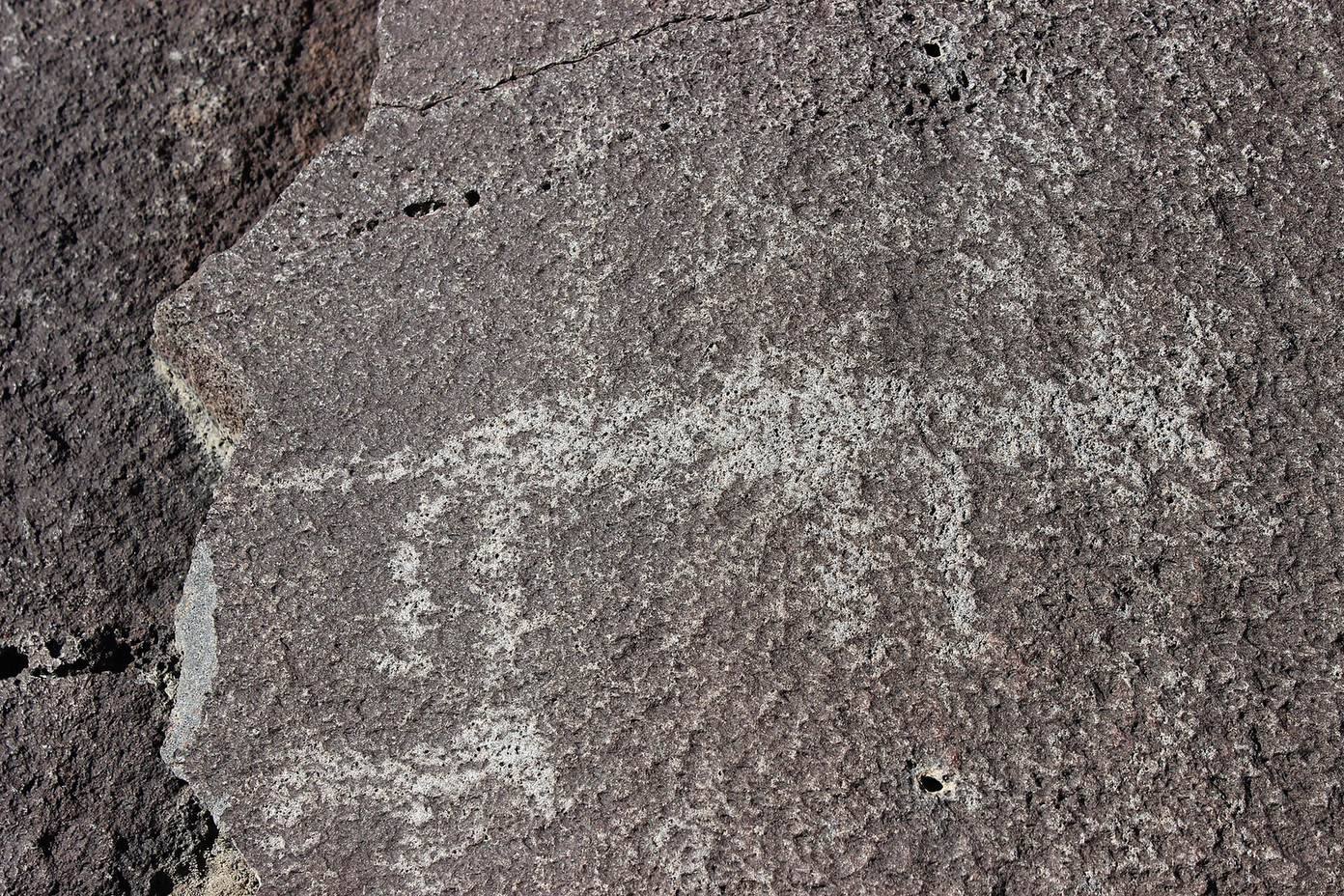
The carvings are on the south-facing surface of a basalt boulder near the summit of Picture Rock Pass, in northern Lake County, on land administered by the Bureau of Land Management. The group contains ten figures: three human-like forms and seven four-legged animals. The designs were cut or scraped into the rock.
One human-like figure is a small stick form at the lower left, while a medium-sized figure lies along the bottom, right of center. The largest is bipedal, with large horns and what may be another pair of arms; it could represent a spirit. The animals may depict game or hunting dogs. A central animal appears to carry a rider, but the rider’s different patina suggests it was probably added later. The animal beneath it may originally have represented a mountain sheep or another game animal. The carvings are fragile, and the site has remained free of vandalism.