Phillaur Fort: A Mughal Sarai Transformed into a Sikh Military Stronghold
Site at a Glance
- Rating
- 4.5
- Popularity
- Medium
- Country
- India
- Primary era
- Early Modern
- Eras represented
- Early Modern
- Civilizations
- Sikh Empire
- Site type
- Military
- Remains
- Fort
On this page6 sections
History
From Mughal Sarai to Sikh Fort
Phillaur Fort is a historic citadel in Phillaur, India, first established as an imperial sarai during the reign of Shah Jahan, the Mughal emperor who ruled from 1628 to 1658. A sarai was a roadside inn for travelers, merchants, and official traffic. The original complex stood beside the Grand Trunk Road in Punjab.
In 1809, the sarai was rebuilt as a fort under Maharaja Ranjit Singh, the Sikh ruler who established and expanded the Sikh Empire in Punjab during the early nineteenth century. The project was directed by Dewan Mohkam Chand, a senior court official, with assistance from Ranjit Singh’s French and Italian generals. Its construction may have responded to the British fort being built at nearby Ludhiana. Officially known as Maharaja Ranjit Singh Fort, the new stronghold incorporated European architectural influences into the Sikh military landscape.
British and Institutional Reuse
After the Sikh defeat at the Battle of Aliwal in 1846, during the First Anglo-Sikh War, the British took possession of the fort. They reused it as an artillery depot, a military installation for storing and servicing artillery and its ammunition.
By 1891, the complex had been converted into a police training academy. It remains a functioning police academy under the Punjab Police and is also identified as the Maharaja Ranjit Singh Punjab Police Academy. This continuing institutional custodianship has prompted debate about heritage access. The complex also includes the shrine of Pir Baba Abdullah Shah Ji, linking the fort to an ongoing religious and cultural tradition. A pir is a Muslim spiritual guide or saint.
Remains
Defensive Walls and Ramparts
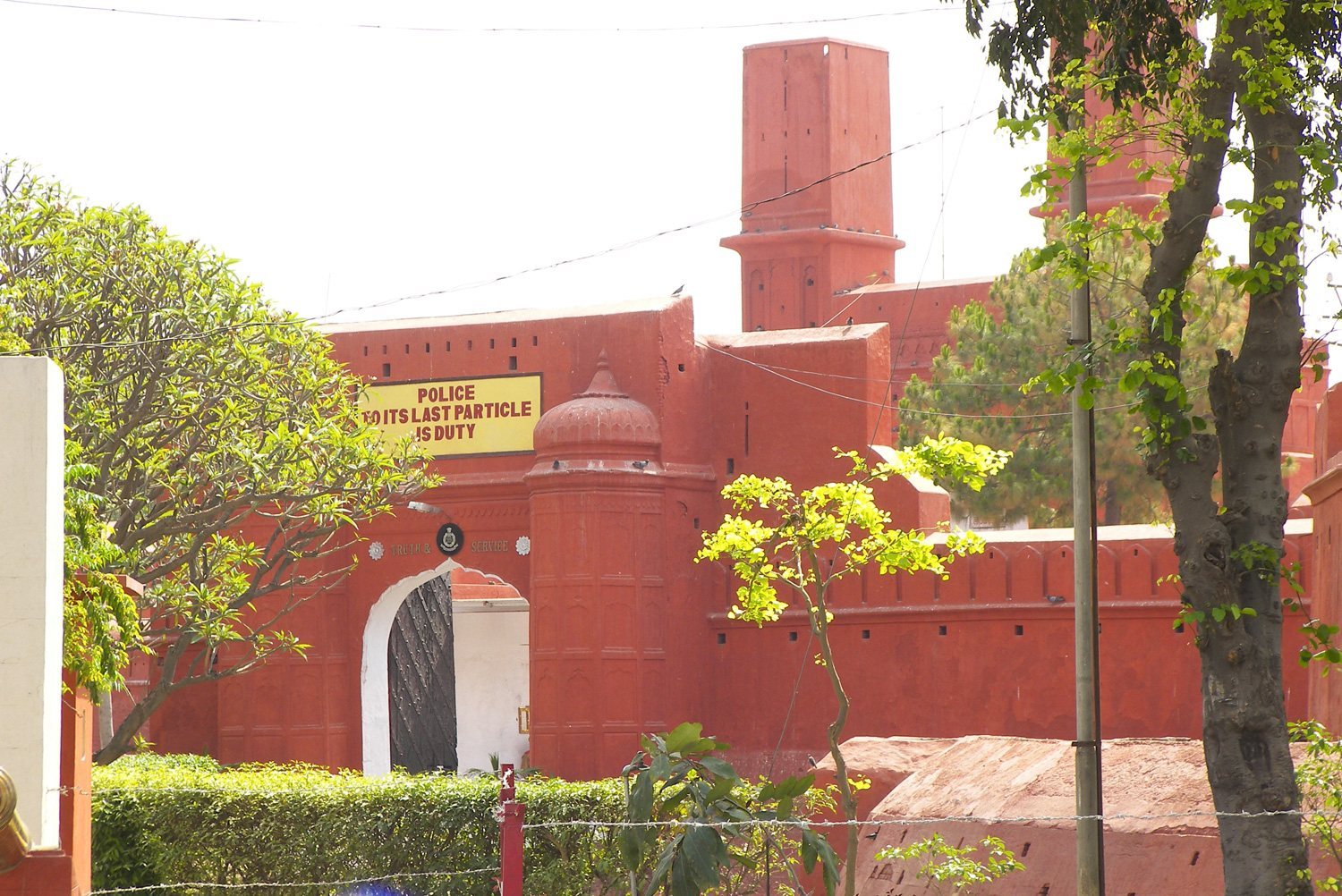
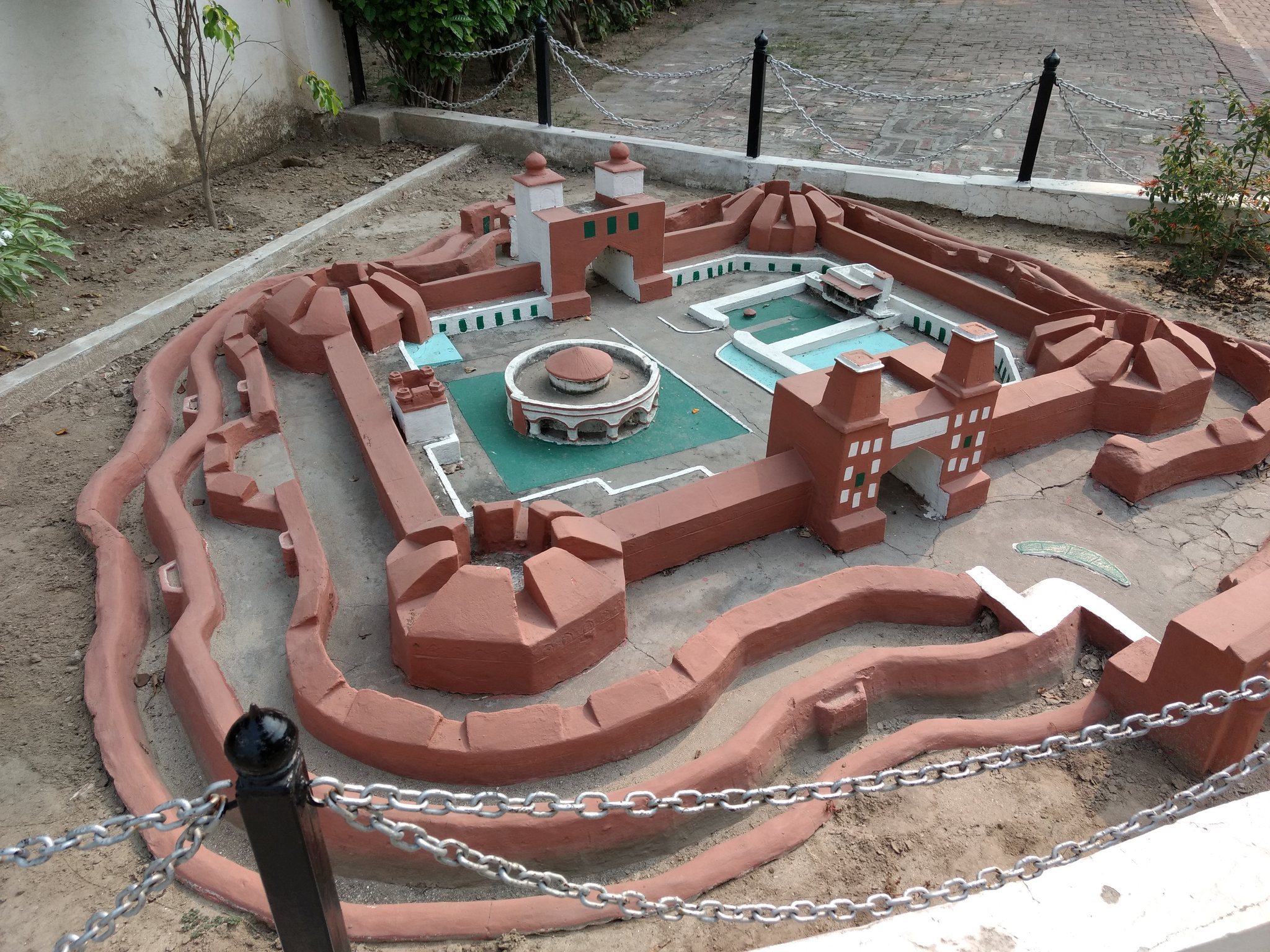
Phillaur Fort is a red-brick citadel with a distinctly European architectural character. Channels were excavated along its boundary, while an extensive moat surrounded the defences. The outer walls slope inward, a design intended to help deflect artillery fire. High walls, four substantial corner bastions, and further bastions along the ramparts form the defensive circuit. A bastion is a projecting fortification that allows defenders to cover the walls and the ground beside them.
Parapets and chemin de ronde walkways formed part of the fortifications. Parapets are low protective walls along the edge of a defence, while a chemin de ronde is a patrol walkway running along a fortification. The mortar-built ramparts now enclose several institutional buildings, including the Police Training College, the director’s residence, and the Finger Print Bureau.
Gateways and Religious Structure
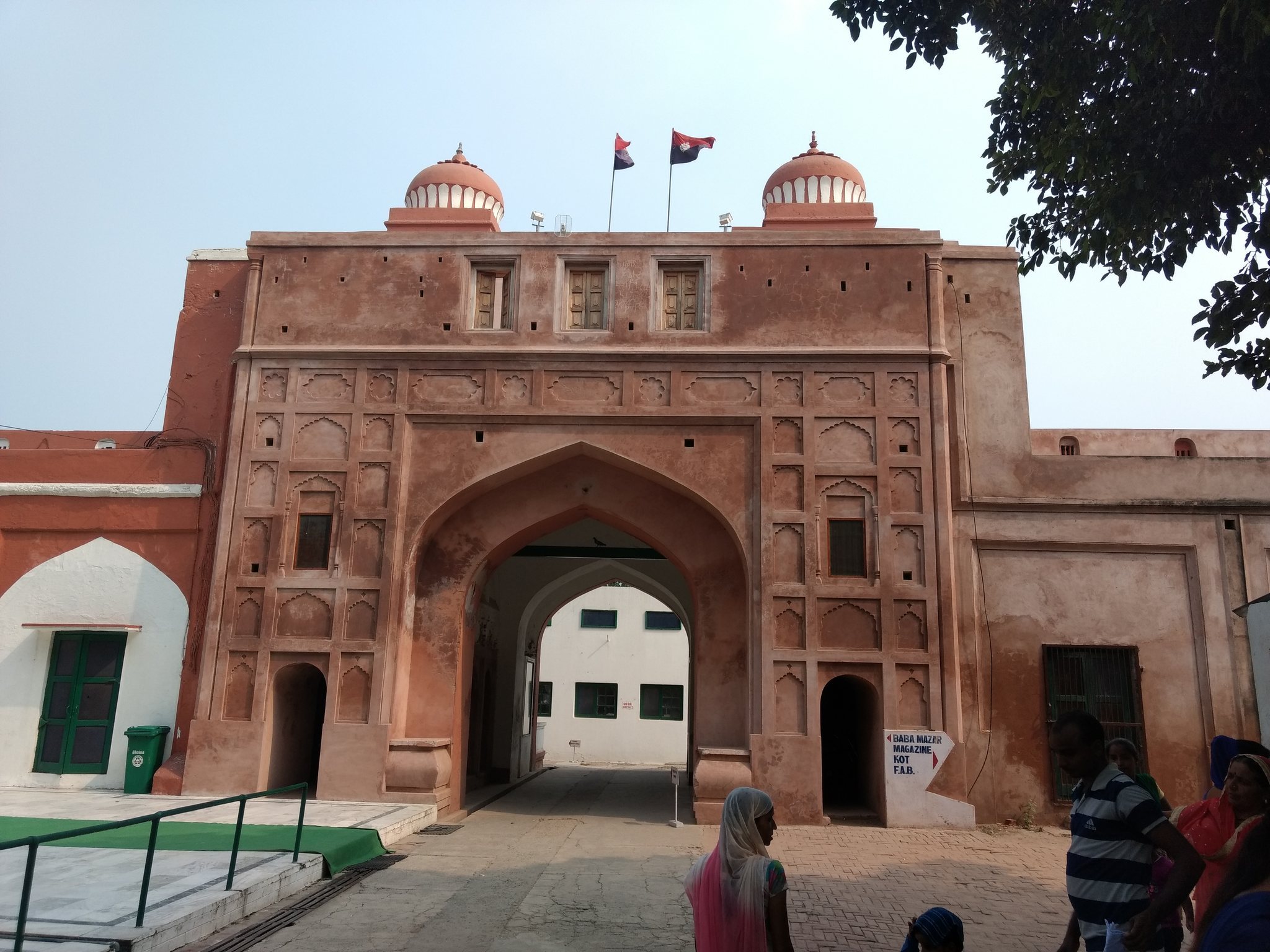
The eastern Delhi Gate and western Lahori Gate each rise beneath a three-storey watchtower. Their gateway complexes include decorative chajjas, projecting architectural sunshades or eaves, and facades richly lined with niches. These elements combine the fort’s military purpose with the European-influenced architectural character established during its reconstruction under Ranjit Singh.
The fort complex also contains the shrine of Pir Baba Abdullah Shah Ji. Its presence adds a religious dimension to the surviving military and institutional layout and helps explain the site’s continuing cultural importance.