Panther Intaglio Effigy Mound: A Native American Earthwork in Wisconsin
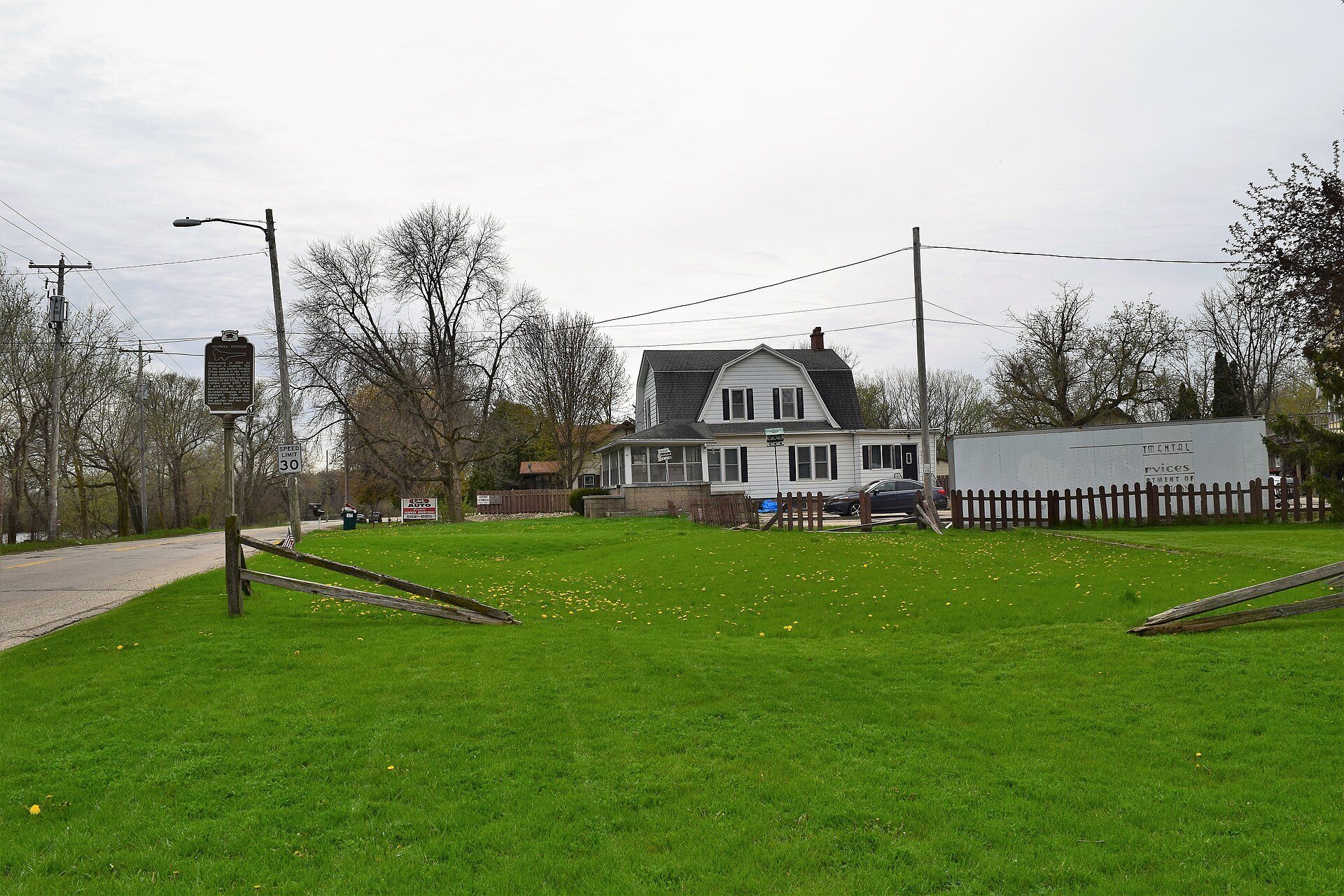
Site at a Glance
- Rating
- 4.2
- Popularity
- Very Low
- Country
- United States
- Primary era
- Medieval
- External website
- Open
- Eras represented
- Medieval
- Civilizations
- Unclassified
- Site type
- Civic
- Remains
- Monument
On this page6 sections
History
The Panther Intaglio Effigy Mound is a Native American earthwork in Fort Atkinson, Wisconsin, United States, probably created between AD 700 and 1200, when effigy mounds were built in Wisconsin. Unlike a raised effigy mound, it was formed by excavating a large animal-like depression. The feature belonged to a group of more than a dozen mounds, most of which were later destroyed by farming and residential construction.
Creation and early interpretation
Increase A. Lapham, a nineteenth-century American antiquarian and surveyor of historical remains, discovered the site in 1850 while examining Wisconsin’s prehistoric earthworks. His sketch showed the depression and the surrounding features. Lapham used the word “lizard” as a convenient description, while acknowledging that the intended figure was unknown. Later archaeologists proposed that it represented a panther or a water spirit, a supernatural being associated with water in Indigenous religious traditions. These identifications remain interpretations rather than certain conclusions.
Lapham also identified eight other Wisconsin intaglios, including lizard-shaped examples near Milwaukee and Pewaukee and two geometric forms at Theresa. Two bear-shaped intaglios were found near Baraboo during the mid-nineteenth century. By 1893, the Fort Atkinson example was the only surviving intaglio in Wisconsin. Antiquarian Stephen Peet proposed that its tail pointed toward a nearby conical mound and suggested that intaglios were connected with conical mounds used as lookouts, while the depressions served as hiding places for hunters. This explanation remains uncertain.
Preservation and recognition
By 1910, the surviving intaglio was threatened. The Daughters of the American Revolution, a lineage-based historical organization involved in preserving sites associated with American history, worked with former Wisconsin governor Hoard and others to purchase the feature. They preserved it in a small park. The Panther Intaglio was added to the U.S. National Register of Historic Places, the federal inventory of historically significant sites in the United States, on October 15, 1970.
Remains
The surviving earthwork
The Panther Intaglio lies on the north side of the Rock River and consists of a man-made ground depression about 125 feet long and two feet deep. It forms an animal-like figure that has been described as a lizard, panther, or water spirit. The feature is an intaglio, or reverse effigy mound, meaning that its builders dug into the natural ground rather than piling soil above it.
Ridges surround the figure’s head and body. They were probably created from soil removed while excavating the cavity. Similar animal-like forms occur among the raised effigy mounds of the upper Midwest. The surviving intaglio is preserved within a small city park.
The former mound group
The intaglio once stood among more than a dozen raised earthworks. The group included conical mounds, a bird, a bear, a dumbbell-shaped mound, and linear mounds. Those features were subsequently destroyed, leaving the depression as the surviving element of the former group.