Panamá Viejo: Archaeological Site of Panama’s Original Spanish City
Site at a Glance
- Rating
- 4.6
- Popularity
- High
- Country
- Panama
- Primary era
- Early Modern
- External website
- Open
- Eras represented
- Early Modern
- Civilizations
- Spanish
- Site type
- City
On this page23 sections
History
Panamá Viejo is the archaeological site of the original Panama City in Panama, founded by the Spanish on 15 August 1519 during the early colonial period. Originally named Nuestra Señora de la Asunción de Panamá, it became the first permanent European settlement on the Pacific coast of the Americas and the capital of Castilla del Oro.
Foundation and Colonial Administration
Pedro Arias Dávila, also known as Pedrarias Dávila, founded the settlement after Panamá replaced Santa María la Antigua del Darién and Acla as the principal Spanish centers in the region. A royal decree issued by Charles V on 15 September 1521 granted the town city status, a coat of arms, and the title “Most Noble and Most Loyal City of Panama.” Local civic affairs were administered by a cabildo, the Spanish colonial municipal council.
From 1520, Genoese merchants controlled much of the city’s commerce under a concession from the Spanish authorities. Their commercial presence continued for roughly a century, reflecting the alliance between the Habsburg monarchy and the Republic of Genoa. Panamá Viejo also became a departure point for Spanish expeditions to Peru, including those that conquered the Inca Empire. Gold and silver from South America passed through the city toward the Caribbean ports of Nombre de Dios and Portobelo, and from there to Europe.
Administrative, Commercial, and Religious Growth
The city developed as an administrative, commercial, and religious center. The bishop’s seat was transferred there, and in 1539 Panamá became the seat of the Real Audiencia of Panama, a high colonial court with judicial and administrative authority over Central America and the northern coasts of South America. Franciscan, Augustinian, Dominican, and Jesuit communities established houses in the city.
By 1610, Panamá Viejo contained about 5,000 inhabitants, approximately 500 houses, a cathedral, a hospital, convents, and chapels. The population grew to about 8,000 by the middle of the seventeenth century and about 10,000 by 1670. The city reached its greatest prosperity during the second half of the seventeenth century, when South American precious metals moved through it on their way to the Caribbean and Europe.
Disasters and Destruction
Panamá Viejo faced a shortage of fresh water and a difficult climate. Fires, attacks by pirates and Indigenous groups from Darién, and an earthquake in 1621 repeatedly damaged the settlement. A major fire on 21 February 1644 destroyed numerous buildings, including the cathedral and other religious structures.
On 28 January 1671, Henry Morgan, a Welsh privateer, attacked the city with approximately 1,400 men after crossing the isthmus from the Caribbean coast. His forces defeated the city militia and captured Panamá Viejo. The number of defenders killed is uncertain, with estimates ranging from about 400 to more than 600, while hundreds were taken prisoner.
The fire that followed remains uncertain in origin. Morgan’s forces may have started it, while Governor Juan Pérez de Guzmán wrote that he ordered the gunpowder magazines ignited during the Spanish retreat. Panamá Viejo was largely destroyed and was not reoccupied. In 1672, the Spanish Crown ordered the city rebuilt approximately 8 to 10 kilometers to the southwest, on the peninsula that is now the historic district of Panama City. The ruined settlement subsequently supplied building material for the new city.
Archaeology and Heritage
Panamá Viejo was declared a historic monument in 1976. The Patronato de Panamá Viejo, a nonprofit foundation, was established in 1995 to support conservation, restoration, and management. From 2003 to 2025, the site formed part of the UNESCO World Heritage property Archaeological Site of Panamá Viejo and Historic District of Panama City. In 2025, it was inscribed as part of the cultural World Heritage property Colonial Transisthmian Route of Panamá under criteria (ii) and (iv). The archaeological component covers approximately 28.7 hectares and has a buffer zone of approximately 619.9 hectares.
The Patronato established a site museum and a Heritage Research Center devoted to history, archaeology, ecology, conservation, and heritage management. Beside the former Plaza Mayor, the Site Museum presents the area’s pre-Hispanic, colonial, and modern historical layers and includes a model of the former city.
Remains
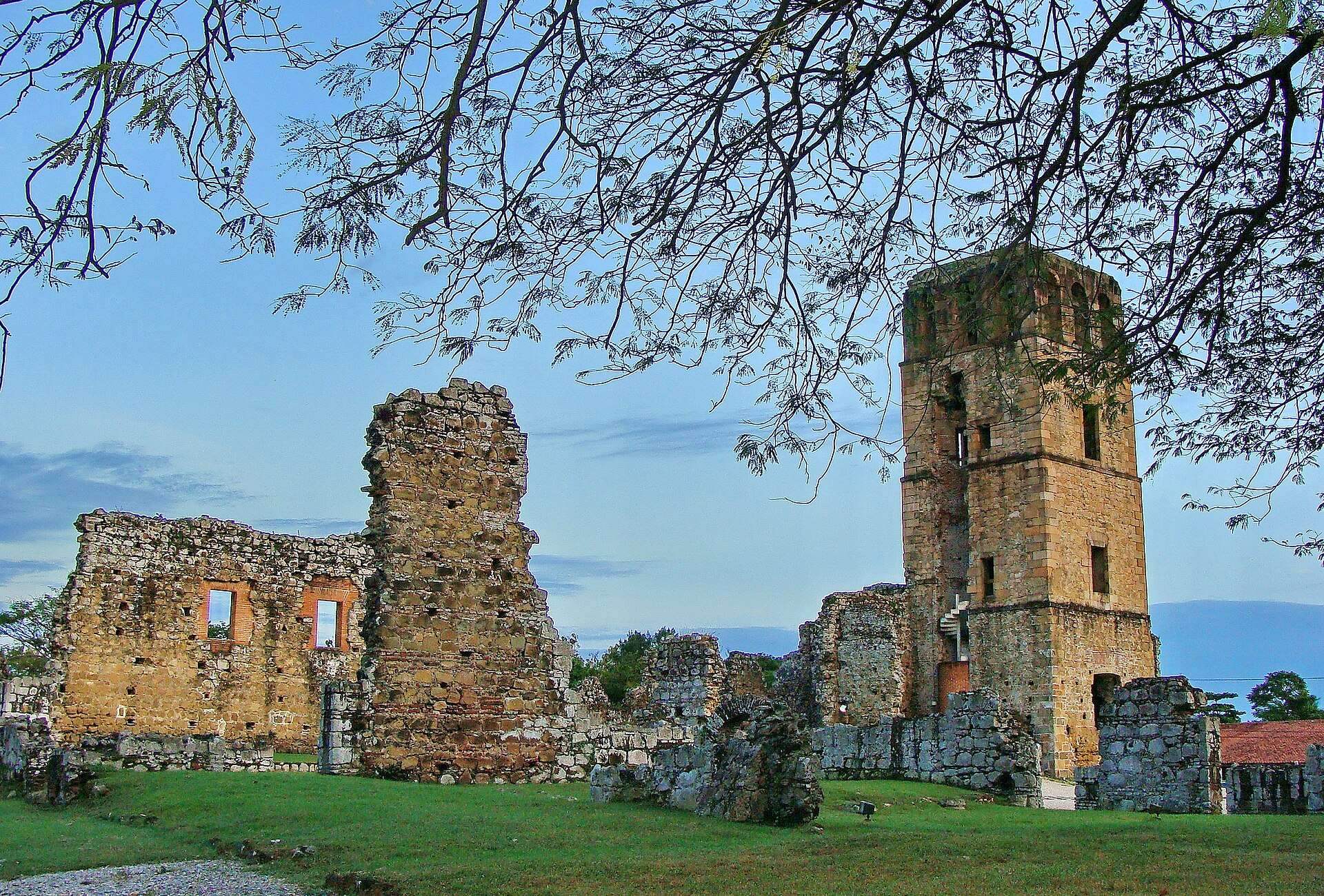
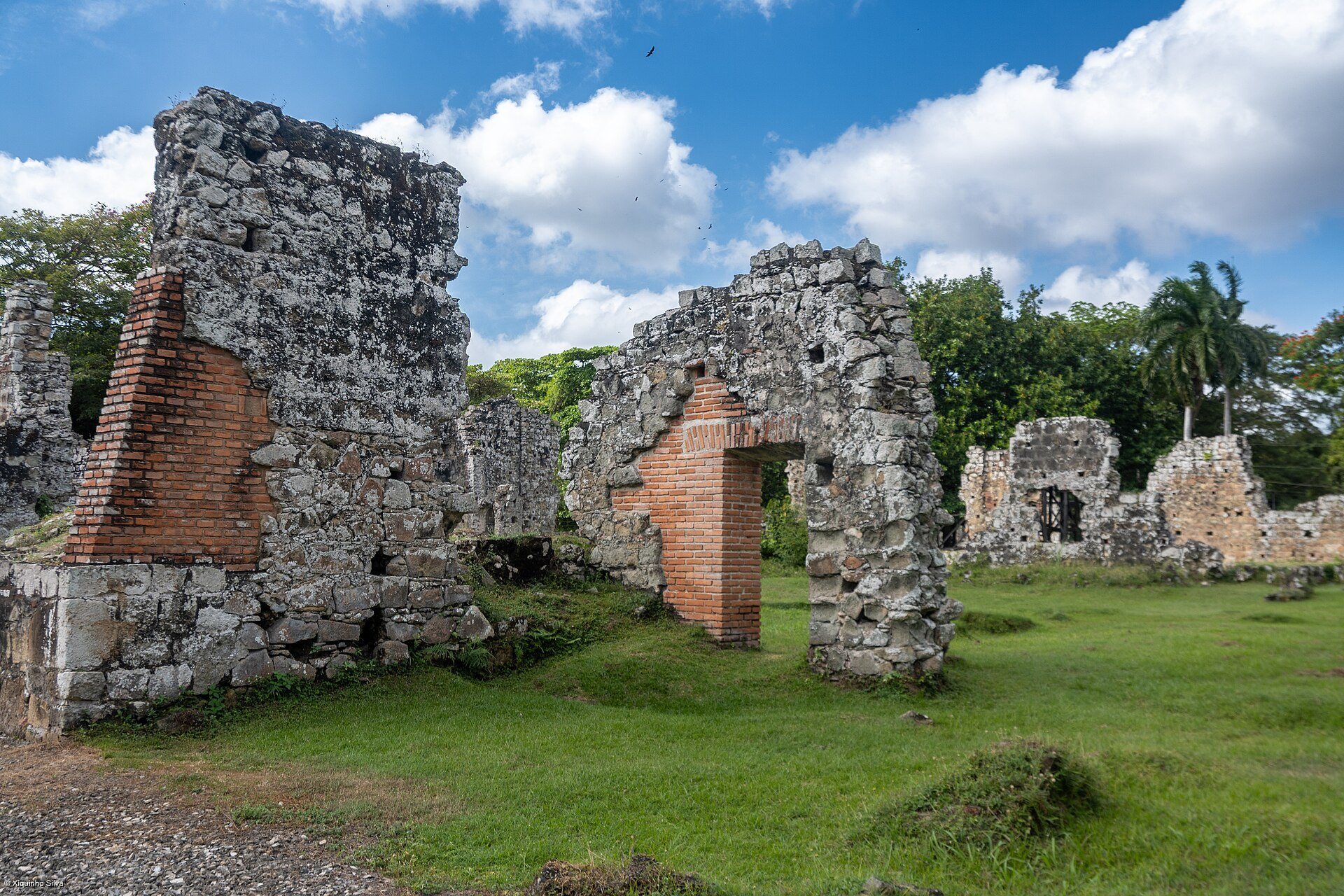
Between the mouths of two streams, the archaeological site extends across approximately 28.7 hectares in an L-shaped area. Much of the original street system survives, broadly following a grid, although the streets are not perfectly parallel and the blocks are irregular. Wealthier houses and most convents occupied a narrow strip along the coast, while two exits crossed surviving bridges that connected the city with the Camino Real and the Camino de Cruces, routes leading toward the Atlantic coast.
Civic and Commercial Buildings
Plaza Mayor and Cabildo
The Plaza Mayor measured approximately 69 by 57 meters and formed the central civic space. Because the settlement was compact, house lots were generally small, narrow, and elongated. The municipal council, or Cabildo, ranked second in civic importance after the Casas Reales. A first building, begun around 1540 as a mayor’s private residence, was destroyed by fire before completion. A masonry meeting hall was constructed near the cathedral in 1583. It had two floors and a three-bay plan, was destroyed by the 1621 earthquake, and had been rebuilt by about 1640.
Casas Reales
The Casas Reales formed a concentrated civic and administrative complex along the coast. It contained government offices, the Real Contaduría, the court, a prison, and residences for the governor and judges. A moat separated the complex from the rest of the city. During the 1580s it comprised six buildings made of wood and stone. The earthquake of 1621 severely damaged them, and they were demolished in 1647 for possible reconstruction. The completion of that rebuilding is uncertain, and waves later damaged the remaining structures.
Casa de los Genoveses
Near the port, the Casa de los Genoveses was a two-story building associated with Genoese merchants. Archaeological work identified it during the twentieth century, and the building served as a center of the slave trade in Panama. It burned and was destroyed during the destruction of the city in 1671.
Residences and Other Civic Remains
The surviving remains also include Casas Terrín and Alarcón. Casa Alarcón was associated with Pedro de Alarcón and functioned as a rental house. Other civic and service structures include the Hospital de San Juan de Dios, where the sick were treated, and the Casas Oeste, situated west of the Plaza Mayor.
Cathedral and Religious Complexes
Cathedral of Nuestra Señora de la Asunción
The Cathedral of Nuestra Señora de la Asunción stood beside the Plaza Mayor. A modest wooden cathedral was built in 1535, then destroyed by fire in 1540 and rebuilt in wood east of the plaza. A stone cathedral followed between 1619 and 1626. The 1644 fire destroyed it, after which it was rebuilt in stone with a wooden roof.
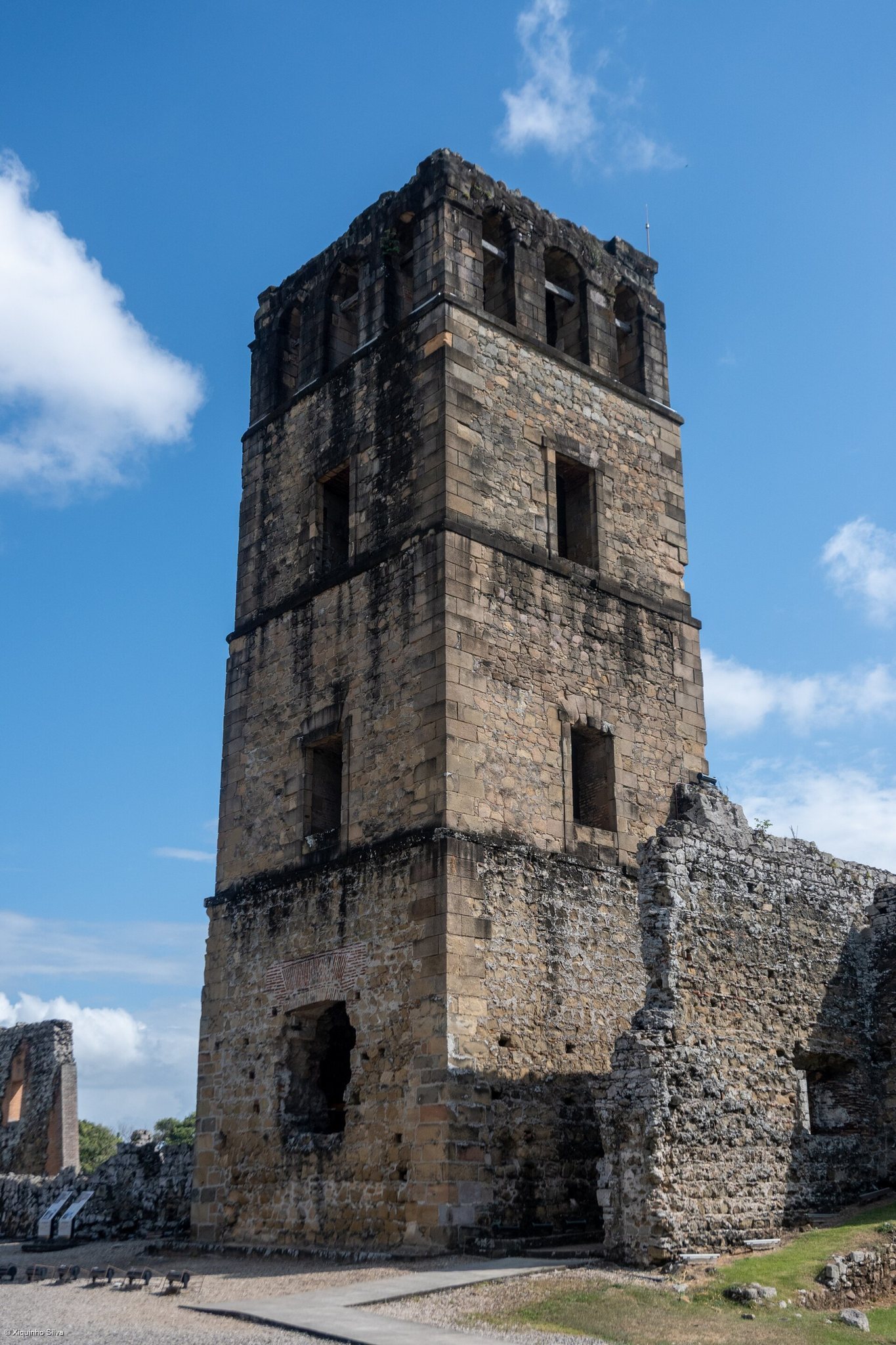
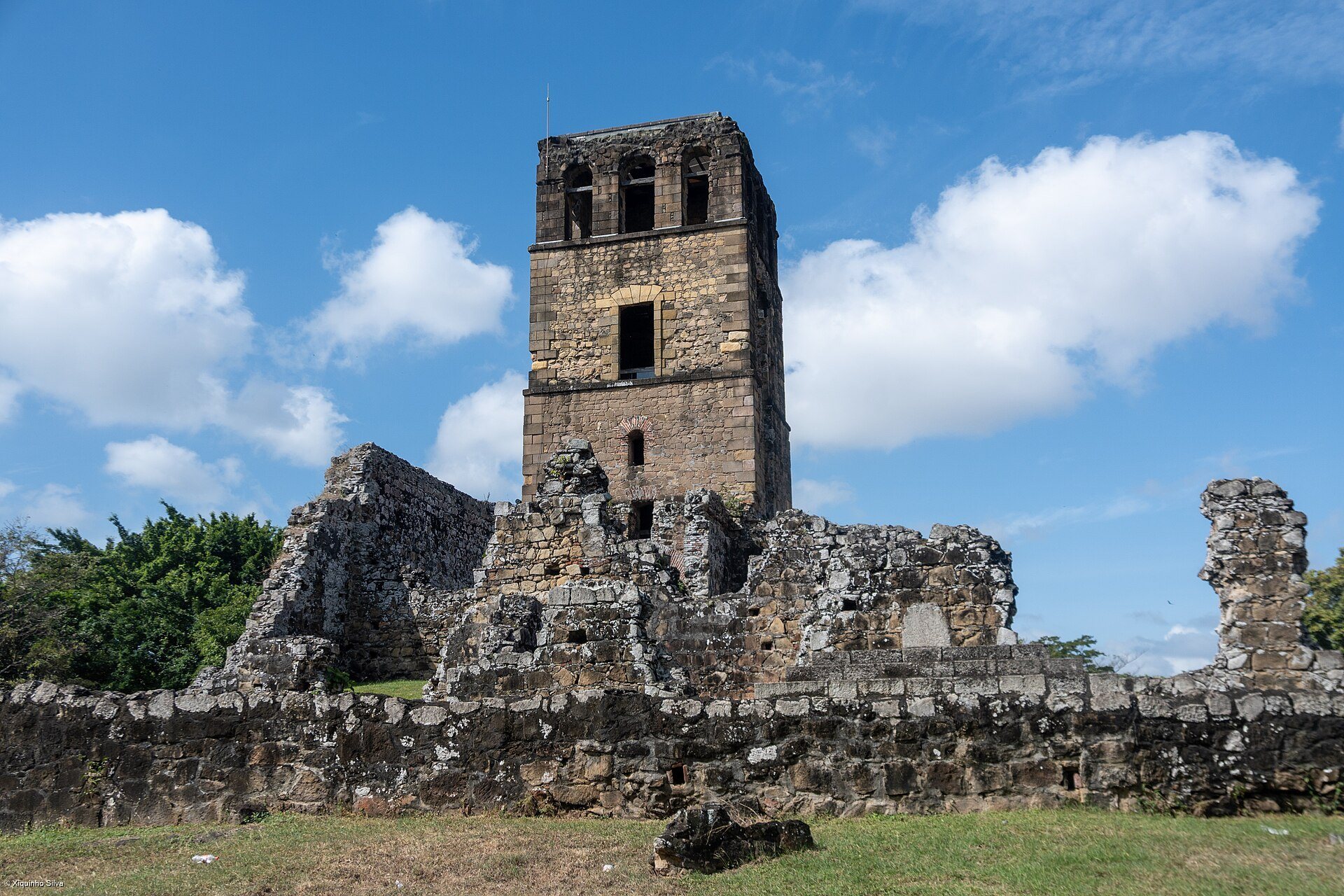
The cathedral had three naves, meaning a central interior space flanked by two side aisles, and measured approximately 47.1 meters long by 19.4 meters wide. Its 30-meter bell tower rose above the apse, the end of the church, and also served as a lookout. The building faced south rather than east and included two chapels beside the central space, creating a Latin-cross plan. The cathedral was destroyed in 1671. Its surviving tower has been adapted as a lookout with three levels, resting platforms, interpretive displays, and 115 steps.
La Concepción
The Convent and Church of La Concepción was founded by nuns who arrived from Lima in 1597 or 1598. Its first church had a single nave, and the 1621 earthquake badly damaged the original complex. Construction of a much larger replacement began around 1640 but remained unfinished when Panamá Viejo was destroyed in 1671. The replacement church had a two-level choir.
The complex occupied approximately two city blocks. Its remains include a large cistern, a constructed reservoir for storing water, enclosed by a masonry wall and covered by four barrel vaults supported by stone arches and columns. It could hold more than 124,000 liters. The convent remains have undergone conservation and intervention.
Merced
Mercedarian friars arrived in Panamá Viejo in 1522 and received a large plot at the western edge of the city. Their wooden church was replaced by a stone building during the seventeenth century. The fire of 1671 did not destroy the church and convent, but the friars moved to the new city, where the church facade was dismantled and re-erected.
The church followed a Latin-cross plan with a central nave and two side aisles and had a wooden roof. A later avenue crossed the Panamá Viejo remains before being moved to another alignment.
Franciscan Complex
The Franciscans arrived during the 1520s and first occupied a temporary building. They moved to a site near the sea in 1573, where their large convent was built between 1589 and 1601. Construction of the church began in 1603. The church had three aisles, a principal facade facing south toward the sea, and a wooden roof supported by stone arches. Parts of the church and the front section of the convent survive.
Jesuit Complex
The Jesuit Convent and Church of the Society of Jesus was established near the Plaza Mayor in 1578. The Jesuits first occupied a private house, expanded it with donations, and built a wooden church. Work on a stone church began in 1608, but the earthquake of 1621 severely damaged both church and convent.
The complex was later rebuilt in stone with a wooden roof supported by wooden columns. It covered approximately 5,000 square meters and had two floors, with the refectory, or communal dining hall, and the monks’ cells on the upper floor. The complex included a three-nave church and a wooden cloister gallery enclosing an internal courtyard. Surviving remains include masonry ruins, column bases, and foundations. After the cathedral, the Jesuit church was regarded as the city’s most prestigious conventual church and served as the cathedral when that building was ruined or under construction. Parts of the ruins have been adapted for teaching the colonial history of Panama.
Dominican Complex
The Dominican community was established around 1571 in a modest wooden building in the northern part of the city, enclosed by a cane fence. The complex expanded gradually, and a stone building was probably constructed between 1610 and 1614. It survived the 1621 earthquake and had a single cloister surrounded by a covered gallery.
Other Religious Remains
The former convent of San José forms part of the surviving religious remains, along with additional structures associated with the city’s churches and convents. Early churches and public buildings were generally built of wood. During the seventeenth century, many were rebuilt in stone, while their roofs commonly remained wooden. Churches followed rectangular or Latin-cross plans, and monasteries generally included internal courtyards, with stone cells and refectories alongside wooden service buildings.
Bridges, Defenses, and Museum
Puente del Rey and Puente del Matadero
The Puente del Rey crossed the Río Abajo and marked the northern limit of the city. It was associated with the Camino Real, the route connecting Panamá Viejo toward the Atlantic coast. A second surviving bridge served the Camino de Cruces and is also known as the Puente del Matadero. Together, these crossings formed part of the city’s connections with the two overland routes across the isthmus.
Fortín de la Natividad
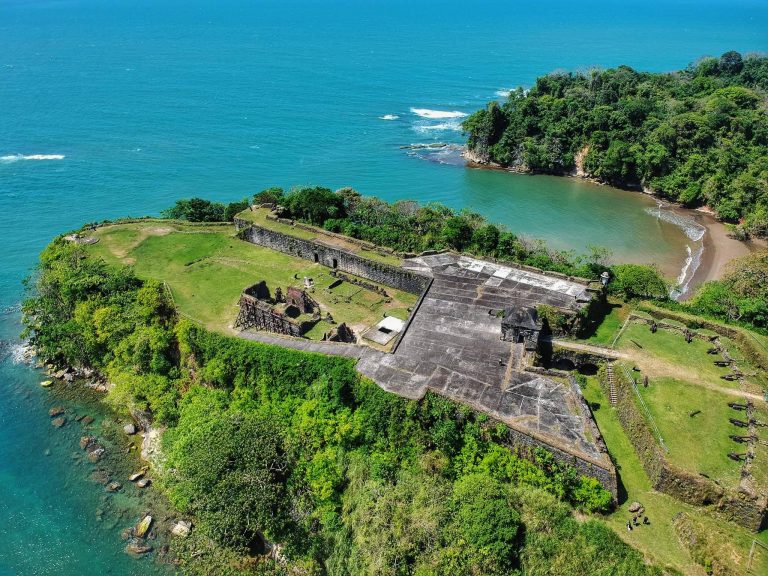
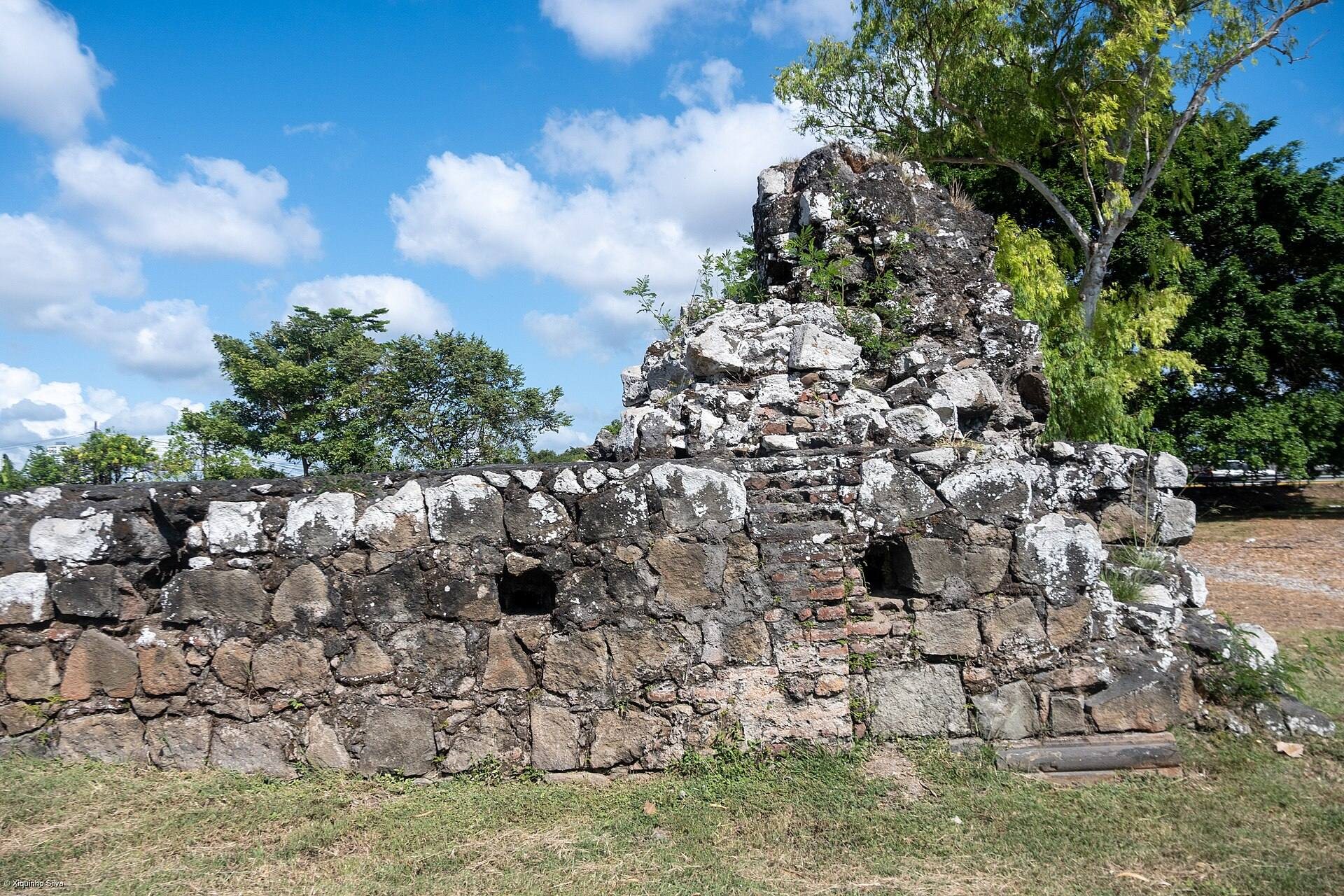
The Fortín de la Natividad protected the western side of Panamá Viejo and served as its principal western defense. Its remains belong to the defensive structures that guarded the settlement alongside the civic, commercial, and religious complexes.
Plaza Mayor Site Museum
The Plaza Mayor Site Museum stands beside the former plaza. Its exhibition rooms present approximately 1,500 years of local history, including the pre-Hispanic settlement that preceded the Spanish city, the colonial period, and later historical layers. A model reconstructs the extent of the former city and relates the surviving ruins to its wider urban form.