Palcho Monastery: A Tibetan Buddhist Center in Gyantse
Site at a Glance
- Popularity
- High
- Country
- China
- Primary era
- Medieval
- Eras represented
- Medieval
- Civilizations
- Mongolian, Tibetan
- Site type
- Religious
- Remains
- Monastery
On this page24 sections
History
Early associations and foundation
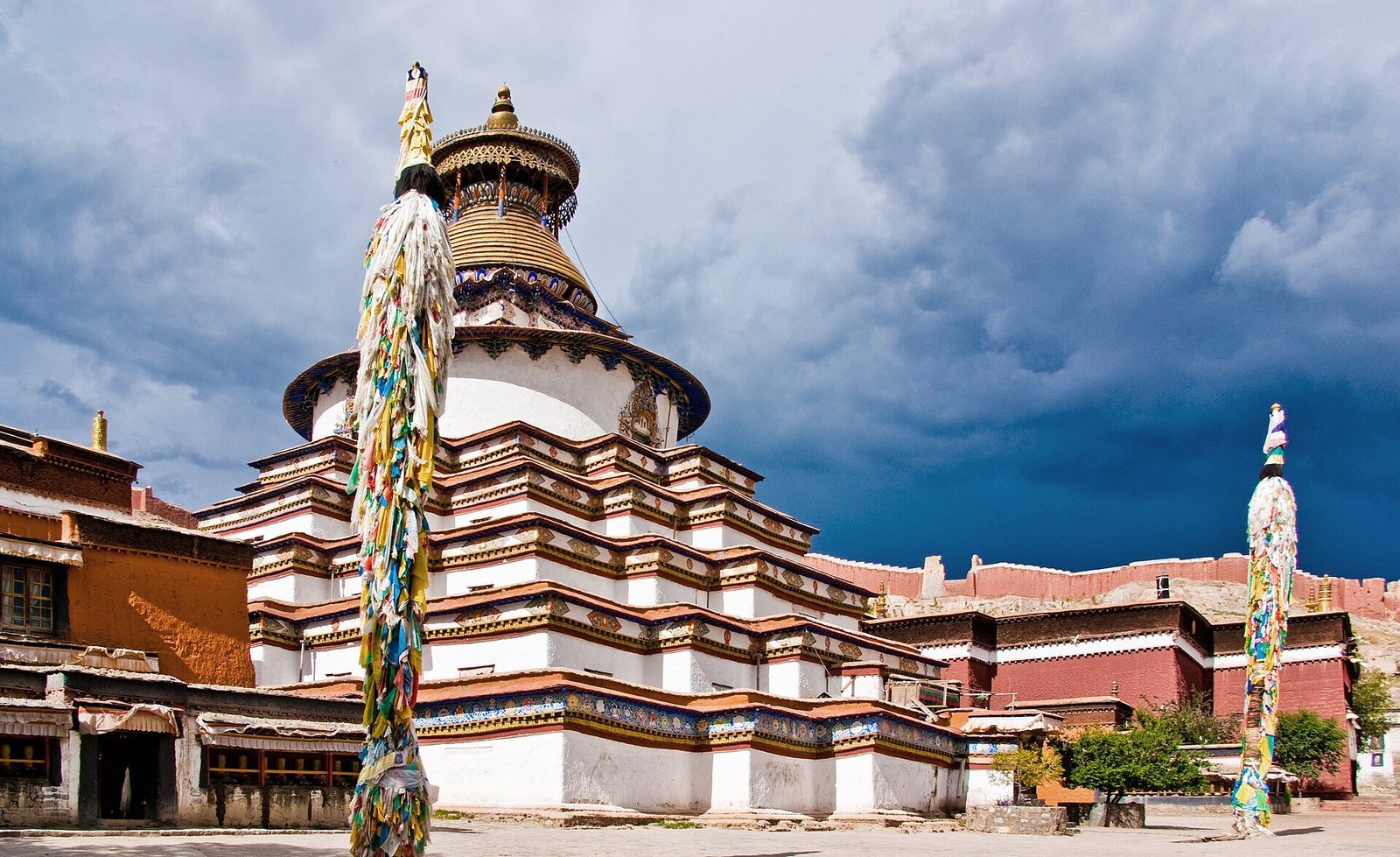
Palcho Monastery is a Tibetan Buddhist monastery in Gyantse, China, whose main building campaign began in 1418. Its principal temple, the Tsuklakhang, was completed in 1425, and the complex developed into an important Sakya Buddhist center. The architecture combines Han Chinese, Tibetan, and Nepalese styles.
The monastery’s early history is linked by tradition to the ninth century. Pelkhor-tsen, son of the Tibetan king Langdarma, is said to have lived at the site and tried to continue the Yarlung dynasty, an early Tibetan ruling house, after his father was assassinated. The monastery’s name is associated with Pelkhor-tsen.
Gyantse grew as a feudatory town during the fourteenth and fifteenth centuries, when the Sakya school held an important overlord role. In 1413, Rabten Kunzang Phak, prince of Gyantse and a major patron of the monastery, invited Khedrup Je to lead religious affairs in the town and allocated land for the monastery. Khedrup Je was a Buddhist scholar and teacher later recognized as the first Panchen Lama. Construction began five years later, and the Kumbum, attributed to Rabten Kunzang Phak, was built during the fifteenth century.
Religious community and practice
Palcho brought several Buddhist traditions together within one precinct. Sakya, Shalu, and Gelug communities had religious colleges and hermitages there, while the Kumbum also represents the Kadampa tradition. This shared arrangement across several schools was uncommon among Tibetan monasteries. The institution had 16 colleges by the late seventeenth century and 18 by the early nineteenth, although most later closed.
Religious observances included a festival in Gyantse during the fourth lunar month. Around 1418–19, a practice began of displaying two large thangkas, religious images painted or embroidered on cloth, on the monastery’s northeastern wall. They show Shakyamuni with principal disciples, alongside Maitreya, Manjushri, and other Buddhist figures. During Saka Dawa, an observance associated with Shakyamuni’s birth and death, lamas recite sacred texts and local people attend.
Occupation, damage, and restoration
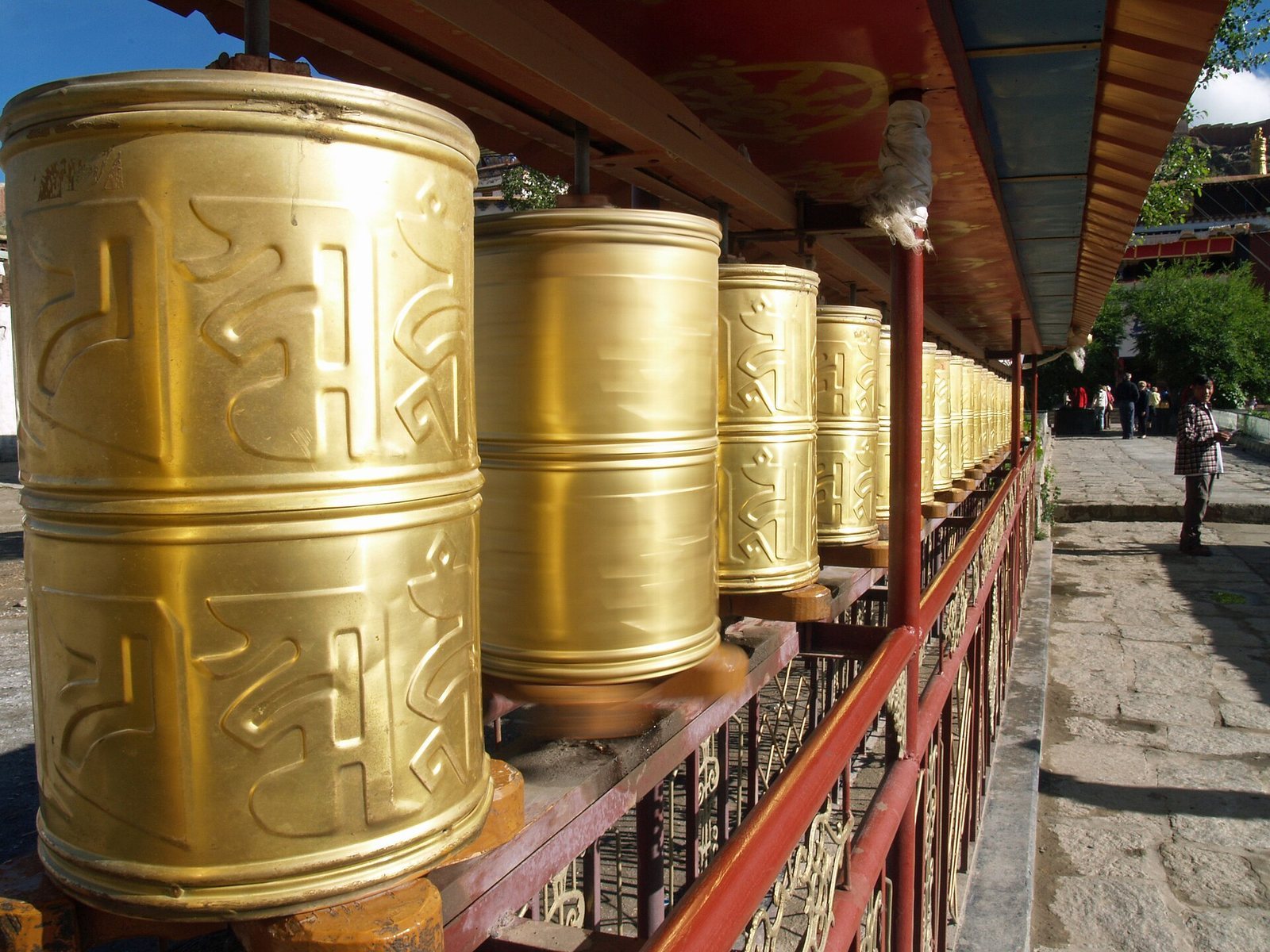
On 11 April 1904, the British expedition to Tibet led by military officer Francis Younghusband reached Gyantse and occupied the town and monastery. Religious property was taken: British officers removed statues and scrolls, some of which were later brought to the United Kingdom, while monks also sold statues and banners to British troops. The monastery was ransacked; its assembly hall was used as a dining room, and prayer wheels were adapted to carry food.
On 2 March 1957, the 14th Dalai Lama attended a Tibetan New Year celebration at the monastery. Palcho was badly damaged in 1959 during the Tibetan uprising and was ransacked again during the Cultural Revolution. Before the uprising, it had more than 1,500 monks; the number later fell below 80. A comprehensive repair campaign began in 1977, and the monastery has since been largely restored. It is designated a Major Historical and Cultural Site Protected at the National Level.
Remains
Precinct and setting
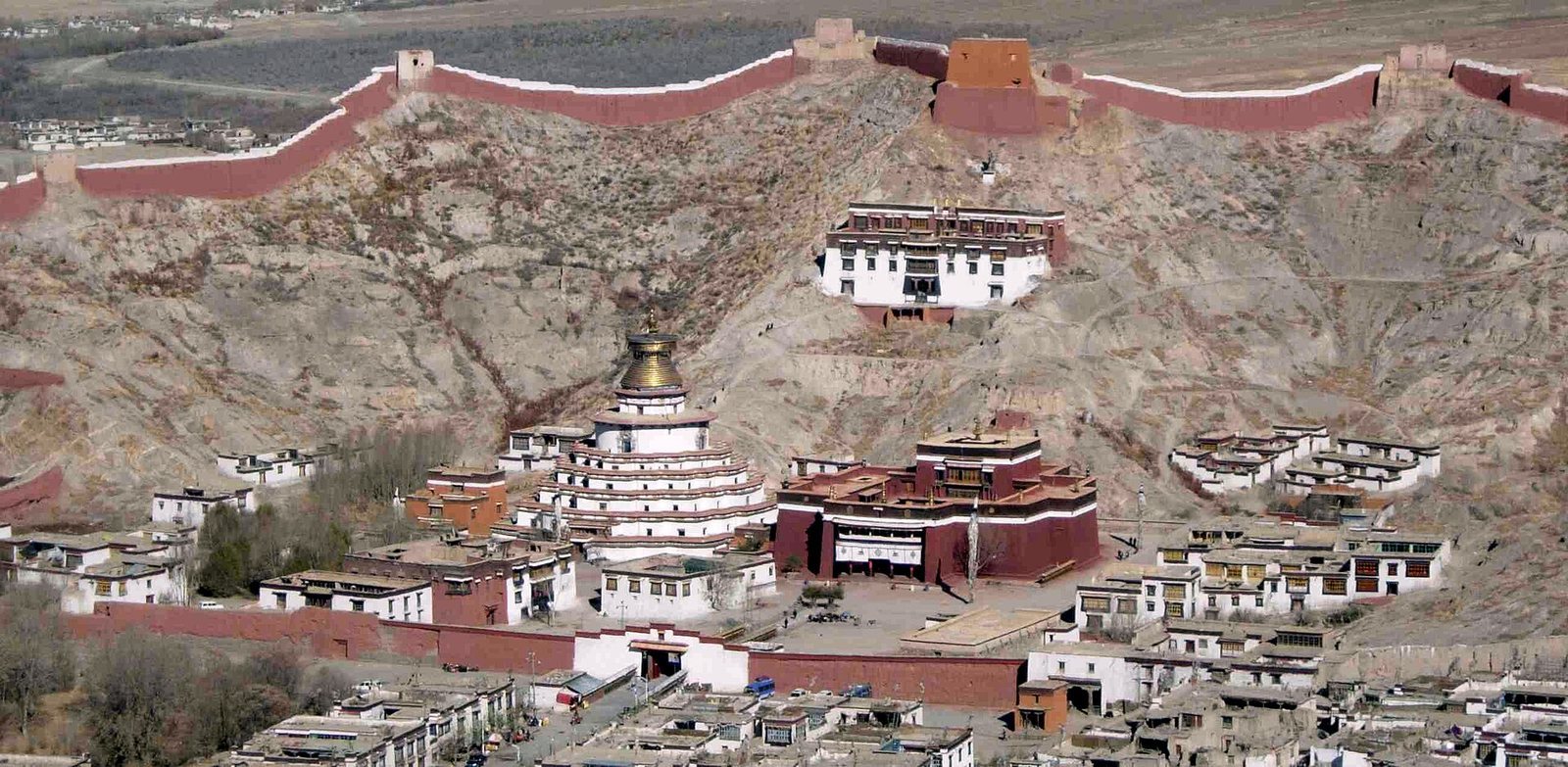
The monastery stands in the Nyangchu River valley, northwest of Gyantse and below Dzong hill. Hills border it to the north, south, and east, while water surrounds the site. Its oval precinct brings together the Tsuklakhang, the Kumbum, monastic colleges, and an enclosing wall.
Fort and hilltop temple
Gyantse Dzong
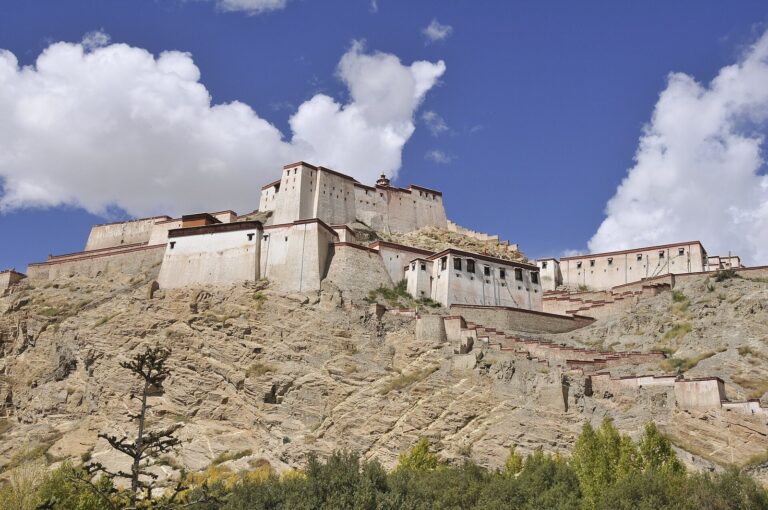
The precinct includes Gyantse Dzong, a Tibetan fortress built on rugged hills around the town and dated to 1268. A castle was later constructed inside it, and the palace was moved from the fort into Gyantse in the fourteenth century.
Sampel Rinchenling
Sampel Rinchenling, a hilltop temple associated with the later building phase, now lies in ruins. Some murals survive, in Newari artistic traditions from the Kathmandu Valley and in the Gyantse Tibetan style.
The Kumbum
Structure and outer form
The Kumbum, also called Tashigomang and the Bodhi Stupa, is a tiered Buddhist monument with chapels and religious images. It rises more than 30 metres across nine levels. Its lower five levels have angular plans, while the upper levels are circular, producing a tapering outline. The structure contains 108 gates and 76 chapels and shrines arranged in a rising sequence. Its images and murals represent about 10,000 Buddha figures. It is considered the largest of Tibet’s three Kumbums; the other two are at Jonang and Ching Riwoche.
The five-level base covers about 2,200 square metres and has an octagonal plan. Above it, a rounded tower section contains a small chapel. Painted eyes of Shiva, each about three metres long, appear above its four doorways; inside are the Buddhas of the past, present, and future with their disciples. The crown, which represents thirteen heavens, is covered in copper.
Chapel sequence
Inside, the chapels form a three-dimensional sequence of mandalas, structured religious diagrams used in Buddhist practice, based on the Sakya compilation Drubtob Gyatsa. Stairways at the four main directions connect the levels, with the principal entrance on the south. The second level has 20 chapels with images arranged according to Kriya Tantra, one class of tantric practice. The third has 16 chapels for Kriya and Carya Tantra, another class; the fourth has 20 chapels devoted to Yoga Tantra. Twelve chapels on the fifth level are associated with lineage holders, and four on the sixth contain Yoga Tantra deities.
Higher levels contain ten and eleven mandalas associated with the Father and Mother classes of Unsurpassed Yoga Tantra. At the top, a chapel holds Vajradhara, a form of the primordial Buddha, flanked by masters of the Kalachakra tantric tradition.
Base chapels and images
The ground level contains 20 chapels, including those devoted to the Wheel of Dharma, Marichi, Vajrapani, the Pure Land, Hayagriva, Achala, Dipankara, and Vaishravana, as well as protective deities and other Buddhist figures. Murals and clay figures on the lower levels chiefly represent protective deities, with Tara also appearing. The fifth level includes clay images of religious masters and four chapels named for the Immeasurable Palace in the north, west, south, and east.
The Tsuklakhang
Assembly hall and main sanctuary
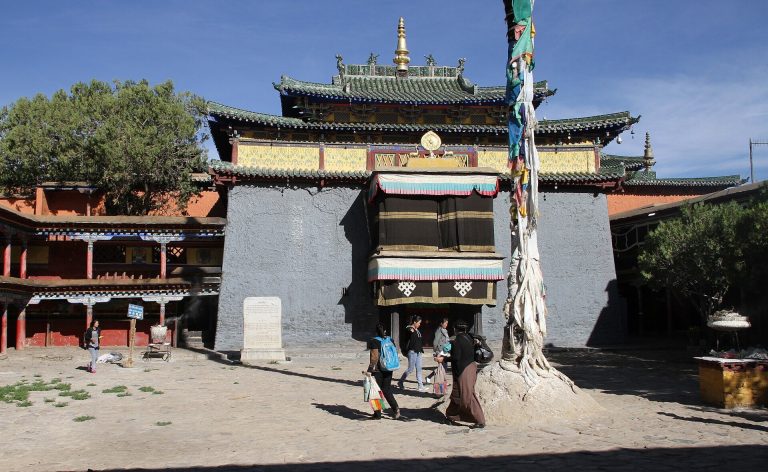
The three-storey Tsuklakhang is the monastery’s principal temple. Its ground-floor assembly hall, the Tshomchen, has 48 pillars hung with silk thangkas. Four Guardian Kings stand at the entrance, and a shrine to protective deities, the Gonkhang, is beside the assembly-hall entrance. Images of Sakya protectors include Panjurantha, also called Gompa Gur, Six-Armed Mahakala, Sri Devi, and Ekajati. Charnel-ground paintings and other fifteenth-century paintings and sculptures also decorate the hall.
In the main chapel’s inner sanctuary, a bronze Shakyamuni Buddha stands about eight metres high and is said to weigh around 14,000 kilograms. Images of the Buddhas of the Three Times accompany him, while standing figures of Manjughosha and Maitreya flank the central image. The walls depict episodes from the Bhadrakalpika Sutra.
Vajradhatu Chapel
The western Vajradhatu Chapel contains a clay image of Sarvavid Vairocana surrounded by four meditative Buddhas. It also holds a Kangyur, a collection of Buddhist canonical texts, written in gold and dated to 1431.
Royal Chapel
The Royal Chapel contains clay images of ancient kings and figures of Atisha, Kamalashila, Padmasambhava, Shantarakshita, Manjushri, eleven-faced Avalokiteshvara, Vajrapani, and Shakyashri of Kashmir. Its large central image of Maitreya is a later addition. A recessed chamber in the south wall holds Rabten Kunzang Phak’s reliquary and canonical texts.
Upper-level chapels
The temple’s upper levels contain chapels with clay images of the Sakya lineage, a three-dimensional model of Chakrasamvara’s mandala palace, and figures of the 84 Mahasiddhas, accomplished tantric practitioners of ancient India. The Tsongkhapa Chapel includes images of Tsongkhapa, founder of the Gelug school, the Seventh Dalai Lama, Shakyamuni, Buton Rinchen Drub, Sakya Pandita, Padmasambhava, and Sakya teachers of the Lamdre tradition. The Neten Lakhang has Chinese-style images of the Sixteen Elders, the Five Aspects of Manjushri, and the Four Guardian Kings.
The top-floor Zhalyekhang has 15 painted mandalas, each about eight metres in diameter, associated with meditative deities. Its images include Jowo Shakyamuni, Maitreya, Manjushri, Tsongkhapa with his disciples, Amitayus, Tara, Sitatapatra, and Padmasambhava. Other chapels on this level contain Amitabha, female tantric figures known as dakinis, and esoteric Buddhist subjects.
Murals and painting traditions
Narrative and lineage paintings
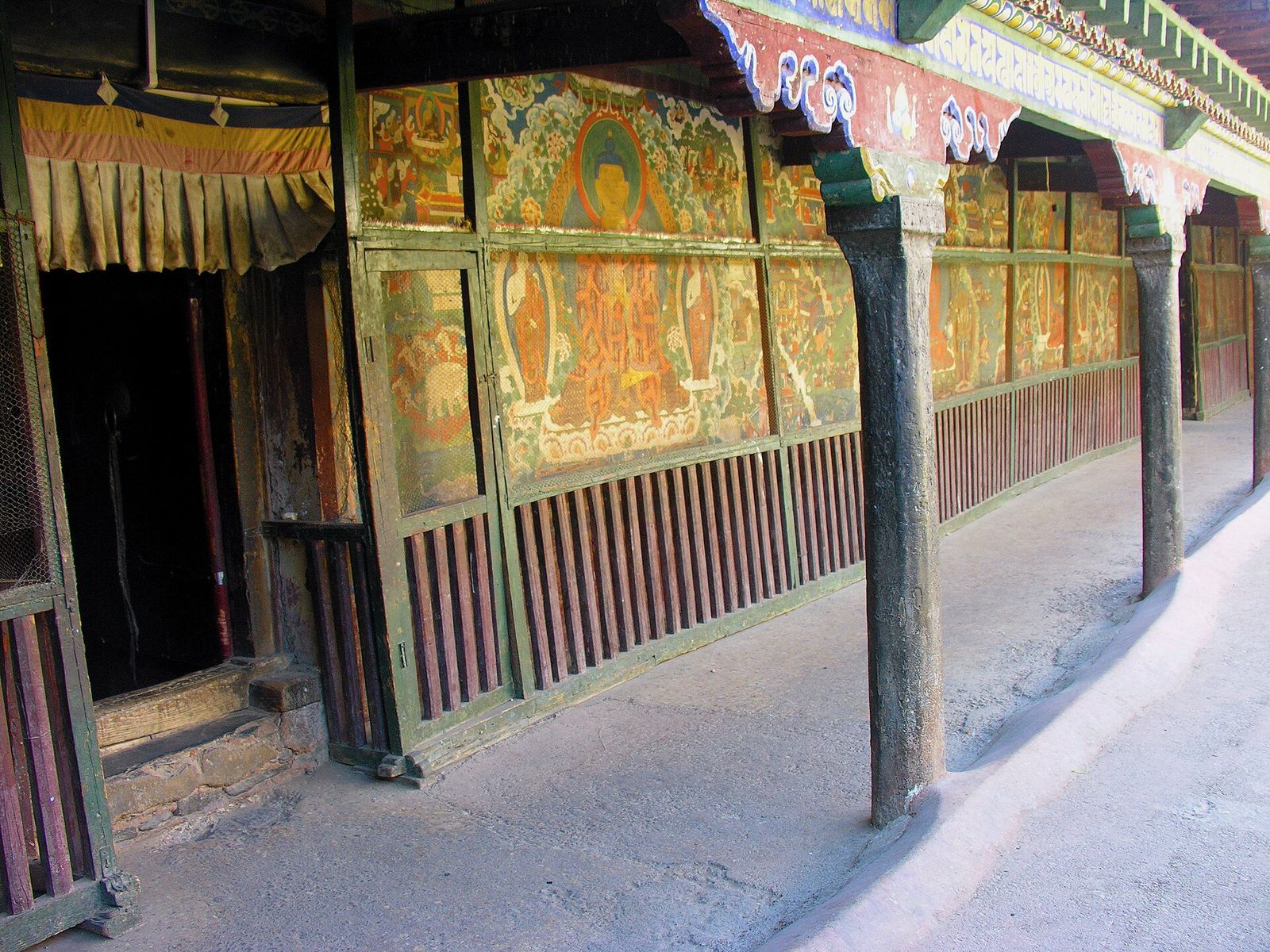
Murals across the monastery depict the Buddha’s life, sutra narratives, and Jataka stories, accounts of the Buddha’s previous lives. These paintings appear in the Tsuklakhang’s ground-floor assembly hall and corridor, as well as in Kumbum chapels. Other murals portray Indian and Tibetan teachers and religious lineages. In the Lamdre Hall, one scene shows 88 Mahasiddhas meeting Phagpa and Kublai Khan.
Esoteric paintings and artists
Paintings of mandalas and Buddhist figures associated with tantric practice appear in chapels of both the main temple and the Kumbum. Their subjects follow four classes of tantra, including Kriya, Carya, Yoga, and Unsurpassed Yoga. Colophons name artists from Lhatse, Kangma, and Nyemo. The Lhatse-led La-tö style is described as simple and free, while the Nyening style associated with Kangma artists blends with the Nyemo style of Lhasa. Together, these traditions reflect the development of Tibetan Buddhist art in the fourteenth and fifteenth centuries.
Colleges and collections
Residential buildings and meeting spaces
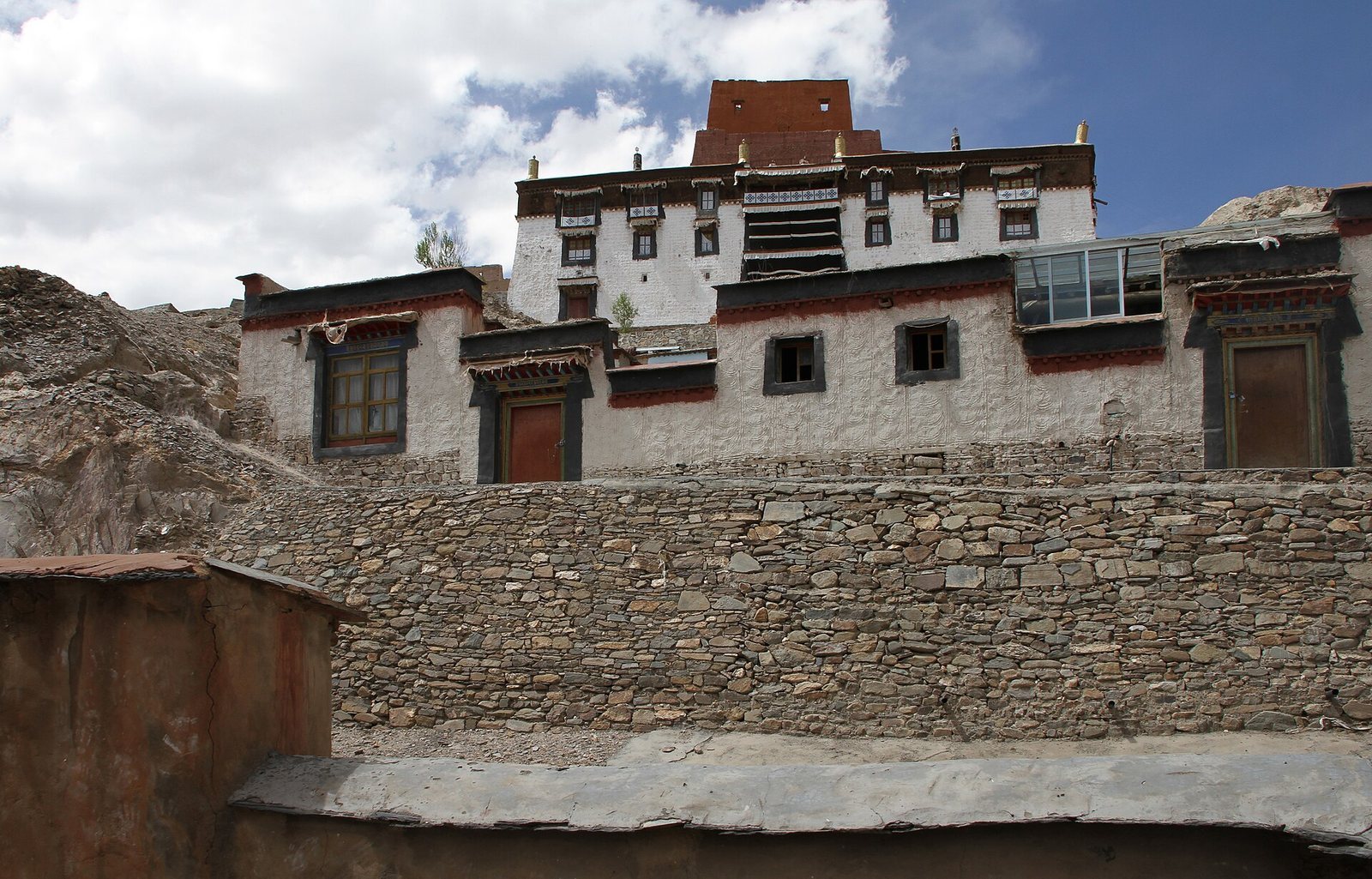
Seventeen zhacangs, monastic colleges or residences, and other chapels and buildings are distributed around the main temple and Kumbum. The Tsuklakhang’s second level includes a meeting hall for the monastery’s highest-level council. A nearby Arhat Chapel contains a sculpted cliff populated with small temples, birds, animals, and the Eighteen Arhats, Buddhist disciples who attained liberation. Mandala murals and a six-sided ceiling with circular lotus panels decorate the third level.
Images, scriptures, and textiles
The monastery’s collections include Buddha images, ritual objects, thangkas, murals, and scriptures. Its Buddhist canon, written in gold powder, is described as having 111 volumes in each set. The collection also includes about 100 Tibetan opera costumes made from silk textiles, among them tapestry, embroidery, and brocade produced in China during the Ming and Qing periods.