Örtofta Castle: A Historic Estate Residence in Sweden


Site at a Glance
- Rating
- 4
- Popularity
- Low
- Country
- Sweden
- Primary era
- Modern
- External website
- Open
- Eras represented
- Medieval, Early Modern, Modern
- Civilizations
- Danish, Swedish
- Site type
- Domestic
- Remains
- Castle
On this page7 sections
History
Örtofta Castle is a historic castle in Sweden whose oldest brick buildings date to the end of the fifteenth century and whose present form was established during the nineteenth century. It stands in Örtofta parish, on the edge of the settlement of the same name in Eslöv Municipality, Scania, the southernmost historical province of Sweden and a region formerly belonging to the Danish realm.
Medieval estate and Danish connections
The Örtofta estate was first documented in 1346. During the fourteenth century, it belonged to the Has family before passing through marriage to Tönne Vernersen Parsberg, a member of the Danish state council, the high-level institution responsible for governing the Danish realm. Later owners included members of the Linden, Bille, Brock, Brahe, and Lykke families.
Until 1632, Örtofta held a special jurisdiction in Scania, giving the estate distinctive legal privileges. That year, Henrik Ramel of Bäckaskog, a district judge in Scania, purchased the property. The estate later passed to Christian Barnekow, owner of Vittskövle Castle and vice-president of the Göta Court of Appeal.
Reconstruction and changing ownership
The Barnekow family retained Örtofta until 1785, when the estate passed as a dowry to court marshal Carl Philip Sack. A court marshal was a senior official responsible for court or household administration. Sack reconstructed the castle and made it into a respectable residence.
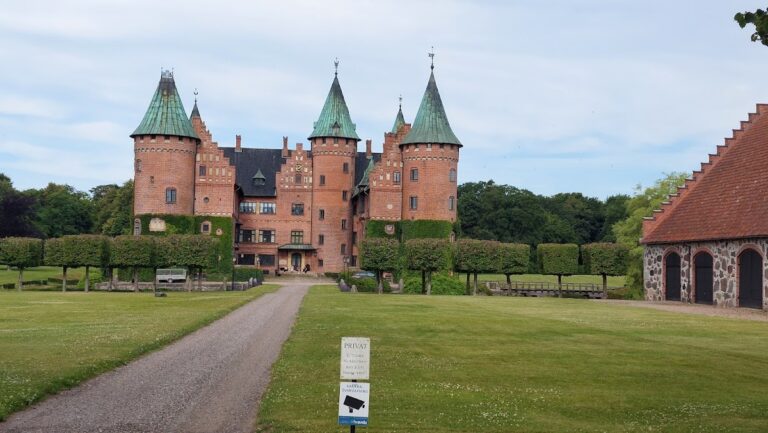
After Sack’s widow died, Count Johan Henrik Dücker bought the estate in 1809. His grandson, Count Henrik Dücker, rebuilt the castle between 1857 and 1861. Henrik Dücker left no descendants and bequeathed Örtofta to Baron Jakob Bennet.
During the twentieth century, the castle and its surrounding park became the property of veterinarian Peter Melinder, while the agricultural land belonging to Örtofta remained with the Bennet family. Örtofta is privately owned and has been restored.
Remains
Castle and grounds
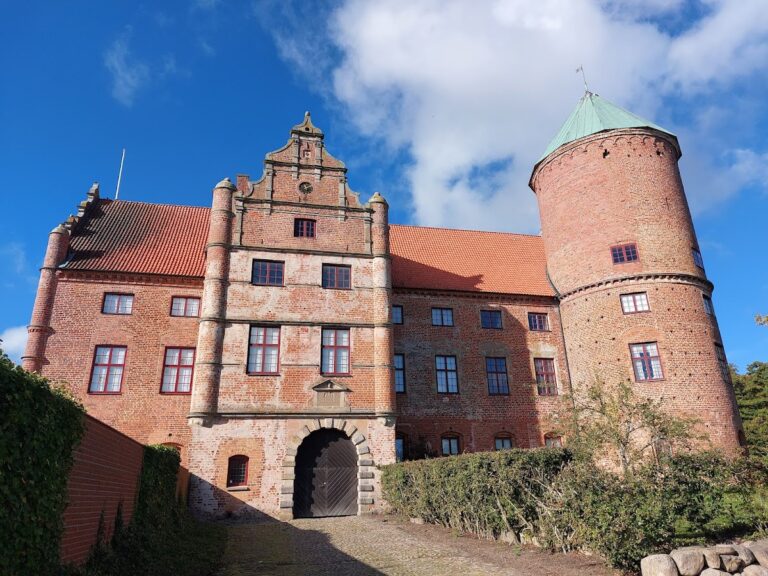
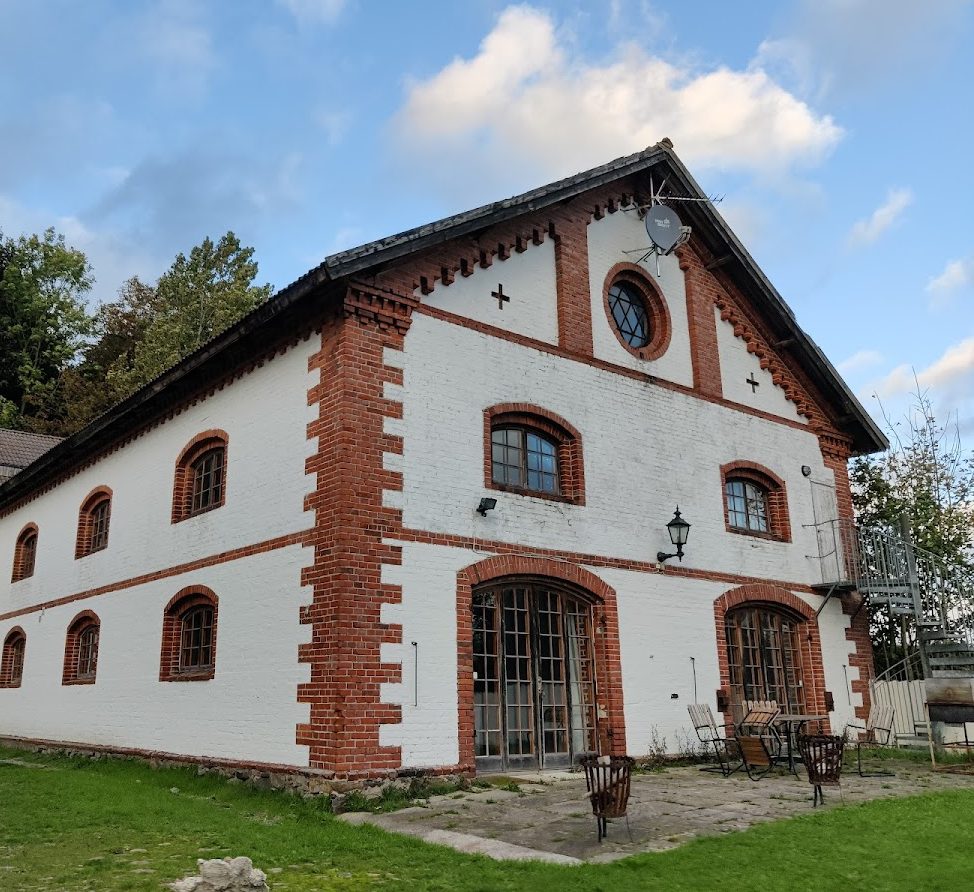
Örtofta’s surviving buildings combine stone and brick, reflecting repeated rebuilding over several centuries. The estate is organized around the castle, its outbuildings, and a surrounding formal park. The current appearance of the castle and its outbuildings took shape during the 1860s.
Old castle fabric
The earliest brick buildings were erected at the end of the fifteenth century and formed the foundation of the old part of the present castle. A castle-like main building was probably commissioned by Tönne Vernersen Parsberg, who died in 1521. Remains of that building are incorporated into the older section of the current structure.
Baroque park
The estate includes a Baroque park, a formal garden arranged through geometric layouts, ordered composition, and controlled views. Its design provides the landscaped setting for the castle and forms part of the surviving estate complex.
Nearby sites