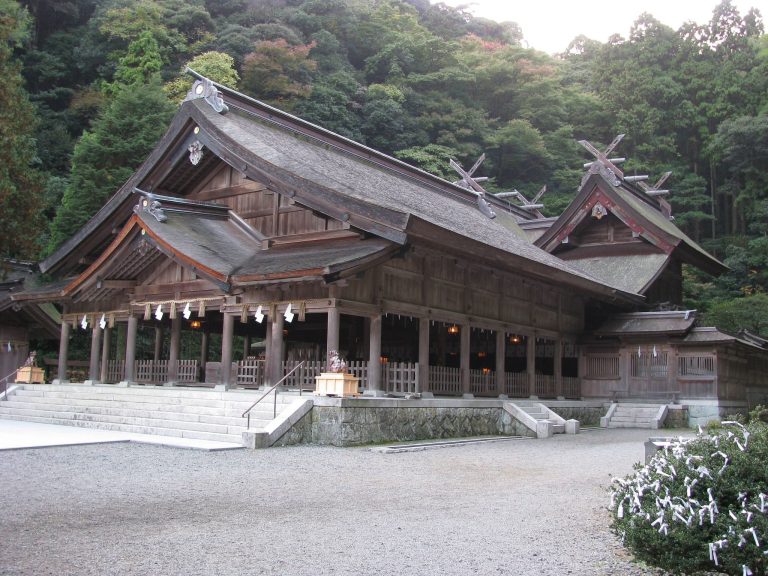
Oki Kokubun-ji Temple: A Provincial Buddhist Monastery in Japan
Site at a Glance
- Rating
- 3.8
- Popularity
- Low
- Country
- Japan
- Primary era
- Medieval
- Eras represented
- Medieval
- Civilizations
- Ashikaga shogunate, Yamato
- Site type
- Religious
- Remains
- Monastery
On this page9 sections
History
Oki Kokubun-ji Temple is a Buddhist temple in Okinoshima, Japan, associated with the provincial monasteries established under Emperor Shōmu’s eighth-century program. It is generally considered to have been founded around 741, during the Nara period, although its exact foundation date is unknown. The temple belongs to the Tōji Shingon school, an esoteric Buddhist tradition associated with Tōji Temple in Kyoto, and its principal image is Shaka Nyōrai, the Japanese name for the historical Buddha.
The Provincial Temple Program
Emperor Shōmu promoted Buddhism as a means of protecting the state and strengthening centralized imperial government. Following a major smallpox epidemic, he ordered a monastery and a nunnery to be established in every province. Oki Kokubun-ji is regarded as the successor to the provincial monastery created in Oki under this policy, although the exact relationship between the ancient institution and the present temple remains partly uncertain.
In 867, statues of the Four Heavenly Kings, Buddhist guardian deities associated with the protection of the teachings and the four directions, were sent to Oki. Four monks were also assigned to conduct rituals intended to subjugate Silla, the Korean kingdom that existed at the time. A subsidiary Four Heavenly Kings temple was established within the grounds of Oki Kokubun-ji. A regulation compiled in 927 allocated 5,000 bundles of rice to support the Oki provincial temple. While many provincial temples declined after the Heian period, Oki Kokubun-ji continued to exist.
Medieval Associations and Rebuilding
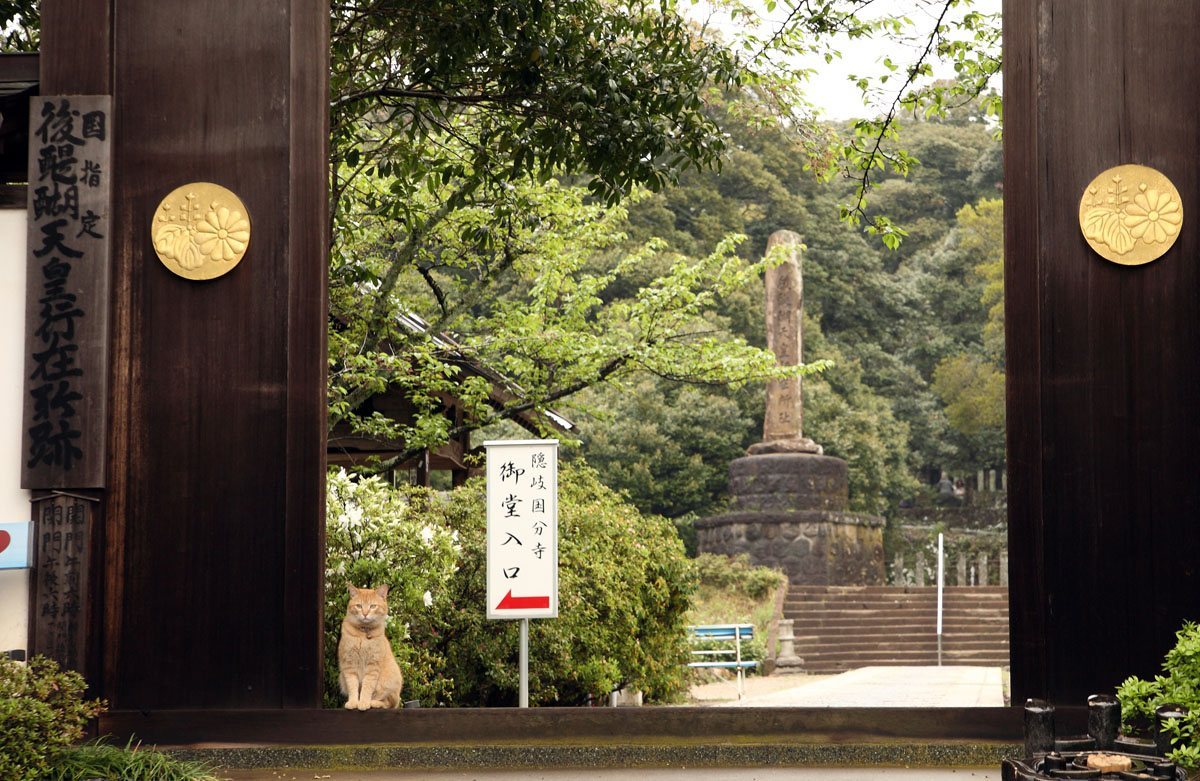
At the end of the Kamakura period, Emperor Go-Daigo was exiled to the Oki Islands after his defeat in the Genkō War of 1332, a conflict that ended his attempt to overthrow the ruling military government. Temple tradition and historical records identify Oki Kokubun-ji as one of his temporary residences, and documents indicate that he issued imperial decrees there. The identification is not certain, however, because Kuroki Palace on Nishinoshima is also associated with his exile residence. A stone monument at the temple now marks the traditional location of the emperor’s temporary residence.
The Four Heavenly Kings temple remained connected with Oki Kokubun-ji during the fourteenth and fifteenth centuries. In 1369, land belonging to it was re-donated to Oki Kokubun-ji after the original proprietor’s family line had ended, and the arrangement was confirmed again in 1391. In 1457, the military governor Kyōgoku Mochikiyo exempted the temple’s holdings from land tax and ordered his retainers to stop demanding payment.
By 1499, the Four Heavenly Kings temple had separated from Oki Kokubun-ji and was rebuilt in Harada village, while Oki Kokubun-ji appears to have been in decline. The main hall was rebuilt in 1514 by the military deputy Oki Munekiyo. During the Edo period, around 1624 to 1644, the temple held estates assessed at five koku, a historical measure of rice used to calculate land income and institutional support.
Modern Disruption and Revival
The temple was closed in 1870 after its main hall and three-story pagoda burned in 1869 during the anti-Buddhist movement of the early Meiji period, when policies and public actions led to the suppression of Buddhist institutions. Oki Kokubun-ji was revived in 1879. A separate Shingon nunnery southeast of the temple, whose medieval history is uncertain, closed in 1872. The former Kokubunji Village and Nunnery Village were later renamed Ikeda and Obara, with Obara eventually incorporated into Ariki.
The temple grounds became a National Historic Site on March 13, 1934, and the protected area was expanded on October 15, 2018. The former nunnery was excavated in 1969 and 1970 and designated a Shimane Prefecture Historic Site on March 31, 1972. The main hall was rebuilt in 1950, but it burned on February 25, 2007. Excavations connected with its rebuilding began in fiscal year 2009, and the present main hall was reconstructed in September 2014.
Renge-emai
Oki Kokubun-ji preserves the Renge-emai dance tradition, which is performed annually on April 21, the anniversary of Kūkai’s death. It originally took place at the Four Heavenly Kings temple on June 15. The performance retains features associated with bugaku, a traditional Japanese court-performance form combining formal dance and instrumental music, as well as silent masked theater of the Nara and Heian periods. Seven performances are presented today, whereas more than ten were performed in the past. Renge-emai became a National Important Intangible Folk Cultural Property in 1977.
Remains
Temple Compound and Ancient Precinct
Oki Kokubun-ji stands on hills north of the Yabihei Plain, the largest plain on Dōgo Island, the principal island of the Oki Islands. The area was historically a regional center, and the Tairajinja Kofun, the largest burial mound in the Oki Islands, lies nearby. The former provincial monastery is thought to have occupied ground overlapping the present temple compound. Its precinct is estimated to have covered at least one chō, a historical area measure equivalent here to approximately 109 meters square.
Rows of postholes discovered during excavations begun after the 2007 fire may belong to the ancient provincial monastery. Tiles had been wrapped around the bases of some of the posts, although the identification of these remains is uncertain. Several foundation stones survive within the present compound, and roof tiles said to have been excavated there are kept at the temple. The compound also contains the principal image of Shaka Nyōrai and the stone monument associated with Emperor Go-Daigo’s traditional temporary residence.
Former Nunnery Precinct
The former Oki Kokubun-niji nunnery lies approximately 500 meters southeast of Oki Kokubun-ji. Its precinct is estimated at about one chō, or approximately 109 meters square. Excavation revealed the remains of six buildings, twelve fence lines, four ditch-like features, and an accumulation of roof tiles. These remains provide a plan of the former complex and distinguish it physically from the present temple compound.
Among the buildings is a structure measuring three by seven bays, with a south-facing eave. Another measures three by five bays and has eaves on both its north and south sides, while a third measures two by one bay. The first two may represent a main hall and lecture hall, and the smaller structure may be an inner gate. Their east-west arrangement differs from the usual layout of a Buddhist temple, leading to another interpretation of the complex as an administrative office.
Roof tiles from the nunnery share decorative patterns with tiles from a former temple site in Yasugi and the Kamiyodo temple site. Excavation also recovered Sue ware, Haji ware, and green-glazed pottery, adding material evidence for the activities carried out within the precinct.
Performance Tradition
The Renge-emai repertoire includes the Mugi-yaki Dance, Sleeping Buddha, a lion dance, Kiteku Mountain Deity, the Dragon King, Taiheiraku, and a Buddhist dance. These performances preserve the tradition’s combination of formal movement, religious themes, and masked performance associated with the Nara and Heian periods.