Okak: A Moravian Mission Settlement in Labrador
Site at a Glance
- Popularity
- Medium
- Country
- Canada
- Primary era
- Early Modern
- Eras represented
- Early Modern
- Civilizations
- British
- Site type
- Settlement
- Remains
- Village
On this page9 sections
History
Okak was a Moravian mission settlement on western Okak Island in northern Labrador, Canada, founded in 1776 by Jens Haven and his followers. It became the second successful Moravian mission on the Labrador coast and also served as a trading post.
Founding and mission years
In 1771, George III granted the Moravian Church, a Protestant Christian church, land in northern Labrador for missions serving Inuit communities. After establishing the earlier mission at Nain that year, Haven and his followers founded Okak in 1776. Haven and his wife arrived at Okak that year, and he returned to serve there from 1778 to 1781.
The Unity Mission Board in Saxony and the Niesky Mission Training School, which trained missionaries, supplied the mission with money and staff. The First World War and the severe damage to the German economy disrupted that support.
Epidemic and abandonment
On 4 November 1918, the Moravian supply ship Harmony arrived at Okak and brought influenza. The epidemic killed 204 of the settlement’s 263 residents, nearly 80 percent of the population. Only a small number survived, mostly women and children. Bodies may have been piled in houses, and about 100 dogs that scavenged among the dead were shot. Petroleum was used to thaw the ground for a mass grave. Burial began on 8 December and was completed by late January.
How the survivors left is uncertain. They may have been taken by dog sled to Hopedale and Nain within days of the epidemic. Another possibility is that they burned the houses and departed in summer 1919 for Nain, Hopedale, or Hebron. Shifts in hunting patterns, together with the influenza outbreak, led to the mission’s abandonment in 1919. Soon afterward, the Moravians sold the trading post to the Hudson’s Bay Company, a trading company active in northern North America.
Final abandonment and recognition
The settlement itself remained inhabited after the mission closed. In 1956, the Canadian government compelled its remaining residents to move to other Labrador communities, and Okak was finally abandoned. Canada designated the site a National Historic Site in 1978 for its former mission and the archaeological sites in the area, which preserve evidence of thousands of years of human habitation.
Remains
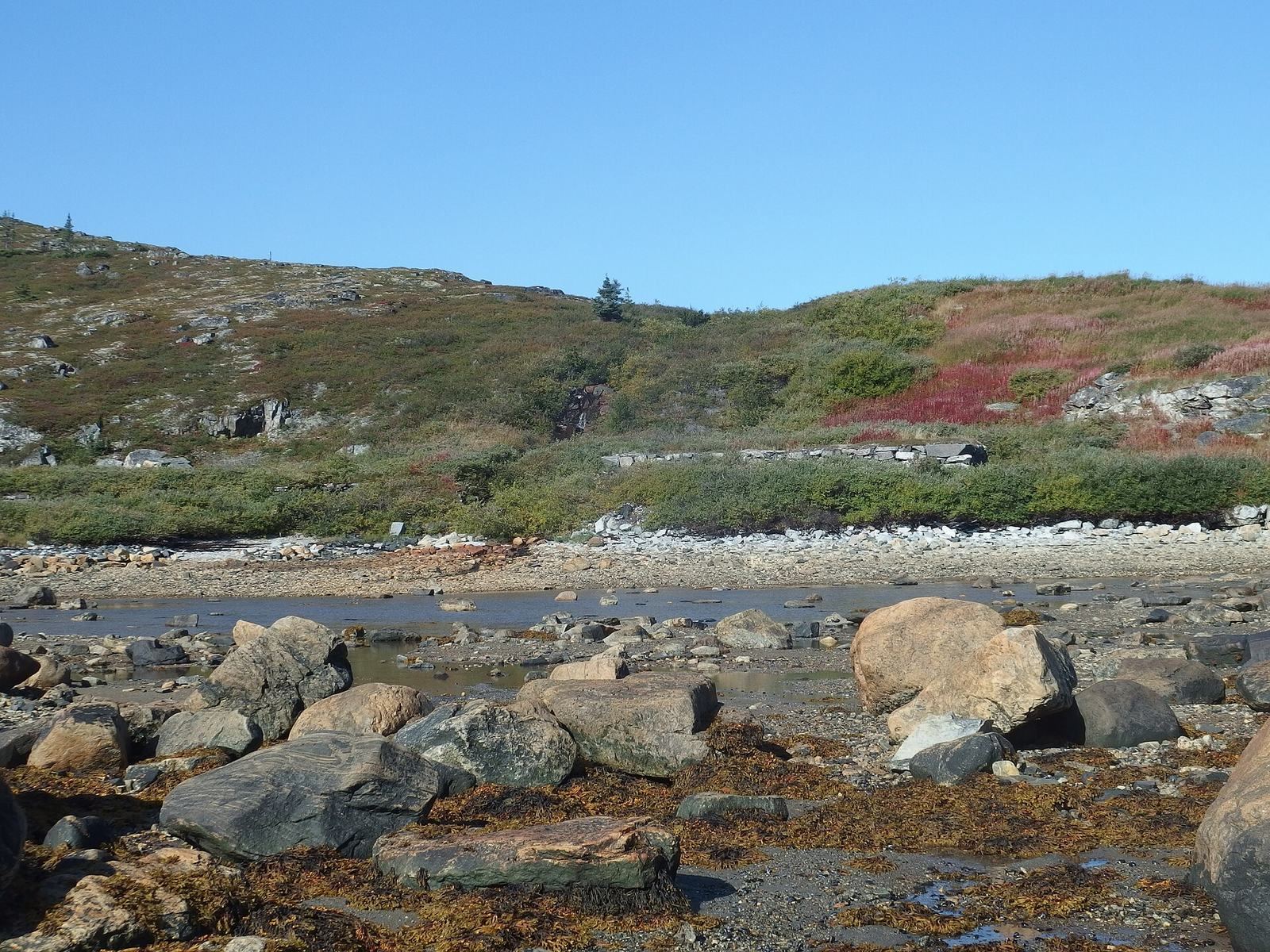
The remains of Okak combine the former mission settlement and its cemetery with a wider archaeological landscape around the bay. The area is flat and sheltered, with highlands around it and a steep southern coast. Tundra vegetation predominates, with a few trees near the head of the bay and around its shores.
Mission settlement and cemetery
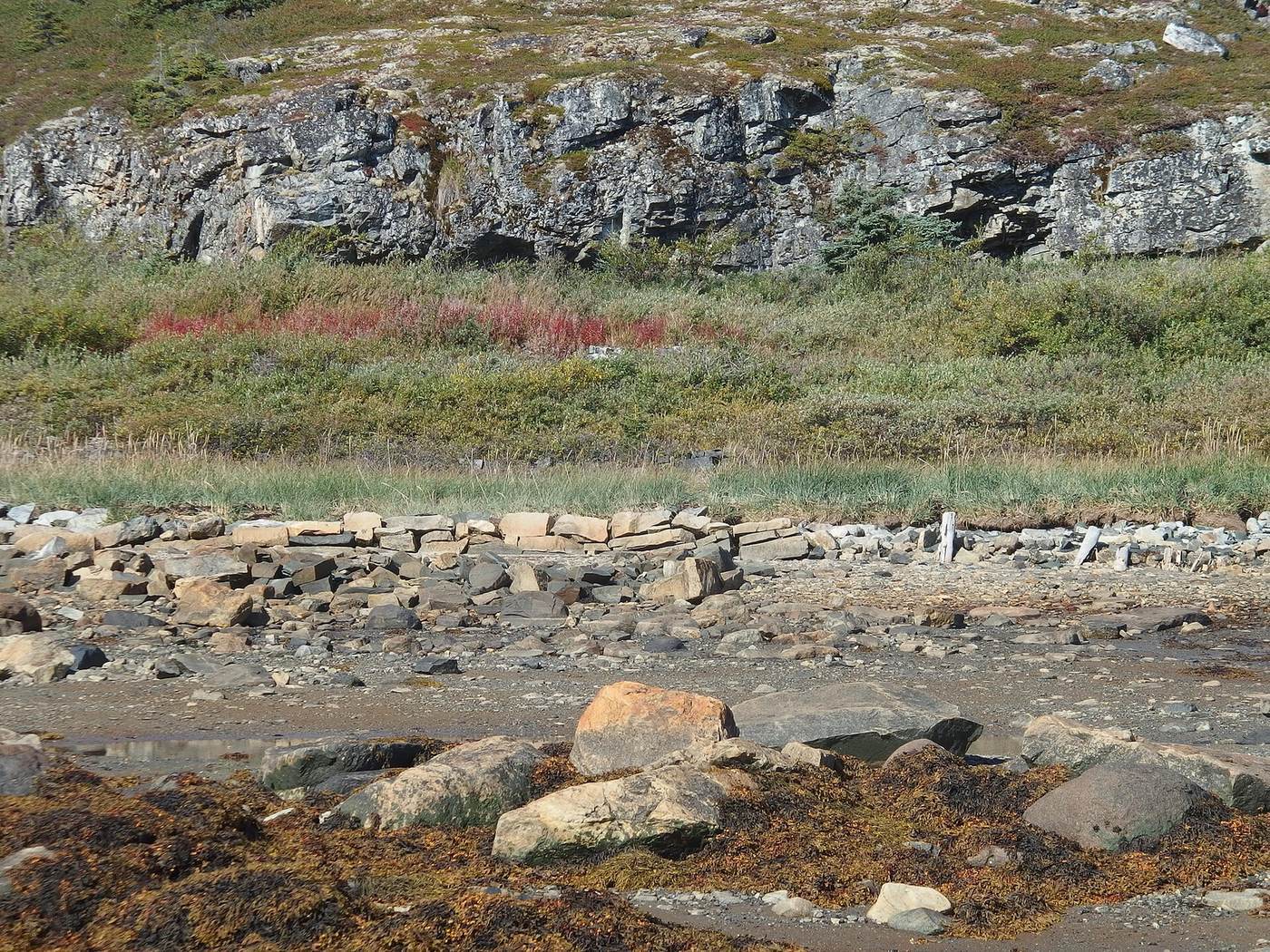
The mission was prefabricated at Nain and transported north with a store and bakery. Inuit families built houses at Okak and gradually moved closer to the mission. Today, the cemetery and mission ruins include building foundations, traces of walkways, and a wharf. Cultural remains also extend into intertidal zones, exposed at low tide and submerged at high tide, and into underwater areas.
Archaeological sites
Cultural occupations
More than 60 archaeological sites lie in Okak Bay, off Labrador’s northern coast. Their remains span more than 6,000 years of Indigenous habitation and are assigned to five archaeological cultural periods: Maritime Archaic, from 5550 to 1550 BCE; Pre-Dorset, from 1850 to 250 BCE; Intermediate Indian, from 1550 to 250 BCE; Dorset, from 550 BCE to 1450 CE; and Labrador Inuit, from 1200 CE to the present. The oldest finds, from the Maritime Archaic period, come from Cut Throat Island. Some locations contain remains from multiple periods, including villages of turf houses and scattered dwellings.
Archaeological material
Stone tools and flakes make up most of the archaeological material. Differences in tool forms, manufacturing methods, and the raw materials used show changes across the cultural periods.