Oberschönenfeld Abbey: A Cistercian Monastery in Germany
Site at a Glance
- Rating
- 4.7
- Popularity
- High
- Country
- Germany
- Primary era
- Early Modern
- Eras represented
- Medieval, Early Modern
- Civilizations
- Habsburg, Habsburg Austria, Holy Roman Empire
- Site type
- Religious
- Remains
- Monastery
On this page15 sections
History
From Beguine community to Cistercian abbey
Oberschönenfeld Abbey is a Cistercian monastery in Germany, founded in 1211 after a religious community had formed in the area. The community’s women were Beguines, members of religious groups who often lived communally without taking the formal vows required of nuns. It may first have been based at nearby Weiherhof before moving to Oberschönenfeld around 1211. Countess Würga led the community from 1186 to 1192, followed by Hildegunde von Brennberg from 1192 to 1211. Hildegunde became the first abbess when the Cistercian abbey was established, with support from Kaisheim Abbey. Volkmar von Kemnat, a local nobleman, and Hartmann von Dillingen, Bishop of Augsburg, are identified as its founders.
By 1248, Oberschönenfeld was established as a Cistercian nunnery. Cistercians follow the Rule of Saint Benedict, and the order developed communities of both monks and nuns. That year, Pope Innocent IV confirmed the order’s privileges in a document that is the oldest known record concerning the abbey. The name Ober-Schönenfeld appears in 1255, and its first church was consecrated in 1262. The abbey was a daughter house of Kaisheim, meaning it had an institutional relationship with that earlier monastery, and belonged to the Cistercian lineage of Morimond, one of the order’s early abbeys. It was associated with the Diocese of Augsburg and the Mehrerau Congregation, a federation of Cistercian monasteries. Its patronage was the Assumption of Mary, the Catholic belief that Mary was taken bodily into heaven.
Territorial authority and upheaval
The abbey held land and judicial authority over Gessertshausen and Altenmünster. It remained within the Margraviate of Burgau, a territory ruled by a margrave, while the Prince-Bishopric of Augsburg, the prince-bishop’s secular territory, gradually acquired additional rights. This territory was distinct from the Diocese of Augsburg, the church jurisdiction. In 1417 the abbey accepted the emperor’s protection. In 1435 it came under the protection of Augsburg, a Free Imperial City governed directly under the emperor rather than by a territorial prince. About fifty years later, it accepted the protection of the Prince-Bishopric, although Burgau’s territorial authority continued.
During the German Peasants’ War, a series of uprisings in German-speaking lands in 1524–1525, the nuns withdrew to their residence in Augsburg, Schönenfelder Hof. They evacuated again in 1546 during the Reformation, a movement that brought major changes and divisions in Western Christianity, and took refuge in Landsberg am Lech.
Reform and rebuilding
Facing a crisis and declining membership, the abbey began admitting women from town-dwelling families; previously, it had accepted only women from noble families. Barbara Elchinger, one of the new entrants, became abbess in 1571 and reformed monastic life. The complex was remodelled in 1607. During the Thirty Years’ War, the European conflict of 1618–1648, the abbey was plundered and damaged, and its community repeatedly fled. In 1632 the nuns took refuge at Thurnfeld Castle in Hall in Tyrol, while the abbey became the property of Colonel Thomas Sigmund von Schlammersdorff. The nuns returned three years later, but left again in 1645 during the Second Battle of Nördlingen and in 1646 as French and Swedish troops passed through. The complex was rebuilt between 1657 and 1685.
The abbey also sought to consolidate its territorial and judicial authority through rules governing daily life. Regulations issued in 1667 covered matters ranging from worship and compulsory labour to visits to inns. Abbess Irmengard II Stichaner renewed them in 1775. In 1718, Abbess Hildegard Meixner commissioned a Baroque rebuilding, an ornate European style that flourished in the seventeenth and eighteenth centuries.
Dissolution and revival
Bavaria’s secularization, the transfer of church institutions and property under state authority, dissolved the abbey in 1803 and nationalized its property. The nuns were not expelled, but the community was formally dissolved and led by prioresses, women who head a priory, a monastery generally ranked below an abbey. Its membership fell to five sisters. King Ludwig I of Bavaria approved the community’s continuation in 1836, initially as a priory. It formally rejoined the Cistercian Order in 1899. King Ludwig III restored its abbey status in 1918, with papal approval following in 1922.
The community in the twentieth century
During the Second World War, the sisters operated a refugee centre at the abbey. The community sent its first missionaries to Brazil in 1951, and they established a daughter monastery at Itararé, in São Paulo state, in 1963. Restoration of the abbey complex began in 1973 and was completed in 1994.
Remains
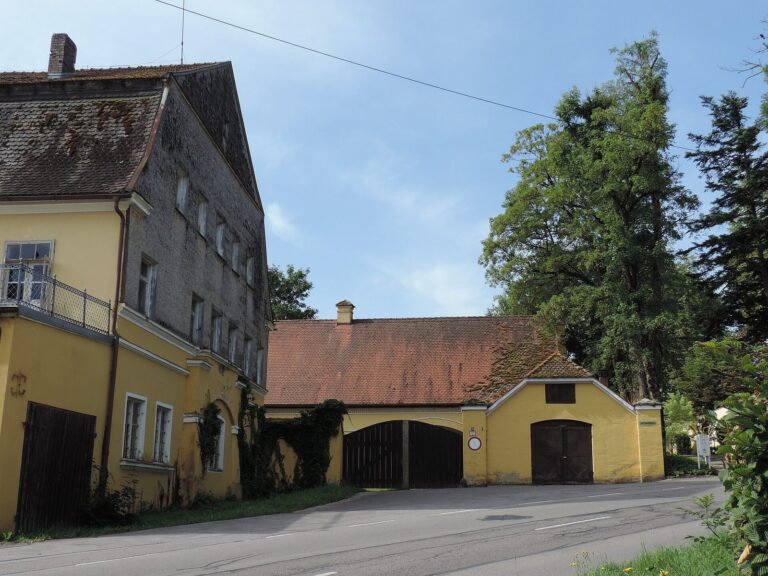
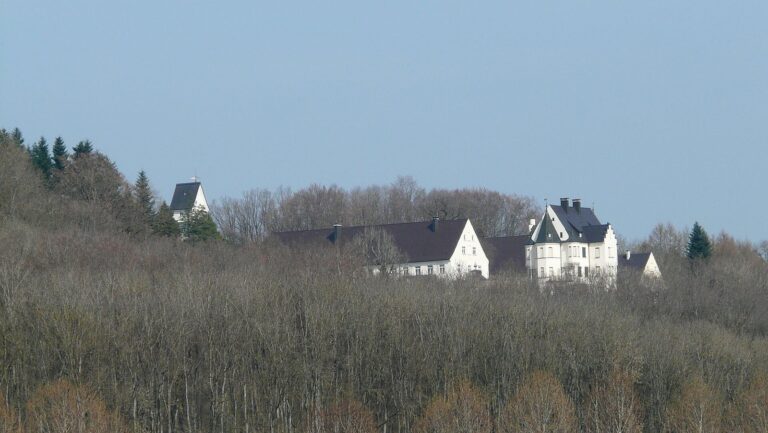
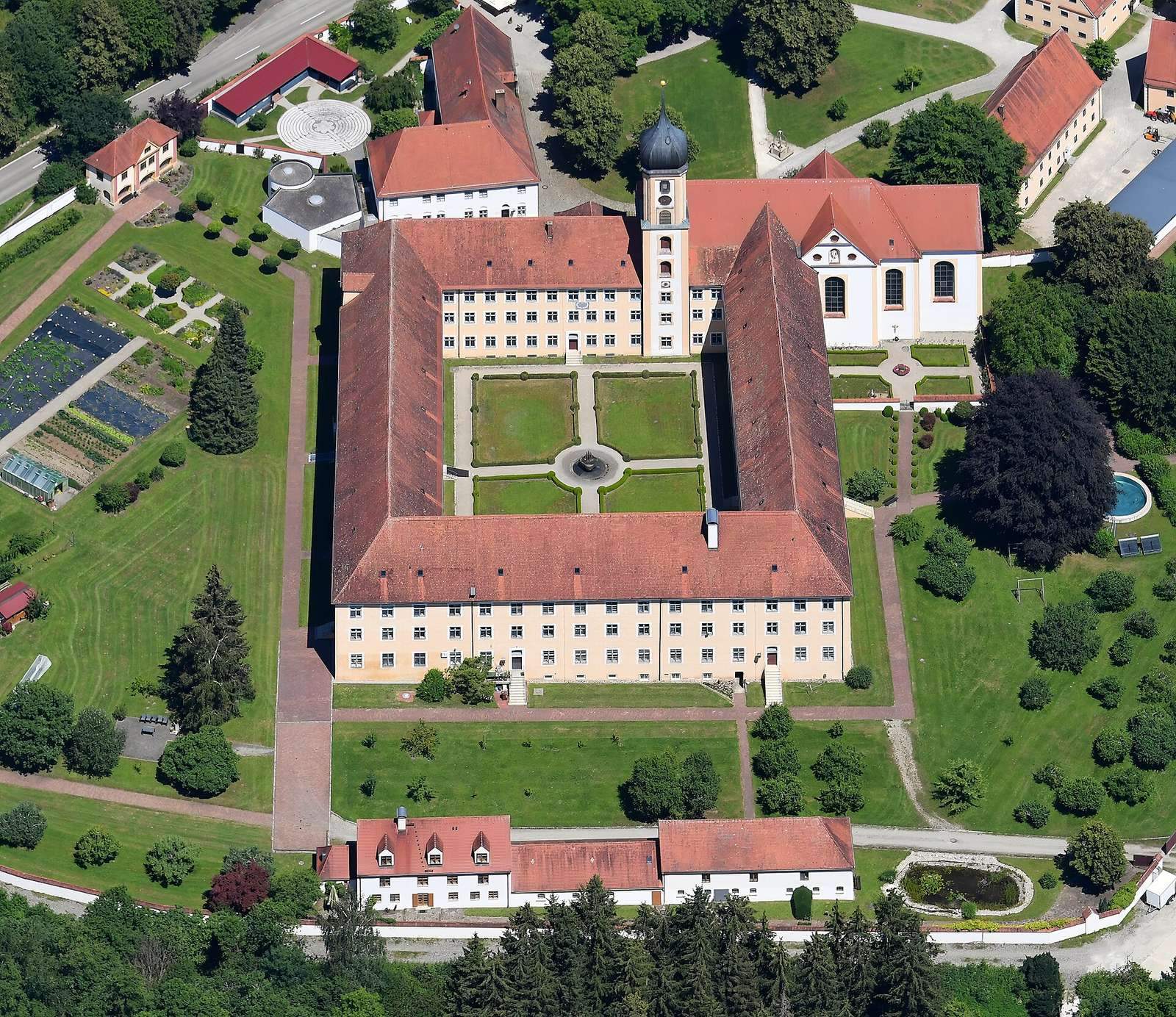
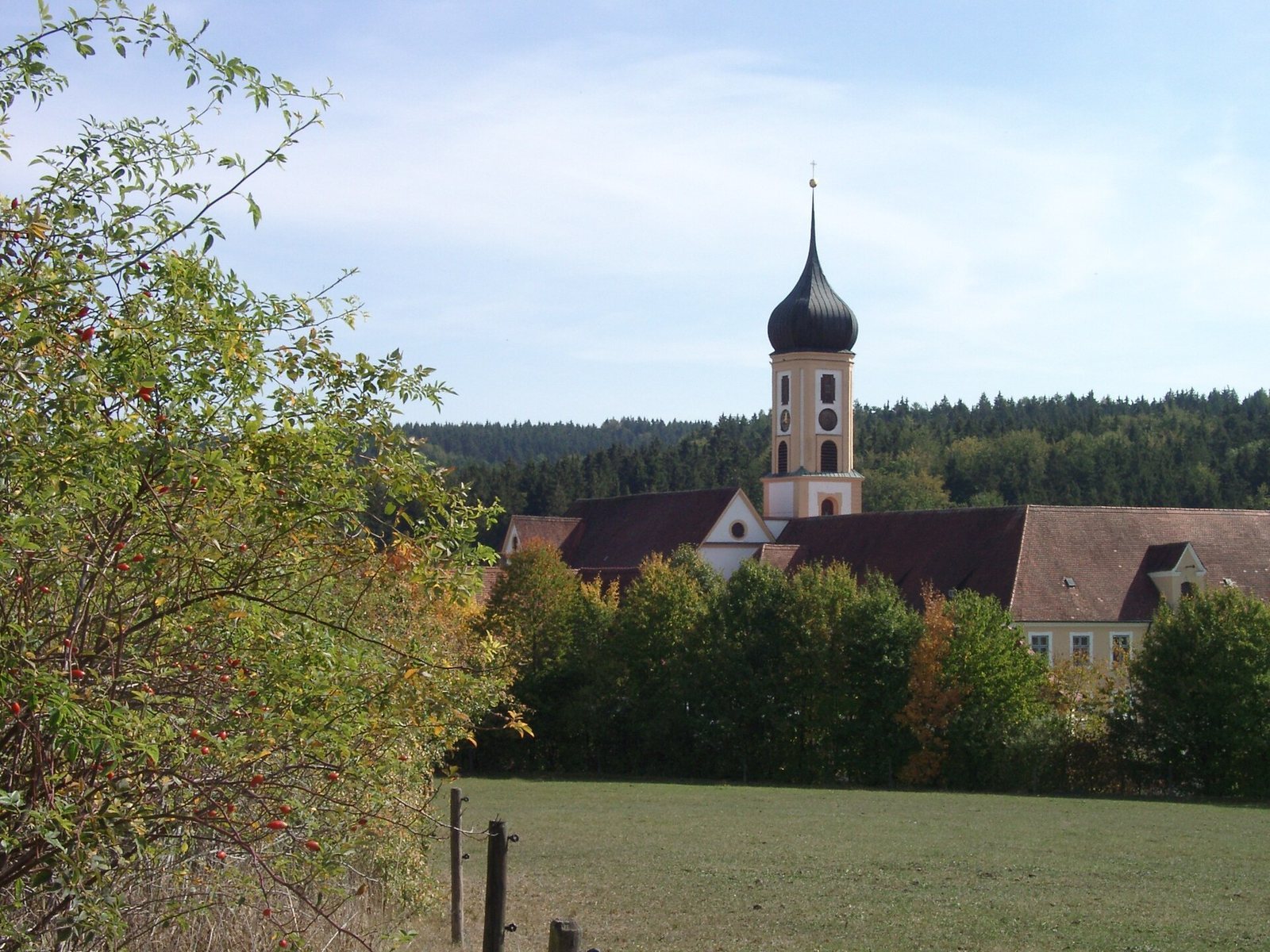
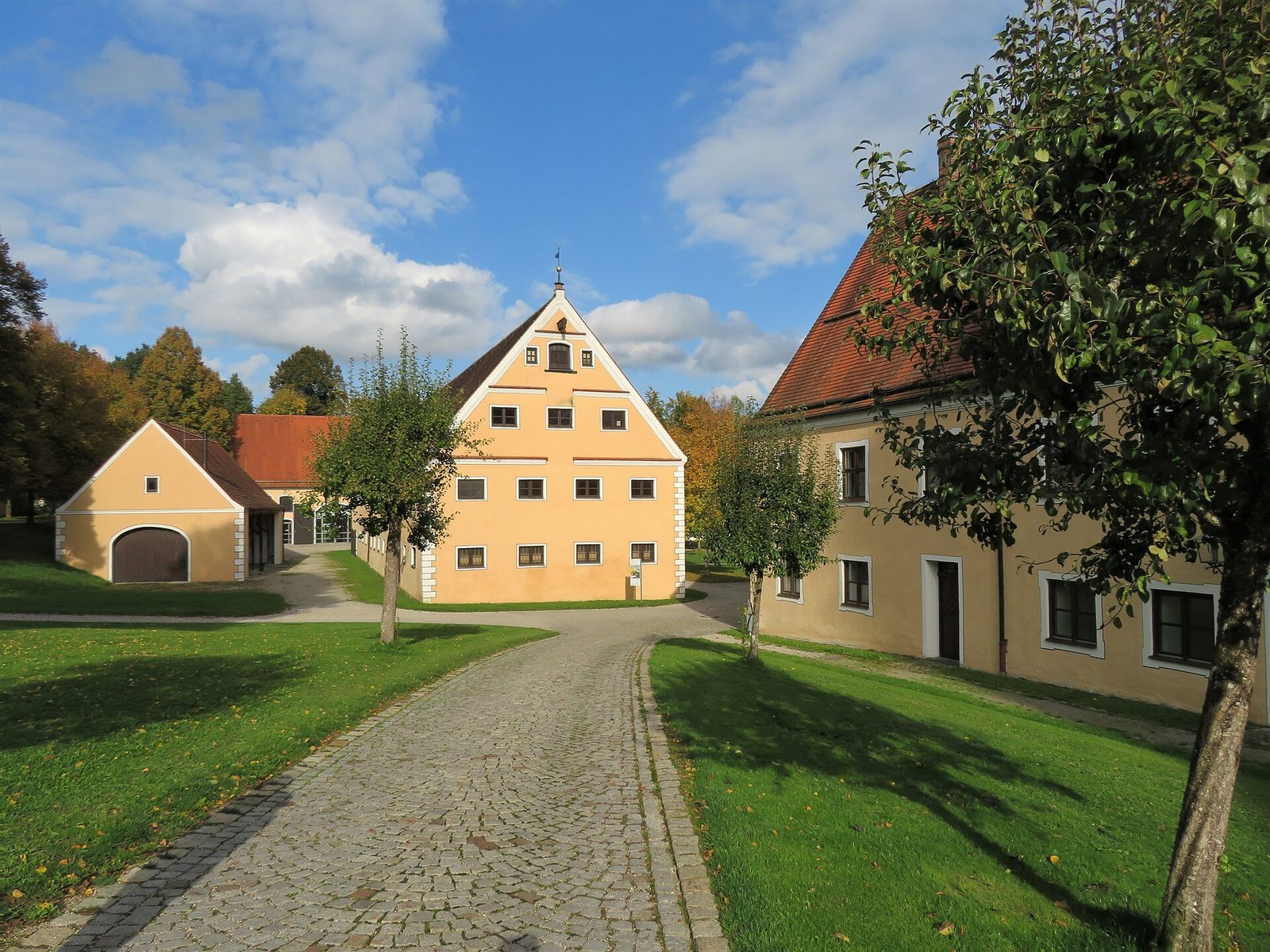
The complex includes Baroque monastic buildings and the abbey church, alongside former service buildings now used for cultural and public purposes. The church and monastic buildings took shape through separate phases of rebuilding in the eighteenth century; former stables and a reconstructed regional farmhouse add to the range of structures on the site.
Baroque abbey complex
Monastic buildings
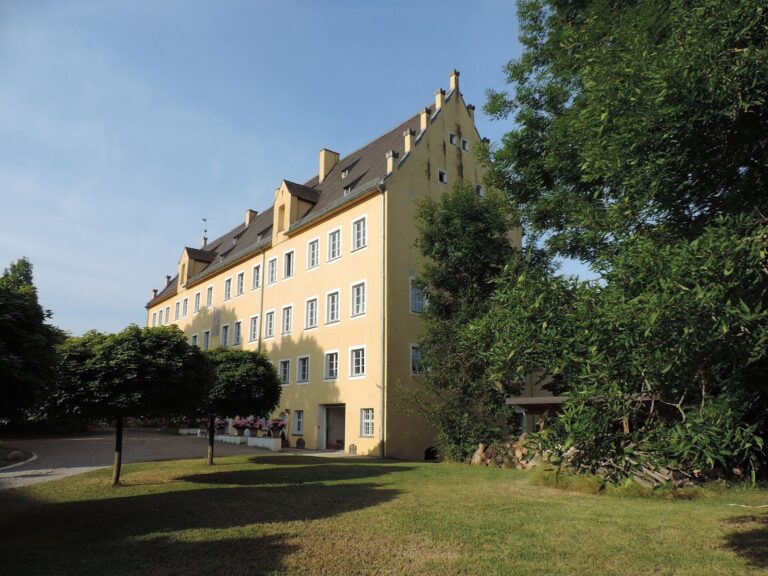
Work on the monastic buildings took place from 1718 to 1721 as part of the Baroque rebuilding commissioned by Abbess Hildegard Meixner. The buildings form part of the abbey complex alongside the church, and reflect the ornate style chosen for this rebuilding.
Abbey church
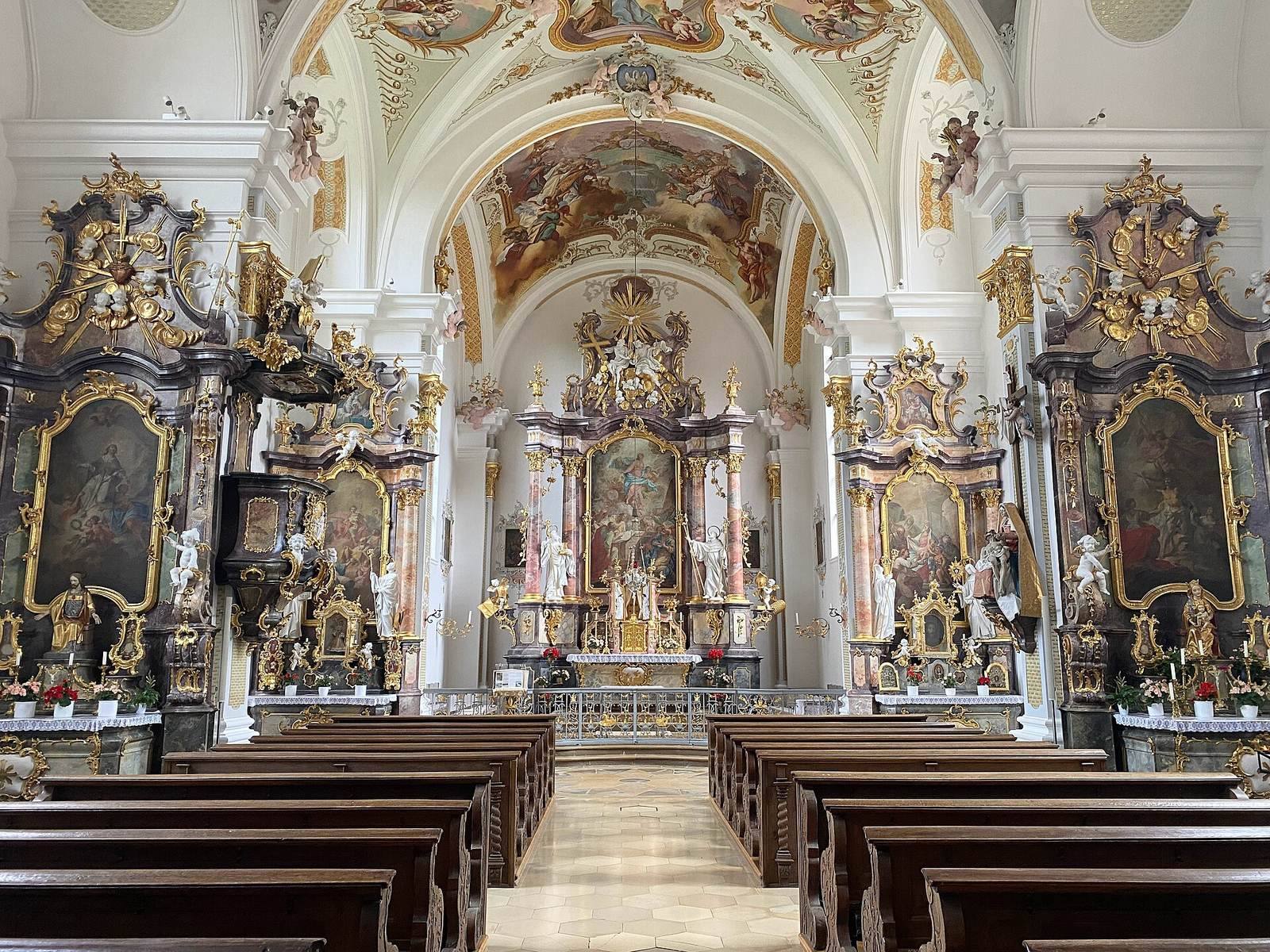
Construction of a new church began in 1721, and it was consecrated on 25 July 1729. The church and its decoration were completed in the Baroque style. Joseph Mages and his pupil Johann Joseph Anton Huber painted its frescoes, paintings made on wet plaster. Joseph Hartmann produced the high-altarpiece, the principal artwork associated with the church’s main altar.
Former farm buildings and museum
Stables and museum
The former monastic stables, no longer in use from 1972, were converted into a museum established by the District of Swabia in 1984. Called Museum Oberschönenfeld since 2018, it has a permanent exhibition on everyday life in Swabia from 1800 to the present, as well as changing cultural-history exhibitions. The associated Kunstforum Oberschönenfeld, formerly known as the Swabian Gallery, provides about 360 square metres of exhibition space for regional and other art. An art gallery was added in 2003.
Cattle stable and bakery
The Nature Park House occupies a former cattle stable and opened in 1992. A monastery bakery has operated in a renovated building since 1982. It has both a wood-fired oven and an electric oven.
Reconstructed farmhouse
A thatched farmhouse from Döpshofen was reconstructed beside the abbey between 1974 and 1980 and opened as a museum. It represents a regional smallholding and is the last thatched smallholding in the Augsburg area.
Historic bells
Three historic bells associated with the abbey date from 1510, 1732 and 1748. Electric drives were installed for the bells in 2025.