Nederluleå Church: A Medieval Parish Church in Gammelstad, Sweden
Site at a Glance
- Country
- Sweden
- Primary era
- Medieval
- Eras represented
- Medieval, Early Modern, Modern
- Civilizations
- Swedish
- Site type
- Religious
- Remains
- Fortified Church
On this page13 sections
History
Nederluleå Church is a medieval church in Gammelstad, near Luleå, Sweden. It is an active parish church of the Lutheran Church of Sweden, within the Diocese of Luleå, an ecclesiastical district, and was formerly Roman Catholic. Dedicated to Saint Peter, it is part of the Gammelstad Church Town UNESCO World Heritage Site and is the largest medieval church in Norrland.
Construction and early purpose
A wooden chapel probably preceded the present stone church. Work on the stone building began in the 15th century and continued into the early 16th century. Jakob Ulvsson, Archbishop of Uppsala and a senior Swedish church official, inaugurated the church in 1492. Its design also served a defensive purpose alongside its religious use.
Changes from the eighteenth century
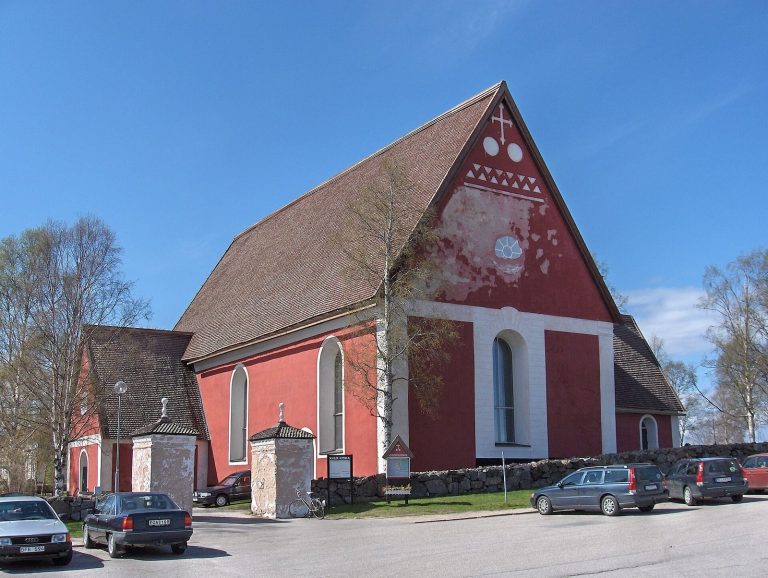
The church remained largely unchanged until the 18th century. In 1745, workers painted over its medieval frescoes, paintings made on plaster, and enlarged the windows during the 1740s. Interior furnishings were removed and replaced over the following years. From 1776 to 1778, the exterior was painted red, a new entrance was created, and more windows were added. The windows were altered again in 1848.
Restoration
A renovation in 1909 uncovered the medieval frescoes and returned the choir portal to its original appearance after changes made in the 18th century. Further renovations took place in 1936, 1954, and from 1969 to 1971.
Remains
Church and churchyard
Church building
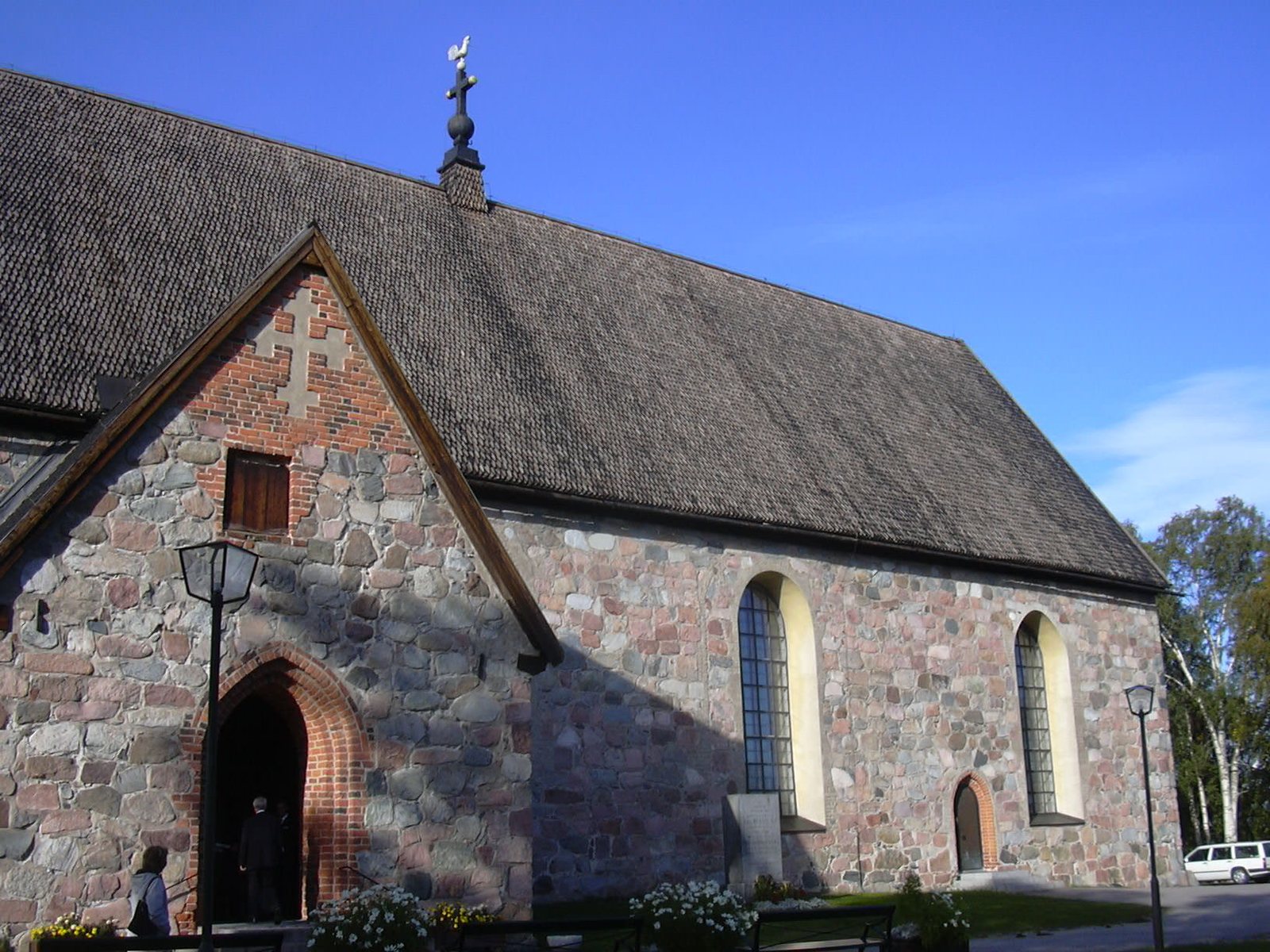
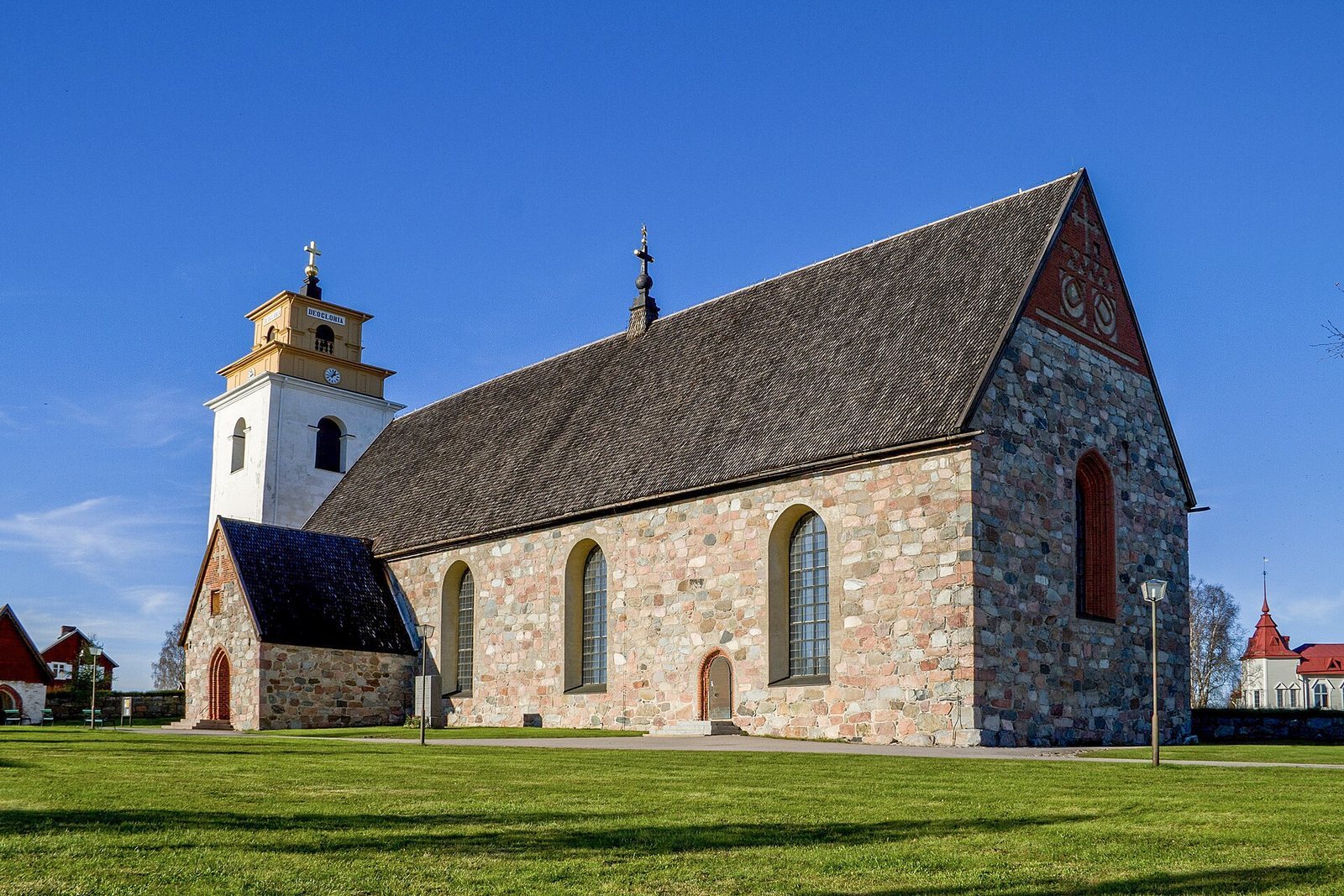
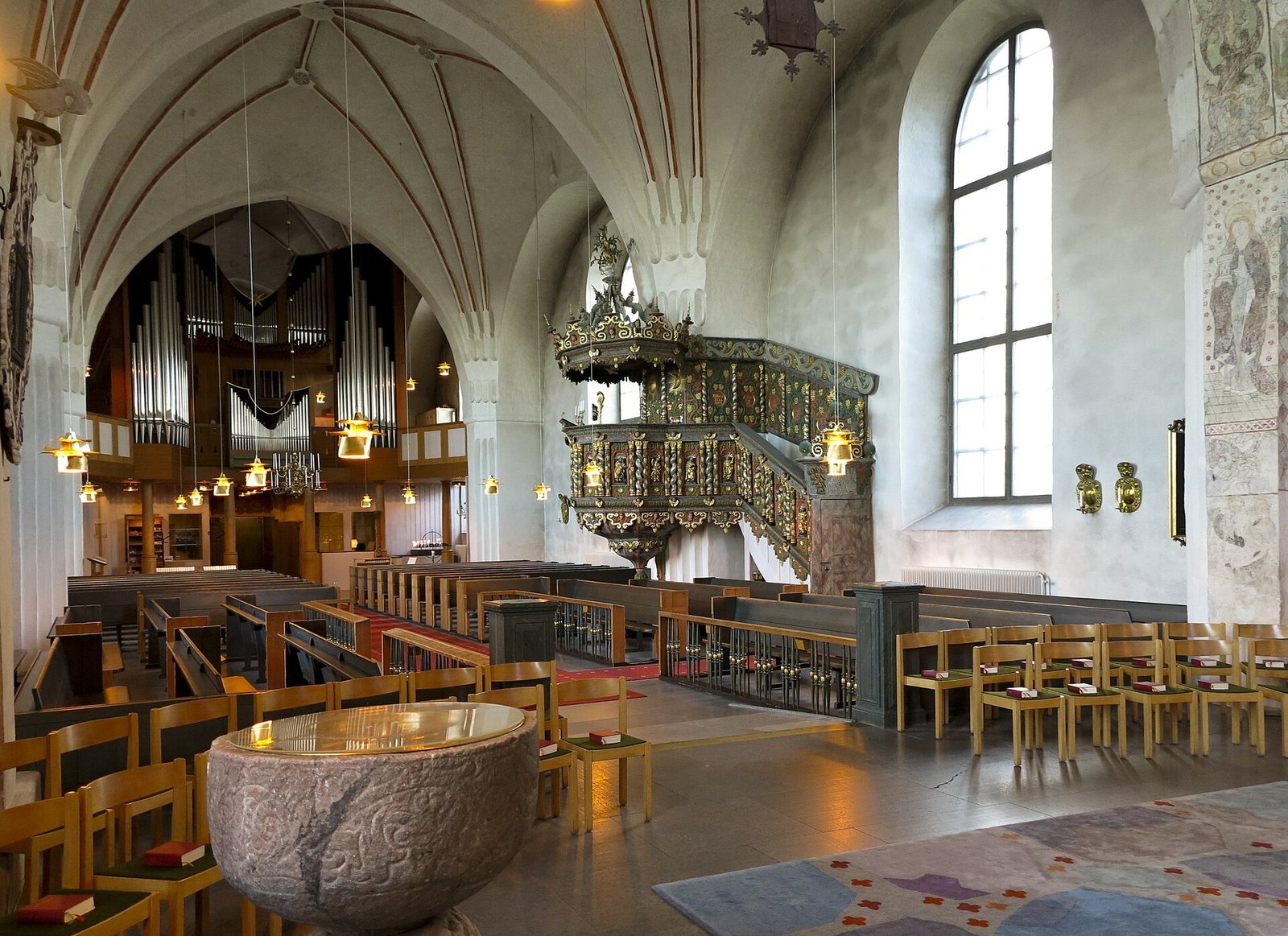
The church is built mainly from natural stones gathered from the ground, with about 40 types of rock represented, and includes brick details. Its roof is covered with wooden shingles, as the original roof was. Inside, a single main hall with a vaulted ceiling meets a choir of the same height. A room used to prepare for services and store furnishings projects from the north side, while a porch extends from the south. Narrow openings designed for shooting arrows survive in the building.
Churchyard wall
A wall encloses the churchyard, with two covered entrances to the churchyard still preserved.
Bell tower
The detached bell tower was built in 1851 to replace an earlier wooden tower. Its two bells date from 1554 and 1684; both were later recast.
Interior decoration and furnishings
Vault paintings
Paintings on plaster decorate the vaults. They are probably the work of a pupil of Albertus Pictor, a Swedish church painter of the 15th century.
Altarpiece
Made in Antwerp around 1520, the altarpiece has a central section filled with intricately carved figures depicting the Passion of Christ, the suffering and death of Jesus. It is regarded as one of Sweden’s finest examples of its kind. The congregation is believed to have paid 900 silver marks in cash. A silver mark was a historical unit of money expressed in silver, and the payment was substantial for a community made up mostly of peasants.
Other furnishings
The late medieval furnishings include a triumphal cross, a large crucifix traditionally placed at the entrance to the choir, and a marble basin used for baptisms. The richly carved pulpit dates from 1712. Some pews are medieval, while others were altered in 1749. The organ dates from 1971.