Navaginskiy Fort: A Russian Coastal Fortification in Sochi
Site at a Glance
- Popularity
- Medium
- Country
- Russia
- Primary era
- Modern
- Eras represented
- Modern
- Civilizations
- Russian
- Site type
- Military
- Remains
- Fort
On this page6 sections
History
Navaginskiy Fort was a Russian coastal fortification built in 1838 in present-day Sochi, Russia. It became part of the Black Sea Coastal Line, a chain of Russian coastal forts organized after the 1829 Treaty of Adrianople transferred the Caucasian Black Sea coast between the Kuban River mouth and St Nicholas Pier to Russia. The government sought to curb smuggling, slave trading and piracy, establish quarantine and customs posts, and prevent unauthorized Turkish dealings with local people.
The landing and construction of the fort
A Russian operation to secure the river mouth ran from 1 to 18 April 1838. At 4 p.m. on 13 April, the first detachment arrived by ship from Sukhumi Fortress and landed under the protection of a naval squadron. The force included five infantry battalions, military engineers, mountain artillery, and militia from Mingrelia, Guria and Imereti. Its strength is estimated at 3,000 to 3,500. A village on both banks of the river was home to about 450 Abazin, Ubykh and Turkish families.
After receiving guns from ships on 14 April, the Russian troops repelled attacks by larger highlander forces through 16 April. The landing cost 31 Russian lives and left 133 wounded; total losses had reached nearly 200 by 16 April. On 21 April, a major-general ordered work on Fort Alexandria, named for Empress Alexandra Feodorovna, the wife of Emperor Nicholas I. The garrison grew to almost 4,000 by the end of the month.
The Caucasian Sapper Battalion completed the fort by the end of July. Isolated from neighboring forts and dependent on access by sea, it was left with a detachment of no more than 400 men while the rest of the troops withdrew. An imperial decree dated 14 January 1839 formally named it Alexandria.
Renaming and attacks, 1839–1847
On 18 May 1839, Alexandria was renamed Navaginskiy Fort to distinguish it from another fort with a similar name. The new name honored the 78th Navagin Infantry Regiment, which had distinguished itself in the Caucasian War, Russia’s prolonged nineteenth-century conflict in the Caucasus.
On 28 September 1839, Circassian attackers entered the fort and seized part of its raised defenses. They approached from three sides under cover of a storm and darkness, carrying more than 30 ladders and long hooks. The defenders initially divided their forces without knowing where the main attack would fall, then rallied. As many as 80 sick soldiers took up arms after encouragement from a staff doctor and a supply official. A bayonet counterattack drove the attackers back; the fort was cleared by dawn after three hours of fighting. The fort commander, a captain, and a lieutenant were killed.
Highlanders surrounded the fort again on 29 and 30 September, leaving only after reinforcements arrived by boat from the Fort of the Holy Spirit under a major’s command. On 28 September 1840, two guns fired from nearby heights, sending as many as 150 cannonballs against the fort and damaging its barracks. A lieutenant colonel led the defense. Russian movements north and south from the fort in 1842 brought clashes with local people, and Circassians attempted to capture it again in 1847.
Withdrawal and the development of Sochi
In 1854, during the Crimean campaign of the Crimean War, Russian forces withdrew and demolished the fort as they left. When the Russian army returned in 1864, a final battle with local people ended in the defeat of the Ubykhs. The new military post was established in the Sochi River valley, rather than on the old fort site. On 3 April 1874, it received 437 hectares on the river’s left bank and became a posad, a settlement outside a fortified town or fortress. The surviving remains are protected as a regional cultural-heritage site.
Remains
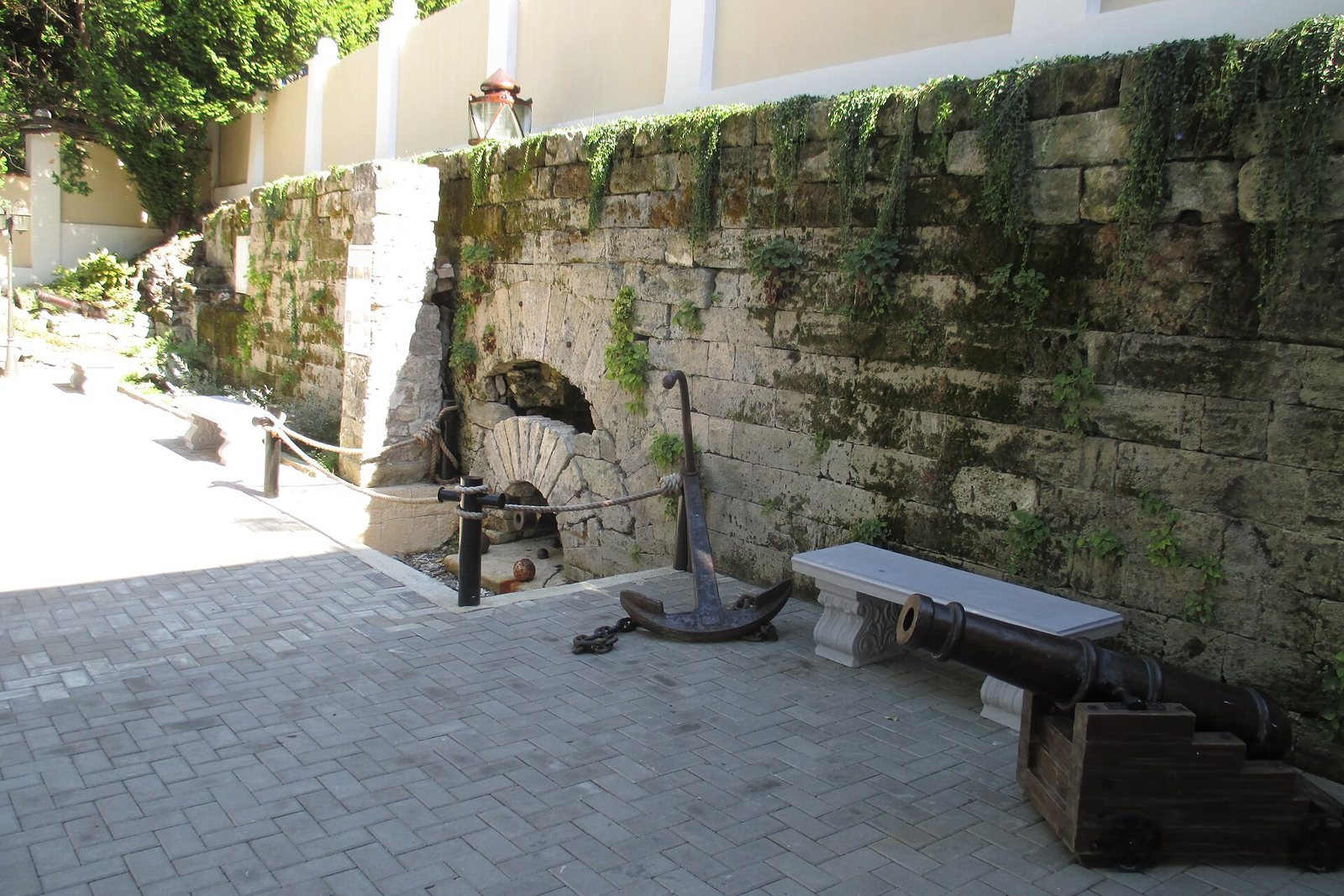
The fort covered an area about 256 metres long and 160 metres wide. Shell limestone shipped from Kerch was used for its fortress walls. A stone tower on the river-facing side rose through three levels, each with openings for defenders to fire through. The other walls were made from stakes, brushwood, earth and wooden beams. Only a small fragment of the northern wall survives.
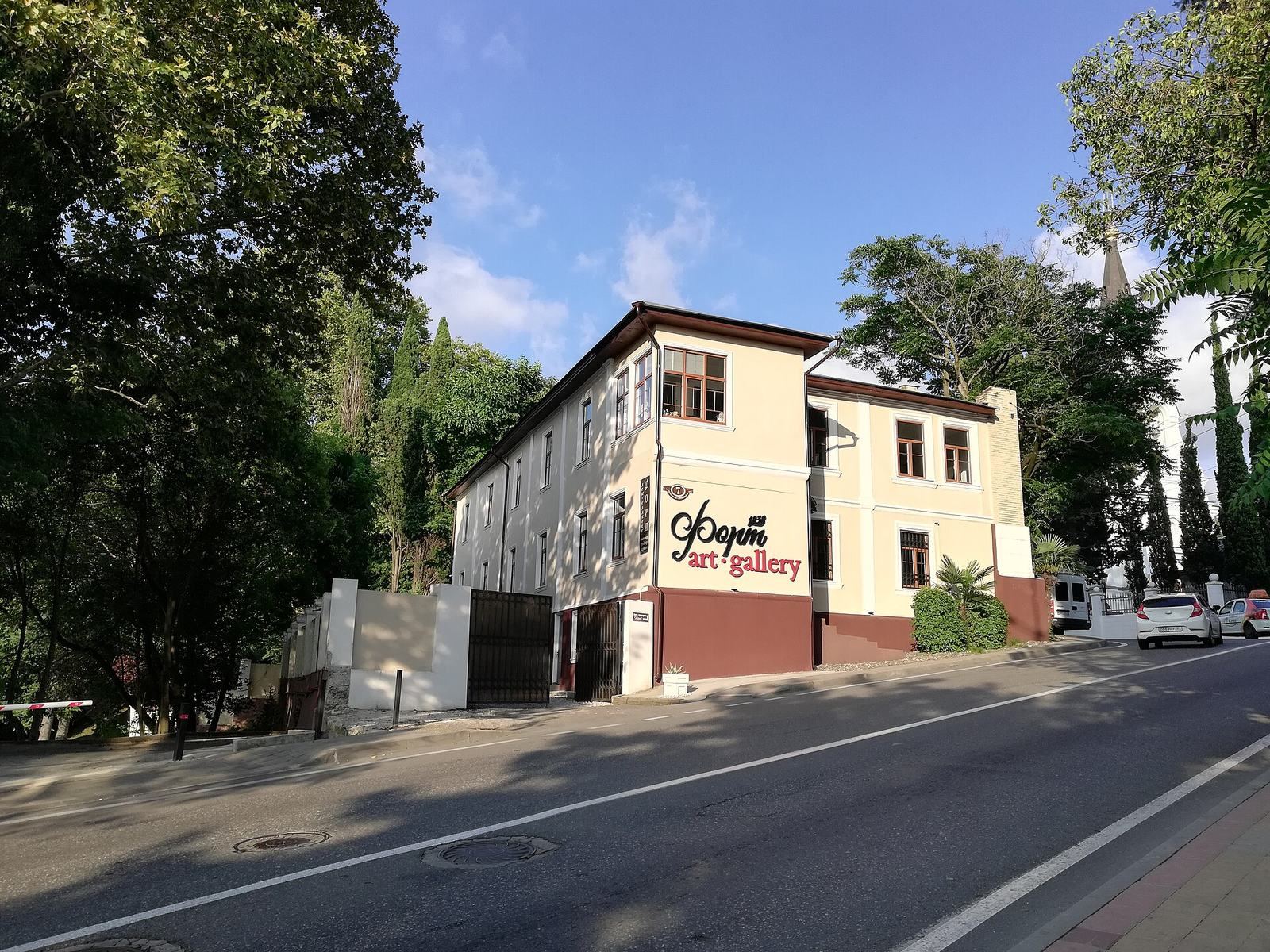
This fragment lies within the courtyard and building of the former merchant Politidi house in central Sochi. The house once served as City Polyclinic No. 1 and was restored in 2016.
Approach and later features
The broad staircase known as the Hellenic Descent runs from the fort’s gate toward a gently sloping part of the settlement. The Cathedral of St Michael the Archangel and a monument commemorating the 150th anniversary of Sochi’s foundation are near the staircase. The cathedral and the Sochi Lighthouse were later built on the former fort site.