Narihualá: Tallán Political and Administrative Center
Site at a Glance
- Rating
- 4.2
- Popularity
- Low
- Country
- Peru
- Primary era
- Unclassified
- External website
- Open
- Eras represented
- Unclassified
- Civilizations
- Unclassified
- Site type
- City
On this page9 sections
History
Narihualá is an archaeological complex in the Catacaos area of Piura Province, Peru, built by the Tallán culture. It served as the principal settlement and political-administrative center of the Tallán people and is regarded as the capital of the Tallán nation. The nearby center of Catacaos held the region’s religious administration. Located in the Piura Valley, about 17 km south of Piura and approximately 2 km from Catacaos, Narihualá is considered the most important architectural evidence of a major Tallán monument in the Piura region because of its size and prominent platforms.
The Tallán political center
The Tallán were a pre-Hispanic cultural group of northern Peru’s Piura region. Narihualá formed the political and administrative focus of their settlement, while Catacaos fulfilled a distinct religious role. The complex’s large artificial mounds and monumental adobe construction express the scale of the settlement and its organized architectural tradition.
Narihualá was declared Cultural Heritage of the Nation in 2003. The site is also associated with native Peruvian dogs described as being in danger of extinction. In 2000, Peru’s National Institute of Culture ordered the protection of such dogs at archaeological sites on the Peruvian coast.
Archaeology and the site museum
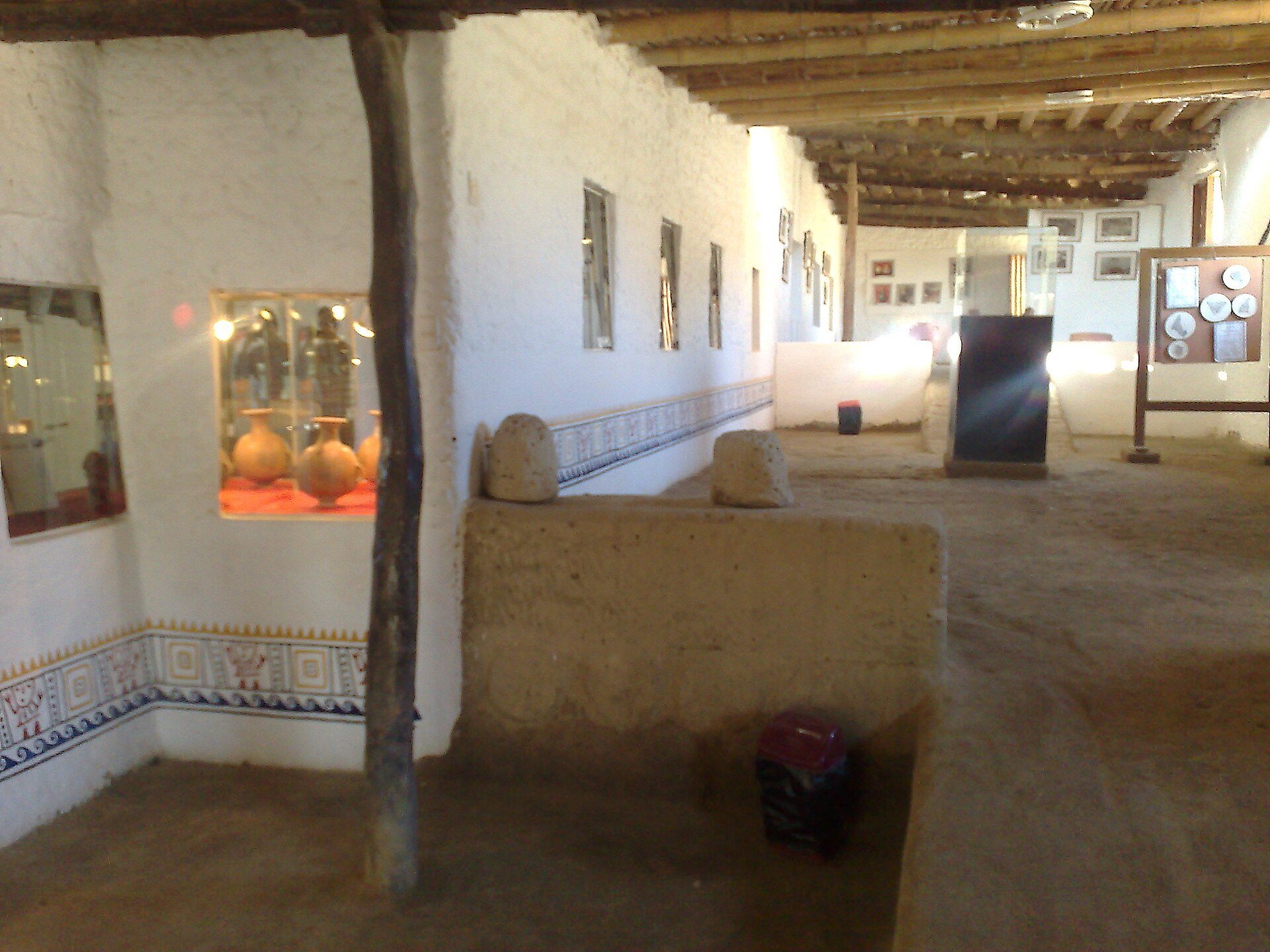
Archaeological studies carried out during the 1980s and early 1990s produced the pre-Hispanic collection now associated with the Narihualá Site Museum. The museum was built in 1997 according to local architectural patterns. Its displays include ceramics, metal objects, stone materials, and human or animal bones recovered through archaeological work. An ethnographic section presents objects made from toquilla straw, a representation of preparing chicha de jora, a traditional fermented beverage made from germinated maize, and photographic oil paintings by an artist.
Remains
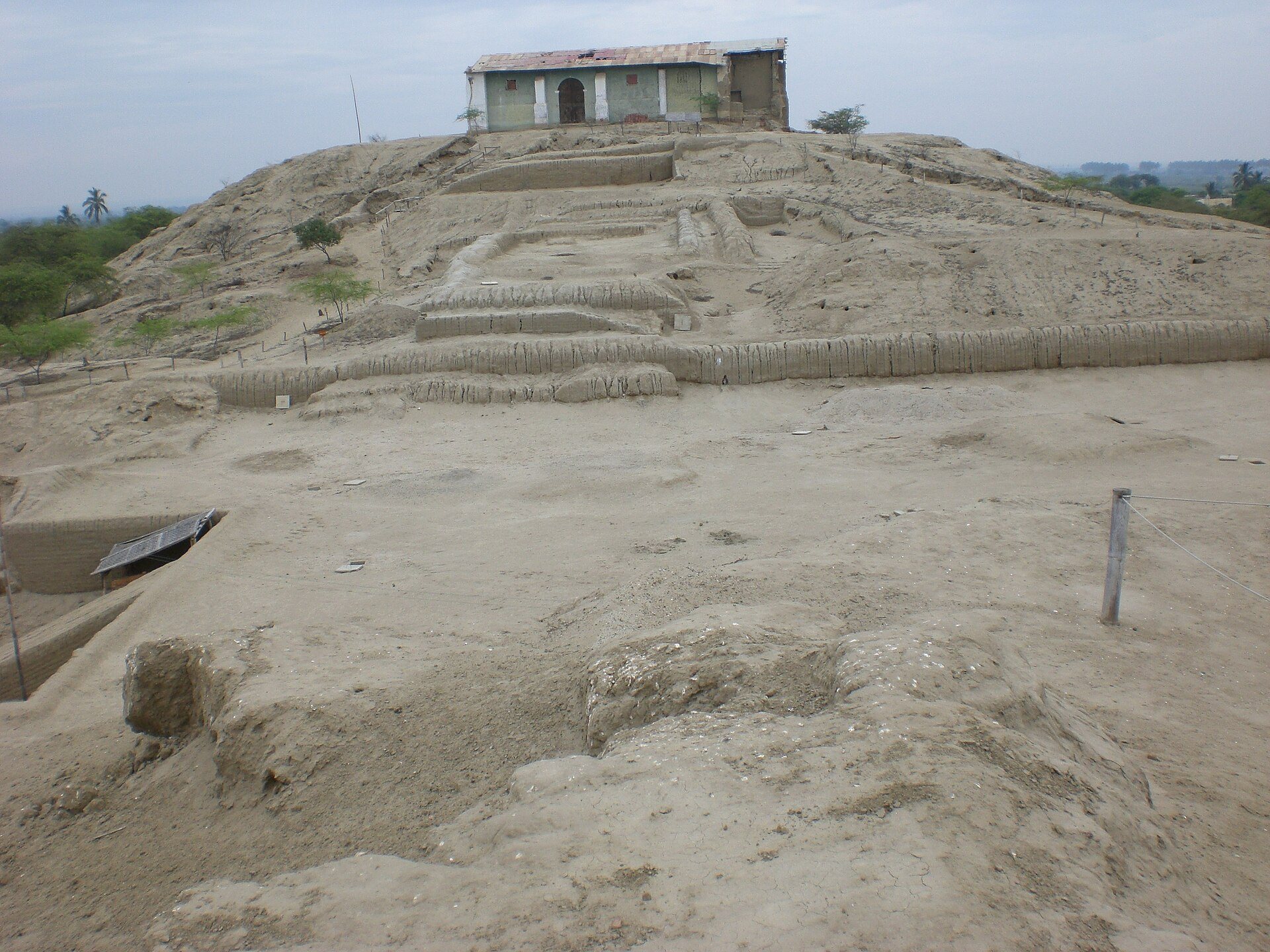
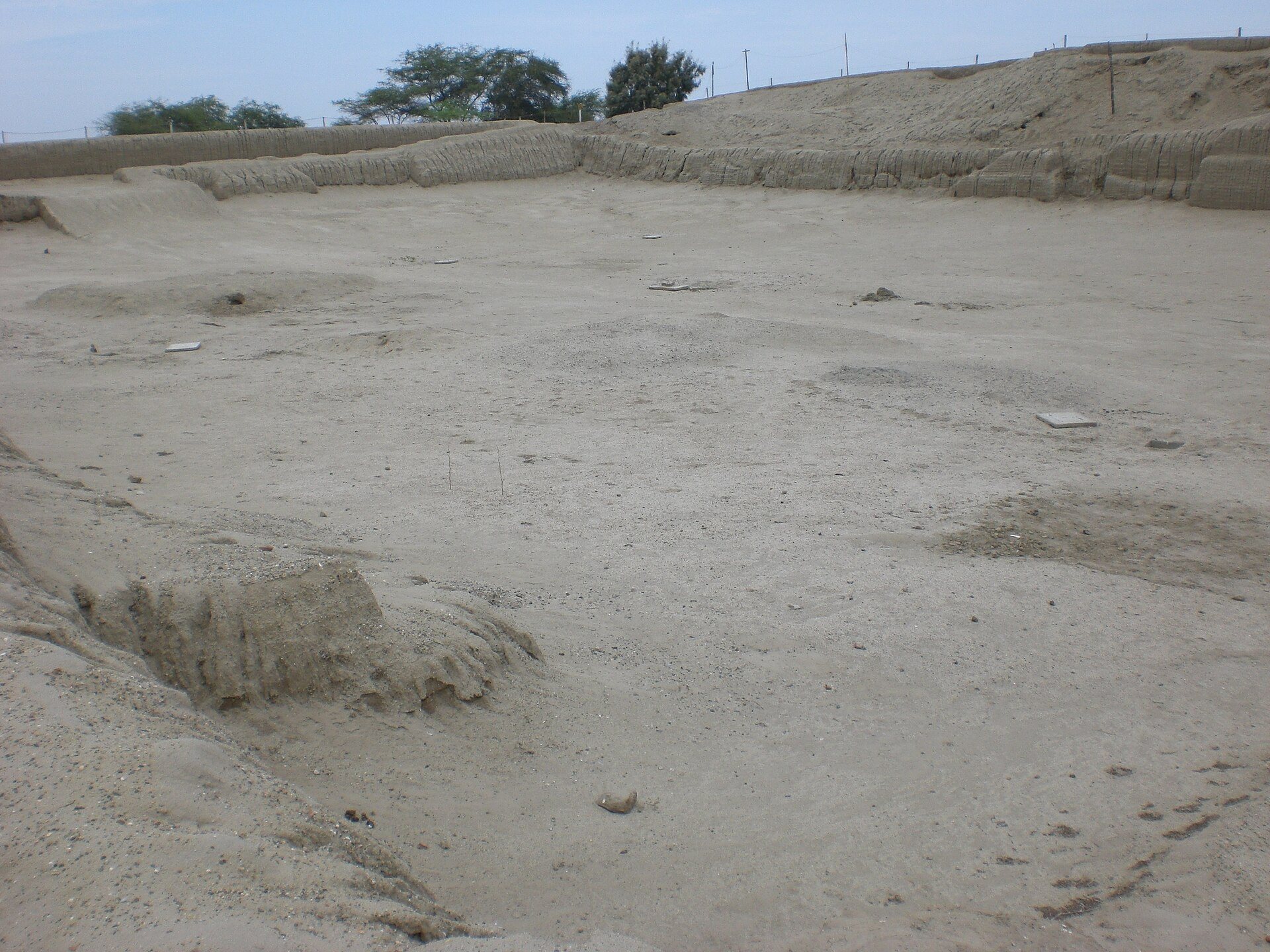
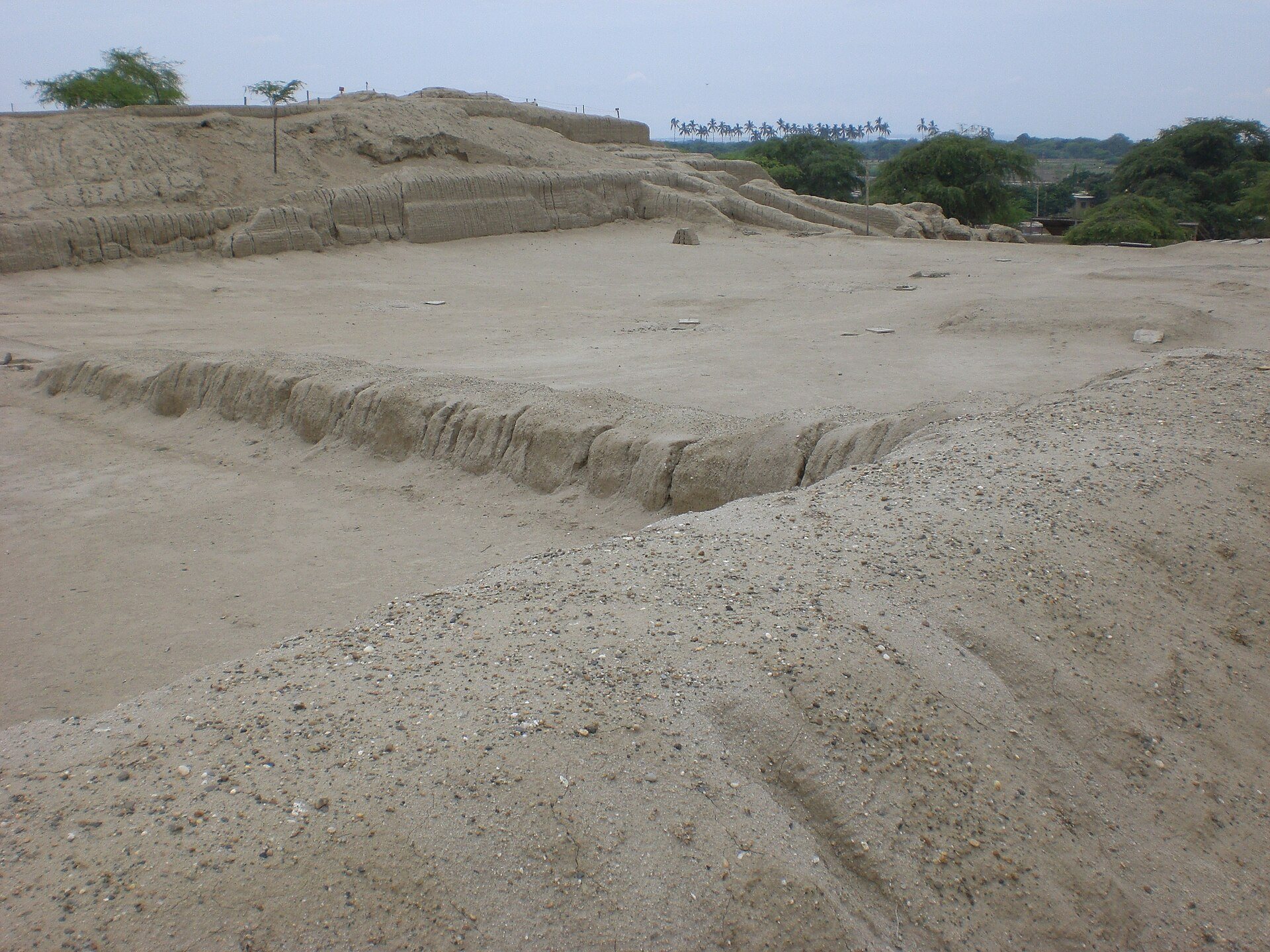
Narihualá consists of artificial mounds of different sizes and heights. Its principal huaca, a sacred or monumental place in the Andean cultural landscape, is formed by monumental adobe architecture bonded with mud mortar. The huaca is described as extending 6 m and reaching a maximum height of 40 m. It is divided into three sectors, whose walls, platforms, rooms, passageways, stairways, and ramps reveal successive construction moments, occupations, and reoccupations.
Principal huaca
First sector
The first sector has the greatest volume and height. It contains a chapel and a modern cemetery, while excavations inside the monument revealed walls 1.60 m thick. These walls have finely finished and well-preserved plaster. Two construction phases can be distinguished: an original phase followed by a remodeling phase.
Intermediate sector
The intermediate sector is lower and contains three rows of parallel walls built from large adobe blocks. The blocks measure approximately 0.60 m long, 0.40 m wide, and 0.12 m high. The walls connect the platforms of the first and third sectors. Their intervening spaces contain fine sand, which apparently helped join the pyramidal blocks and also served as a defensive or protective construction element.
Third sector
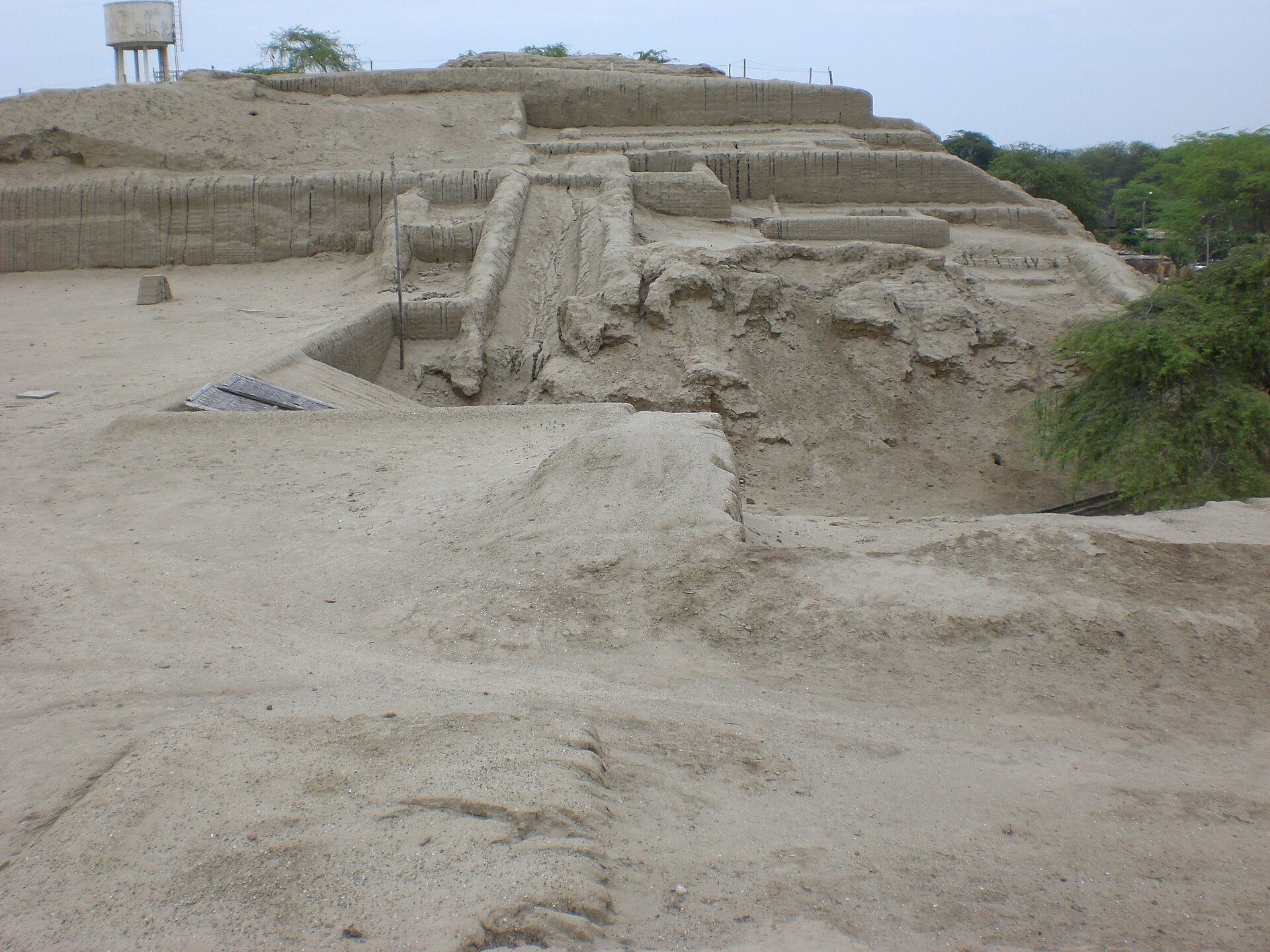
The third sector takes the form of a truncated pyramid made up of three superimposed platforms. Its floors, walls, and platforms are irregular because they were built over rooms, passageways, stairways, and access ramps. Additional structures were added as functions changed over time, producing a complex arrangement of construction and reuse.
Investigation of the third sector continues, while exposed areas show original floors, plastered walls, impressions left by builders’ fingers, and marks from algarrobo posts. Algarrobo is a tree whose wood was used for roof supports. Fine sand was placed to seal walls or rooms below ground level before new adobe structures were raised above them, allowing the monument to increase in height.
Site museum
The Narihualá Site Museum preserves the pre-Hispanic material recovered from the complex, including ceramics, metal objects, stone artifacts or fragments, and osteological remains, meaning human or animal bones. Its ethnographic displays extend the presentation to local craft and cultural practices through toquilla-straw objects, a scene showing the preparation of chicha de jora, and photographic oil paintings.