Narayangad: A Hill Fort and Watchpoint in Maharashtra
Site at a Glance
- Popularity
- Medium
- Country
- India
- Primary era
- Unclassified
- Eras represented
- Unclassified
- Civilizations
- Unclassified
- Site type
- Military
- Remains
- Fort
On this page7 sections
History
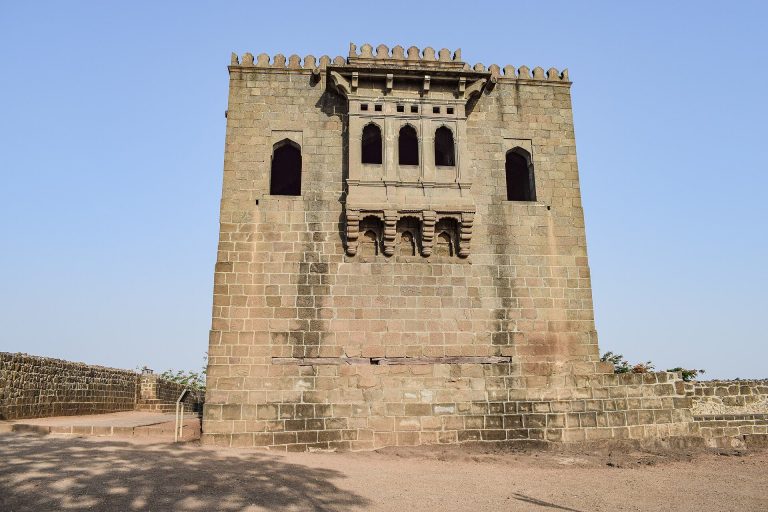
Narayangad is a stone hill fort in Pune district, Maharashtra, India, dating to the era of the Satavahanas, an ancient dynasty that ruled parts of the Deccan. It served as a watchpoint on the route between Junnar and Paithan. The nearby settlement of Narayangaon takes its name from the fort.
Maratha and British periods
The Maratha Empire controlled Narayangad from 1714. Balaji Vishvanath, the first Peshwa, or chief minister and senior executive official of the Maratha state, is said to have rebuilt the fort. He held the office from 1714 to 1720. The fort was assigned to Sayaji Povar as a service grant.
During the final Maratha war, Narayangad is said to have surrendered to the British in 1818. It then came under the East India Company, a British trading company that also exercised political power in India, from 1818 to 1857. Direct British rule, known as the British Raj, followed from 1857 to 1947. The fort has been under India since 1947 and is identified as the property of the Government of India.
Remains
Fort layout
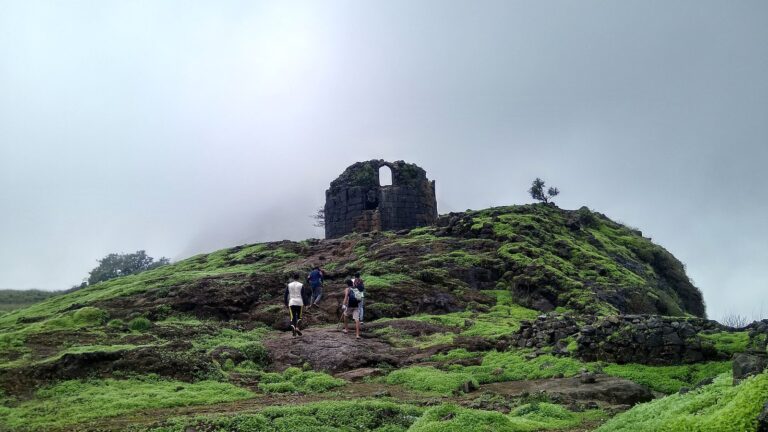
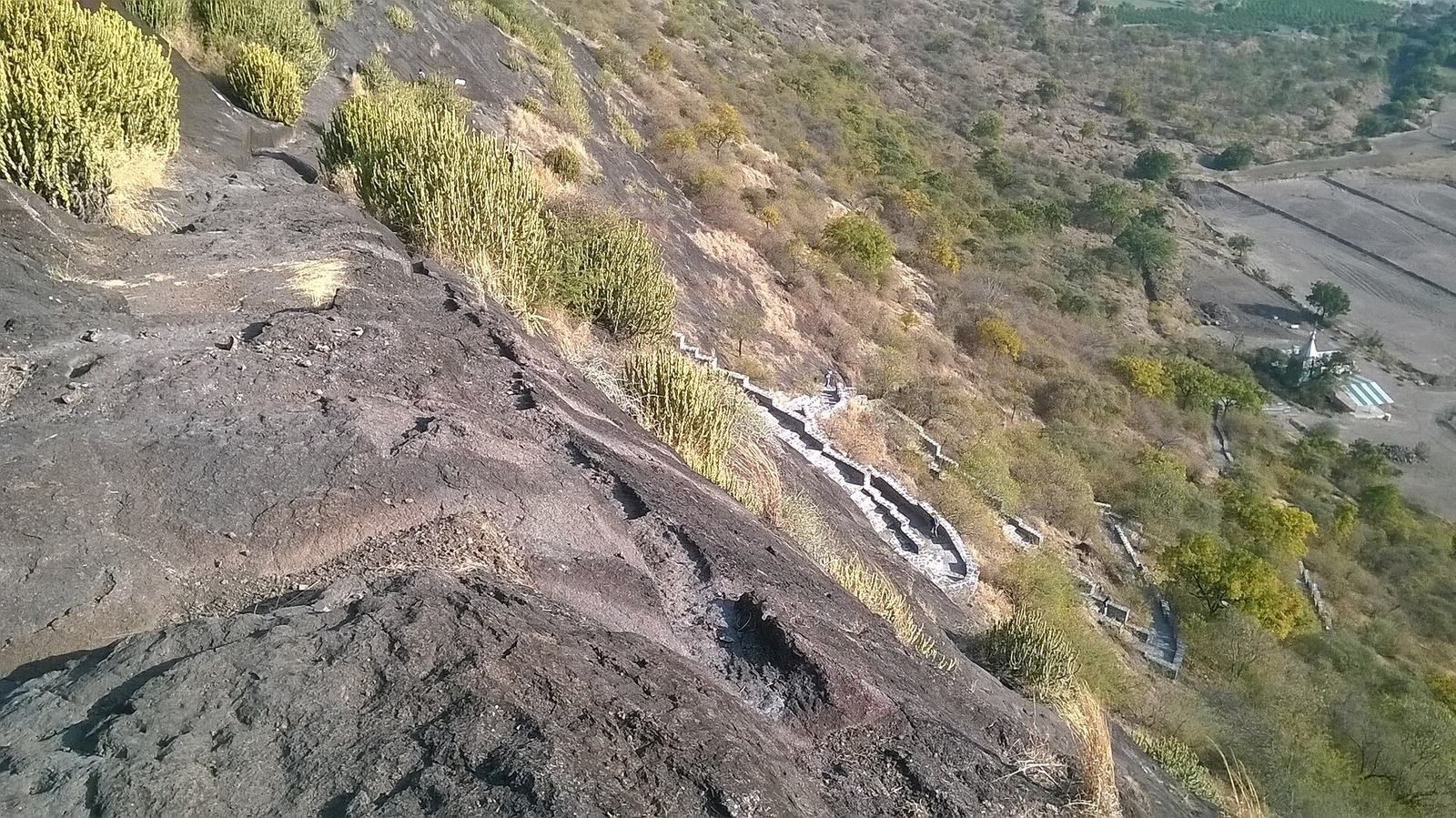
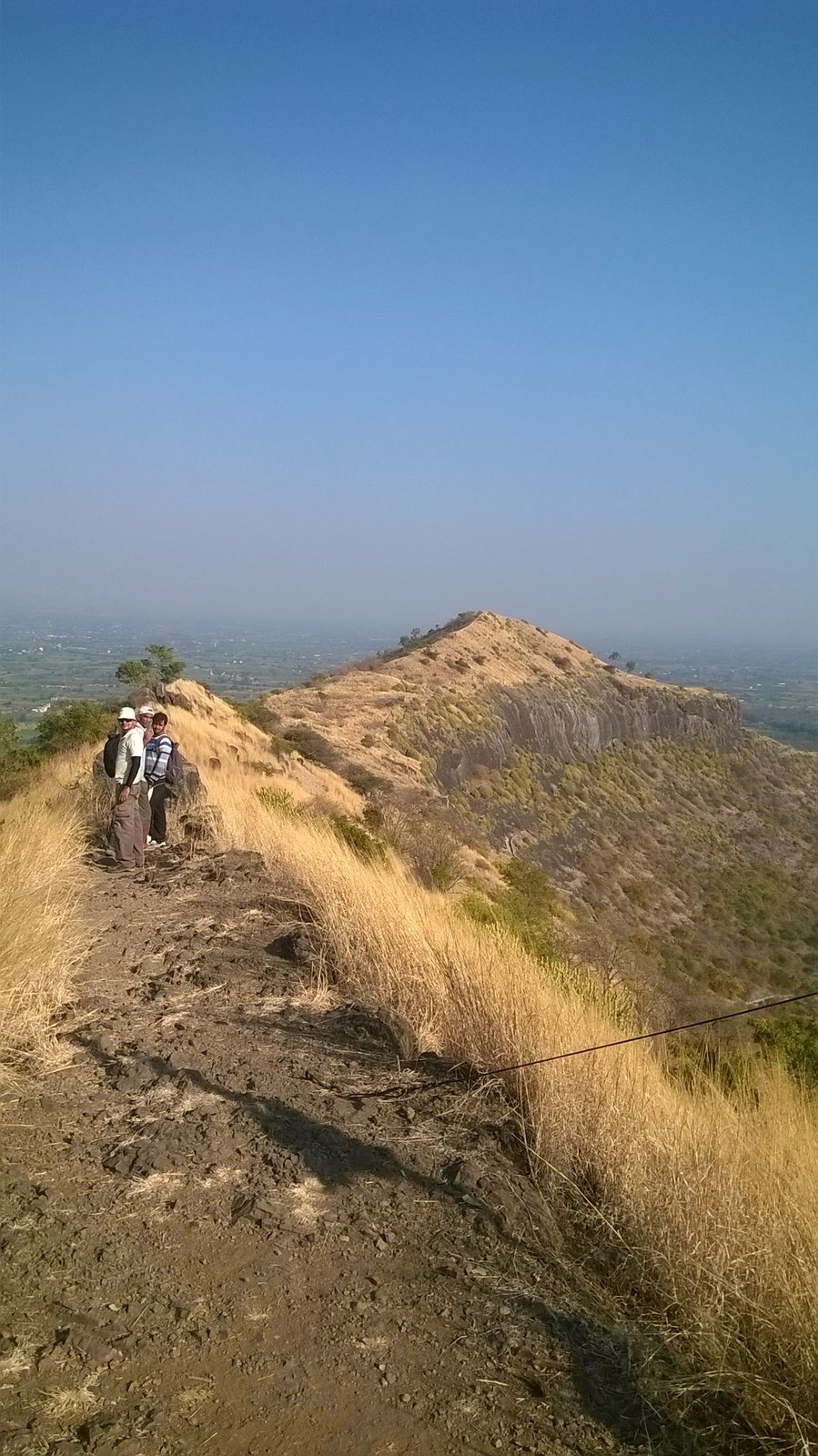
Narayangad stands on a detached hill, 2,557 feet high, rising sharply from the plain to the north, south, and west. It lies east of Narayangaon and near Gadachiwadi. The fort is aligned north to south, with its main entrance on the western side. It is now dismantled.
Water ponds
Two small ponds above the fort are named Narayantake and Chambar Take.
Hilltop temples
A temple to Hastamata, a local Hindu goddess, stands at the hill’s highest point. Below it is the temple of Mukaai, another local Hindu goddess.
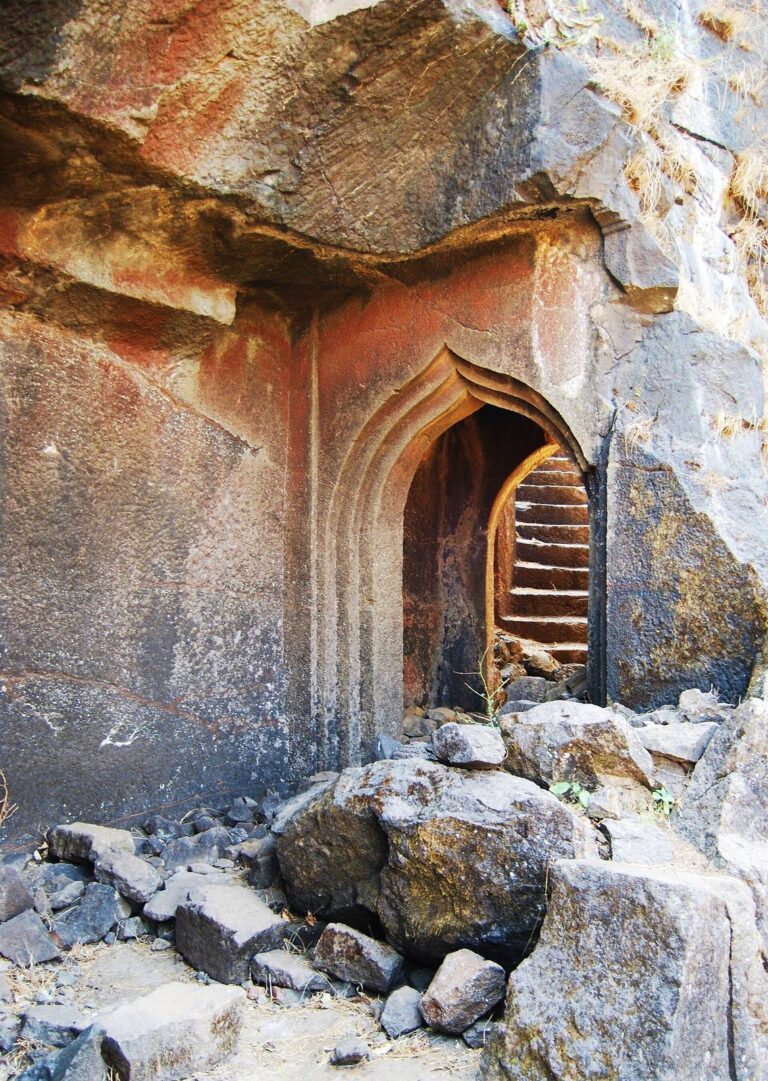
Carved stone doorway
Among the hill’s other ruins is a stone doorway. Its lintel bears a figure of Ganpati, a name for Ganesha, a widely worshipped Hindu deity, flanked by two tigers.