Namutoni: German Colonial Police Post and Fort in Namibia
Site at a Glance
- Rating
- 3.9
- Popularity
- Medium
- Country
- Namibia
- Primary era
- Modern
- External website
- Open
- Eras represented
- Modern
- Civilizations
- German
- Site type
- Military
- Remains
- Fort
On this page6 sections
History
Namutoni is a former German colonial police post and fort in southeastern Etosha National Park, Namibia. The German colonial administration established the post in 1897 in German South West Africa, Germany’s colonial territory in what is now Namibia. The fortification was built around the turn of the twentieth century. Namutoni marked the northern limit of German influence and helped control cattle movement during a rinderpest outbreak, a highly contagious cattle disease.
Colonial post and veterinary boundary
Namutoni formed the eastern link in a chain of posts that also included Fort Sesfontein and Fort Okaukuejo. It stood on the Red Line, a veterinary boundary intended to limit the spread of cattle disease. The line extended west to Okaukuejo and east to Otjituuo.
The battle of 1904
When the Herero uprising, a revolt against German colonial rule, began in 1904, most of Namutoni’s garrison was sent south to assist farmers under threat. Four soldiers and three farmers remained. The small force was considered adequate because the Ovambo communities to the north had not joined the revolt, although rumors said Herero leaders were seeking their support. Finnish missionaries reported that messengers had carried appeals from Herero leaders to Ovambo kings and leaders. If that report was accurate, only the Ondonga community north of the Etosha pan joined the uprising.
On 28 January 1904, about 500 armed Ondonga warriors led by King Nehale lyaMpingana attacked the fort. The defenders repelled the first assault, killing about 60 attackers. After the warriors temporarily withdrew, the defenders escaped under cover of darkness to Tsumeb, about 100 kilometers away. The fort was left without a garrison and was stormed and largely destroyed the next day. The attack may have been intended to draw Ovambo communities into the uprising. Another possible motive was a rumor that the German administration planned to shoot all Ovambo cattle to contain the rinderpest outbreak. The battlefield, known as Amutuni lyOmanenge, became a National Monument in 2019.
Rebuilding and military use
The German Schutztruppe, the colonial military force, rebuilt the fort between 1905 and 1907. During the First World War it served as a prison camp for British soldiers, and in 1915 it was handed over to the South African army. It later functioned as a police post and army base before falling into disrepair. The fort was declared a National Monument in 1947.
Use within Etosha National Park
After Etosha National Park was established, the ruined fort regained importance and was rebuilt. In 1957 it was restored for use as a park-administration post and a basic rest camp, with part of the fort converted into a museum. The camp was initially open only in winter; its facilities were later improved to provide accommodation throughout the year.
From the mid-1960s, Namibia Wildlife Resorts operated the site as a hotel, first as Namutoni Rest Camp and later as Namutoni Resort. The camp was renovated and moved onto land around the fort in 2011, then renovated again from mid-2014 to early 2015. The fort was largely neglected from the mid-2010s. Following public protests, cleanup work took place in December 2020, and repairs began in 2022.
Remains
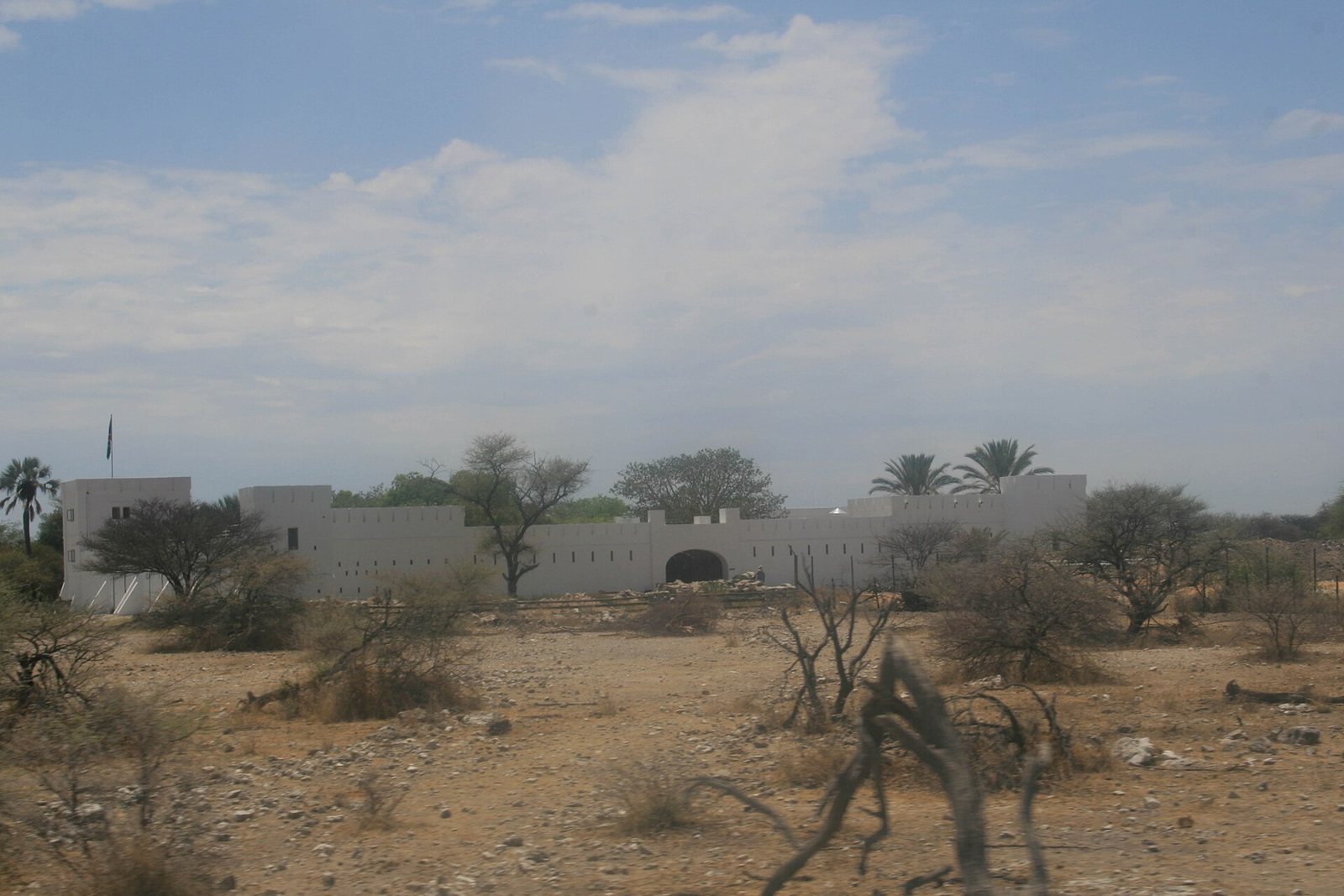
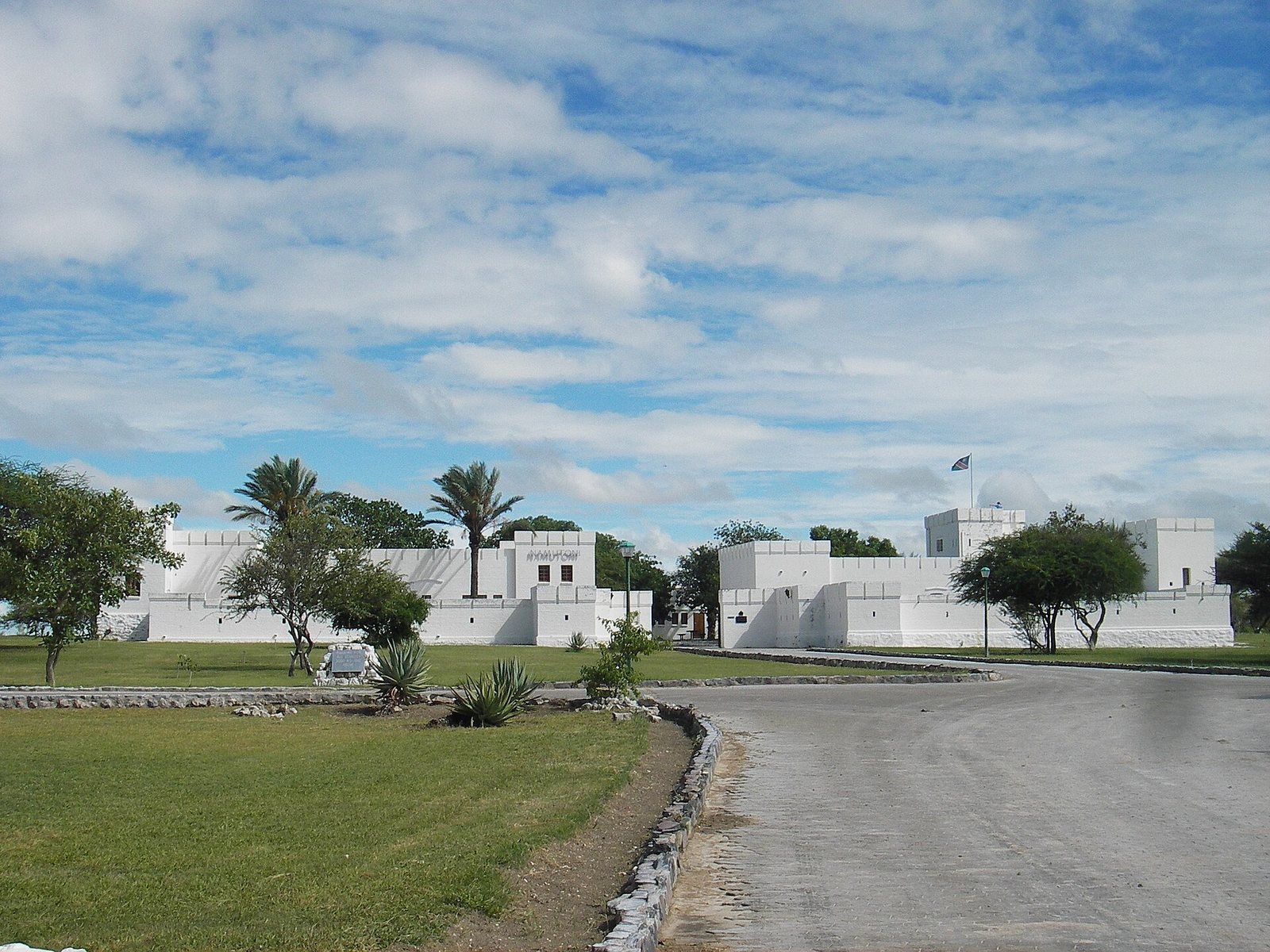
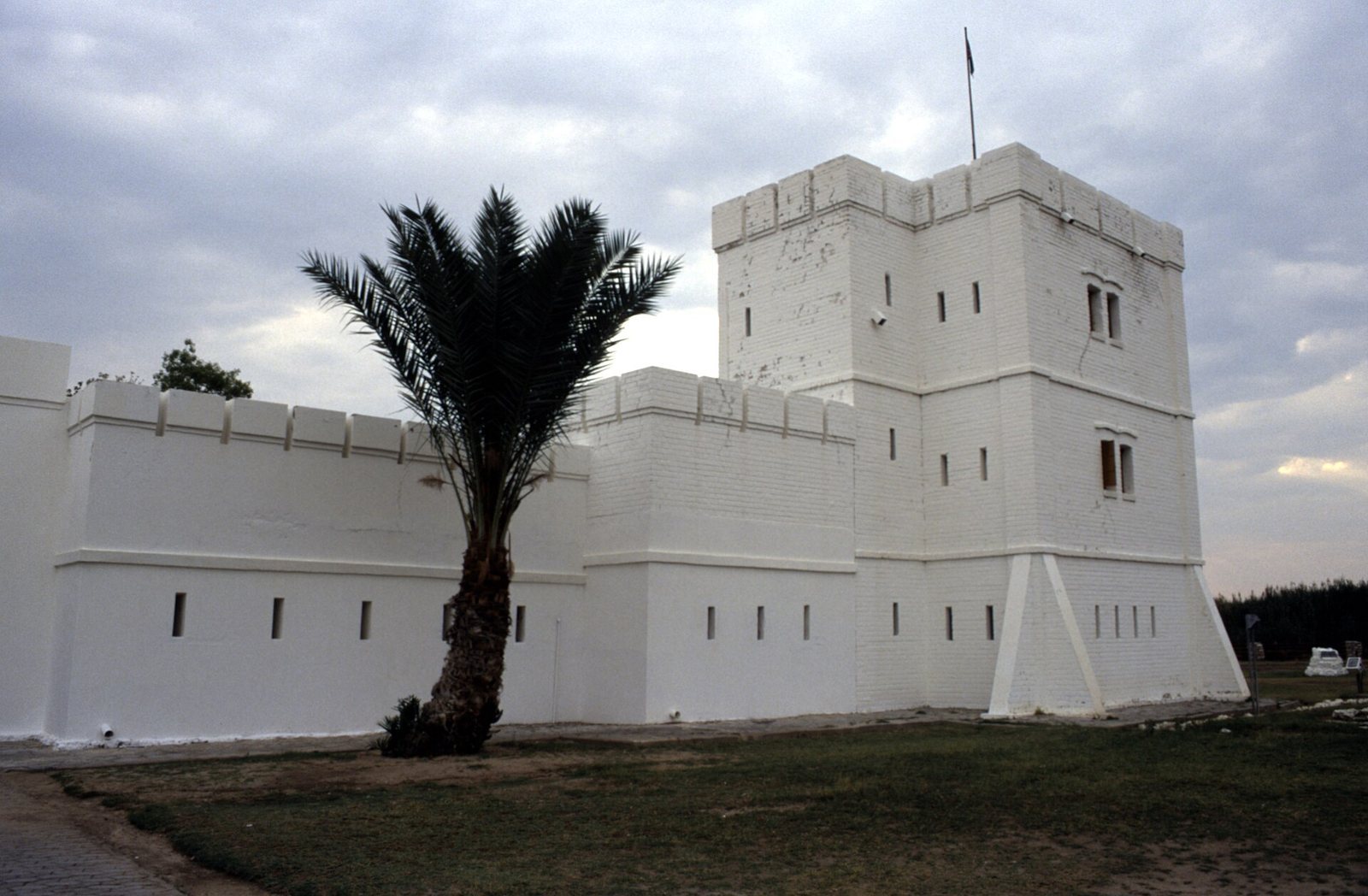
The fort stands on a limestone hill about 100 meters from a spring, in the southeastern part of Etosha National Park, near the park’s eastern edge and beside the Etosha pan. The wider rest-camp facilities occupy land around the fort and include the King Nehale waterhole. The name Namutoni is loosely translated from Ovambo as “the high place,” referring to the spring’s position on the hill.