Mudumal Megalithic Menhirs: Ancient Standing Stones in Telangana
Site at a Glance
- Rating
- 4.7
- Popularity
- Very Low
- Country
- India
- Primary era
- Bronze Age
- Eras represented
- Bronze Age
- Civilizations
- Indian
- Site type
- Religious
- Remains
- Sanctuary
On this page6 sections
History
Mudumal Megalithic Menhirs are an ancient Indian megalithic site near Mudumal village in Telangana, India. Dating from approximately 3,500 to 4,000 years ago, the site consists of large standing stones associated with a prehistoric culture whose builders may have observed the Sun, Moon, and stars.
Origins and possible uses
A menhir is a single large stone set upright, while the term megalithic describes monuments made with large stones. At Mudumal, the stones occur in circles, straight lines, and rows, and several formations appear to align with sunrise and sunset during the spring and autumn seasons. These arrangements suggest that the builders may have used the site to study celestial phenomena, estimate the passage of time, and observe seasonal or weather changes.
The exact purpose of the menhirs remains uncertain. Proposed interpretations include astronomical observation, worship, and commemoration of ancestors. Their continuing religious importance is reflected in local beliefs. The stones are known locally as “Thimmappa of the Standing Stones,” and one particular menhir is worshipped as Yellamma, a widely revered Hindu goddess associated especially with communities and traditions in parts of southern India.
Modern recognition and protection
The British archaeologist Alchin examined the site in 1980, bringing wider attention to the importance of the standing stones. The Archaeological Department manages the site, which is owned by the Government of Telangana. In 2025, the Government of India proposed the Mudumal menhirs for UNESCO World Heritage recognition and added them to India’s UNESCO Tentative List. This list identifies places that may be considered for future nomination, but inclusion does not grant World Heritage status.
Remains
Standing stones and spatial arrangements
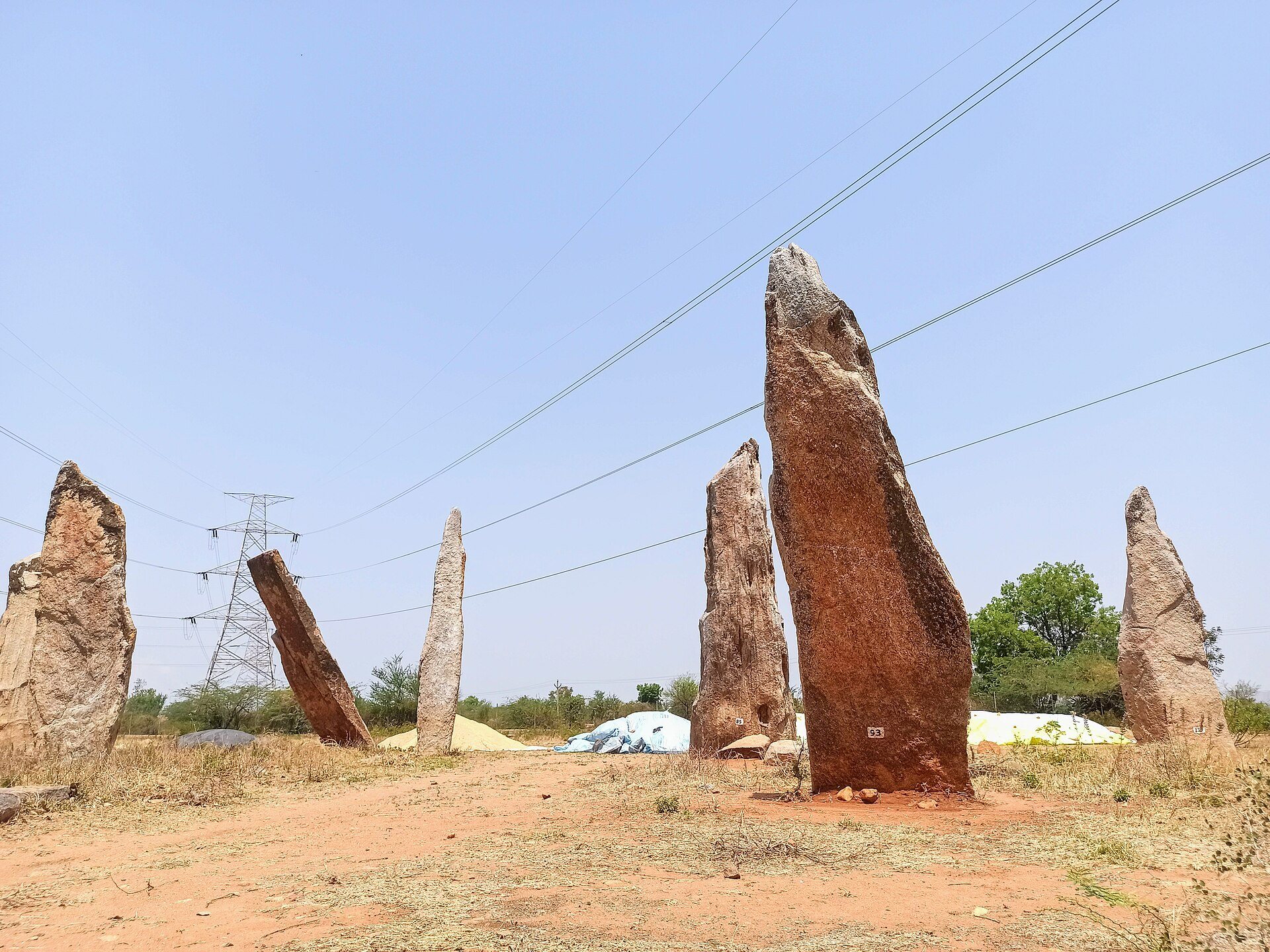
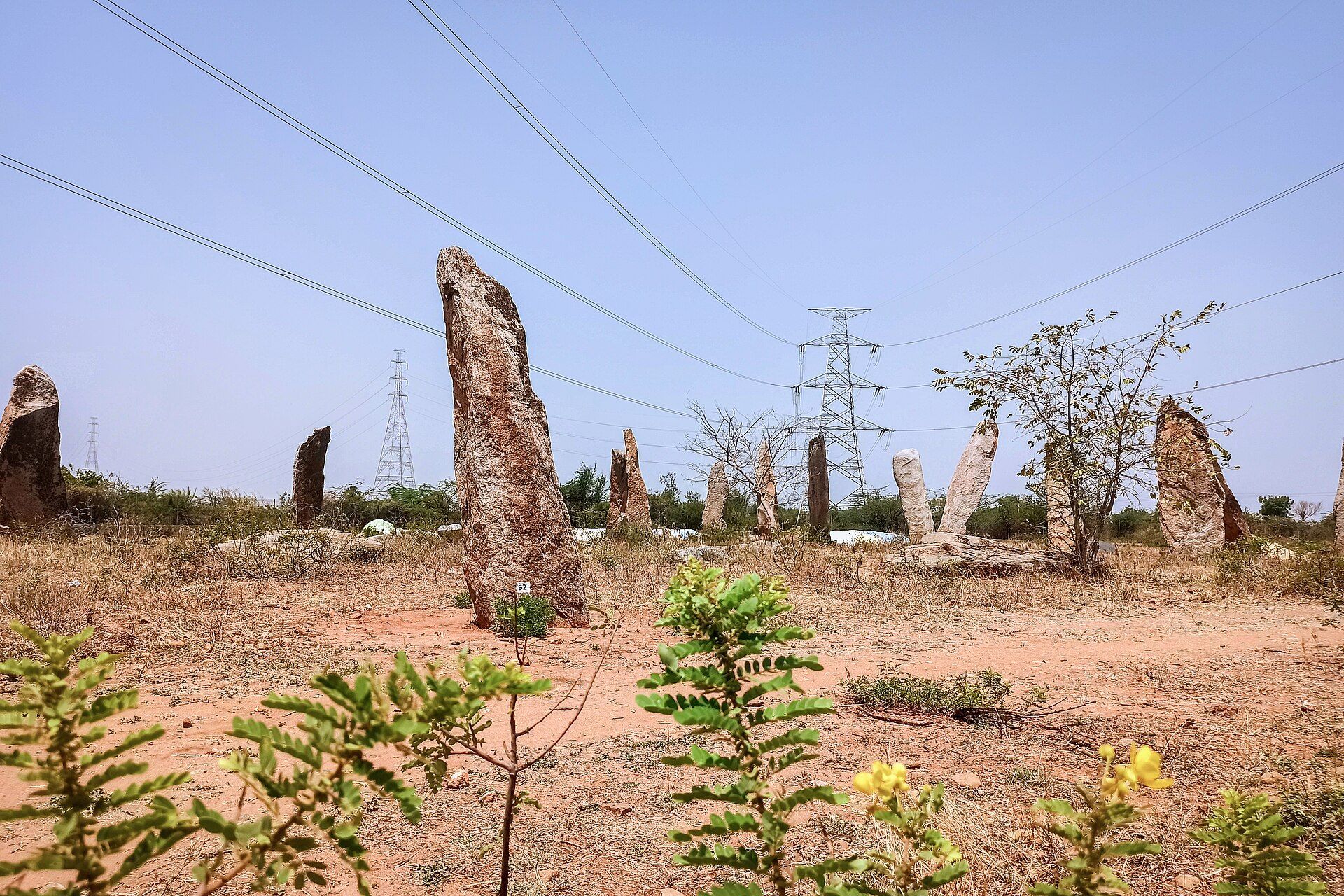
The site covers approximately 89 acres and contains about 80 stone structures. Most are large upright stones, generally between 3 and 5 metres high, built from stone and arranged in circles, lines, and rows. Some stones are placed one above another, while others stand individually in ordered formations. The overall arrangement has been compared with Stonehenge, and several groups have reported alignments with the directions of sunrise and sunset during the spring and autumn seasons.
The surviving remains represent only part of the ancient site. Most original formations have been destroyed, and some boulders were removed to support irrigation on nearby agricultural land. The remaining stones preserve evidence of a broad megalithic complex whose layout combined substantial upright monuments with arrangements that may have carried calendrical or ceremonial meaning.
Sacred stones
One menhir continues to serve as a place of worship for Yellamma. The wider group is also connected with the local sacred name “Thimmappa of the Standing Stones,” linking the physical remains with living religious traditions.