Maroilles Abbey: A Frankish Monastery in France
Site at a Glance
- Popularity
- Medium
- Country
- France
- Primary era
- Early Modern
- Eras represented
- Early Modern
- Civilizations
- Habsburg, Habsburg Spain, Holy Roman Empire, Spanish
- Site type
- Religious
- Remains
- Monastery
On this page11 sections
History
Maroilles Abbey was a Frankish monastery beside the Helpe Mineure at the edge of Mormal Forest in France, founded around 650 by Radobert, Count of Famars. It became an important religious and landholding institution in Hainaut, passing through several forms of authority before its suppression during the French Revolution.
Foundation and royal authority
Radobert, a Frankish noble related to the powerful Pippinid family, established the abbey as a proprietary monastery, a religious house controlled by its lay founder or family. The surrounding countryside was largely forested, with abandoned estates dating from Roman times. During the Merovingian period, named for an earlier Frankish ruling dynasty, aristocrats granted land along the Sambre’s right bank to monasteries.
Humbert, the first abbot, was also a landowner. In 674 he gave the monastery an estate at Mézières-sur-Oise, including vineyards, and came to be regarded as a co-founder. Radobert’s family continued to influence the abbey, a connection that persisted into the mid-eighth century.
In the early ninth century, the abbey came under royal authority. The cult of Saint Humbert took root there around this time, and Abbot Rodin secured Charlemagne’s approval to transfer Humbert’s relics, bodily remains or objects associated with a saint, to the abbey. Tradition also credits Humbert with bringing relics and a statue of the Virgin Mary back from Rome. He designated Mary, under the title Our Lady of the Afflicted, as patroness of the abbey church.
The Treaty of Verdun in 843 placed the region on the frontier of West Francia, the western Frankish kingdom formed after the Carolingian Empire was divided. Charles the Bald assigned the abbey to Enguerrand as part of Carolingian secularization, the transfer of church property and offices into lay control. A lay abbot, a non-cleric holding an abbey office or its revenues, was in place before 870. Part of the abbey’s income supported about thirty canons, clergy serving a church community. The monks followed the Rule of Saint Benedict, precepts for communal discipline and religious observance, until the French Revolution.
Episcopal authority and estates
Around 920, Maroilles came under the bishop of Cambrai and became an episcopal abbey, meaning one governed by a bishop. It was the only abbey of this kind in Hainaut; other abbeys in the region increasingly passed under the control of the Reignier family, the ruling house of the County of Hainaut. In 921, Charles the Simple confirmed its holdings in Taisnières-en-Thiérache, Noyelles-sur-Sambre, Marbaix, and Maroilles. By then, its lands covered more than 4,300 hectares and included the people bound to work them. The abbey also received exemption from transport tolls, and a market was established in the town. On 30 April 948, Otto I transferred the abbey, then held by Count Isaac, to Fulbert, bishop of Cambrai.
Land and tithes, levies often paid in produce or goods, provided the abbey’s income. Owners of cows paid their tithe in cheese, first known as craquegnon. Tradition links the origins of Maroilles cheese to the abbey and credits Enguerrand, bishop of Cambrai, with encouraging a longer ripening period.
The abbey’s ties to Cambrai remained disputed. During the episcopate of Gérard of Florennes, bishop from 1012 to 1051, the canons were expelled, stricter observance of the Benedictine Rule was imposed, and part of the abbey’s estates was recovered. In 1025, after Norman invasions, Gérard arranged repairs and restoration.
Medieval landholding and local disputes
From the twelfth century, written charters increasingly set out customary rights between lords and peasants. A charter for Salesches in 1202 gave the abbot the right of ban, the power to issue binding orders and enforce local duties. The 1245 law governing the abbey’s four villages instead shared that authority with their inhabitants. Disagreements over how these charters should be applied led to repeated lawsuits.
The Black Death, a devastating plague pandemic, reduced Hainaut’s population by about a third in the fourteenth century, and farming practices gradually changed. Maroilles prospered by devoting land to livestock and became one of the three most important abbeys in the French part of Hainaut. Disputes with villagers focused on crop rotation and the enclosure of shared meadows by the monks. Hedged pastureland also spread through Thiérache during this period.
In 1304, Count John II of Avesnes exchanged Forest-en-Cambrésis for the abbey’s Renaut-Folie farm; the abbey regained the village in 1495. Wars involving the County of Hainaut damaged the institution during the fourteenth and fifteenth centuries. Later, its lands were affected by the passage of Henry II of France’s troops during the Italian Wars, a series of conflicts in Italy involving European powers including France and the Habsburgs.
Rebuilding and suppression
After the Peace of Cateau-Cambrésis, Margaret of Parma, a Habsburg regent in the Netherlands, appointed Frédéric d’Yve as abbot in 1564. He later became an adviser to Philip II of Spain. Major rebuilding took place during the sixteenth century.
After the Thirty Years’ War, a major European conflict, the 1659 Treaty of the Pyrenees brought the region under the French crown. Maroilles remained prosperous. In the eighteenth century, when the abbey reached its peak in wealth and power, it underwent further rebuilding. Under Abbot Alexandre de Brissy, it maintained an active musical life and commissioned new organs.
In late July 1789, villagers from Taisnières-en-Thiérache sacked the abbey. Longstanding disputes, along with resentment of its wealth and influence, contributed to the attack. The French Revolution suppressed the abbey, and between 1791 and 1794 its buildings were quarried for stone. The abbey and its mill were listed as historic monuments in 1977.
Remains
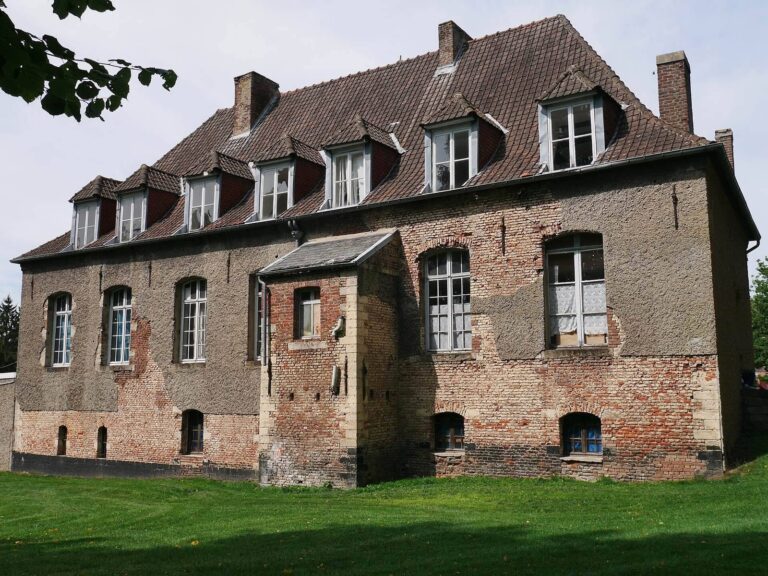
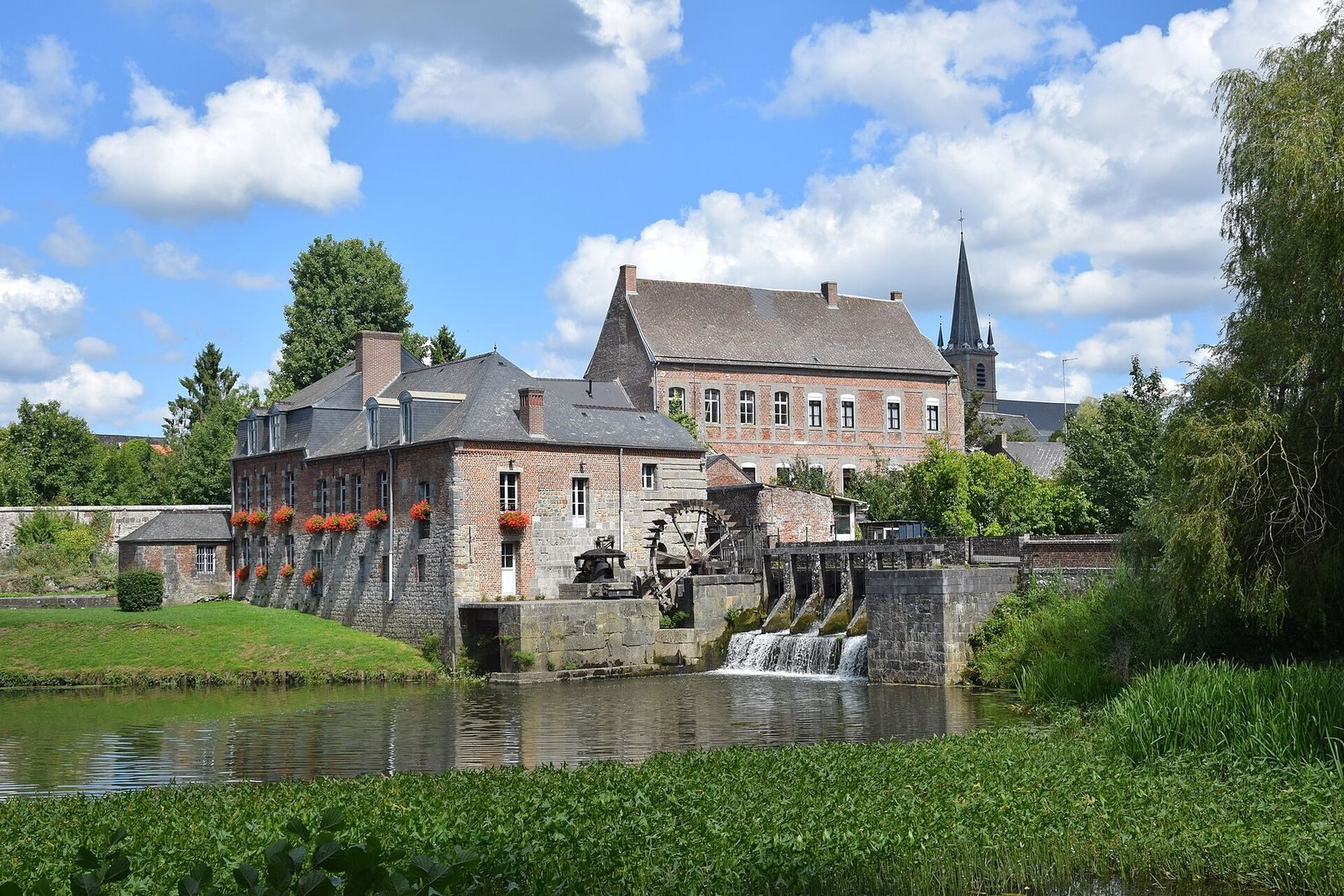
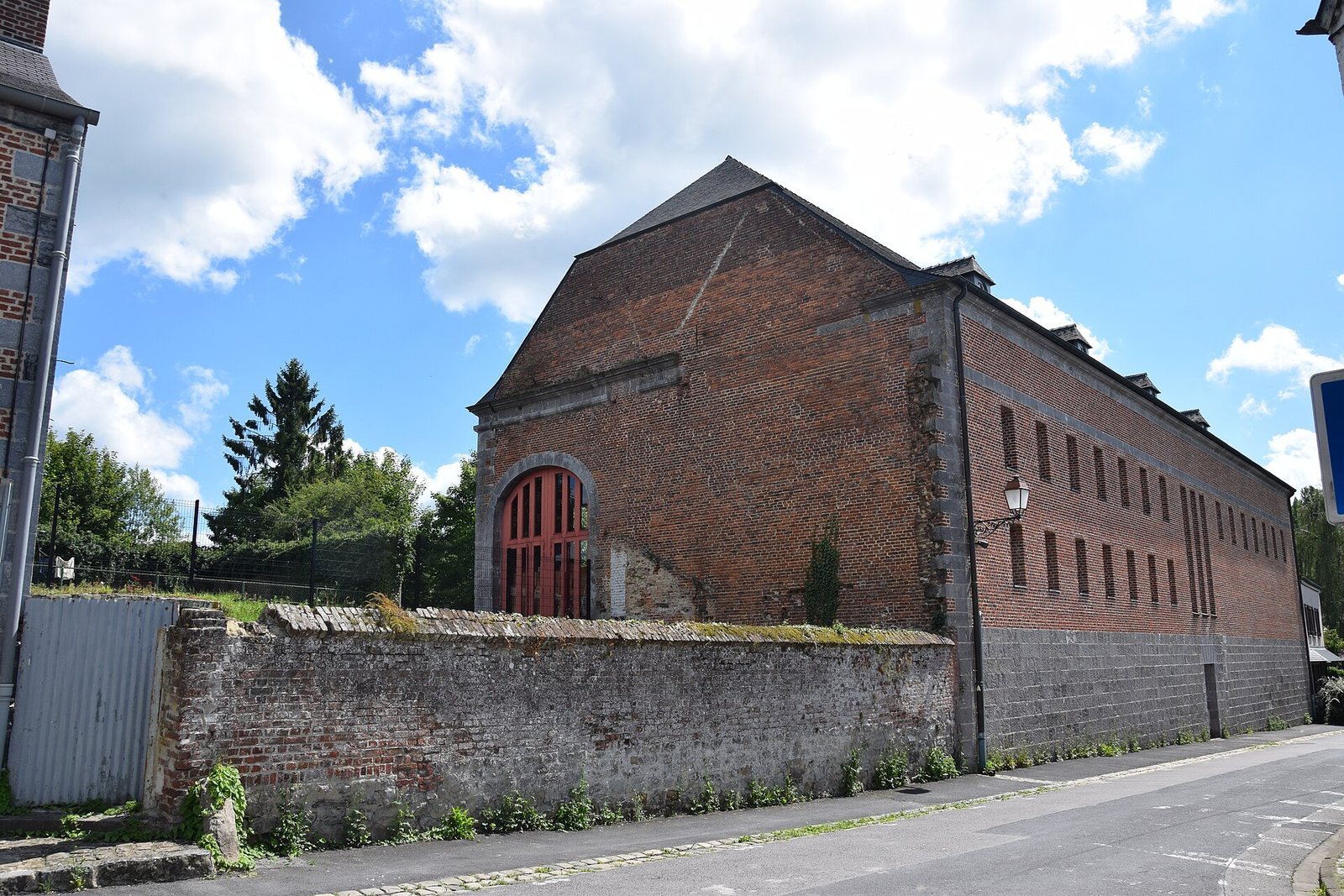
The surviving remains comprise several buildings and reused fragments from the former abbey complex. They include a flour mill, a tithe barn, a guesthouse, and a porter’s lodging, as well as elements from an abbey entrance incorporated into a ceremonial arch.
Surviving buildings and reused features
Flour mill
The surviving flour mill was built in 1576 and enlarged in 1634 under Abbot Simon Bosquier. It remains one of the principal standing structures associated with the abbey.
Tithe barn
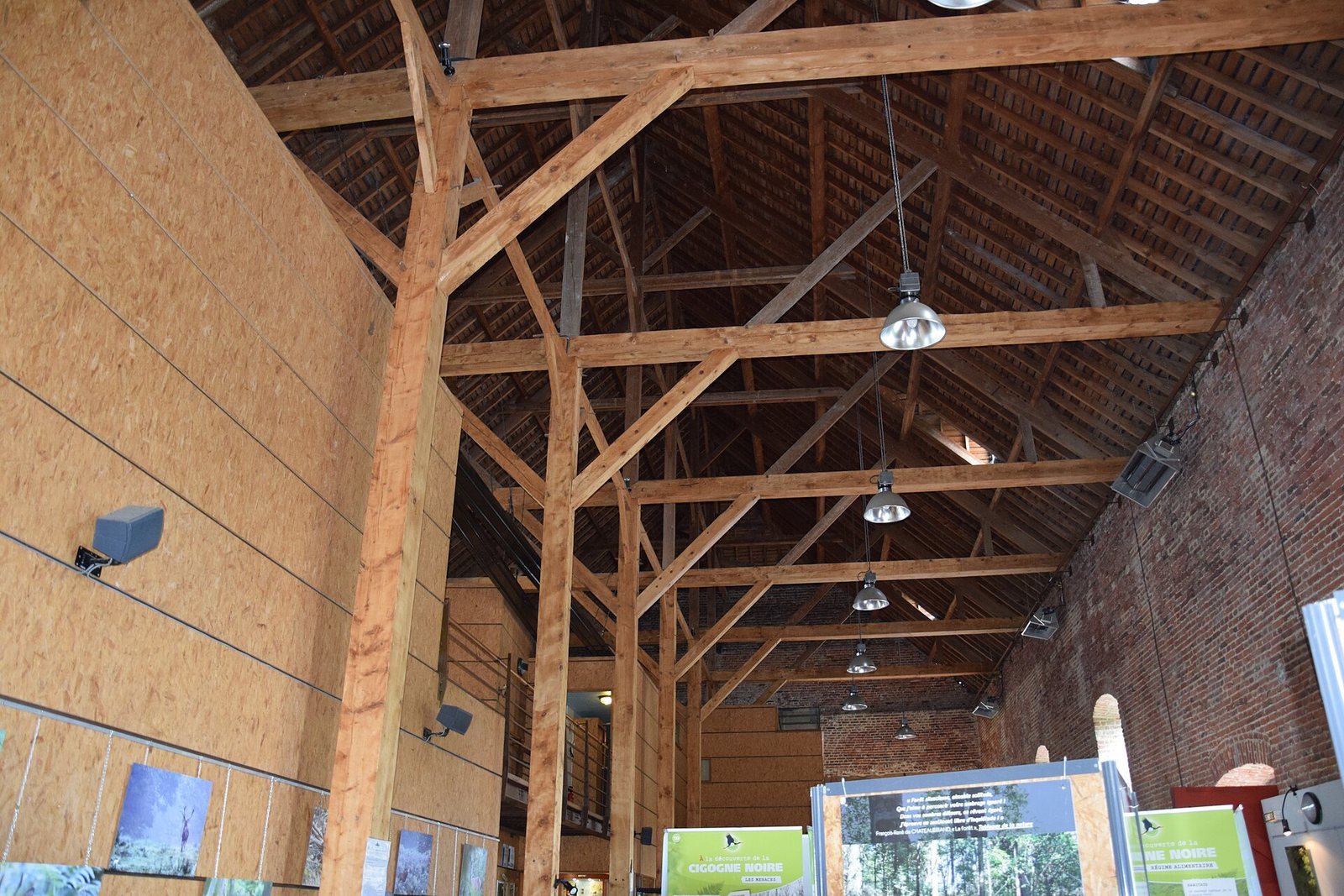
The tithe barn, originally used to store payments made in produce or goods, has been restored and converted into an environmental and interpretation centre for the Avesnois Regional Nature Park. It also serves exhibition purposes.
Guesthouse and porter’s lodging
The guesthouse and the porter’s lodging also survive as parts of the abbey’s former building complex.
Reused entrance elements and organ
Some pieces from an abbey entrance were incorporated into a triumphal arch, a ceremonial commemorative arch. The abbey’s organ is now installed in the Church of Saint-Humbert in Maroilles.