Lion of Chaeronea: A Theban Funerary Monument in Greece
Site at a Glance
- Rating
- 4.8
- Popularity
- High
- Country
- Greece
- Primary era
- Classical
- Eras represented
- Classical, Modern
- Civilizations
- Ancient Greek, Greek
- Site type
- Civic
- Remains
- Monument
On this page8 sections
History
The Lion of Chaeronea is a Theban funerary monument near Chaeronea, Greece, commemorating warriors killed in 338 BCE while fighting the Macedonian army of Philip II, king of Macedon.
Battle and commemoration
The monument’s date remains disputed. It is often thought to have been erected soon after the battle, but other proposals place it around 316 BCE, when Cassander refounded Thebes, or around 285 BCE, when the city rejoined the Boeotian League, a political association of cities in Boeotia. These later dates take account of Alexander the Great’s destruction of Thebes in 335 BCE, which may have left little time for an earlier construction.
A tradition says Philip ordered the lion to honor the Thebans’ courage, though the story is uncertain. The burial beside the monument is generally associated with the Sacred Band, an elite Theban military unit traditionally described as having 300 members. In the second century CE, the Greek travel writer Pausanias described the mass grave and its lion, which was already buried by then. He also lamented that Macedonian victory had ended the age of the Greek city-states. The Macedonian dead were cremated and buried beneath a mound on the plain of the Kephissos River.
Rediscovery and restoration
On 3 June 1818, English architects George Ledwell Taylor, John Sanders, William Purser, and Edward Cresy found fragments of the monument, including the lion’s head and a paw. The pieces were buried again after attempts to take them to London or secure them for the British Museum failed. In 1819, French artist Louis Dupré sketched two more fragments, indicating that further excavation had taken place, although its organizers are unknown. During the Greek War of Independence, the conflict through which Greeks fought to end Ottoman rule, the fragments were exposed again and the pedestal was badly damaged.
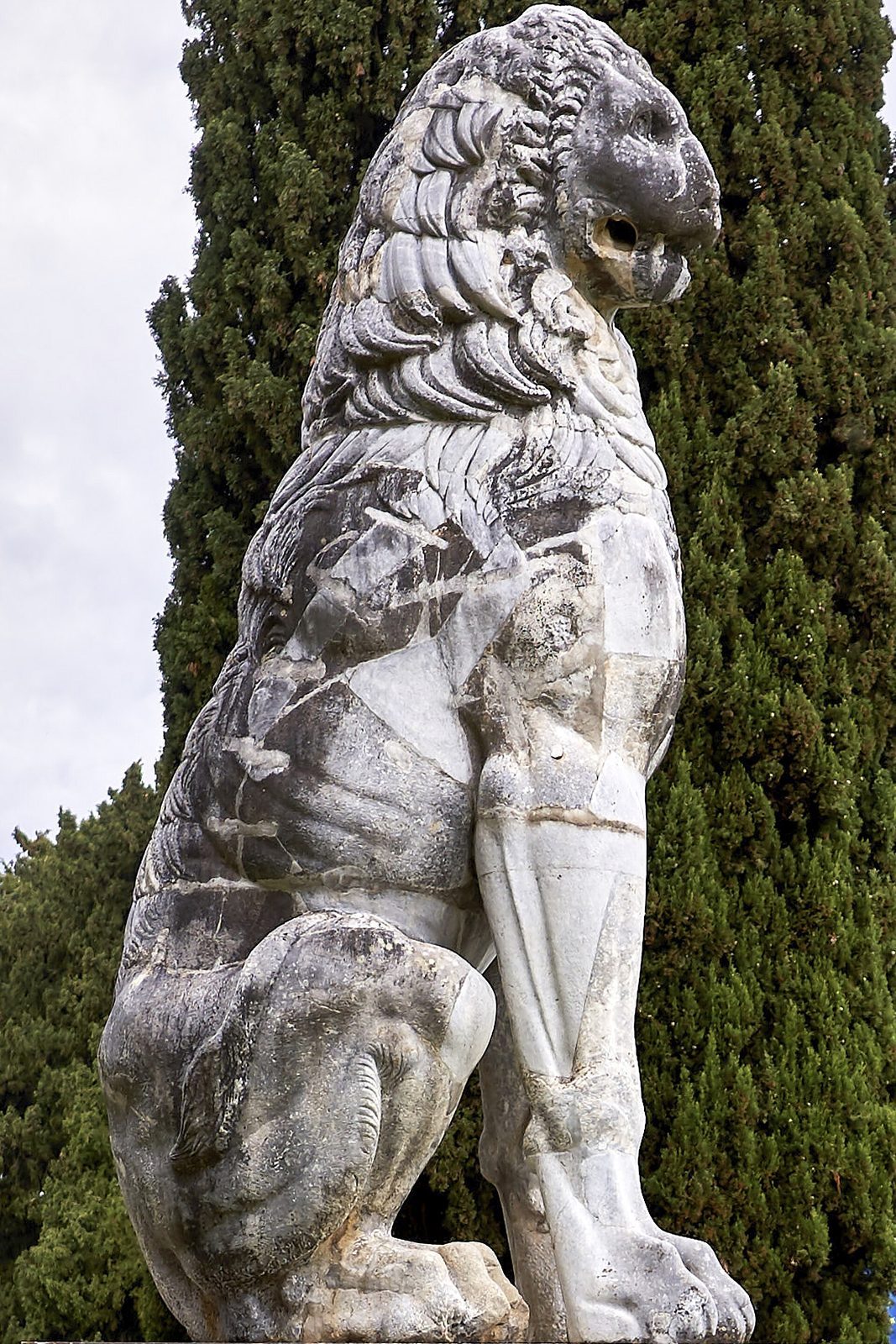
Archaeologists Panagiotis Stamatakis and Lazaros Fytalis excavated the grave in 1879–80. Further digging took place during restoration, while Georgios Sotiriadis examined the surrounding area. Opinions differed over whether to leave the broken monument as a reminder of transience or rebuild it as an expression of Greek heritage and identity. With Crown Prince Constantine among its advocates, the restoration was authorized in 1902 and carried out by sculptor Lazaros Sochos from 1902 to 1904. Most of its funding came from the Order of Chaeronea, a clandestine nineteenth-century organization associated with homosexual men. The lion later became a symbol of freedom. A replica was erected in 1930 in Pythagoras Square, in Vathy on the island of Samos.
Remains
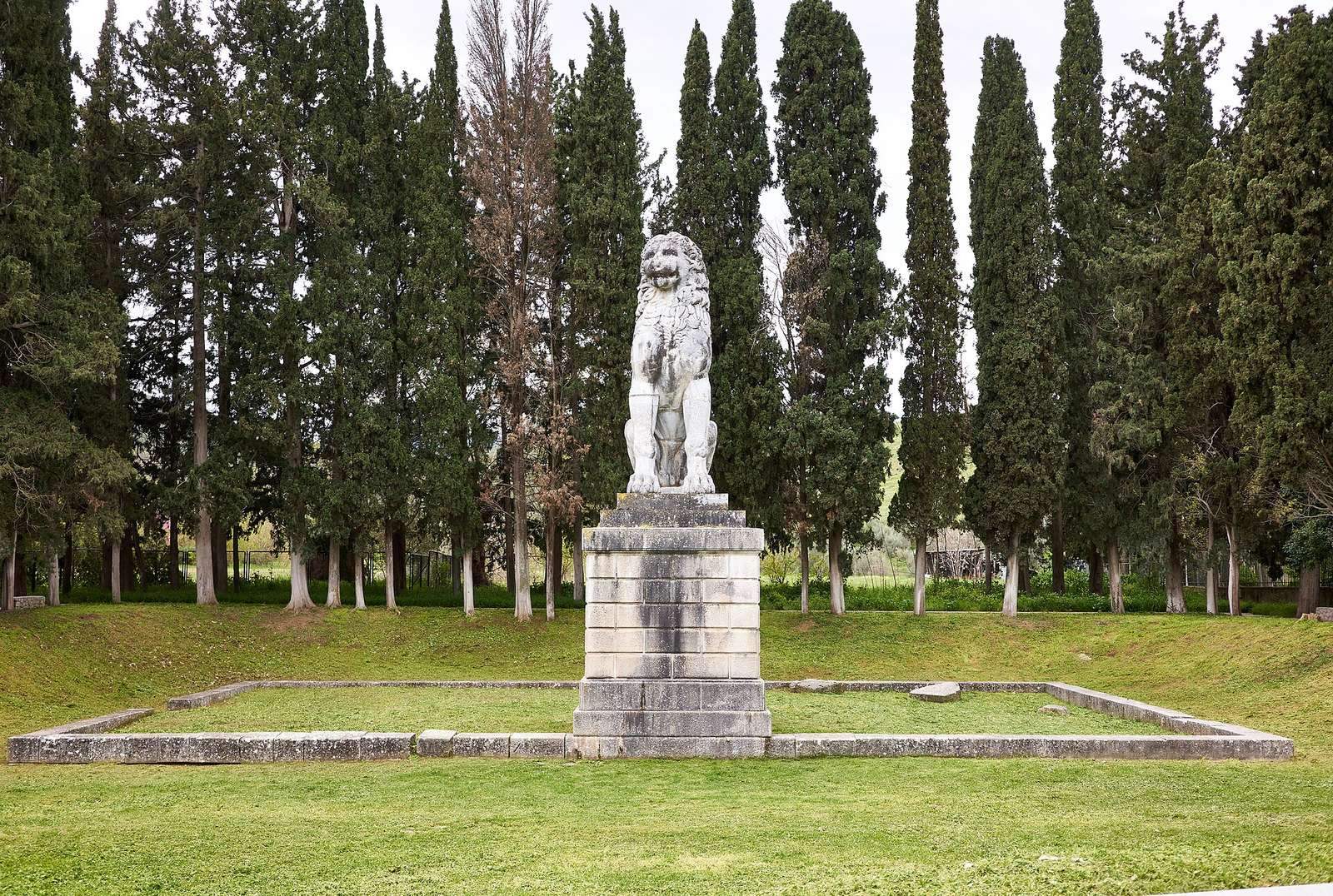
The surviving complex centers on the reconstructed lion monument, with an excavated burial chamber beside it.
Monument and enclosure
Lion and pedestal
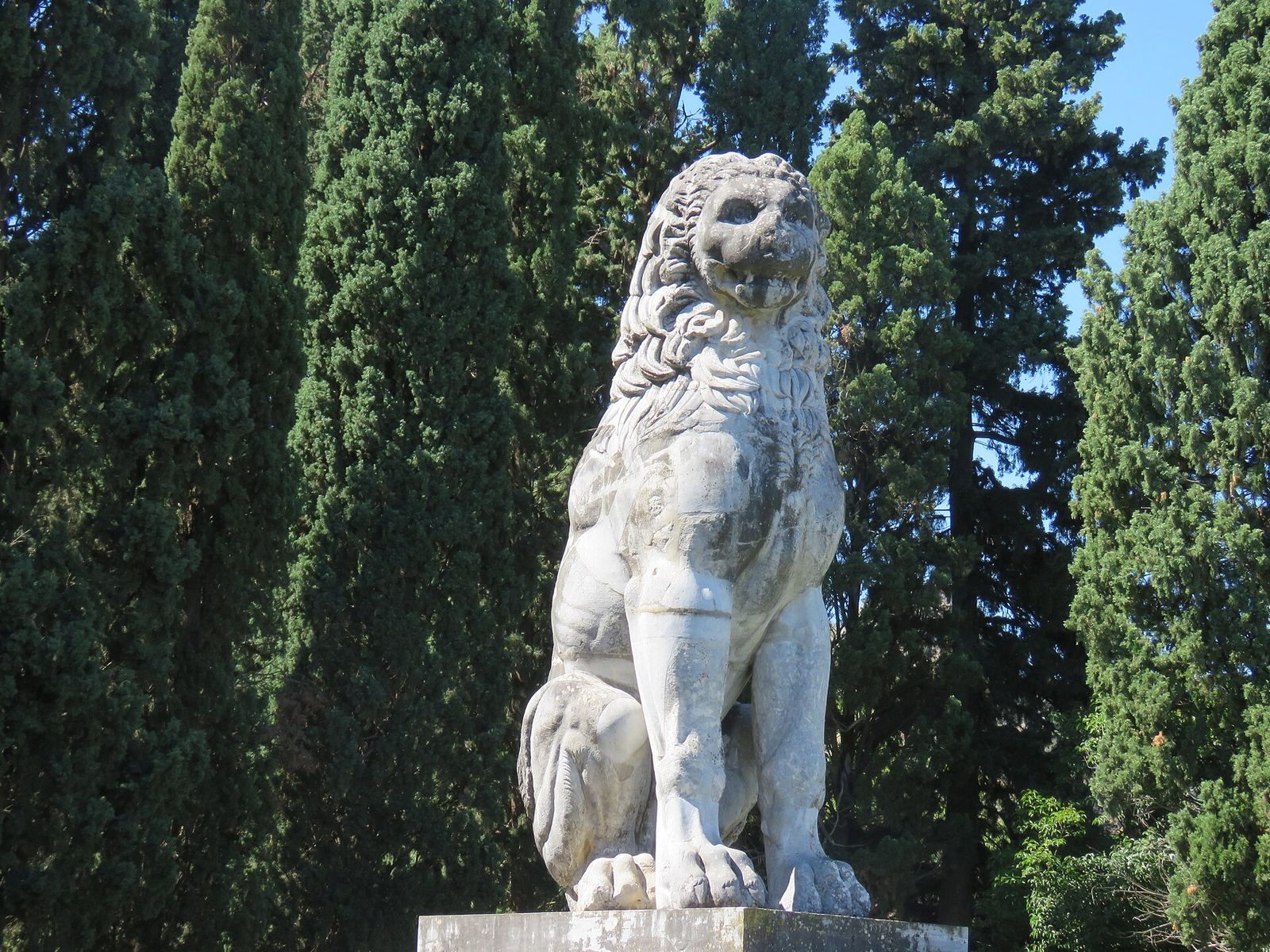
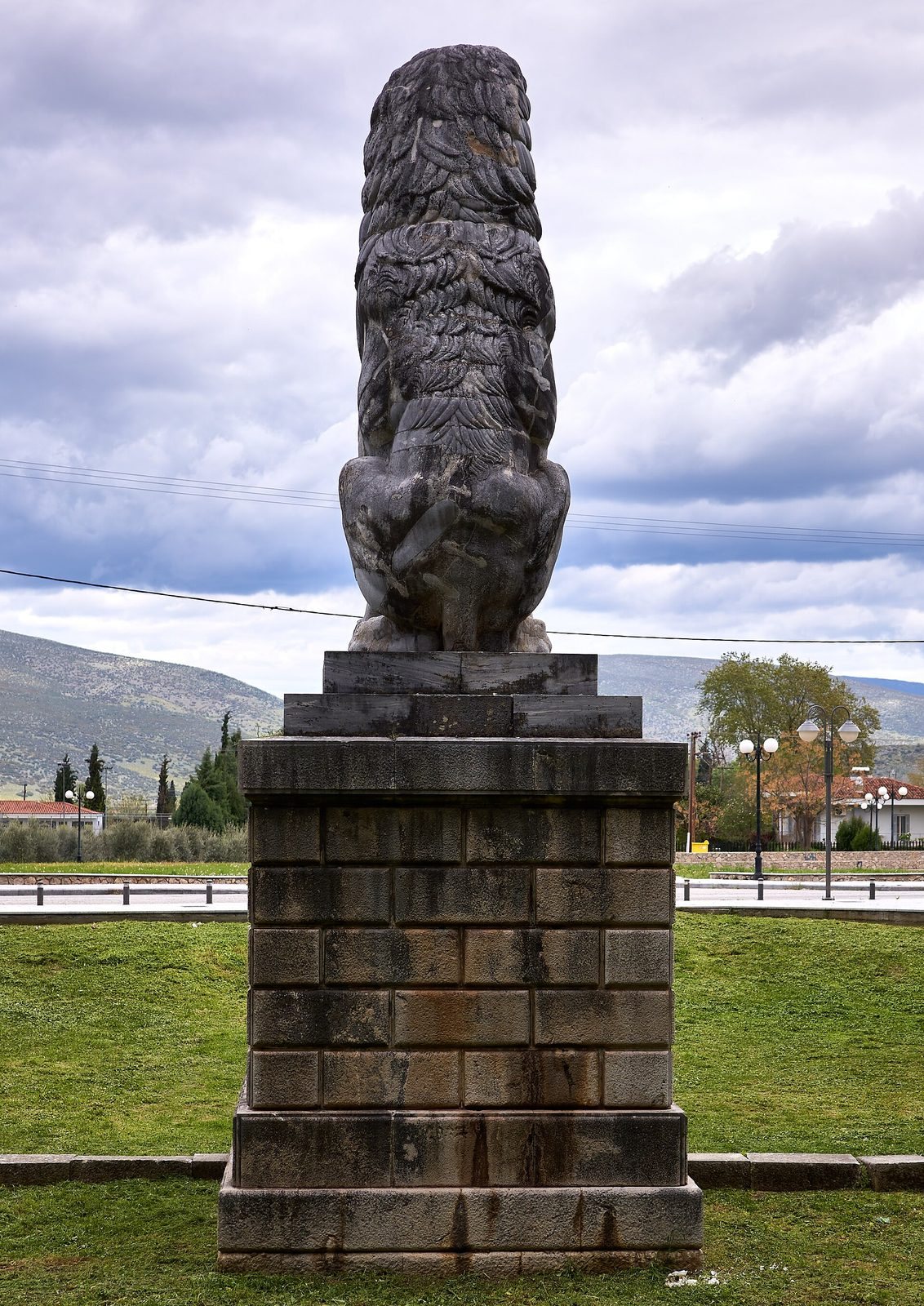
The hollow lion, carved in several pieces from Boeotian marble, stands 3.8 m high, with its head turned about 40 degrees. The restored sculpture combines ancient fragments with modern additions and is supported by a steel framework. Some ancient pieces were recut during reconstruction, and the newer work is not readily distinguishable from the original material. The current pedestal is a modern reconstruction, 3 m high.
Boundary enclosure
The original pedestal occupied a base measuring 3.65 by 4.30 m within a rectangular enclosure measuring 22.55 by 13.45 m. Its boundary wall stood 2.18 m high and had disappeared by the end of the nineteenth century. Cypress trees were planted around the monument in 1902.
Burial chamber
The four-sided chamber beside the monument probably formed part of an ancient burial mound that no longer survives. It contained the remains of 254 people laid out in seven rows, with cremated remains at the center attributed to at least one further person. Only bones showing battle injuries were retained. A 2019 re-examination estimated that these represented 10–18 individuals and attributed their wounds to Macedonian cavalry swords striking from above.