Kudepsta Stone: A Megalithic Monument of Disputed Date in Sochi
Site at a Glance
- Popularity
- Medium
- Country
- Russia
- Primary era
- Bronze Age
- Eras represented
- Bronze Age
- Civilizations
- Unclassified
- Site type
- Civic
- Remains
- Megalithic Monument
On this page4 sections
History
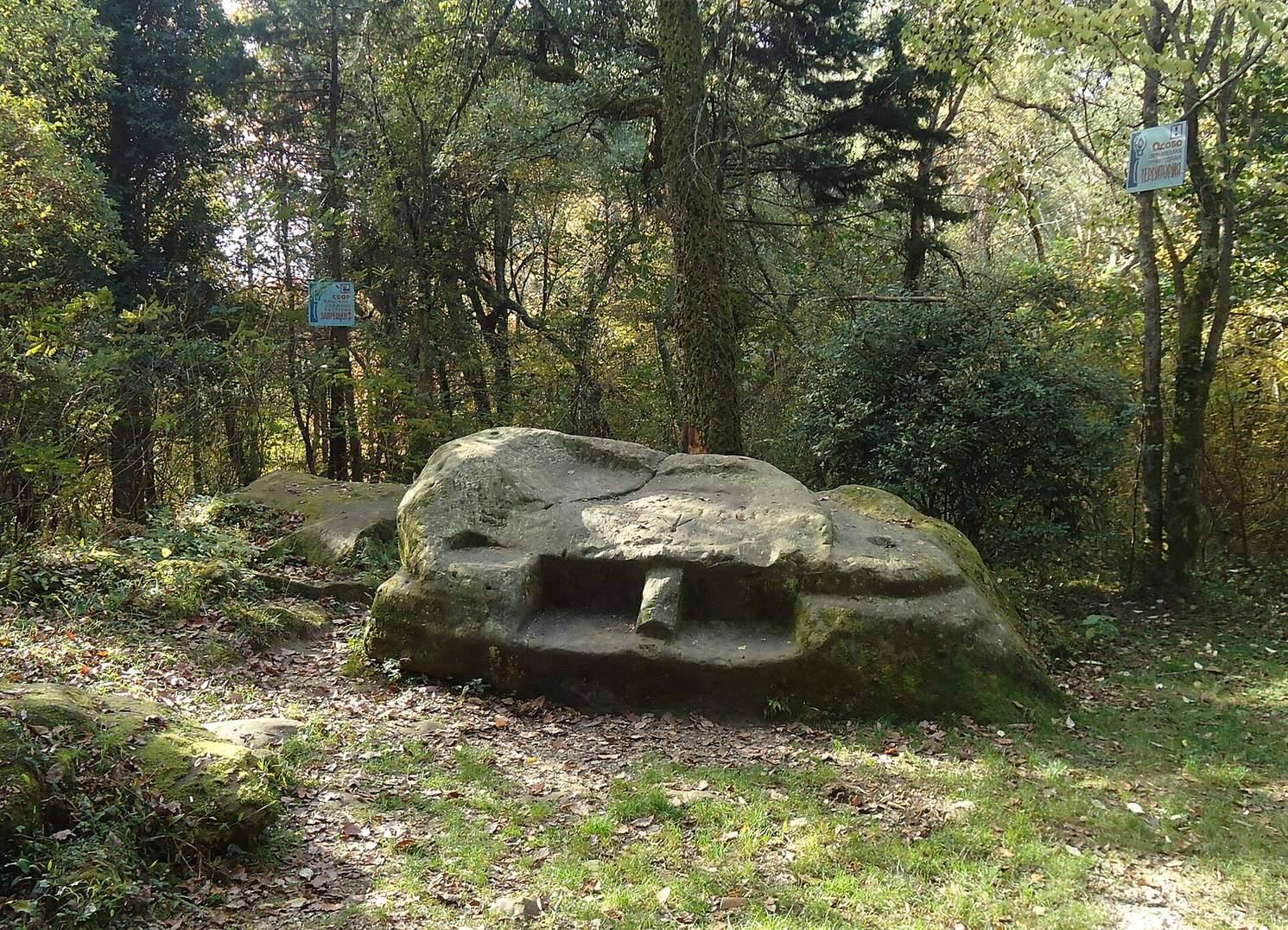
The Kudepsta Stone is a megalithic monument, built from large stones, near the Kudepsta microdistrict in Sochi, Russia. Its date is disputed. The Abkhaz historian, ethnographer, and literary scholar Sh. D. Inal-Ipa considered it medieval, while other writers placed it in the megalithic period based on its appearance and the numerous pits on the stone. The megalithic interpretation has been considered more likely, but no evidence connects the marks with Circassian communities, an Indigenous people of the northwestern Caucasus.
Many archaeologists associate the monument with the dolmen culture of the Western Caucasus, an archaeological tradition connected with dolmens, large stone structures often used as tombs. In the late 1960s, Inal-Ipa and V. S. Orelkin, an artist and amateur local historian, examined the stone and excavated around it.
The Kudepsta Stone is classified as an archaeological monument and a specially protected natural area, a designation for nature conservation under Russian law. It is also registered as a Russian cultural heritage monument.
Remains
Sandstone boulder and worked surface
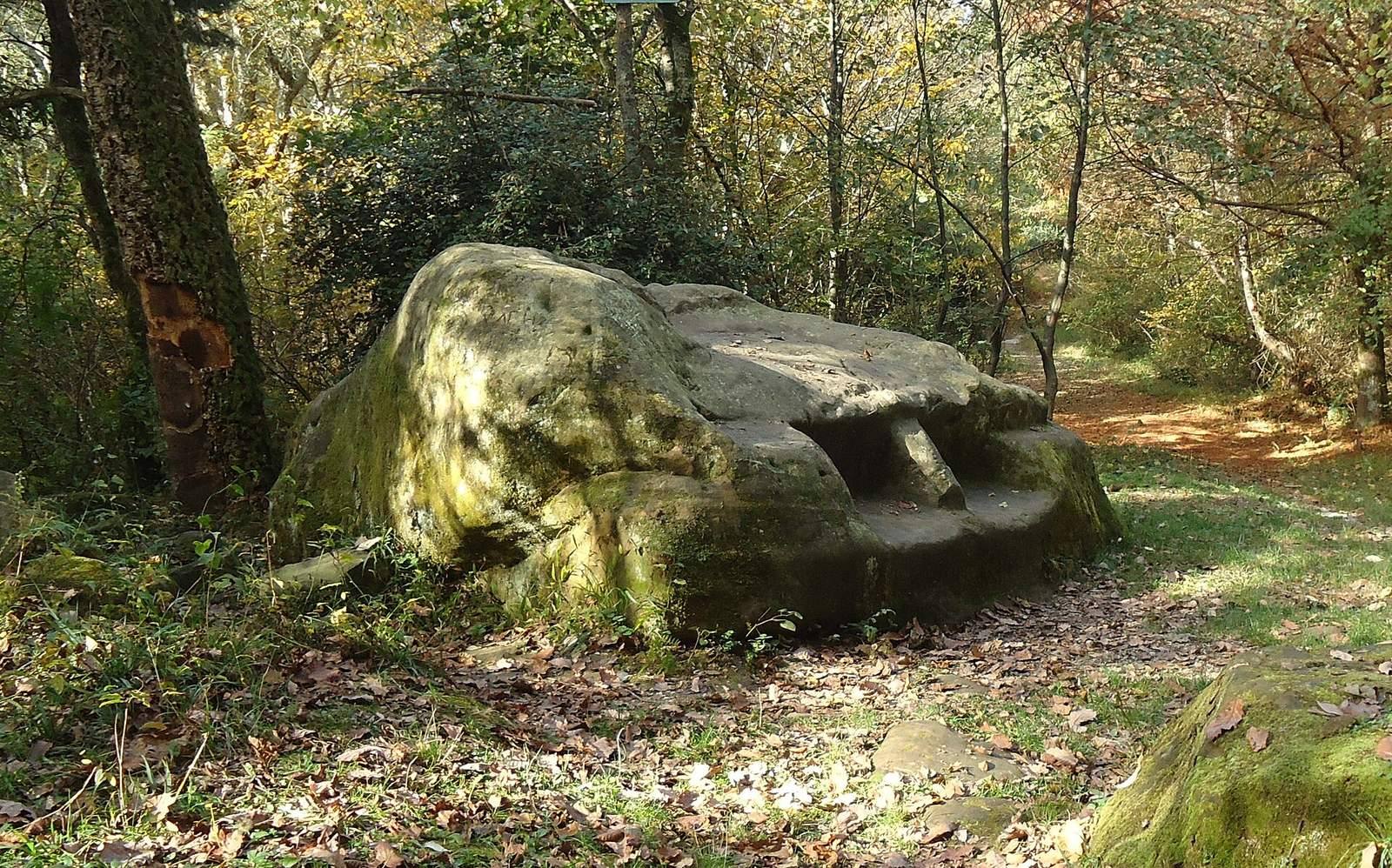
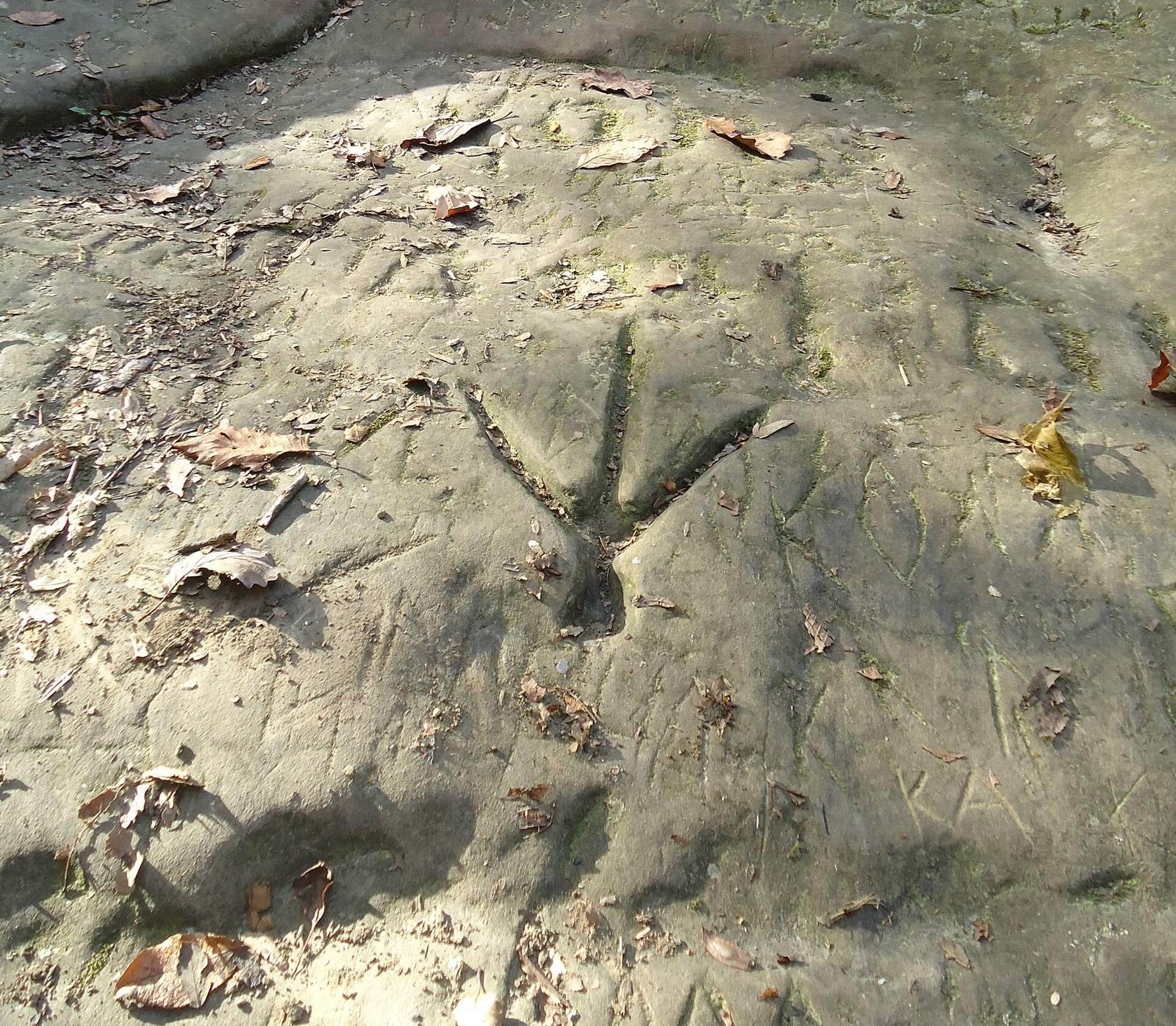
The monument is a roughly quadrilateral sandstone boulder, about 4.6 by 4.4 metres, split almost diagonally. Its south side stands 1.6 metres high and its north side about 1 metre. Work is concentrated on the eastern half, where two seat-like hollows, each 75 centimetres wide and 45 centimetres deep, are divided by a raised feature resembling an armrest. They face an azimuth of 60 degrees, possibly toward the winter-solstice sunrise. Behind them, a 1.95-metre-long, 0.9-metre-wide platform slopes toward the seats and is bounded on three sides by a low border, 15 centimetres high. Pits of various shapes occur on the boulder and on nearby stones.
Excavated features
Excavations exposed a pavement of flat stones in front of the boulder. They also uncovered a rounded stone that had been used for fires over an extended period.