Kesene Mausoleum: A Medieval Muslim Memorial in Russia
Site at a Glance
- Rating
- 4.9
- Popularity
- Very Low
- Country
- Russia
- Primary era
- Medieval
- Eras represented
- Medieval, Early Modern
- Civilizations
- Unclassified
- Site type
- Religious
- Remains
- Tomb
On this page7 sections
History
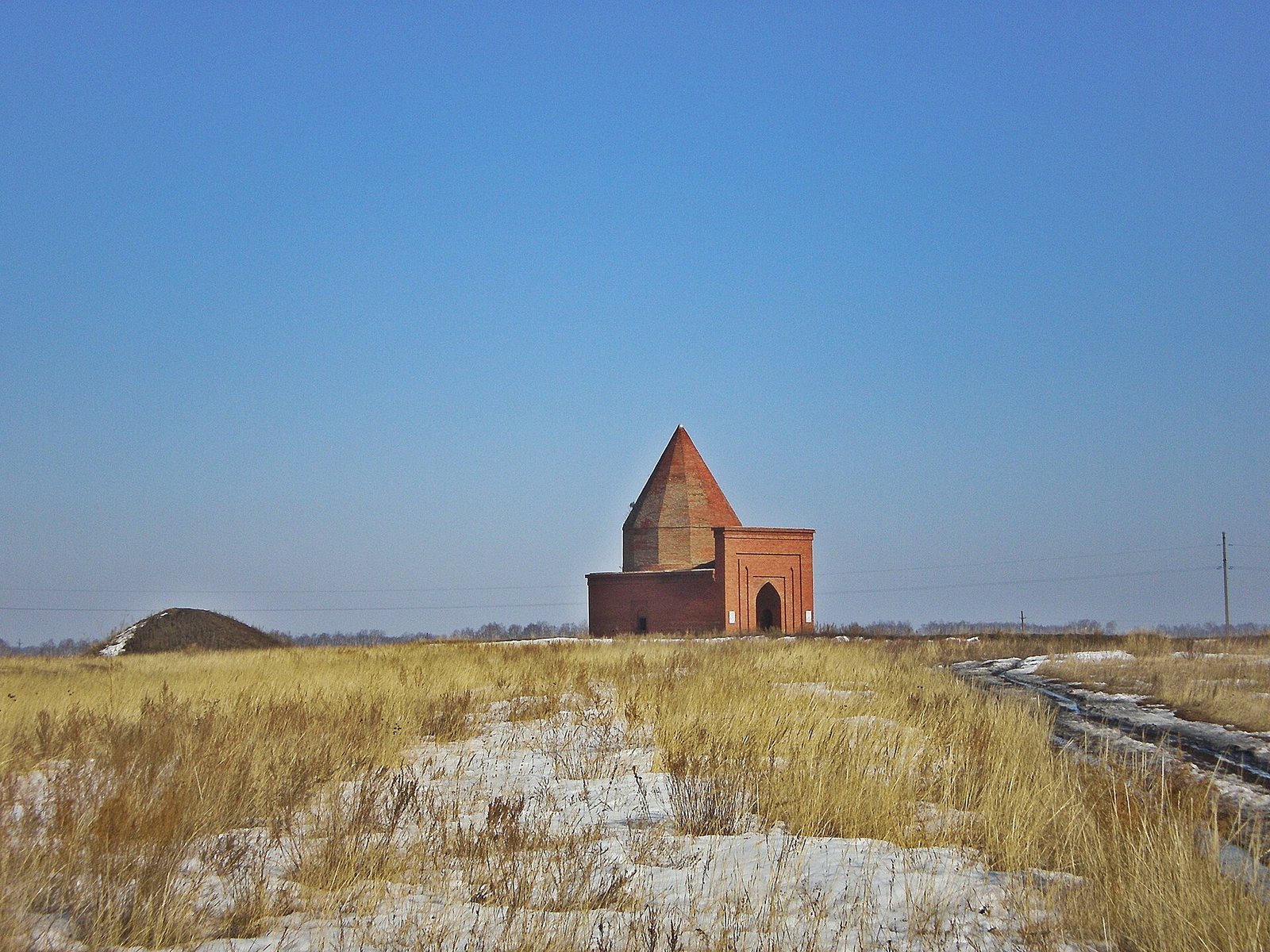
Kesene Mausoleum is a fourteenth–sixteenth-century Muslim memorial monument in Russia, located near Varna in Chelyabinsk Oblast. Its exact origin is unknown, although its form belongs to medieval Islamic memorial architecture associated with the Khwarazm and Khorasan traditions. Known colloquially as the “Tamerlane Tower,” it stands within a much older burial landscape whose traditions and archaeological evidence do not establish a connection with Tamerlane, the fourteenth-century Central Asian ruler and conqueror.
Burial landscape and early interpretations
The mausoleum is part of a broad necropolis, or cemetery complex, containing six Bronze Age kurgans, one Early Iron Age kurgan, and almost 150 kurgans from the late medieval period. A kurgan is a burial mound. Nearly 700 graves were found around the tower near the end of the Soviet period. Archaeological interpretation identifies the surrounding complex as an ancient necropolis of the Early Iron Age, while the tower itself was built much later.
The first recorded description came from Captain P. I. Rychkov in 1762. He understood the structure as a tomb erected over the grave of a king belonging to an unknown people. About a century later, the ethnographer R. G. Ignatiev reported that Kyrgyz nomads regarded it as a temple of an unknown faith and as the mausoleum of a holy king. These traditions helped shape the tower’s later reputation, including its popular association with Tamerlane.
Excavation and preservation
Professor E. Y. Petri excavated the mausoleum’s crypt in 1889. The investigation revealed that the tomb held a female burial accompanied by grave goods, clarifying the character of the monument while leaving its precise origin unresolved.
The mausoleum underwent restoration in the early 1980s, and the work was completed by 1985. The monument is recognized in the Russian Federation as a cultural-heritage object of federal significance.
Remains
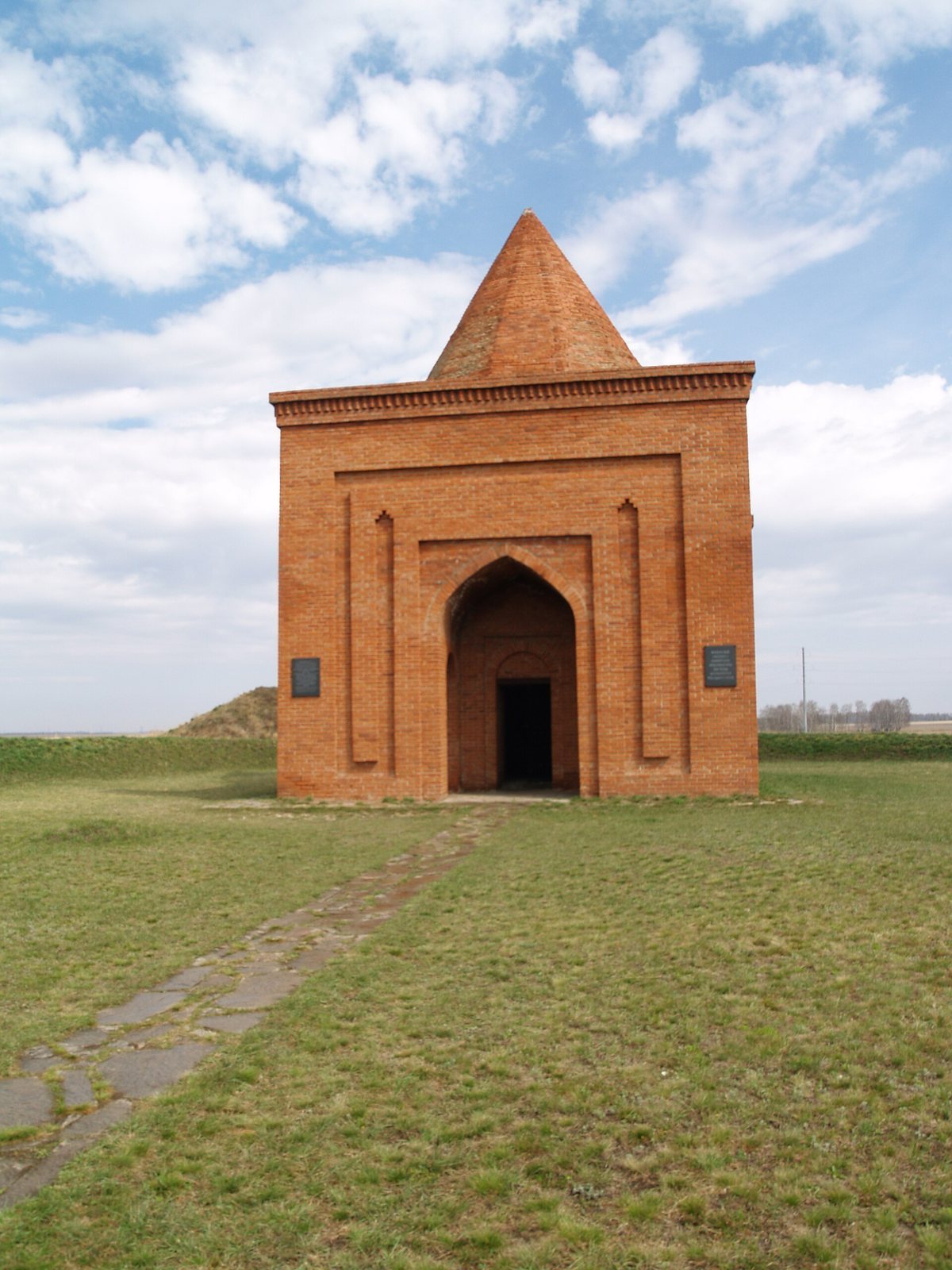
The Kesene complex lies about 3 kilometres east of the village of Varna, on the shore of the overgrown Lake Bolshoye Kesene. Marshland surrounds the mausoleum. The principal structure is a 17-metre-high brick tower with a tent-shaped composition characteristic of medieval Muslim memorial architecture. Its design belongs to the tradition of portal mausoleums, tombs organized around a formal entrance portal, which developed in the mid-fourteenth century and continued into the nineteenth century.
The mausoleum and burial
Brick tower
The bricks were formed from red clay mixed with wild-bird eggs and camel milk, although goat milk has also been proposed as the second ingredient. This mixture was believed to make the bricks stronger. The bricks were probably produced near the Uy River in the area of present-day Troitsk and transferred to the construction site through a chain of transport. During the early 1980s restoration, new bricks covered the older ones. The replacements were fired with the ancient technique, but without camel milk.
An openwork, gridded door leads into a single large interior room. The room is sparsely lit and has a stone floor. Architectural parallels cited for Kesene include the mausoleums of Madzhar in the North Caucasus, Irki-Baba in Turkmenistan, and Bandebike in Bashkortostan.
Female burial
Petri’s 1889 excavation found the body in a bark container covered with boards. The grave goods included remnants of silk fabric, two gold rings decorated with arabesques, and two earrings shaped like question marks. An arabesque is a flowing ornamental pattern based on vegetal or geometric forms. The earrings belong to a type widely distributed among the ornaments of nomadic and forest-steppe populations from the fourteenth century onward.