Kepier Hospital: A Medieval Charitable Foundation in Durham
Site at a Glance
- Popularity
- Medium
- Country
- United Kingdom
- Primary era
- Unclassified
- Eras represented
- Unclassified
- Civilizations
- Unclassified
- Site type
- Civic
- Remains
- Hospital
On this page15 sections
History
Kepier Hospital, formally the Hospital of St Giles of Kepier, was a medieval charitable lodging and care institution founded at Gilesgate in Durham, United Kingdom, in June 1112. Bishop Ranulf Flambard established it as an almshouse, providing support and lodging for poor people. The foundation was dedicated to God and St Giles, a Christian hermit venerated as patron of beggars and people with disabilities.
Foundation and early conflict
Flambard endowed the hospital with lands and income, including the manor of Caldecotes, a mill on Durham’s Millburn, and corn from fifteen villages. Godric of Finchale served as doorkeeper at the hospital church before settling at Finchale; he was later venerated as a saint.
After Bishop Geoffrey Rufus died in 1140, his former clerk William Cumin joined King David I of Scotland in an effort to take control of the Durham bishopric. In March 1143, Pope Innocent II excommunicated Cumin and removed his church appointments and their attached incomes. The following year, William of St Barbara, the elected bishop, was driven back to St Giles Church after Cumin’s men prevented him from entering Durham. St Barbara fortified the church, then withdrew with his followers to Bishopton Castle. Cumin’s men destroyed nearby hospital buildings. Cumin later ended the dispute by giving up his claims to Durham.
Refoundation and civic growth
Around 1180, Bishop Hugh le Puiset refounded the hospital beside the River Wear at Kepier. Its community included thirteen brethren, who served about thirteen male residents as well as travellers and pilgrims. Puiset granted it further resources, including Clifton village, a lead mine in Weardale, a peat bog at Newton, and additional rights to corn from the bishop’s villages.
To improve the hospital’s income, Puiset issued a charter for a borough of St Giles, a settlement with defined civic privileges that became the nucleus of modern Gilesgate. Many of its burgesses probably came from Caldecotes and Clifton.
Royal visits, rebellion and suppression
Kepier was drawn into the politics of the Anglo-Scottish border. Edward I and Queen Isabella stayed there on journeys north. Scottish raids included the seizure of goods from Durham in 1315 and attacks on the hospital’s northern possessions.
In 1535, Henry VIII’s Valor Ecclesiasticus, a survey of church property and income, recorded Kepier as the richest hospital in the diocese. Its gross annual income was £186 0s 10d, with one-quarter assigned to almsgiving. The hospital maintained four choral chaplains, clergy responsible for worship that included singing, and ten inmates. It also gave £16 5s each year in alms at its gates.
Henry VIII’s suppression of lesser religious houses helped prompt the Pilgrimage of Grace, a northern English rebellion against the Crown’s religious policies and the closure of religious institutions. Kepier’s master supported the Bishop of Durham against the rebels, while the hospital’s lay steward, Sir John Bulmer, was executed for taking part in the uprising. Legislation in 1539 extended suppression to Kepier, although the hospitals of Sherburn and Greatham were spared.
Kepier and its lands were granted to Henry VIII’s Secretary of State, Sir William Paget, but soon returned to the Crown. They later passed to private owners, including the Scottish landowner John Cockburn of Ormiston.
Later ownership and heritage
The Heath family later made substantial changes to the estate. By 1827, its house was operating as an inn called the Kepier Inn or the White Bear.
Kepier is a Scheduled Monument, meaning its archaeological site is legally protected, and has Grade I and Grade II* listed-building status, categories for buildings of exceptional and particularly important historic interest. The West Range is included on the Buildings at Risk register, which identifies historic buildings considered at risk.
Remains
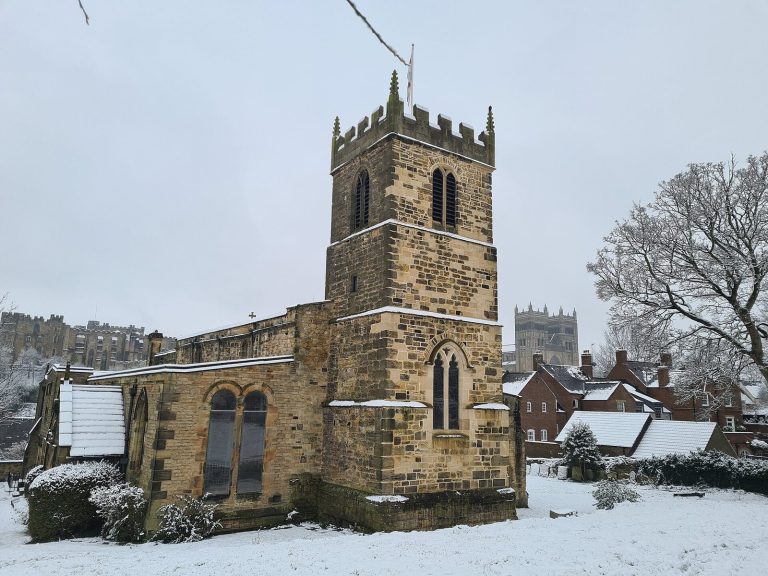
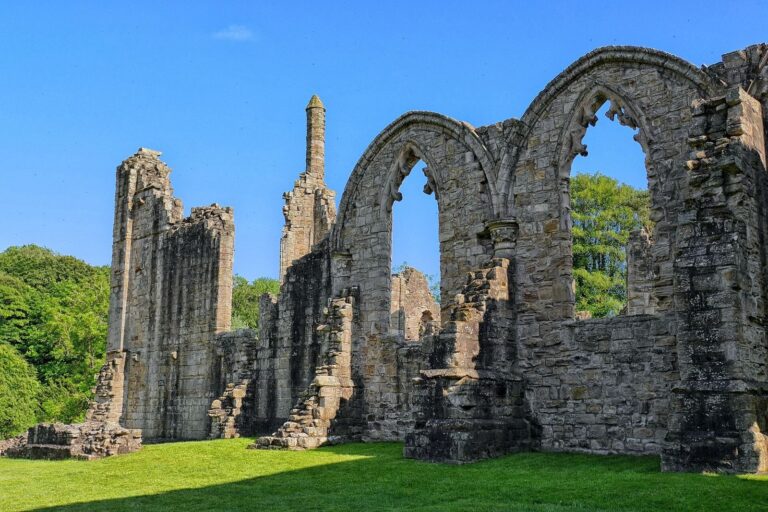
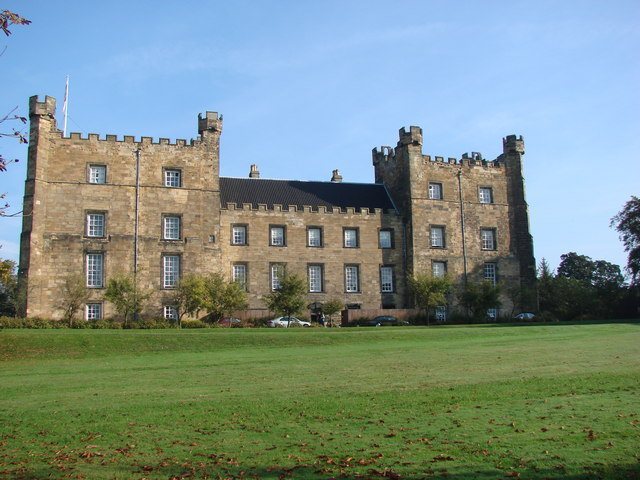
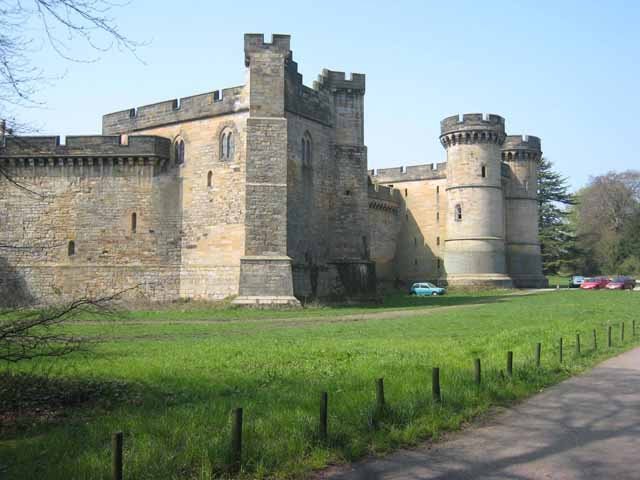
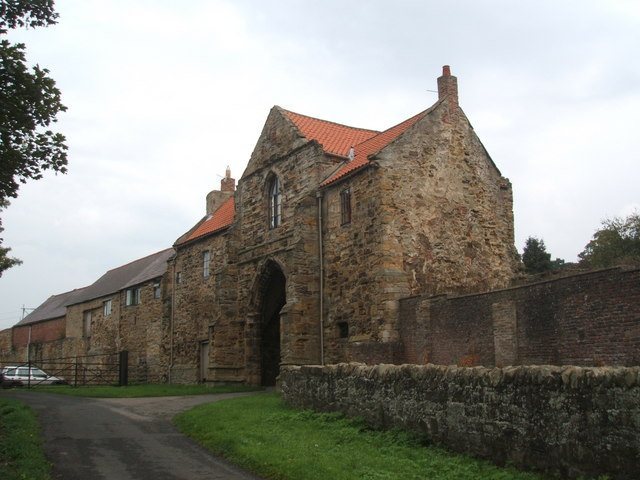
The hospital’s early buildings were made of wood or of branch frameworks coated with plaster. Beside the River Wear, the Kepier complex includes an intact gatehouse, the ruined mansion, the West Range, and a farmhouse still in private use. The hospital’s first chapel is now St Giles Church in Gilesgate, which remains a parish church.
Buildings
Gatehouse
The gatehouse survives intact as part of the Kepier complex.
West Range
The West Range forms another component of the site.
Mansion and gardens
The mansion stands where a chapel and infirmary may previously have been located. It is now in ruins. The Heath family laid out gardens as part of their alterations to the estate.
Farmhouse
The farmhouse remains in private use.
Mill
Kepier Mill was destroyed by fire in 1870. Its kiln remained after the fire and was demolished in 2025.
Estate landscape
Routes and former holdings
Public footpaths and bridleways continue to follow routes that once linked Kepier and Gilesgate with the hospital’s lands at Caldecotes and Clifton. These holdings are associated respectively with High Grange in modern Gilesgate Moor and Low Grange in modern Carrville.
High Grange barn
The tithe barn at High Grange, a building used to store grain, held corn for the hospital and remained standing until 1964.