Kavaledurga Fort: A Hilltop Stronghold and Keladi Capital
Site at a Glance
- Popularity
- High
- Country
- India
- Primary era
- Early Modern
- Eras represented
- Medieval, Early Modern
- Civilizations
- Chola
- Site type
- Military
- Remains
- Fort
On this page6 sections
History
Kavaledurga Fort is a hilltop stronghold in India whose earliest fortifications may date to the ninth century, when builders of the Chola dynasty, a major South Indian ruling house, made use of the hill’s natural defenses. The fort later became the fourth and final capital of the Keladi kingdom.
Keladi Rule
The Keladi Nayakas, the ruling house of Keladi, began administering the fort in 1499, initially under the authority of the Vijayanagara Empire, a powerful South Indian empire. King Venkatappa Nayaka had the fort extensively strengthened during the sixteenth century. After Vijayanagara fell in 1565, Keladi’s rulers declared independence and retained the fort until Hyder Ali, ruler of Mysore, annexed their territories in 1763.
Refuge and Later Use
In 1677, Queen Chennamma used the fort to gather her forces and recapture Nagara after fleeing the Bijapur siege of her capital, Bidanur. In 1689, the Maratha prince Rajaram took refuge there while escaping the armies of Aurangzeb, the Mughal emperor. Mysore’s rulers later used the fort intermittently as a garrison. It was eventually abandoned and fell into ruin.
Remains
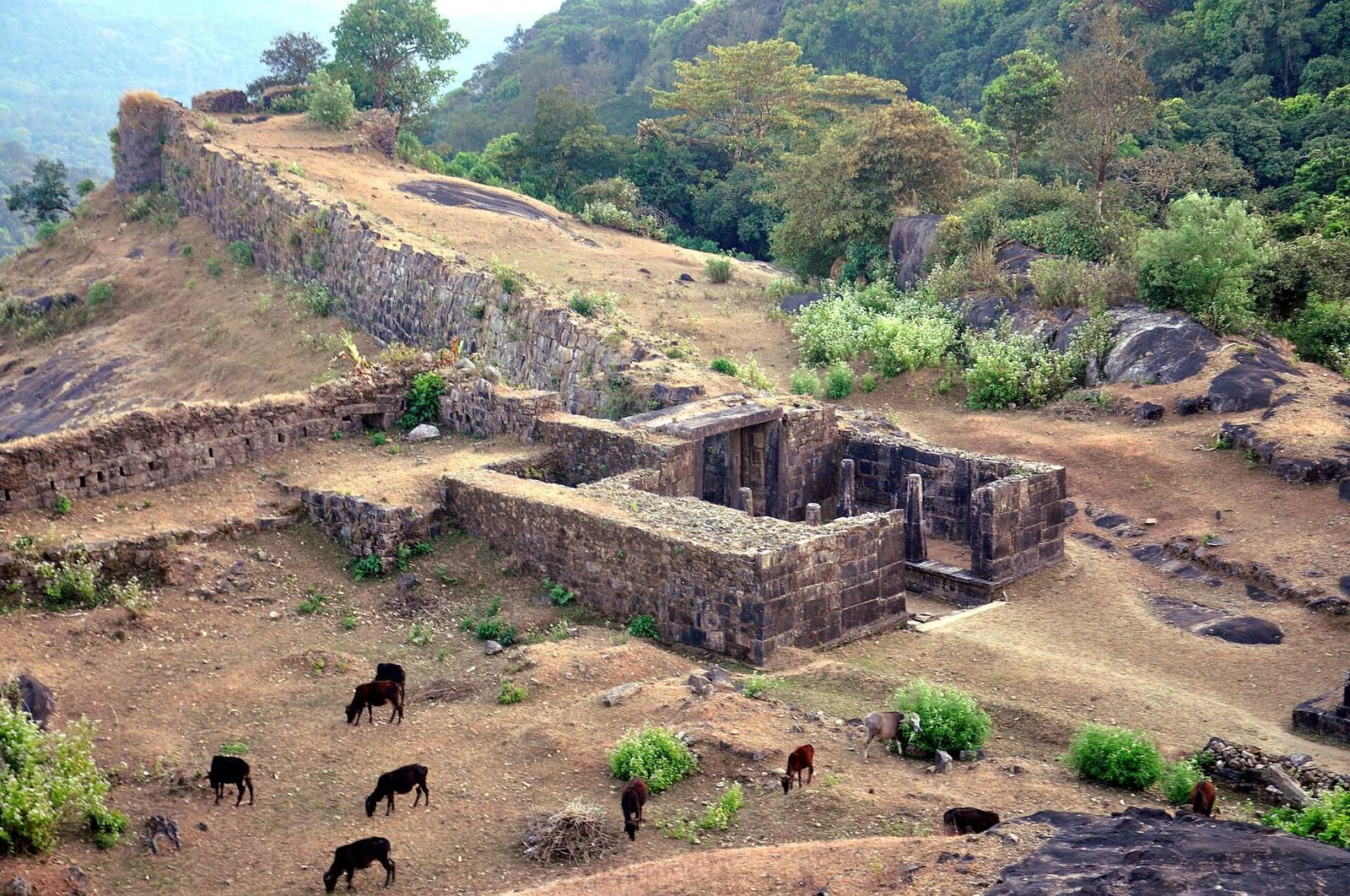
The fort occupies a heavily forested hilltop, and its multiple levels follow the contours of the terrain. Built of granite, the stone defenses were blended with boulders and rock outcrops as camouflage. Three concentric walls, concealed pathways, and hidden stairways formed part of the fort’s defensive layout. Ramparts and temple remains survive amid the surrounding monsoon foliage.
Palace Remains
The remains of a once-extensive palace include a plinth and numerous stone columns. Other surviving features are a T-shaped stepped tank, a stone toilet, and a firewood stove. These palace features are described as carved from stone.
Inner Gateway and Sacred Remains
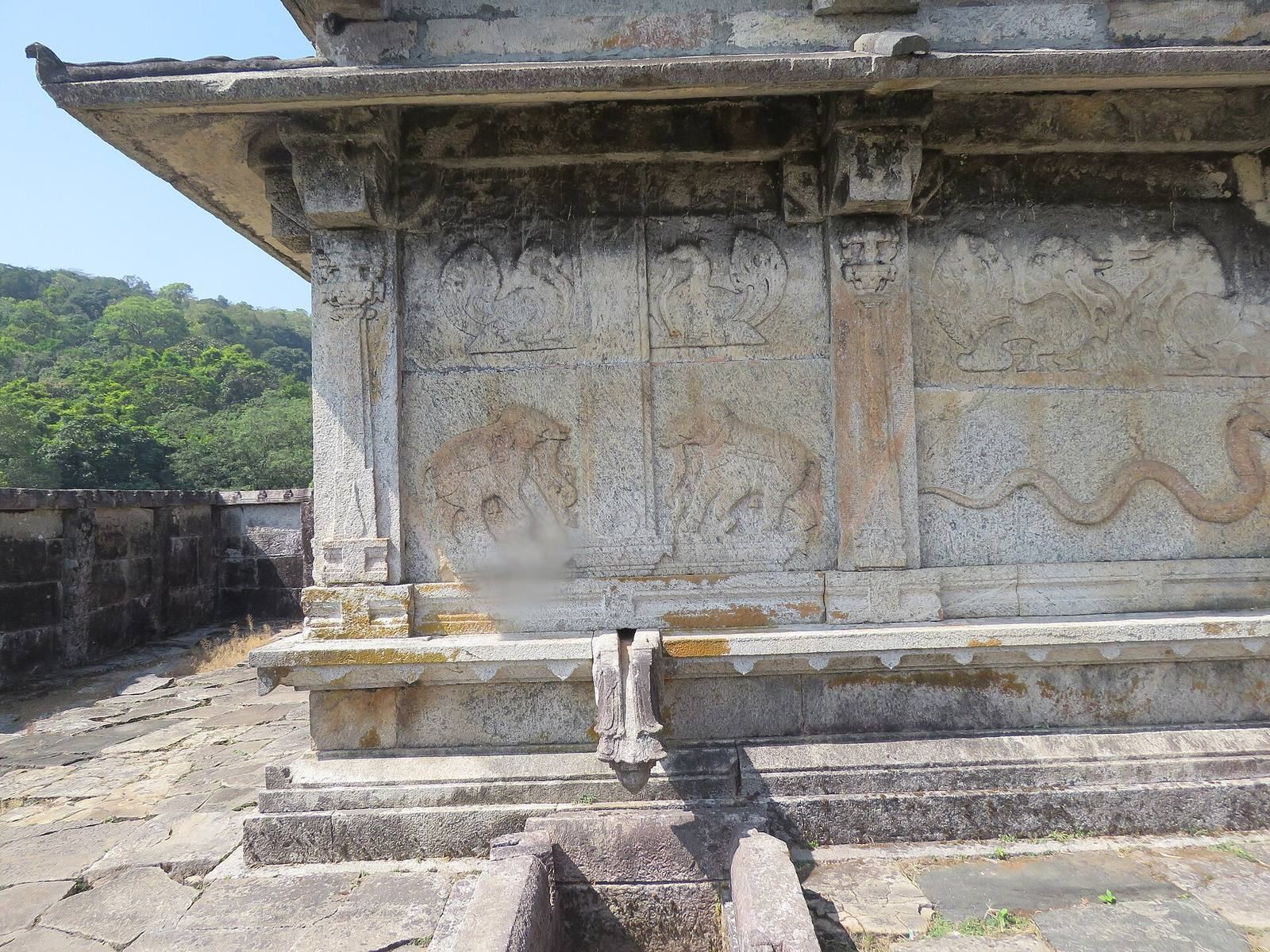
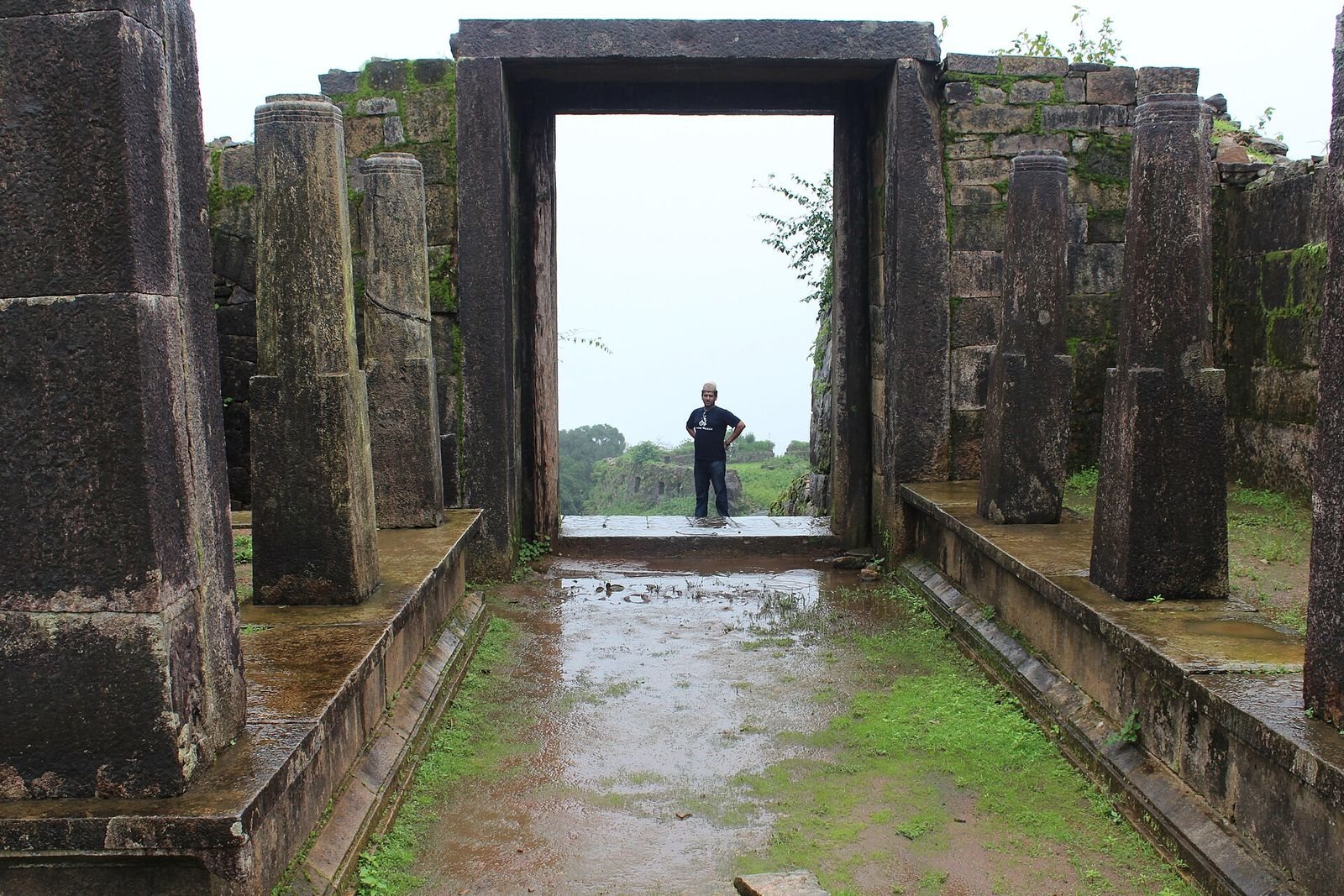
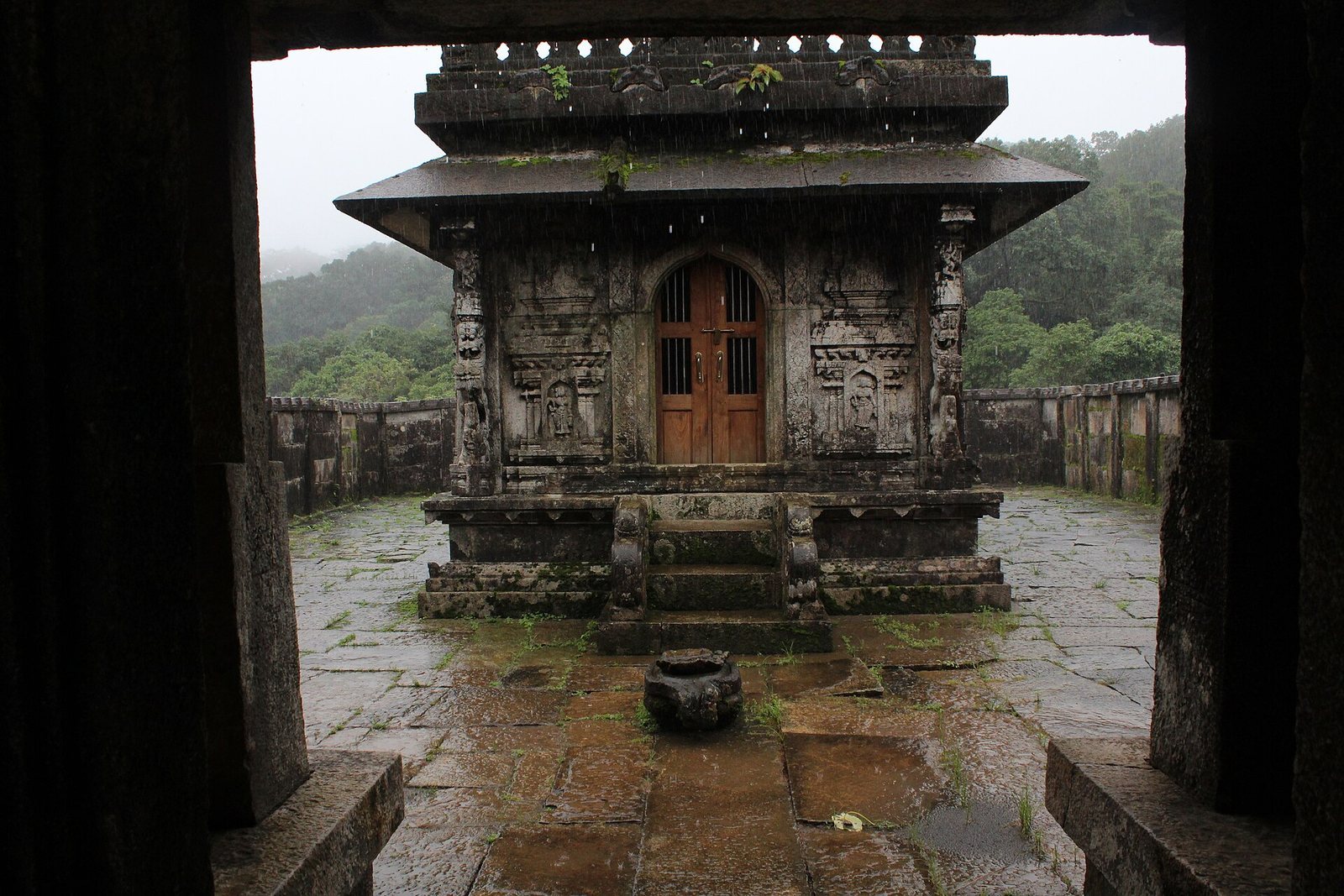
A small stone gateway within the inner defenses is reached by a stairway. On a rocky outcrop, a shrine contains a linga, a symbolic form of the Hindu deity Shiva. Temple ruins also remain within the fort.