Kapova Cave: A Paleolithic Cave and Rock-Art Site in Russia
Site at a Glance
- Rating
- 4.7
- Popularity
- High
- Country
- Russia
- Primary era
- Stone Age
- Eras represented
- Stone Age
- Civilizations
- Unclassified
- Site type
- Civic
- Remains
- Rock Art
On this page20 sections
History
Kapova Cave, also known as Shulgan-Tash, is a limestone cave system on the southern slope of Mount Sarykuskan beside the Belaya River in Russia. People used it during the Paleolithic, or Old Stone Age, and its paintings are associated with the Upper Paleolithic, the later part of that period. Their discovery extended the known distribution of Paleolithic cave art beyond western Europe, where such paintings had chiefly been known from France and Spain.
Paleolithic use and paintings
The cave’s entrance-side spaces served as places of habitation, while deeper chambers may have been used for ritual. The suggestion that Paleolithic people held ceremonies there, including initiation rites, remains an interpretation rather than an established fact.
Different dating methods place the paintings within broad but not identical ranges. Uranium-thorium dating of calcite deposits above and below the images gives estimates from about 14,500 to 36,400 years ago. Radiocarbon dates from cultural layers suggest a narrower span of about 16,300 to 19,600 years ago. The paintings are also broadly associated with the Late Solutrean through the Middle Magdalenian, cultural periods of the European Upper Paleolithic.
Bashkir traditions and later use
Bashkir traditions place the cave and nearby Shulgan Lake within a sacred landscape. The Bashkirs are a Turkic-speaking people indigenous to Bashkortostan and neighboring parts of the southern Urals. Their epics Ural-Batyr and Akbuzat connect Shulgan with an underworld or underwater realm. Traditions also recount human sacrifice at the lake, but do not establish that such rites took place in the cave. Archaeological finds and local traditions suggest that the cave may later have served as a pagan sanctuary, including during the medieval period. Here, pagan refers to religious practice outside the major monotheistic traditions.
The cave also sheltered Bashkir families and their livestock during wars. The origins of its names have several proposed explanations: Kapova has been linked either to dripping water or to a word for a shrine. Shulgan-Tash has been connected with the underground Shulgan River and with Shulgan, a figure in Bashkir epic tradition. Suggested meanings include “water disappeared” for the river and “Shulgan’s stone” for the cave.
Exploration, research, and protection
Pyotr Rychkov gave the earliest written description of the cave in 1760 and mentioned a human head that may have been mummified. During his 1770 visit, Ivan Lepyokhin connected the cave’s formation with groundwater. Geologists Alexei Antipov and N. G. Myaglitsky proposed a tectonic explanation after visiting in 1858, a view later displaced by explanations based on groundwater. In 1896, members of the Orenburg branch of the Russian Geographical Society surveyed and mapped the entrance and lower level. Georgy Vakhrushev explored the cave in the 1920s and 1930s, describing its passages and supporting its formation by groundwater.
Alexander Ryumin discovered the paintings in 1959 while investigating the cave. From 1960, archaeologist Otto Bader’s team recorded more than 30 images. Vyacheslav Shchelinsky resumed archaeological work in 1982 and identified a clear Upper Paleolithic cultural layer. Later investigations included work directed by Yuri Lyakhnitsky from 1995 to 2010, and research and documentation have continued.
Rising visitor activity from the late nineteenth century and through the twentieth damaged paintings and cave formations through graffiti, litter, soot, moisture, and breakage. Traffic also altered the cave’s microclimate. Visits were prohibited in 1971, and access was later restricted, with painted chambers and remote areas closed to ordinary visitors. In 2003, Hermitage restoration artists made life-size copies of paintings for display in the accessible part of the cave. Calcite deposits and moisture continue to complicate conservation of the original images.
Kapova Cave lies within the Shulgan-Tash Nature Reserve and is a federally significant cultural heritage site in Russia. In 2025, its paintings were added to the UNESCO World Heritage List as the Rock Paintings of Shulgan-Tash Cave, under criterion (iii), which recognizes exceptional testimony to a cultural tradition.
Remains
The cave is a natural system of passages and chambers in limestone and dolomite, shaped in part by groundwater. Its principal network has three levels and about 3,045 metres of passages. Including water-filled passages, called siphons, its vertical range is about 165 metres. The cave lies within a rock massif about 140 metres high.
Cave system and levels
Entrance and Main Gallery
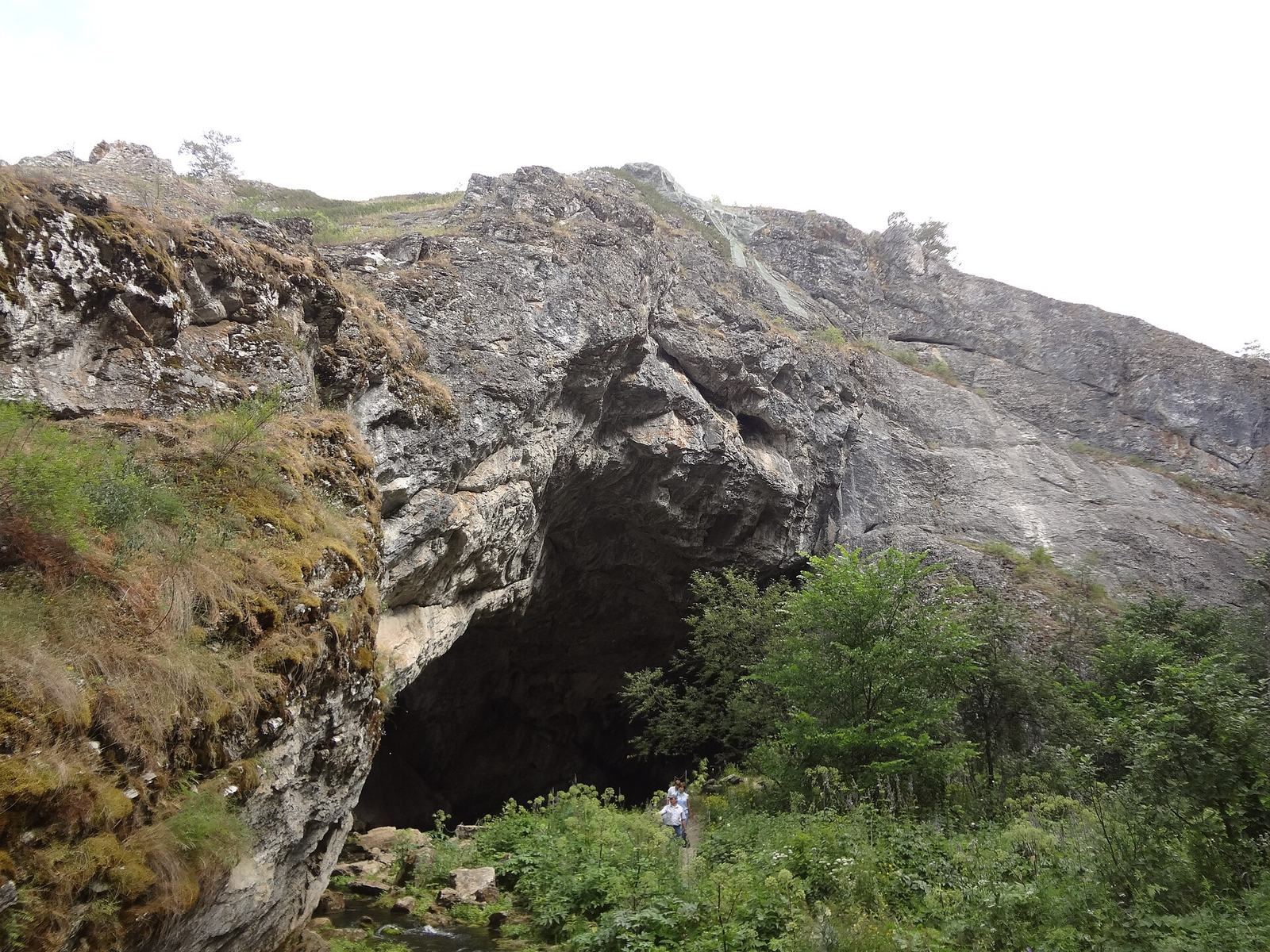
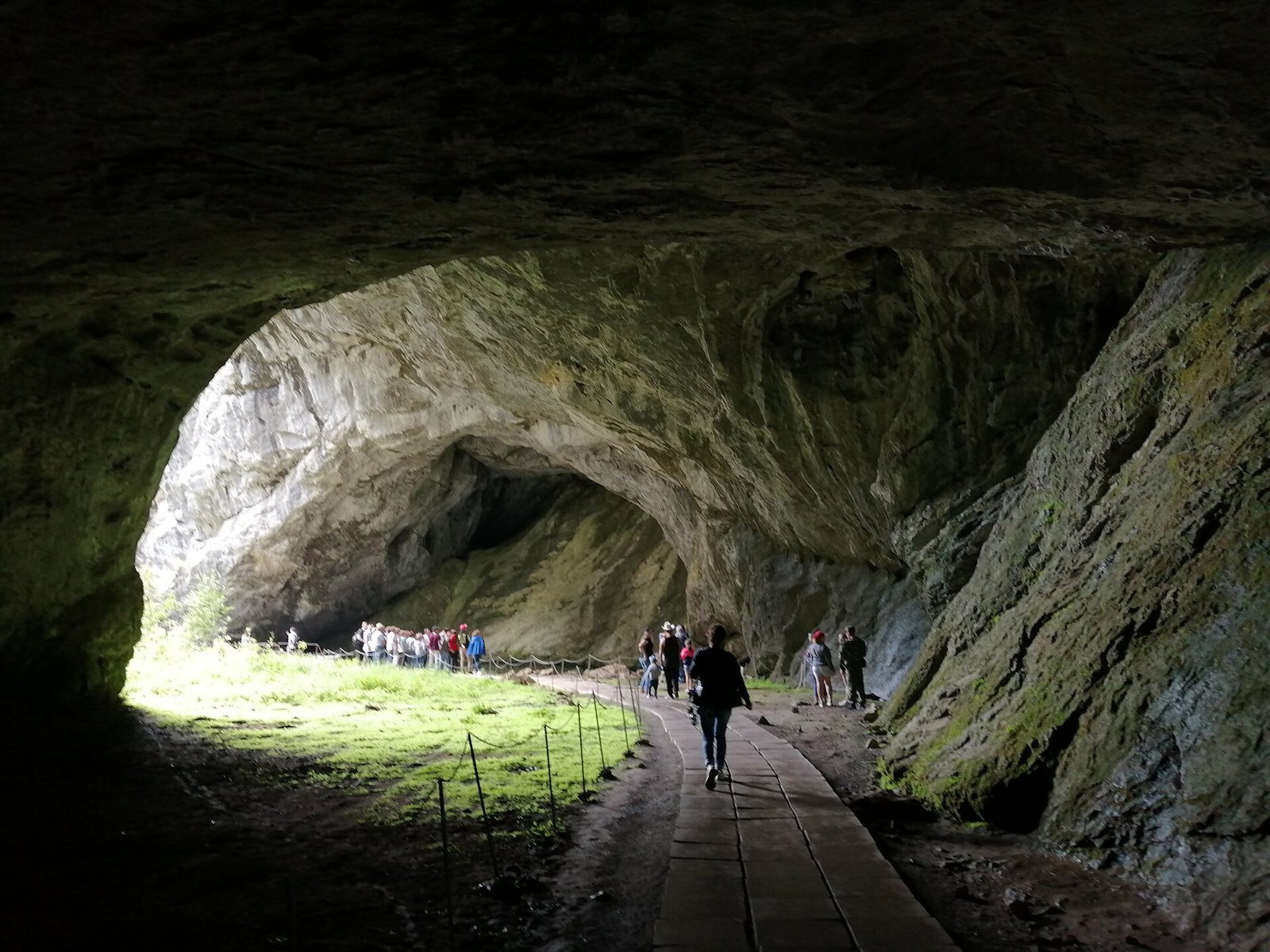
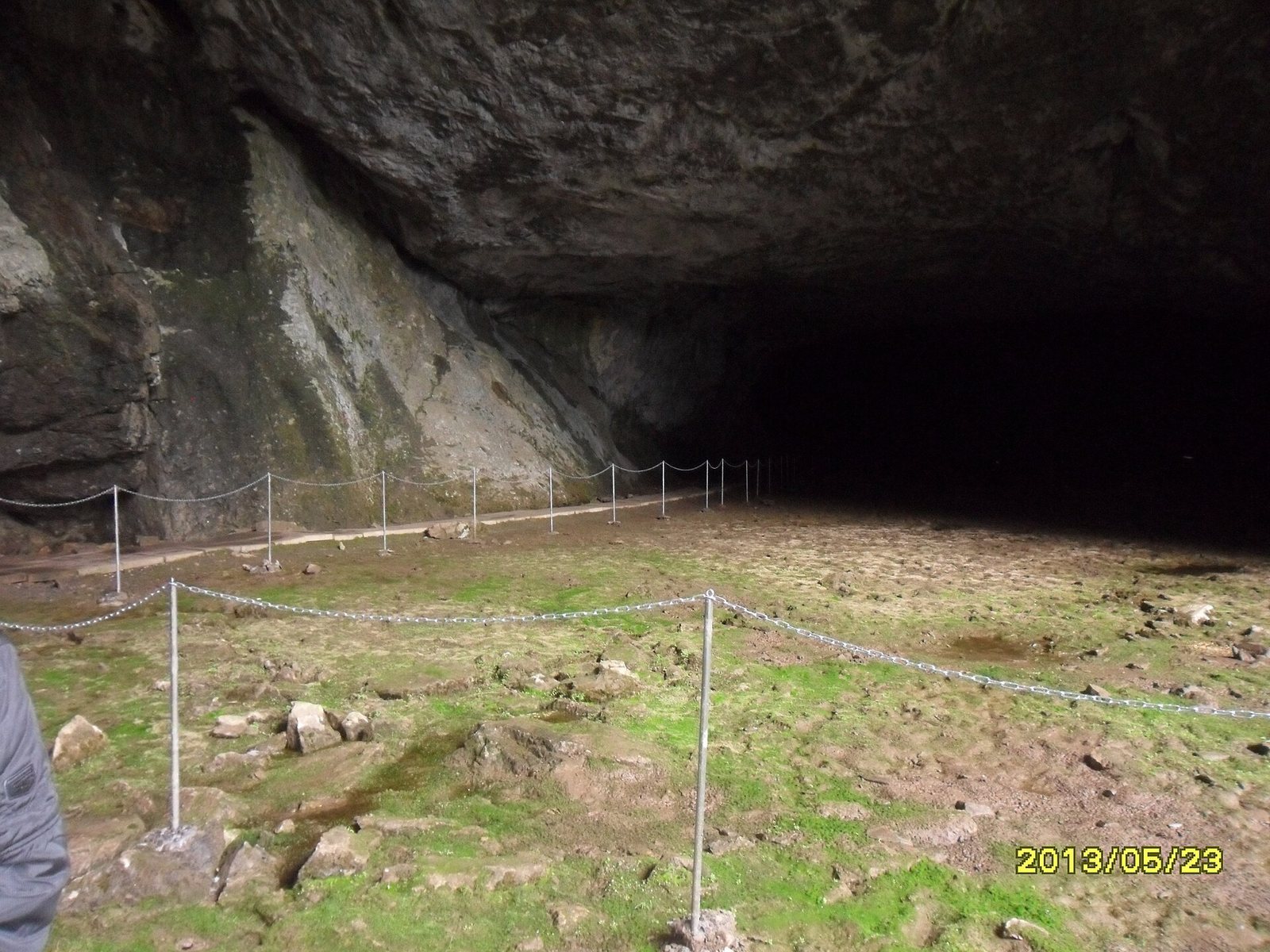
The entrance, known as the Portal, forms an arch about 30 metres high and roughly 39 metres wide. It opens onto the Main Gallery, which runs northeast for about 150 metres and measures about 20 metres across and 5 to 8.5 metres high. The entrance-side floor is clay and supports plant growth; mosses also grow near the opening. Outside air reaches the Main Gallery and part of the Stalagmite Hall, while deeper chambers from the Dome Hall onward are more isolated. Temperatures remain roughly 6 to 7 degrees Celsius throughout the year.
Middle and upper levels
Galleries connect the middle level’s Stalagmite Hall, Dome Hall, Hall of the Signs, and Hall of Chaos. Their approximate dimensions are 20 metres wide and 15 metres high, 35 by 15 metres, 18 by 14 metres, and 46 by 16 metres, respectively. From Stalagmite Hall, a passage running north extends about 90 metres; it is roughly 4 metres wide and 15 metres high and leads to the Vestibule. A western passage from there runs about 70 metres and ends within the cave, while another leads to the Hall of the Drawings.
A shaft links the middle level to the upper one. Named chambers and galleries there include the First Gallery, Antechamber, Second Gallery, Acoustic Hall, Oval Hall, Temple Hall, Upper Hall, Diamond Hall, Hall of Upper Lake, Rainbow Hall, Crystal Hall, Hall of the Mountain King, and Gallery Hall. Diamond Hall connects toward Lake Hall and a newer passage section linked to Rainbow Hall.
Lowest level
The lowest level includes the Halls of the Abyss, Transsyphon, and Far Hall. It lies close to the level of the Belaya River and is affected by water from the underground Shulgan River; spring floods can inundate parts of the cave. A passage at the end of Far Hall is partly submerged, and the underground river can be seen in Transsyphon Hall. A diver explored 317 metres into the siphon beyond Far Hall.
Water and nearby landforms
Shulgan River and lakes
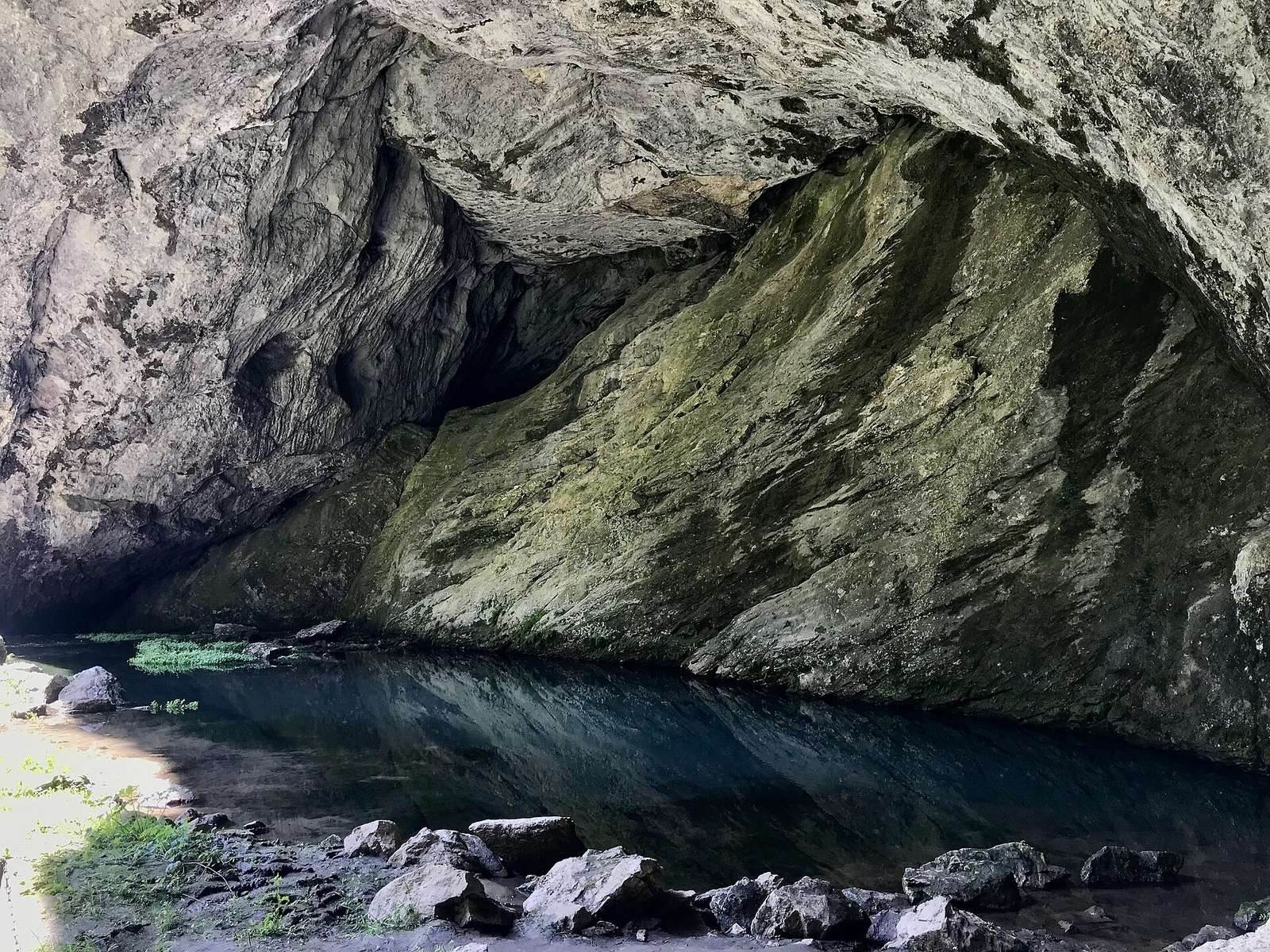
The underground Shulgan River helped form the cave. Near the entrance it emerges at the Blue Lake, then later sinks underground again. The Blue Lake is about 3 metres across, and its submerged siphon reaches about 82 metres deep. Its mineral-rich water is unsuitable for drinking. Nearby Round Lake is about 6 metres deep. Inside the cave, Great Upper Lake extends about 60 metres and reaches up to 2.5 metres deep; a separate Far Lake also lies underground.
Canyon and surrounding features
The nearby Shulgan karst canyon extends about 3 kilometres and continues into a dry valley marked by sinkholes and small lakes. The Shulgan waterfall, about 100 metres from the cave entrance, drops roughly 5 metres. Mammoth Grotto lies in a separate nearby rock outcrop; its outline is said to resemble a mammoth at sunset.
Mineral formations and additional level
Calcite and tufa formations
Calcite deposits cover some cave walls to a thickness of about half a metre. Crystal Hall contains tubular stalactites, mineral growths hanging from the ceiling, about 20 to 30 centimetres long, as well as calcite formations shaped like small dams across a stream. Small sparkling crystals occur among the formations in Diamond Hall. Hall of Chaos contains a cascade of tufa, a porous mineral deposit formed by calcium-rich water.
Fourth level
A fourth level was discovered in 2019. It contains abundant stalactites more than 100,000 years old. One large mineral formation rises about 3 metres above the floor and measures about 8 metres across.
Paintings and archaeological deposits
Images and their locations
More than 190 Paleolithic images are known from the cave, with about 30 to 50 relatively well preserved. Many occur in the Hall of Chaos, Hall of the Signs, and Hall of the Drawings, as well as in chambers on other levels. The best-known animal figures, including mammoths, horses, rhinoceroses, bison, and a camel, lie at least about 300 metres from the entrance. A two-humped camel image was found beneath calcite and later graffiti in 2017.
Pigments and condition
Most images use red ochre, a natural earth pigment, sometimes mixed with animal fat. Others use charcoal or darker pigment, and a few combine red and black. The subjects include animals, human-like figures, huts, ladders, triangles, lines, and other geometric signs. Images range from about 6 centimetres to 1.6 metres in size. Some are partly covered by calcite, affected by water, or damaged by graffiti.
Tools, ornaments, and pottery
Excavated cultural layers have yielded 193 objects, mainly tools and weapons made from cave limestone, calcite, and other stone. More than half of the stone pieces are flint, and some are made from non-local green-brown jasper; two weapons are bone. Other finds include a small limestone piece painted with ochre and shaped like a mammoth, four perforated barrel-shaped beads of green serpentinite, two small bone pendants probably made from mammoth tusk, and pierced fossil shells.
A small clay cup from the Hall of the Signs measures about 6 centimetres across and 2 centimetres high, with a rounded base. Its interior is red and its exterior beige; the inner surface may have been fired. It may have served to prepare or store pigment, or as a fat lamp. Fragments of clay lamps and pottery also come from Paleolithic layers. A cultural layer containing a shrine in the Hall of the Signs dates to a late phase of the last glaciation, about 16,000 to 14,000 years ago.
Human and animal remains
Cave deposits contain human remains from different periods. Holocene remains from Dome Hall include fragments of two skulls. Other excavated skulls have prompted speculation that they belonged to revered people, such as chiefs or shamans, but this identification is uncertain. DNA analysis of people associated with the Bronze Age Mezhovskaya culture found Y-chromosome haplogroups R1a and R1b, which trace paternal lineages, and mitochondrial haplogroups I5, M1, and U5, which trace maternal lineages.
Animal remains include a fragment of mammoth tusk and bones of cave bear, hare, fox, marmot, horse, hoofed lemming, and other small rodents.