Hinglajgarh: An Ancient Fortified City in India
Site at a Glance
- Rating
- 4.3
- Popularity
- Low
- Country
- India
- Primary era
- Early Modern
- Eras represented
- Medieval, Early Modern
- Civilizations
- Unclassified
- Site type
- Military
- Remains
- Castle
On this page13 sections
History
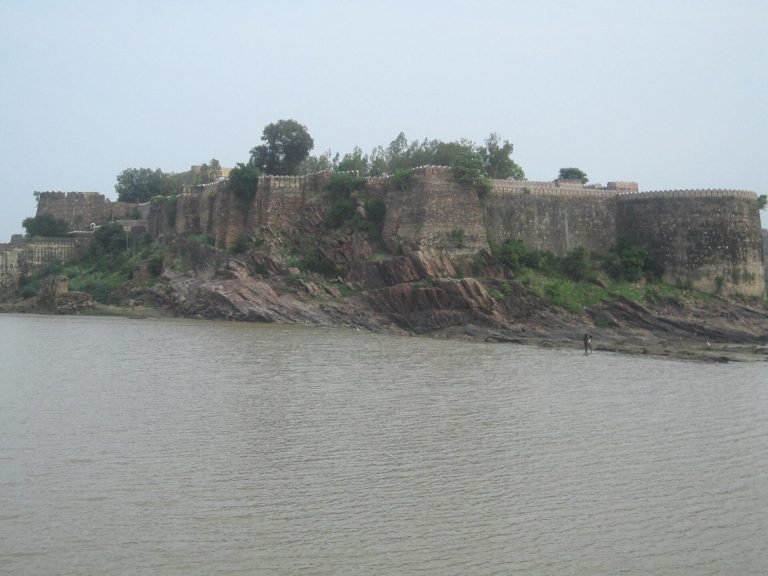
Hinglajgarh is an ancient fortress in India, located in Navali in Madhya Pradesh’s Mandsaur District. Traditionally associated with the Mauri or Marwari people, it is said to have been established as a fortified city, and its name derives from Hinglaj Devi, the Hindu goddess whose temple stands in the southern part of the fortress.
Paramara and early medieval rule
The Paramaras, a medieval ruling dynasty associated with the Malwa region, controlled Hinglajgarh and renovated it during the twelfth century. The fortress subsequently became a centre of artistic production, containing numerous sculptures and statues. Works from the site dating to the fourth and fifth centuries CE are associated with the Gupta and Paramara periods. The Gupta period was a major era of artistic production in northern and central India, generally dated from the fourth through sixth centuries CE.
In 1281, the Hada king Halu occupied Hinglajgarh. The Hadas were a Rajput ruling lineage associated with regional states in northwestern and central India. The fortress later passed to the Chandrawats of Rampura, another Rajput ruling lineage, who used it as a haveli, or residence.
Holkar control and later history
In 1773, Queen Ahilya Bai of the Holkar dynasty defeated Laxman Singh Chandrawat and brought Hinglajgarh under the Maratha Empire. The Holkars were a powerful Maratha ruling house, while the Maratha Empire was the wider political structure under which the fortress then came. Ahilya Bai rebuilt the fort and maintained the surrounding temples dedicated to Hinglaj Devi, Rama, and Shiva. Maharaja Yashwantrao Holkar later undertook further renovation.
Successive periods of control brought rebuilding and alteration, and most of the surviving ruins date from the Chandrawat or Holkar periods. Sculptures from Hinglajgarh were later displayed at the Central Museum of Indore. A Nandi sculpture, representing the bull associated with Shiva, and an Uma-Maheshwara sculpture, depicting the divine pair Uma and Shiva, were also exhibited at an India Display Festival in Washington.
Remains
Fortress setting and defenses
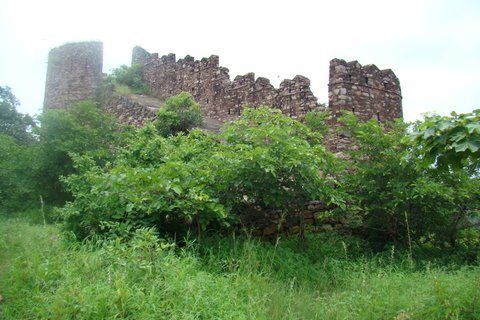
Hinglajgarh occupies the catchment area of the Chambal River and is surrounded by its rivulets, the Mandaleshwari Nulla and Txakeshwar Nulla. These waterways formed a defensive barrier around the fortress, whose remains lie amid dense vegetation. Four gates mark the fortifications: Patanpol, Surajpol, and Katrapol stand on the eastern side, while Mandleshwaripol is on the western side.
Surajkund reservoir
Near Surajpol is Surajkund, a reservoir described as the only water body near the fort. Its position beside the eastern gate places the surviving water feature within the defensive and internal organization of Hinglajgarh.
Palace and administrative buildings
Rani Mahal
Rani Mahal is a small palace within the fortress. It was repaired during Ahilya Bai’s rebuilding of Hinglajgarh, linking the surviving structure to the Holkar phase of the site’s history.
Darbar Kaksha
The fortress also contains Darbar Kaksha, a kachhari, or courthouse. The building represents the administrative functions maintained within the fortified settlement.
Observation and communication structures
Tirthams
Two installations described as lighthouses, or Tirthams, transmitted information by means of light. Their communication function formed part of the fortress’s wider defensive organization.
Fateh Burj
Fateh Burj is a watchtower, a structure used for observation and defense. It belongs to the group of installations that supported surveillance around the fortified site.
Temples and sculptural remains
Hinglajgarh contains temples dedicated to Hinglaj Devi, Shiva, Rama, and Hanuman. The Hinglaj Devi temple stands in the southern part of the fortress and gives the site its name. Together, these religious buildings preserve the continuing association between the fortified settlement and Hindu worship.
The fortress contains numerous sculptures, including representations of Nandi and Uma-Maheshwara. Sculptures dating from the fourth and fifth centuries CE connect the site’s surviving artistic heritage with the Gupta period and later historical phases. Some of these works are preserved or displayed at the Central Museum of Indore, while the Nandi and Uma-Maheshwara sculptures were exhibited internationally in Washington.