Halswell House: A Tudor Manor and Baroque Country House in Somerset
Site at a Glance
- Rating
- 4.4
- Popularity
- Low
- Country
- United Kingdom
- Primary era
- Early Modern
- Eras represented
- Early Modern
- Civilizations
- British, English
- Site type
- Domestic
- Remains
- Manor House
On this page8 sections
History
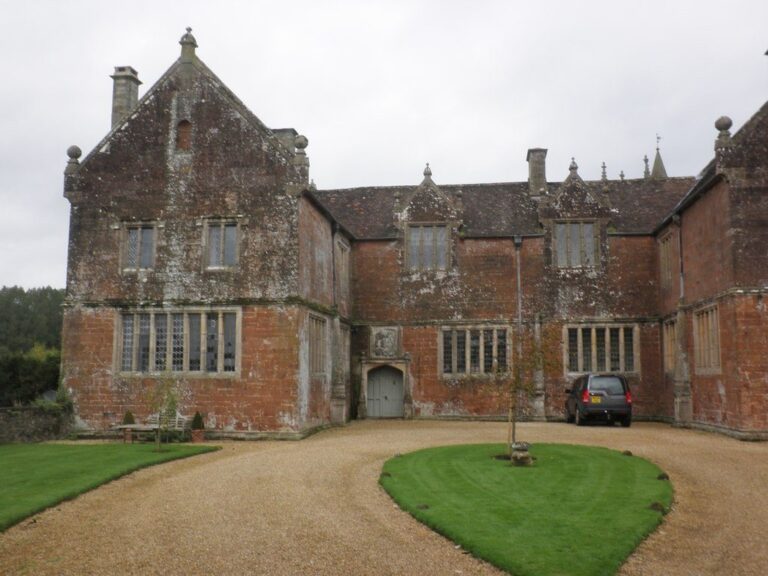
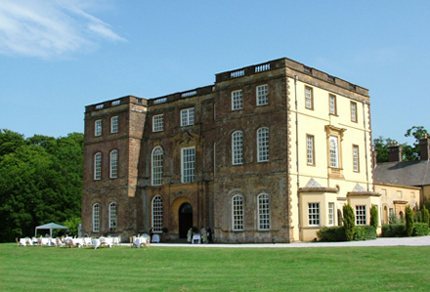
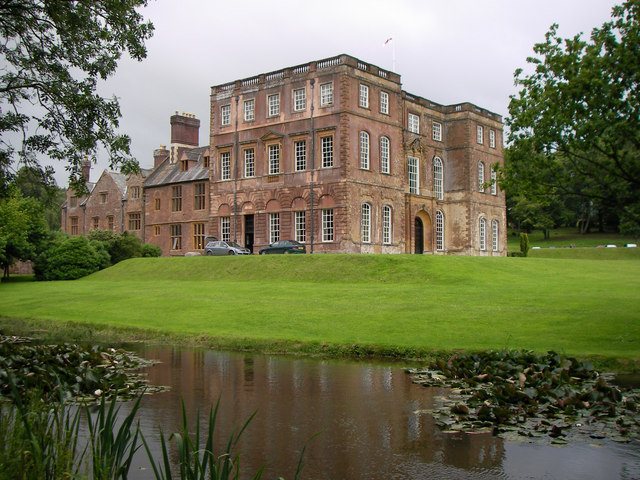
Halswell House is a country house in Goathurst, Somerset, England, on an estate that includes a Tudor manor and a Baroque house. The Tudor period takes its name from the dynasty that ruled England, while Baroque describes an elaborate architectural style. Robert Halswell built the house, and the estate later became associated with the Halswell and Tynte families and with a designed park.
The medieval manor
The Domesday Book, a survey of English landholding and taxable resources, names Roger Arundel as holder of the manor of Halswell in 1086, with Wido as his tenant. The manor later passed to Henry de Newburgh. In 1285, Taunton Priory, a religious house governed by a prior, was Henry’s tenant, while Peter de Halswell held the manor under a tenure of a quarter of a knight’s fee. A knight’s fee was a measure of landholding linked to an obligation to provide military service. William de Halswell held it in 1303 for an eighth of a fee.
William Halswell was living in 1394 and appears to have held the manor in 1428. Its ownership after that is uncertain until Nicholas Halswell, born around 1512, who died in 1564. Nicholas represented Bridgwater in Parliament in 1553 and 1563. His son Robert, who died in 1570, built Halswell House.
The Halswell and Tynte families
Robert’s son Sir Nicholas Halswell inherited the house and represented Bridgwater in Parliament in 1604. Sir Nicholas’s eldest son Robert, also a Member of Parliament, died in 1626 before his father. The heir was therefore Henry, Sir Nicholas’s eldest surviving son. In 1628, Sir Nicholas settled much of his property, including Halswell, on Henry to protect it from creditors. Henry died unmarried and without children in 1636, and his brother, the Reverend Hugh Halswell, became his heir.
Hugh’s only daughter, Jane, married John Tynte of Chelvey Court in Somerset. She is identified as Hugh’s sole heiress, although she died in 1650, before Hugh’s death in 1672, leaving the succession chronology unclear. Jane and John’s son, Sir Halswell Tynte, inherited the manor, which was placed in trust for him in 1667. A baronet is the holder of a hereditary title below the rank of baron. Sir Halswell represented Bridgwater in Parliament from 1679 to 1689.
After Sir Halswell, the estate passed through three generations of baronets. The Reverend Sir John Tynte, the 2nd Baronet and rector, or parish priest, of Goathurst, married Jane Kemeys of the Kemeys family of Cefn Mably. Their sons succeeded in turn: Sir Halsewell Tynte, the 3rd Baronet, whose two daughters died young; the Reverend Sir John Tynte, the 4th Baronet, who died unmarried; and Sir Charles Kemys Tynte, the 5th Baronet, who died without children in 1785. Charles left Halswell to a niece who adopted the name Kemys Tynte. The estate remained with the family until 1923.
The park and the estate’s later history
Between 1745 and 1785, Sir Charles Kemys Tynte developed Halswell Park as the setting for the house and created its pleasure garden. In 1916, the Kemeys-Tynte family successfully petitioned the House of Lords, one chamber of the UK Parliament, to reclaim the dormant Barony of Wharton, a peerage title not then recognized as held by an active claimant. Lord Wharton later sold the estate. Auctions between 1948 and 1950 broke it up; its contents were sold in 1948 and the house in 1950.
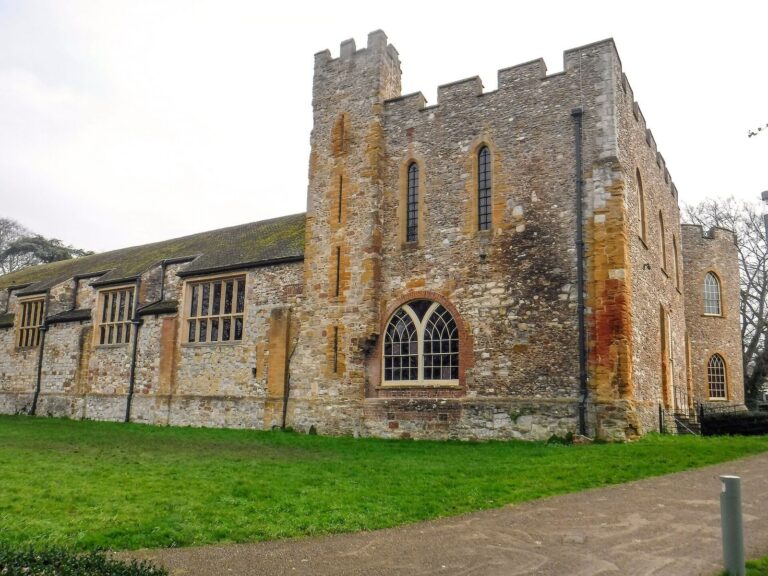
Although the estate was divided, much of the Tudor manor was converted into flats, while the Baroque house remained physically intact. The Baroque house was no longer used as a residence and served as a warehouse. In 1998, the Halswell Park Trust restored Robin Hood’s Hut. In 2004, a property developer and hotelier acquired Halswell, but became bankrupt in 2012. Edward Strachan bought the estate in 2013 and began a broad restoration of the house, outbuildings, gardens, and park. Later that year he acquired the derelict lake landscape at Mill Wood, reuniting it with the house for the first time since the estate’s breakup.
Halswell House has been Grade I listed since 1950. Halswell Park was listed Grade II in 1984 and is included on the Register of Historic Parks and Gardens of Special Historic Interest in England. The park is also on the Heritage at Risk Register.
Remains
The house
The estate contains a Tudor manor and a Baroque house. Much of the manor has been divided into flats, while the Baroque house survives physically intact. Together, these buildings represent the estate’s different architectural forms. The Baroque house’s former use as a warehouse followed its end as a residence; restoration of the house began in 2013.
Park and pleasure garden
The pleasure garden covers 17 acres (about 6.9 hectares). The estate grounds measured 30 acres (12 hectares) in 1740 and had grown to about 132 acres (53 hectares) by around 1800. The parkland includes tree plantations and avenues. A canal was later converted into a lake, and the grounds also contain fish ponds, cascades, bridges, and fanciful buildings.
Mill Wood and park buildings
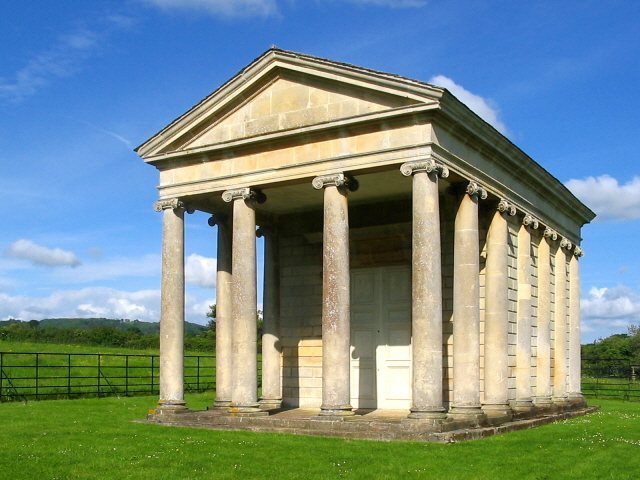
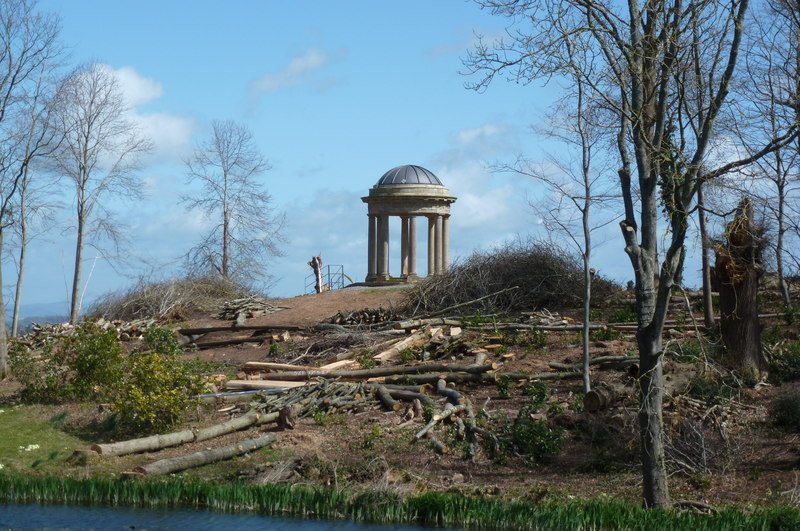
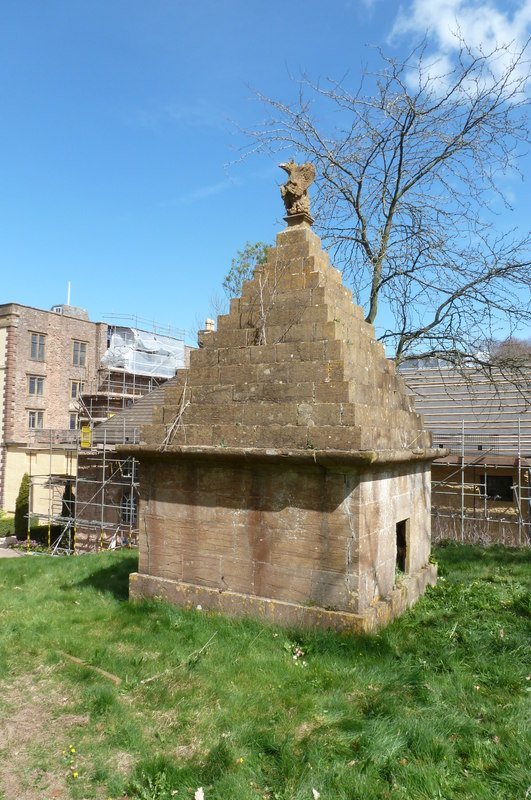
Mill Wood contains an eighteenth-century lake system with bridges, dams, and waterfalls, as well as follies, ornamental structures designed to look picturesque. Trees have been replanted there, and restoration of the follies has been under way. The Temple of Harmony, completed in 1767 within Mill Wood, has been fully restored. Robin Hood’s Hut is another building associated with the estate; it has views across Somerset, the Bristol Channel, and South Wales.