Hadžijska Mosque: An Ottoman Place of Worship in Bosnia and Herzegovina
Site at a Glance
- Popularity
- Medium
- Country
- Bosnia and Herzegovina
- Primary era
- Early Modern
- Eras represented
- Early Modern, Modern
- Civilizations
- Ottoman
- Site type
- Religious
- Remains
- Mosque
On this page8 sections
History
Hadžijska Mosque is an Ottoman-style mosque in Bosnia and Herzegovina, built by Vekil Harč Mustafa between 1541 and 1561. He was an Ottoman provisioning official serving Gazi Husrev-beg, the governor of Bosnia and a major patron of Sarajevo. The surrounding mahallah, a neighborhood organized around a local community, developed between 1540 and 1545.
The mosque was first known by its founder’s name. It later became known as Hadžijska, or the Pilgrim’s Mosque, because people from Sarajevo customarily prayed there before travelling to Mecca for the hajj, the pilgrimage to the city. Their route passed by way of Alifakovac and Kozja ćuprija.
Damage and neighborhood institutions
In October 1697, the mosque burned during Prince Eugene of Savoy’s campaign against Sarajevo. Eugene was a Habsburg prince and military commander. Residents of the neighborhood repaired the building soon afterward.
Hadži Mustajbeg Bešlija, a wealthy Sarajevo merchant who died in 1799, established a mekteb, a school for basic religious instruction, and a bakery beside the mosque. Both were destroyed after the First World War. Nearby stood the Džumišića medresa, a school for advanced religious study, also called the Drvenija medresa. The latter name was associated with the wooden bridge in front of the mosque. In 1846, Sarajevo mufti Mehmed Šakir ef. Mujidović, a Muslim legal scholar, bequeathed a shop and storehouse to the mosque.
The cemetery beside the mosque is also associated with Sarajevo’s history. The Morić brothers, Hajji Mehmed Morić and Ibrahimaga Morić, led a ten-year rebellion against Ottoman rule and were executed in Sarajevo in 1757.
Renovation and later history
Haji Hasan-aga Neziragić ordered a renovation in 1938. During the Bosnian War, the conflict in Bosnia and Herzegovina from 1992 to 1995, the mosque’s roof was destroyed. Its structure was partly repaired afterward, and damaged tiles were replaced. The architectural ensemble was declared a National Monument of Bosnia and Herzegovina in 2005. The mosque remains an active Sunni place of worship, administered by the Islamic Community in Bosnia and Herzegovina.
Remains
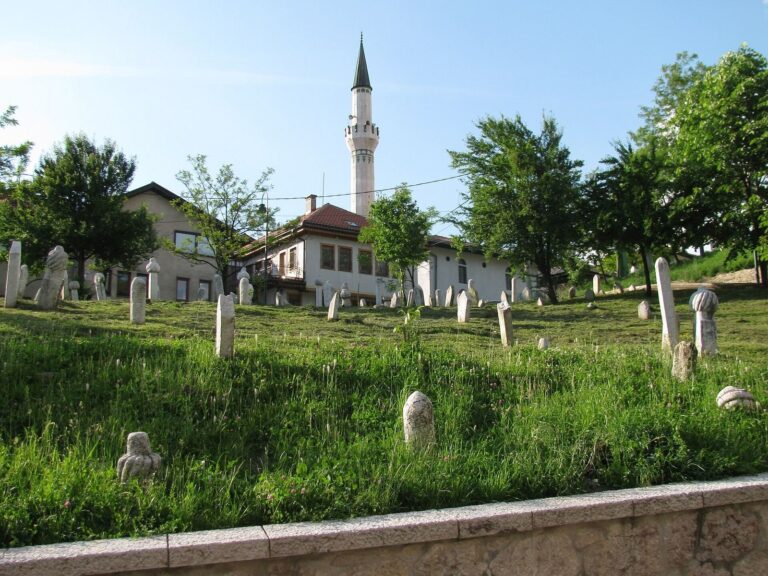
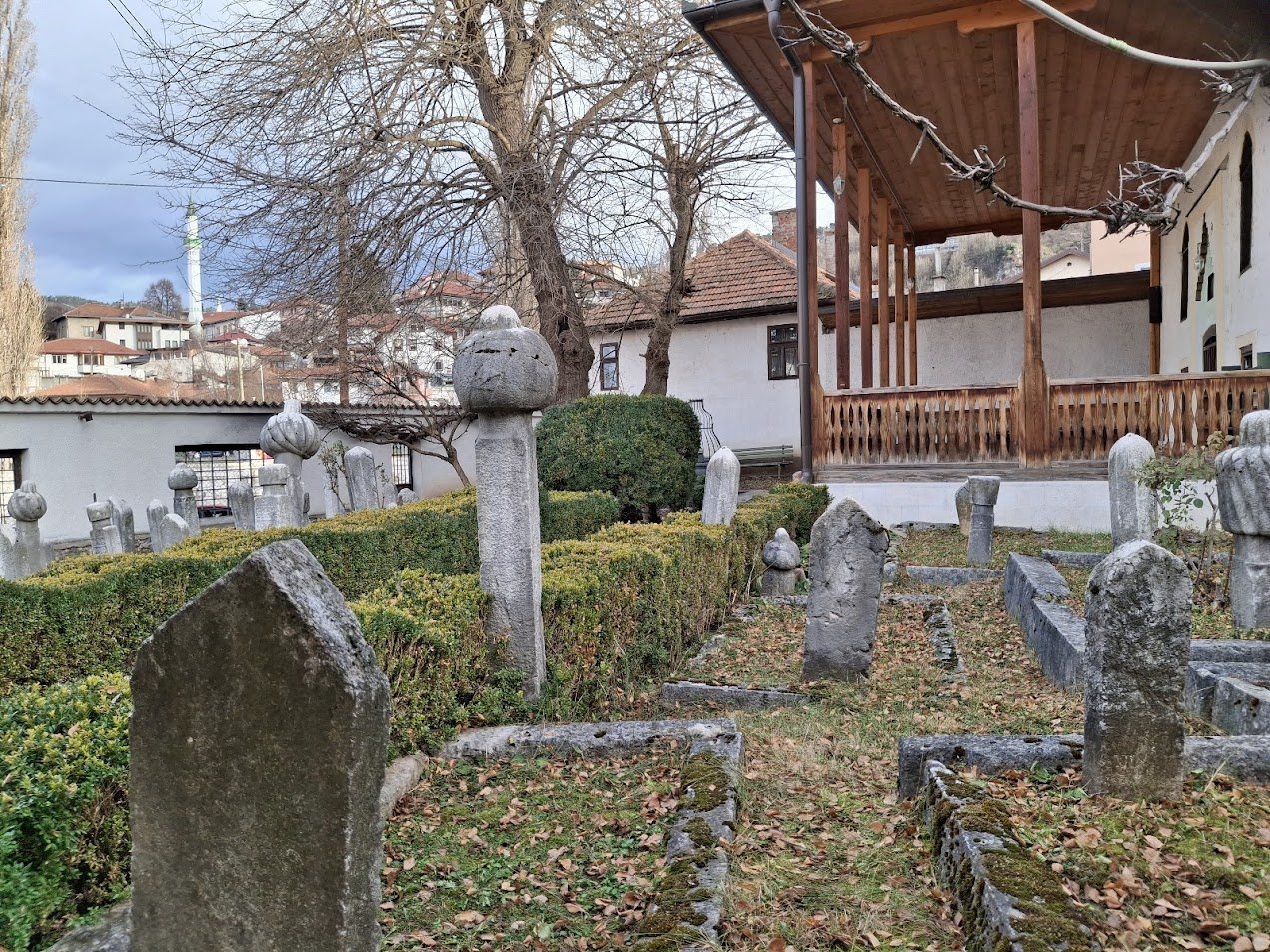
The mosque stands within an enclosed precinct. Its principal building, an open porch, a stone fountain near the entrance and the adjoining cemetery form the main features of the site. The courtyard wall was replaced during a major renovation in 1959.
Mosque precinct
Mosque building
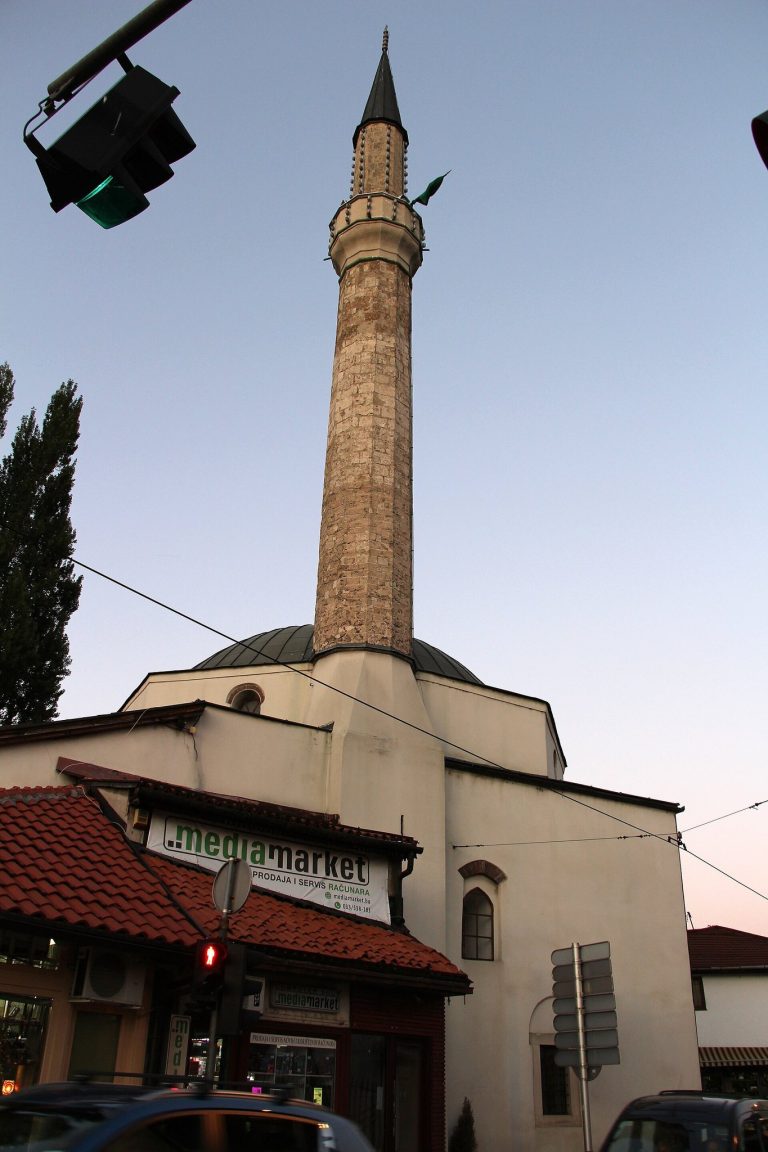
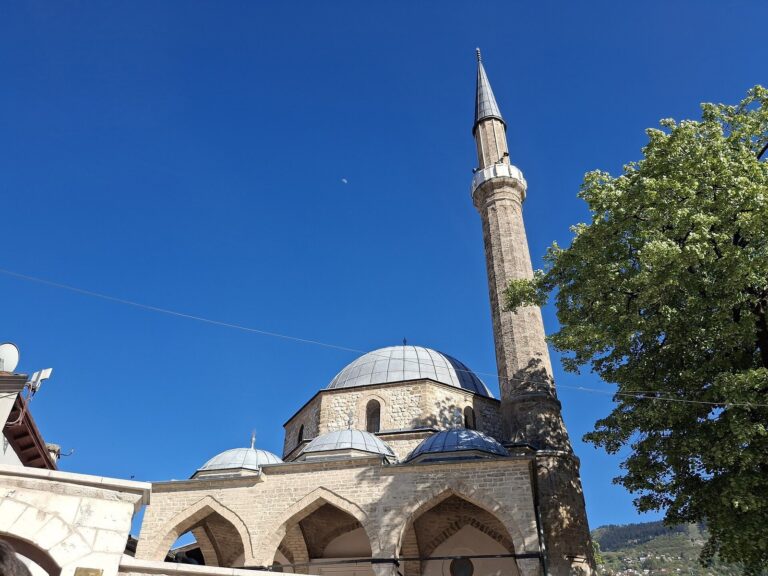
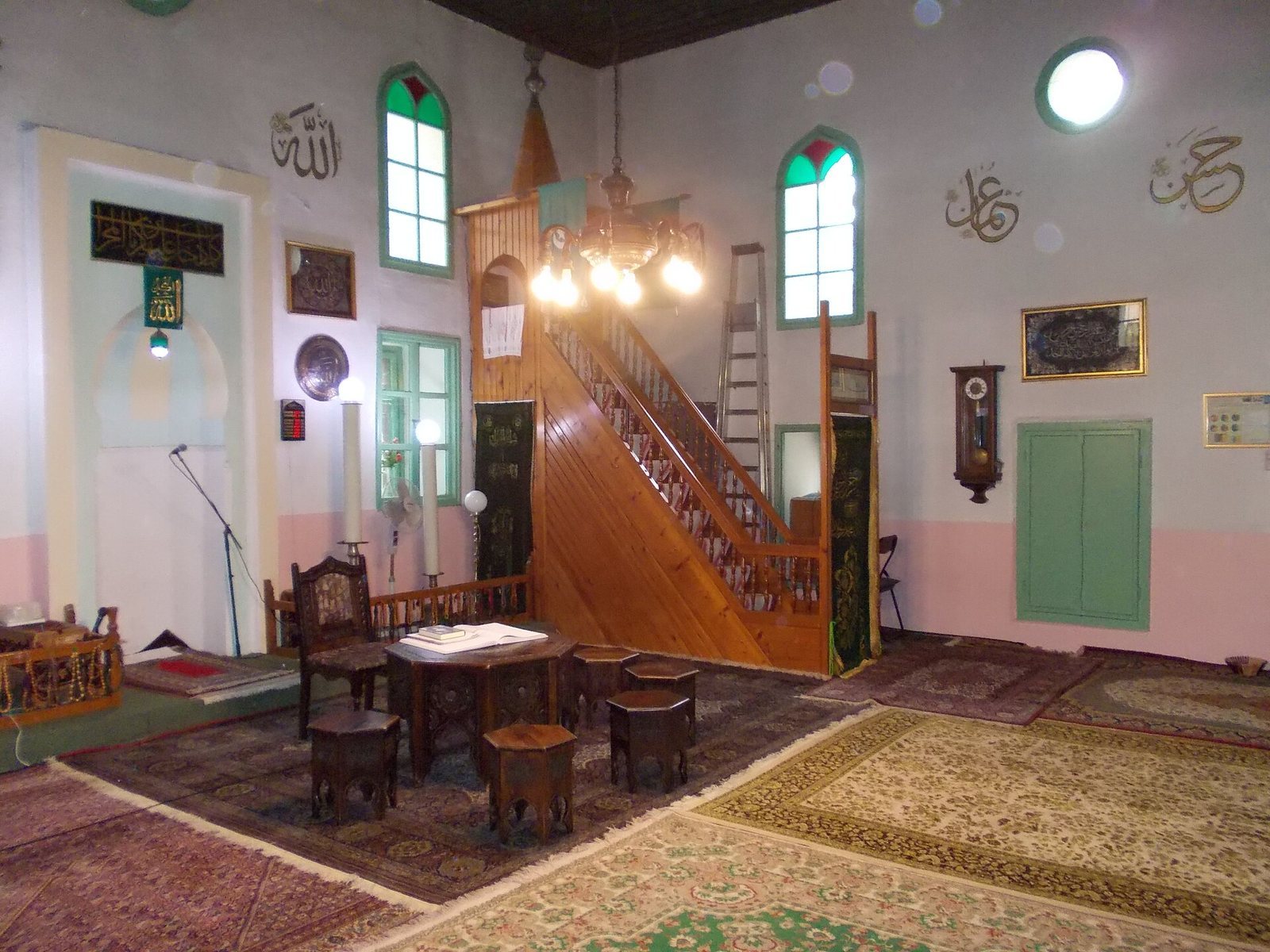
The mosque is a single-room square building measuring 12 by 12 metres. It has an open porch, a high, steeply pitched hipped roof, one dome and a stone minaret. Stone, adobe and wood were used in its construction. The renovation ordered in 1938 altered the wooden roof structure and replaced its ceramic-tile covering with red tiles. Interior seating and a musandera, a built-in wooden furnishing, were also replaced.
Stone fountain
A stone fountain stands to the left of the entrance. Judge Mustafa Fejzi ef. Mostar built it in 1800. A Turkish poem carved on the slab above the fountain uses Nastaliq, a Persian-derived style of Arabic calligraphy. It identifies Mostar as the son of Hamdi-efendi of Mostar and describes him as a teacher at a medresa and a judge of Binfše. The inscription credits him with renovating the fountain and compares its water to Kevser, a spring in paradise, while asking God to accept the benefaction. It names Hashim as the reciter of a chronogram, a date encoded through the numerical values of letters, giving the year as 1215 (1800/01). The poem also says that the benefactor has earned Firdevs, or paradise.
Cemetery
The cemetery beside the mosque contains the graves of founder Vekil Harč Mustafa and the Morić brothers. It has 51 nišan tomb markers, or Muslim gravestones, 23 of which bear inscriptions. They date from 1731 to 1873. During the renovation, damaged markers were repaired, and an inscription above the mosque entrance records the work.