Govan Old Parish Church: A Historic Place of Worship in Glasgow
Site at a Glance
- Rating
- 4.8
- Popularity
- Medium
- Country
- United Kingdom
- Primary era
- Modern
- Eras represented
- Medieval, Early Modern, Modern
- Civilizations
- British
- Site type
- Religious
- Remains
- Church
On this page12 sections
History
Govan Old Parish Church is a Scottish Gothic Revival church in Govan, southern Glasgow, Scotland, United Kingdom. Designed by Robert Rowand Anderson and built from 1884 to 1888, it stands on a site with a long history of Christian worship and early medieval sculpture.
Early Christianity and Strathclyde
Christian activity at the site is thought to have begun in the fifth or sixth century. Excavations in the 1990s uncovered two Christian burials beneath the foundations of a later church. Radiocarbon dating placed them between AD 435 and 601, and between AD 474 and 601. Although the earliest church’s form is unknown, the site has remained in religious use.
Govan gained prominence in the ninth and tenth centuries. A history written by Symeon of Durham in the twelfth century describes a Northumbrian army, from the Anglo-Saxon kingdom of northern Britain, returning from “Ovania” after attacking Dumbarton Rock in 756. The Annals of Ulster, a medieval Irish chronicle, identify the rock as the centre of Alt Clut, meaning “Rock of Clyde,” from the sixth century until the later ninth century. After a Viking raid there in 870, the kings of Alt Clut disappear from the annals. By 872, the chronicle uses Ystrad Clud, the name associated with the later kingdom of Strathclyde. This change appears to reflect a shift in power upriver towards Govan.
A predecessor to the twelfth-century royal estate at Partick and the meeting place at Doomster Hill may have contributed to that shift. Doomster Hill, now destroyed, is thought to have served as a Viking-style assembly site, perhaps adapted from a Bronze Age burial mound. The churchyard’s size and the number of early medieval carvings point to royal patronage.
Successive churches
Excavations have established a succession of churches at Govan. The medieval church had a belfry at its western end and gained a north aisle in 1651. It was demolished in 1762 and replaced by a new church. That building, in the Georgian Gothic style, was itself replaced in 1826. It was dismantled in 1884 and reassembled on Golspie Street as Elder Park Parish Church. After closing in 1970, it burned and was demolished in 2008.
John Burnet proposed modernizing the earlier church in 1876, and Anderson later put forward a plan to extend it. Neither proposal proceeded. In 1882, a new church, described as the sixth on the site, was chosen to Anderson’s design. Construction followed from 1884 to 1888, and the church opened and was dedicated on 19 May 1888. Anderson was commissioned to extend the choir in 1912, and further alterations were made after 1940.
The stones and archaeological study
The rediscovery of a stone coffin during grave-digging in December 1855 prompted closer study of Govan’s early medieval carvings. John Stirling Maxwell commissioned photographs of 46 stones. Robert Foster made plaster casts, which the photographic studio T. & R. Annan & Son photographed. The resulting images appeared in Early Christian Monuments of Scotland, which included 39 Govan stones. One of those was not in Maxwell’s photographic record, suggesting that Govan had probably yielded 47 early medieval stones.
In the 1960s, archaeologist Ralegh Radford used the carvings to interpret Govan’s early importance and compared them with stones at Inchinnan. He and other researchers grouped regional carvings under the name “Govan School.” Excavations from 1994 to 1996 established the sequence of churches on the site. The Channel 4 programme Time Team also excavated in the churchyard in 1996.
Congregation and preservation
The congregation belonged to the Scoto-Catholic High Church tendency within the Presbyterian Church of Scotland, which emphasized formal worship, sacraments and continuity with historic Christian tradition. The church is dedicated to Saint Constantine of Strathclyde. In 1966, the building received Category A listing, Scotland’s highest category for buildings of special architectural or historic interest. Its churchyard is a Scheduled Ancient Monument, a nationally protected archaeological or historic site.
On 28 October 2007, the Church of Scotland ended Govan Old’s status as a separate charge, meaning a congregation served by a minister. It became part of a union of local Govan congregations with Linthouse, and the parish church was established at Govan Cross. Govan Old stopped holding regular Sunday services but continued to be used for worship. An options study in 2008 planned a new display of the sculpture, completed in 2013. In 2016, the Govan Heritage Trust received a Scottish Government grant to support the church’s future as a community-run cultural and museum site.
Remains
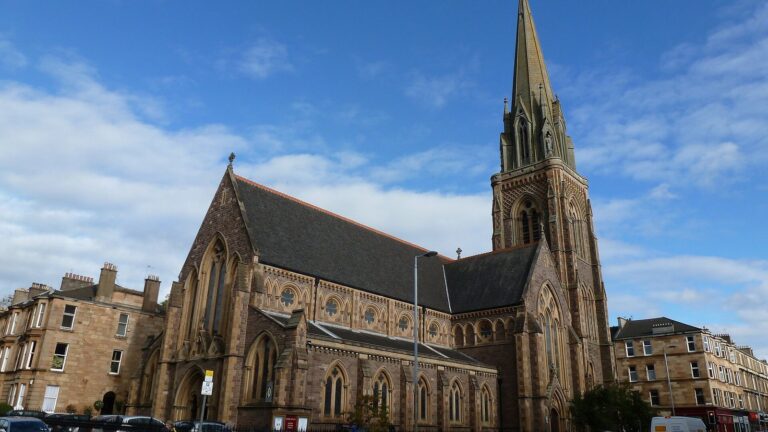
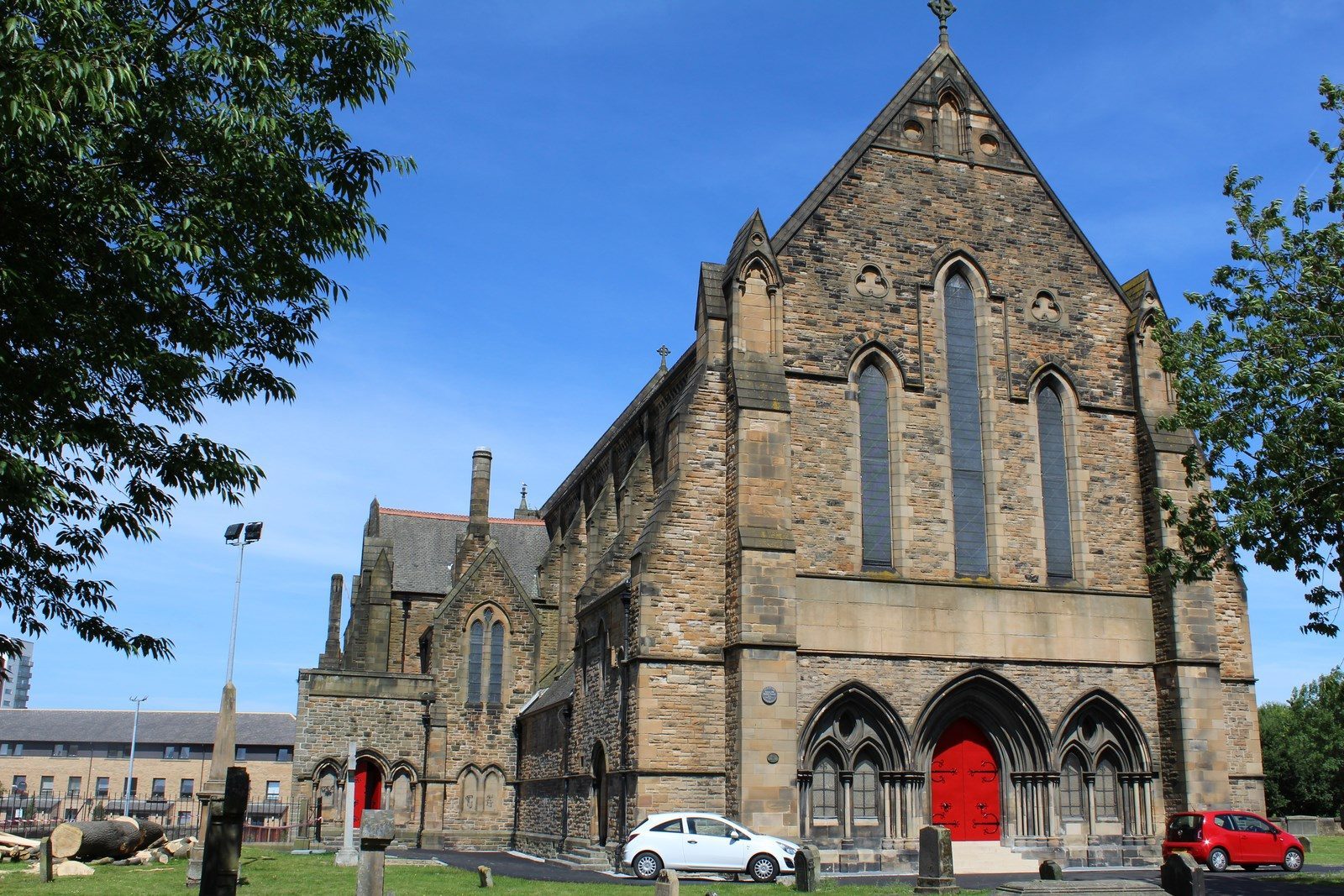
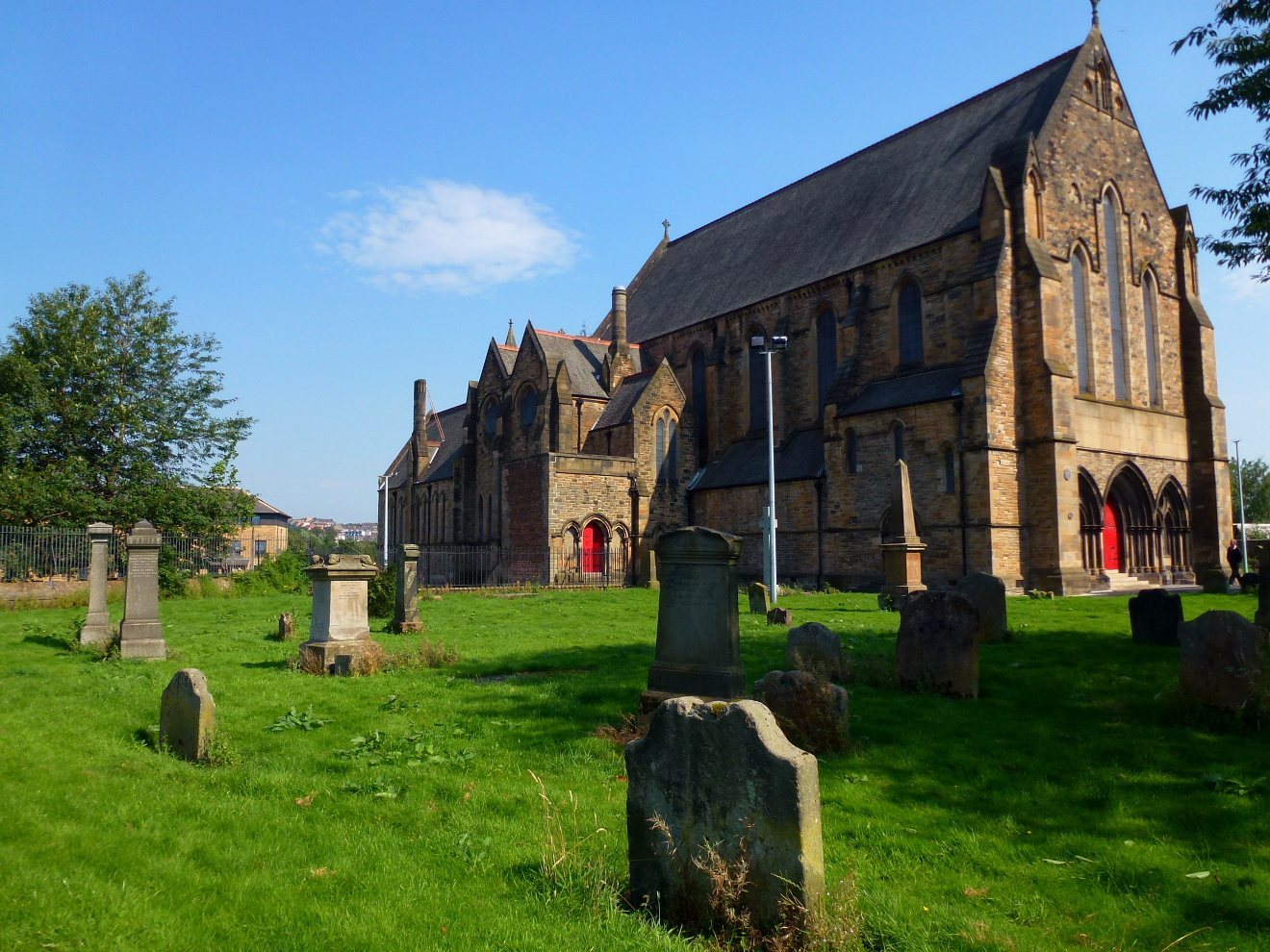
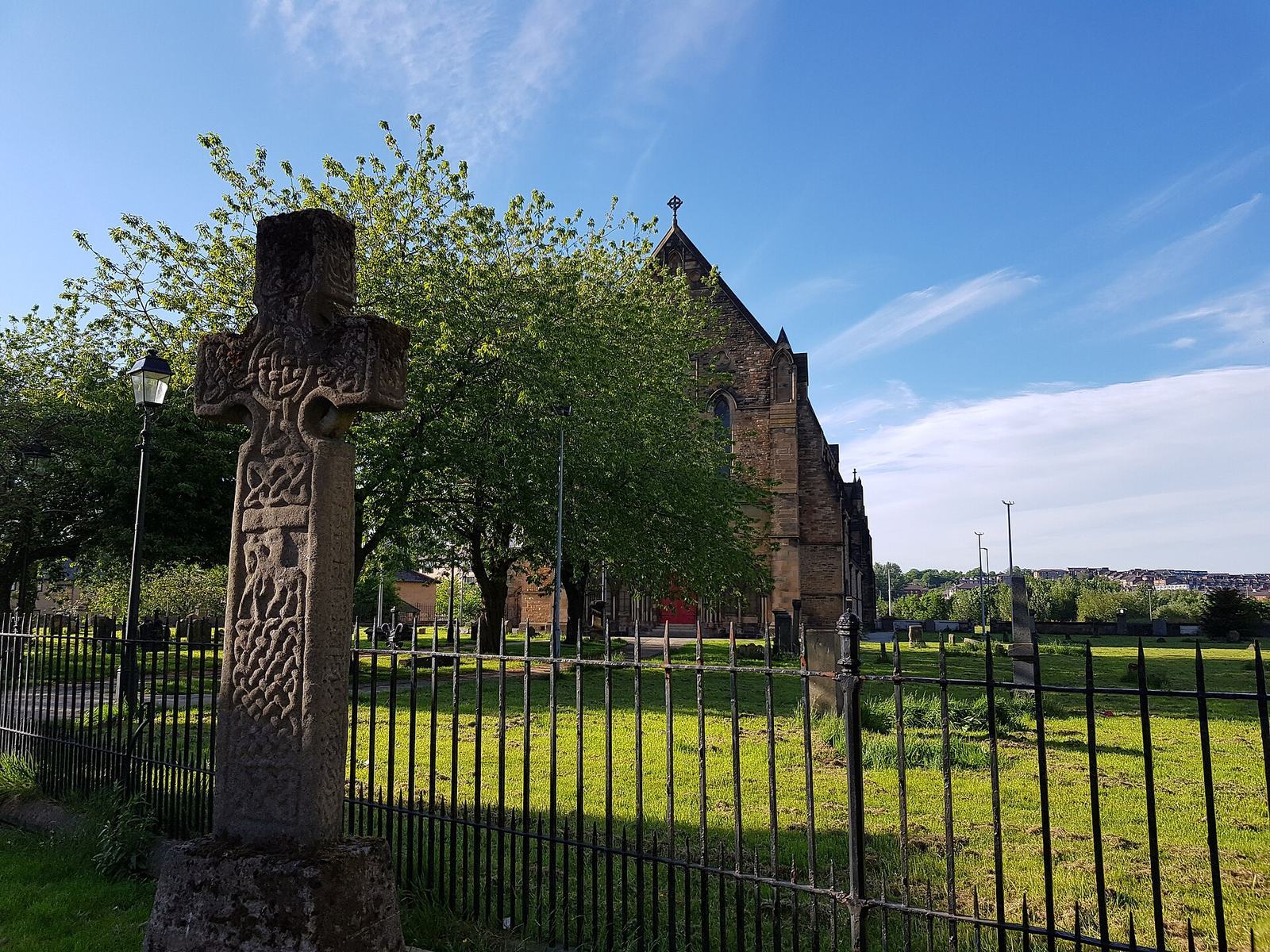
The present church has a cross-shaped plan and is oriented north to south, rather than the customary east to west. Its main entrance faces south towards the main street, and slate covers its roofs. It stands off Govan Road on the left bank of the Clyde, on ground occupied by successive earlier churches.
The present church
Plan and south front
The south gable is dominated by a pointed entrance arch edged with carved moulding. Recessed panels on either side contain decorative stonework and central supports between the doorway openings. Three tall, narrow pointed windows rise above the entrance. Apart from small three-lobed decorations and a cross on the gable, the front is largely plain. Substantial projecting supports flank the entrance.
Windows and unfinished tower
Six tall, narrow pointed windows line the church’s main body, with projecting supports dividing its exterior wall. Each of the two cross arms ends in a gable with three decorative pointed recesses and a circular rose window with radiating stonework. Two stained-glass windows were given by Robert Malcolm Kerr: the Emmaus window in 1891 and Christ Blessing the Children in 1902. Both were made by Heaton, Butler and Bayne. A foundation was laid for a tower on the west side, but the planned tower was never built. Anderson’s design drew on Pluscarden Abbey, a medieval abbey near Elgin.
Foundations of the medieval church were exposed during the excavations of 1994 to 1996, revealing part of the earlier building sequence beneath the present structure.
The Govan Stones
Churchyard monuments
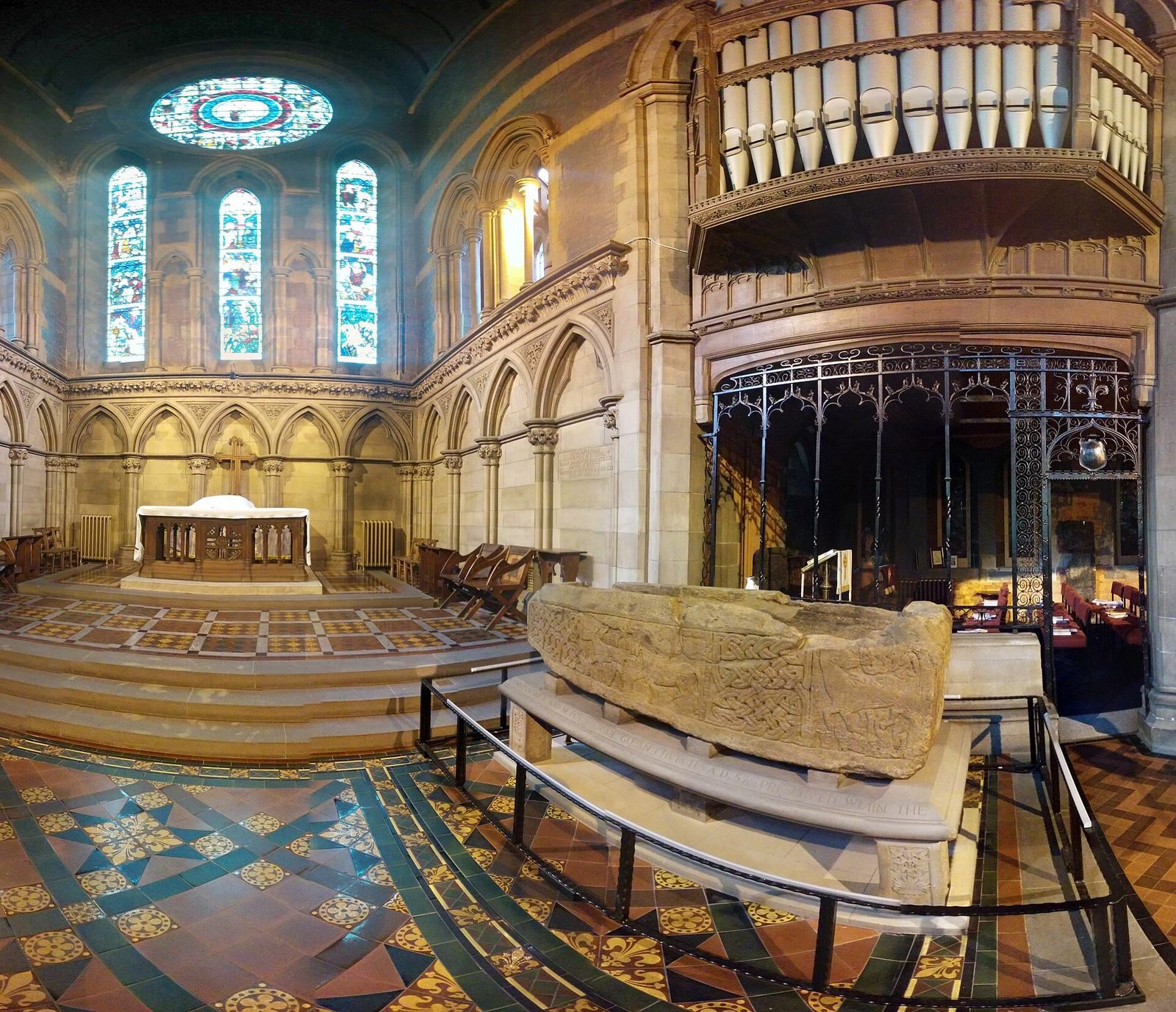
The Govan Stones are carved monuments from the churchyard, generally dated to the ninth through eleventh centuries. The church display contains 31 monuments: one sarcophagus, or stone coffin; two cross-shafts, the upright central parts of crosses; two upright cross-slabs, flat stones carved with crosses; five hogbacks, curved, roof-shaped grave monuments; and 21 recumbent cross-slabs. The four upright monuments have figurative carvings and interlace formed from interwoven bands. One other recumbent medieval monument remains in the churchyard.
Stones beyond the display
Sixteen stones not brought into the church were thought to have been buried or removed after the neighbouring Harland & Wolff factory building was demolished in 1973. In 2019, community archaeologists and schoolboy Mark McGettigan helped locate at least three of them, bringing long-lost medieval carvings back to light.