Clare College: A Constituent College of the University of Cambridge
Site at a Glance
- Popularity
- Very High
- Country
- United Kingdom
- Primary era
- Early Modern
- Eras represented
- Early Modern, Modern
- Civilizations
- British, English
- Site type
- Civic
- Remains
- University
On this page12 sections
History
Clare College is a constituent college of the University of Cambridge in Cambridge, United Kingdom, founded in 1326 as University Hall by Richard Badew, then a senior university officer known as the chancellor. It is the university’s second-oldest surviving college after Peterhouse.
Foundation and refoundation
University Hall initially had resources for only two fellows, members of a college’s senior academic community, and soon encountered financial difficulties. In 1338, an endowment from Elizabeth de Clare enabled its refoundation as Clare Hall, with support for twenty fellows and ten students. Elizabeth was a noblewoman and granddaughter of Edward I, king of England from 1272 to 1307.
Buildings and institutional change
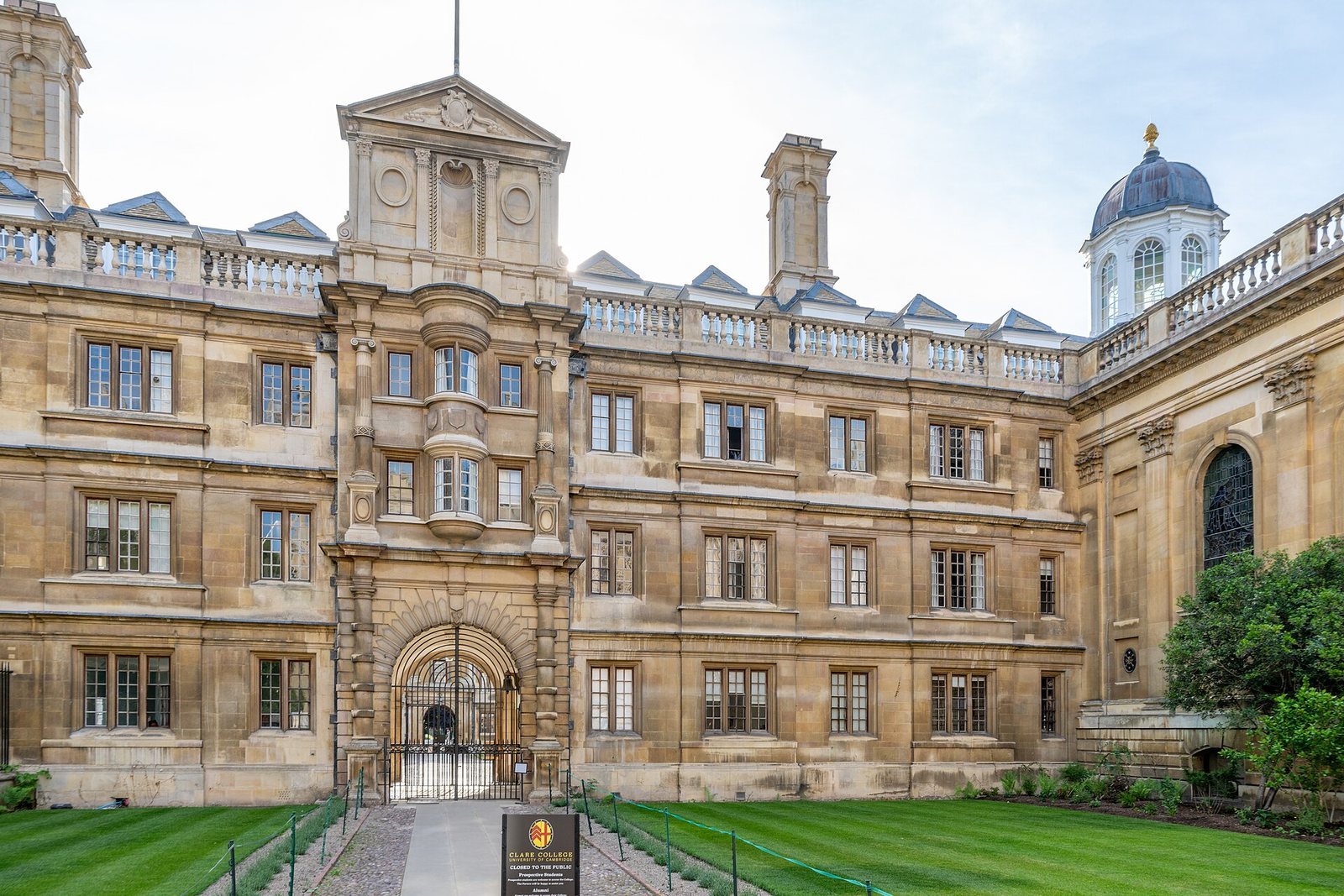
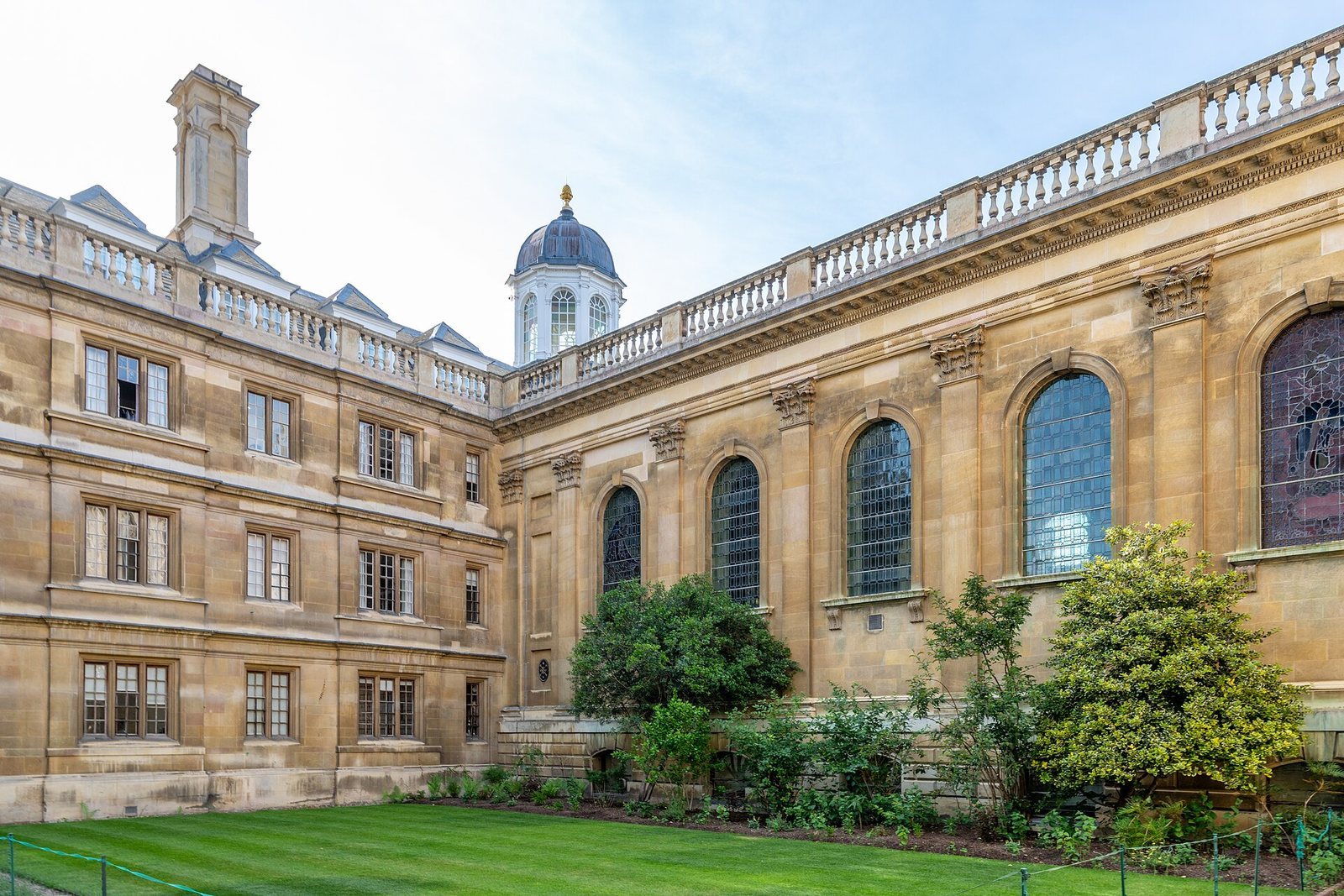
Work on Old Court began in 1638 and continued until 1715, with a long interruption during the English Civil War, fought between Royalist and Parliamentarian forces in England from 1642 to 1651. Clare Bridge was built in 1640. The college chapel followed in 1763.
The institution kept the name Clare Hall until 1856, when it became Clare College. Memorial Court was dedicated in 1926 in memory of Clare men who died in the First World War, and was extended in the 1950s with Thirkill Court. The college later created a separate postgraduate institution called Clare Hall in 1966. In 1972, Clare became one of the first three Cambridge colleges that had previously admitted only men to accept women as undergraduates. The college is also noted for its chapel choir. Old Court and Clare Bridge are Grade I listed, a category for buildings of exceptional interest; Memorial Court is Grade II*, a category for particularly important buildings of more than special interest.
Remains
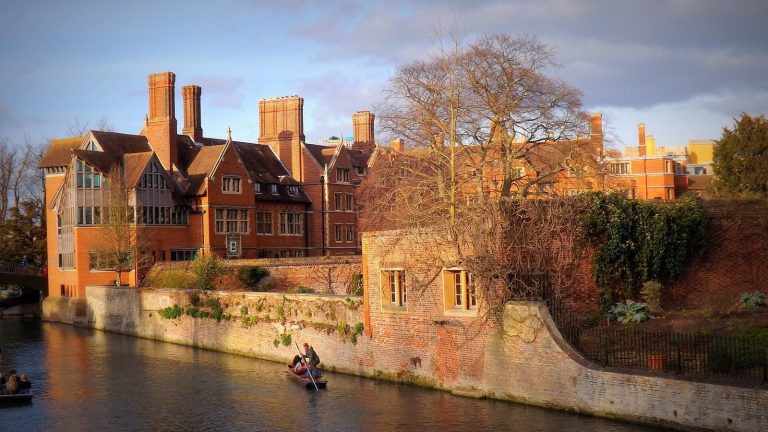
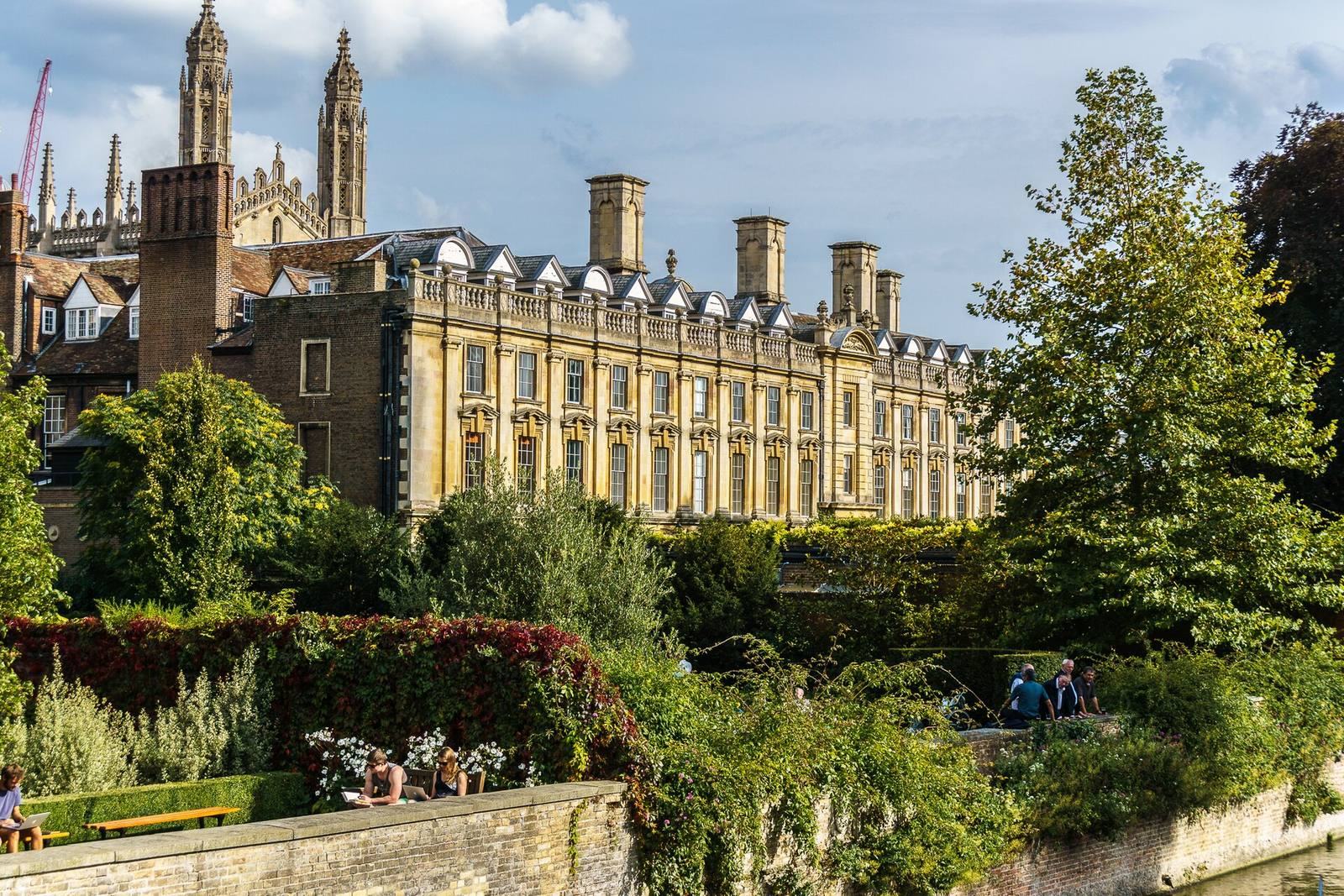
The college’s buildings include the courts of Old and Memorial, linked by Clare Bridge across the River Cam. The complex brings together Old Court’s Gothic and classical architecture with later court buildings and facilities.
Old Court
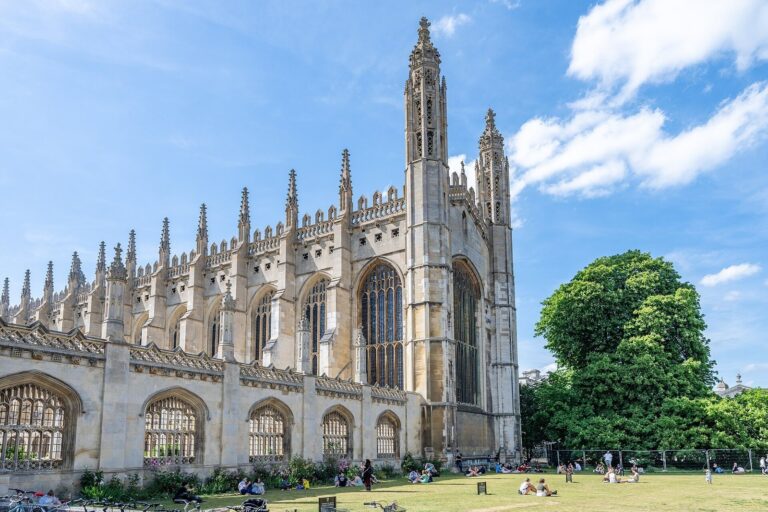
The north wing retains vaulted elements of the English Gothic tradition, a medieval form associated with pointed arches and vaulting. The southern block has a fully developed classical design, drawing on ancient Greek and Roman architecture. From the Backs, Old Court frames views of King’s College Chapel. Witherford Watson Mann designed a River Wing addition to the court.
Clare Bridge
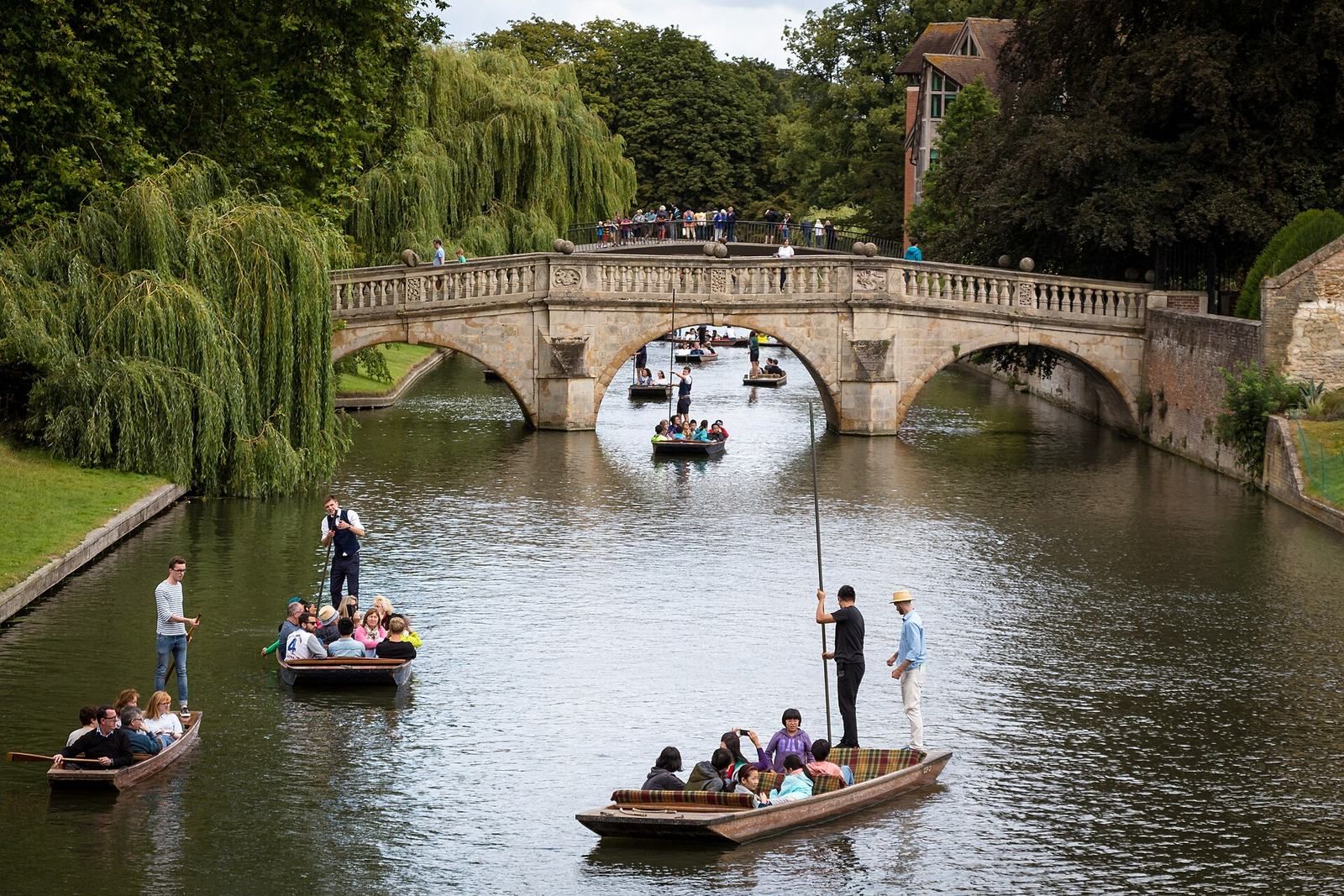
The stone bridge crosses the River Cam between Old Court and Memorial Court, which lies west of Queen’s Road. It is described as the oldest of Cambridge’s current bridges and is decorated with fourteen stone balls.
College chapel
Designed by James Burrough, then master, or head, of Gonville and Caius College, the chapel contains an altarpiece depicting The Annunciation by the Italian painter Giovanni Battista Cipriani.
Memorial Court
Giles Gilbert Scott designed Memorial Court. Its monumental entrance arch contains a large bell and bears the names of Clare alumni who died in both world wars. The court includes Thirkill Court, while the Forbes Mellon Library stands at its centre; the courtyard to the west is named Ashby Court.
Lerner Court
Designed by van Heyningen and Haward Architects, Lerner Court stands beside Memorial Court in the central college area. It contains a lecture theatre, catering facilities, fellows’ offices, residential accommodation and a student laundry.
Castle Court
Castle Court is a detached student-accommodation area on Castle Hill, north of the city centre, between Castle Street and Chesterton Lane.
Gardens and other facilities
The college’s gardens lie on the Backs overlooking the River Cam. Its other named facilities include the Great Hall, Scholars’ Garden and a boathouse.
College arms
The college shield combines three red chevrons and a red cross on gold, surrounded by a black border bearing gold droplets. The de Clare arms occupy the dexter half, the shield-bearer’s right, a position where a husband’s arms would ordinarily appear. The shield and its gold-droplet border also feature on Elizabeth de Clare’s personal seal. Her first husband was John de Burgh, an Anglo-Irish nobleman who lived from 1286 to 1313.