Fortress of the Immaculate Conception: A Spanish Colonial Stronghold in Nicaragua
Site at a Glance
- Rating
- 4.6
- Popularity
- Low
- Country
- Nicaragua
- Primary era
- Early Modern
- Eras represented
- Early Modern
- Civilizations
- Spanish
- Site type
- Military
- Remains
- Fort
On this page7 sections
History
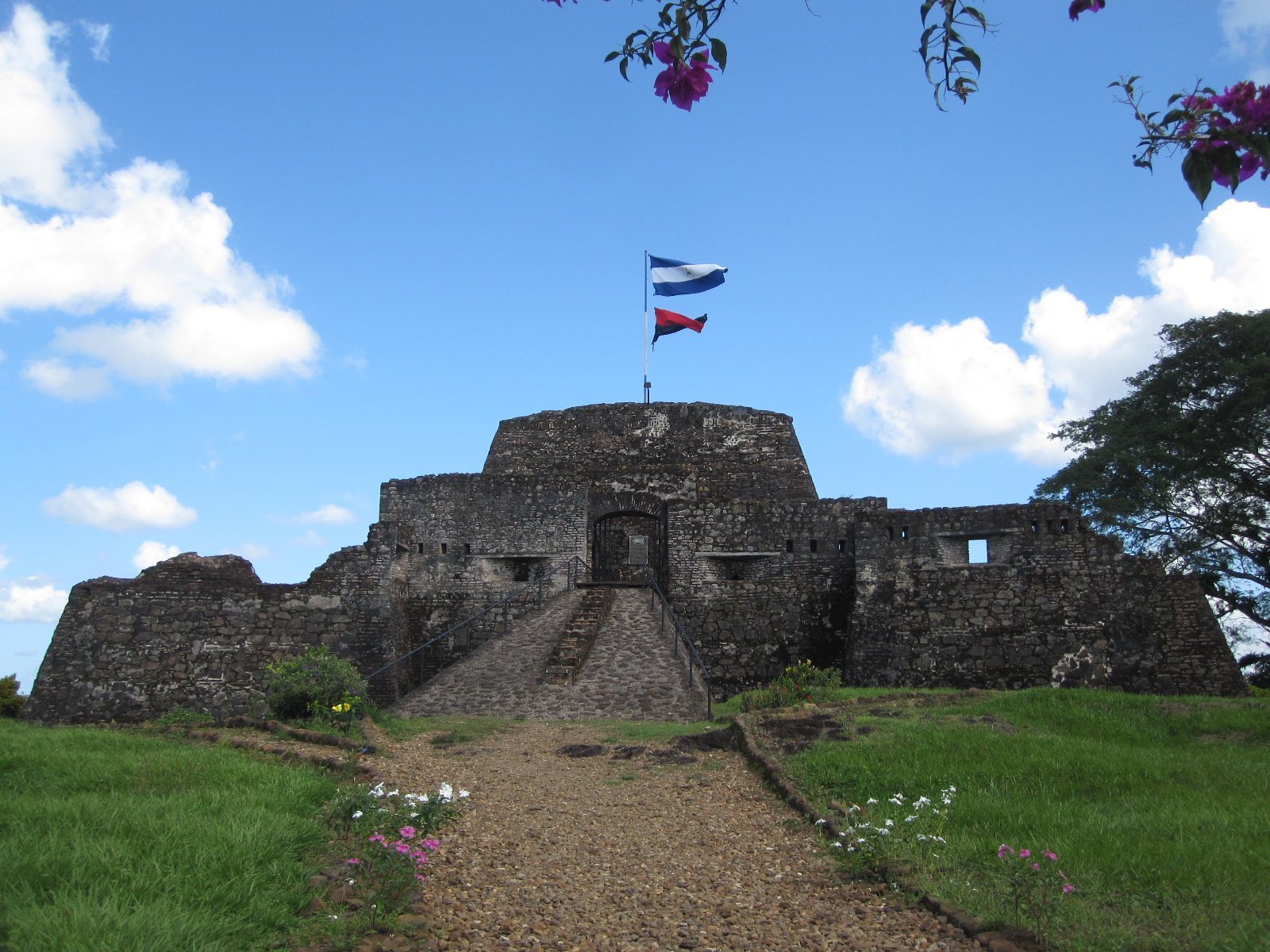
The Fortress of the Immaculate Conception is a Spanish colonial stone bastion fortress in El Castillo, Nicaragua, built between 1673 and 1675 to defend the San Juan River route between the Caribbean Sea and Lake Nicaragua. Its position helped protect the cities of Granada and León from pirate attacks and secure access to the lake.
Foundation and Spanish colonial defense
The decision to strengthen the entrance to Lake Nicaragua followed the attack on Granada by the pirate Gallardino in 1670. In January and February 1673, Captain General Fernando Francisco de Escobedo, who was also governor of Yucatán, inspected the region with the military engineer Martín de Andújar Cantos. They selected the site at the Raudal del Diablo rapids, then known as the Raudal de Santa Cruz.
Construction began on March 10, 1673, and ended in 1675. The new fortress, initially named Fortaleza de la Limpia Pura e Inmaculada Concepción, replaced the earlier Fuerte de Santa Cruz, which had been built during the reign of King Philip III of Spain. The fortress and the settlement that grew around it developed into the present town of El Castillo.
The defenses did not prevent every attack on the region. On April 8, 1685, the buccaneer William Dampier plundered and burned Granada. El Castillo and its fortress nevertheless remained strategically important to the Captaincy General of Guatemala, the major Spanish colonial administrative and military jurisdiction in Central America, until the late eighteenth century.
Sieges during the eighteenth century
During the Seven Years’ War, an international conflict fought from 1756 to 1763, a combined British and Miskito-Sambu force attacked the fortress on July 26, 1762. The expedition included about 2,000 men and more than 50 boats, while the Spanish garrison numbered about 100.
The garrison commander, Lieutenant Colonel José de Herrera y Sotomayor, died unexpectedly on July 15, shortly before the siege. His 19-year-old daughter, Rafaela Herrera, became associated with the defense through acts of heroism, including the killing of the British expeditionary commander. Lieutenant Juan de Aguilar y Santa Cruz then led the defenders. After six days of fighting, the besieging force lifted the siege and withdrew on August 3.
Spain entered the American Revolutionary War against Britain in 1779, and the British planned a new advance through the San Juan River. Major General John Dalling, governor and commander-in-chief of Jamaica, proposed capturing Granada in order to divide Spanish America and perhaps gain access to the Pacific Ocean.
During the San Juan Expedition of 1780, Colonel John Polson and Captain Horatio Nelson led the British attack. The Spanish garrison contained 228 men under Juan de Ayssa, who later served as governor of Nicaragua from 1783 to 1787. On April 29, 1780, an expeditionary force of about 200 British troops captured the fortress after Nelson led soldiers through dense jungle to attack from the hill behind it. The British occupied the position for nine months before abandoning it in January 1781. The hill became known as Lomas de Nelson.
Later military and civic roles
After Nicaragua became an independent state in 1821, the fortress retained strategic value and also served as a customs station. During the Eisenstuck affair, a diplomatic crisis between Germany and Nicaragua in 1878, its inland and protected position prevented a landing party from the German corvette Medusa from occupying it. The ship’s commander, Friedrich von Hollmann, sent Sub-Lieutenant Harms to reconnoiter the fortress, but the proposed occupation of the customs station was considered impracticable.
During the Somoza era, when the Somoza family dominated Nicaragua’s government and political life, the fortress served as a base for the Nicaraguan National Guard. In the Contra War, the 1980s conflict between Nicaragua’s Sandinista government and armed groups opposed to it, the site was used by the Sandinista Popular Army. In 1982 and 1983, the ferry Gröpeln, a solidarity gift from Bremen to Ernesto Cardenal, sheltered near the fortress for an extended period because of wartime conditions and bad weather.
The fortress is a historic landmark of Nicaragua and now houses a museum and library. Since 1995, it has been included on Nicaragua’s UNESCO tentative list, which identifies sites considered suitable for possible future World Heritage nomination. The nomination documentation places it within the protected Indio Maíz Biological Reserve.
Remains
River fortress
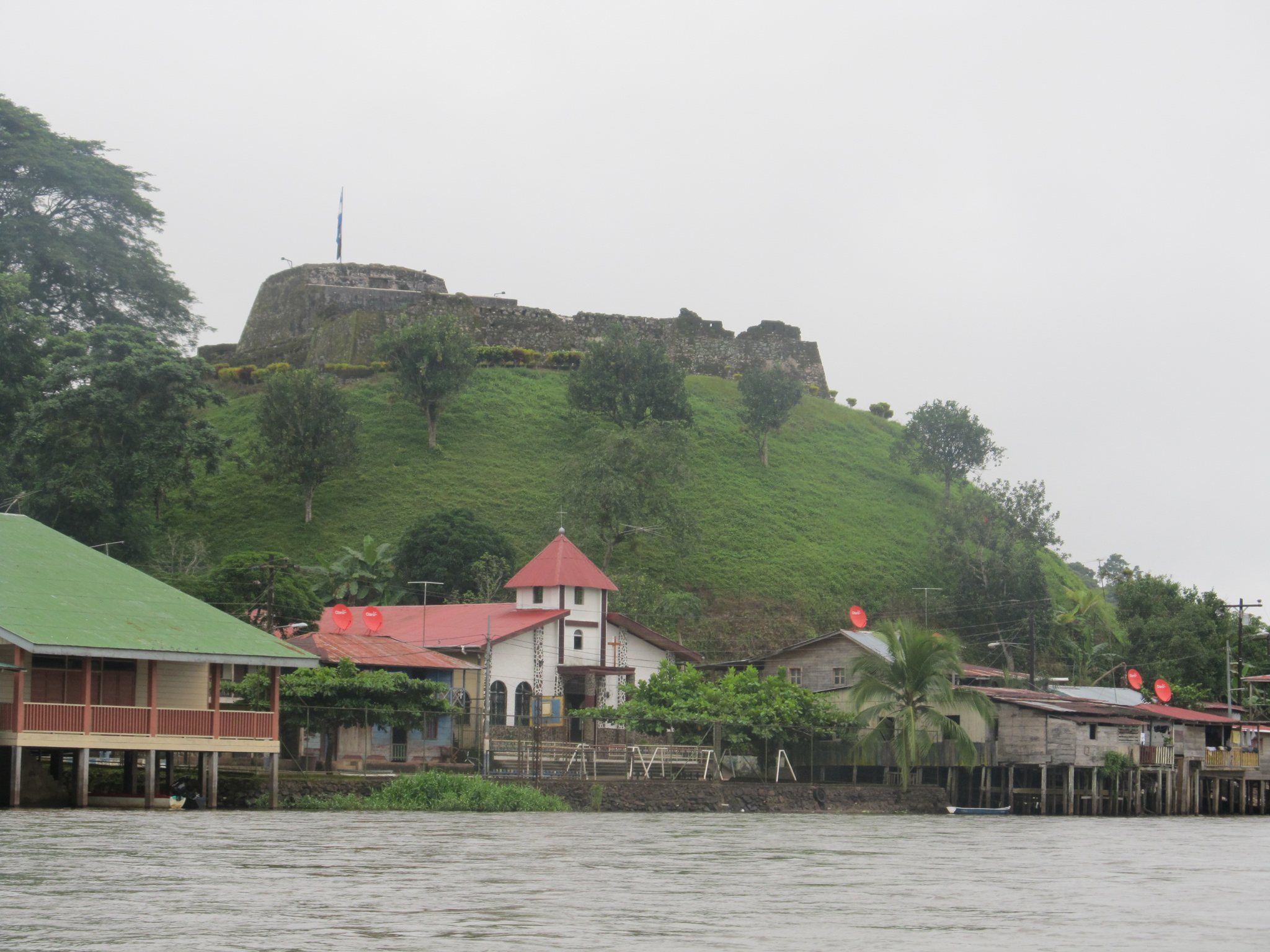
The Fortress of the Immaculate Conception occupies the southern bank of the San Juan River at the Raudal del Diablo rapids, about 6 kilometers from the Costa Rican border. Its stone construction and bastion form reflect its purpose as a defensive position controlling river movement between the Caribbean Sea and Lake Nicaragua. The site stands in El Castillo, the village that developed around the fortress and the earlier settlement associated with Fuerte de Santa Cruz.
Lomas de Nelson
The hill behind the fortress forms a separate element in its surviving historical landscape. British troops used it as an attack route during the 1780 assault, and it has since been known as Lomas de Nelson. Its position explains how the British force approached the fortress from behind after moving through the surrounding jungle.