Forte Santa Viola: An Italian Armoured Fort in the Lessini Defensive System


Site at a Glance
- Rating
- 4.1
- Popularity
- Very Low
- Country
- Italy
- Primary era
- Modern
- Eras represented
- Modern
- Civilizations
- Italian
- Site type
- Military
- Remains
- Fort
On this page6 sections
History
Forte Santa Viola is an armoured fort in Italy, built between 1904 and 1913 near Azzago in the municipality of Grezzana, Verona. Constructed by military engineers during the Kingdom of Italy, it was operated by the Royal Italian Army, the kingdom’s land force, at an elevation of 830 metres on the mountain bearing its name.
Construction and defensive role
The fort formed part of the Lessini defensive system, along with Forte Masua, Forte Monte Tesoro, Forte Castelletto, and Forte San Briccio. The five forts stood about 20 kilometres apart and were visually connected, creating a defensive arc from northwest to southeast. This arrangement was intended to protect the city from attacks arriving from the north. The system was designed for defence and was never used for offensive operations.
Disarmament and later history
Forte Santa Viola was never used for military purposes. After it was disarmed, the building was converted into a warehouse. The Municipality of Grezzana acquired the fort in 1958, after which it fell into disuse. Water infiltration, vandalism, and the spread of spontaneous vegetation damaged the structure.
Architects Fiorenzo Meneghelli and Massimiliano Valdinoci began a recovery study in 2002. Restoration followed in three phases from 2005 as part of a European project supported by the Lessinia mountain community. The third phase, which concerned connections to public services and remediation of the surrounding area, had not yet been carried out.
Remains
Layout and construction
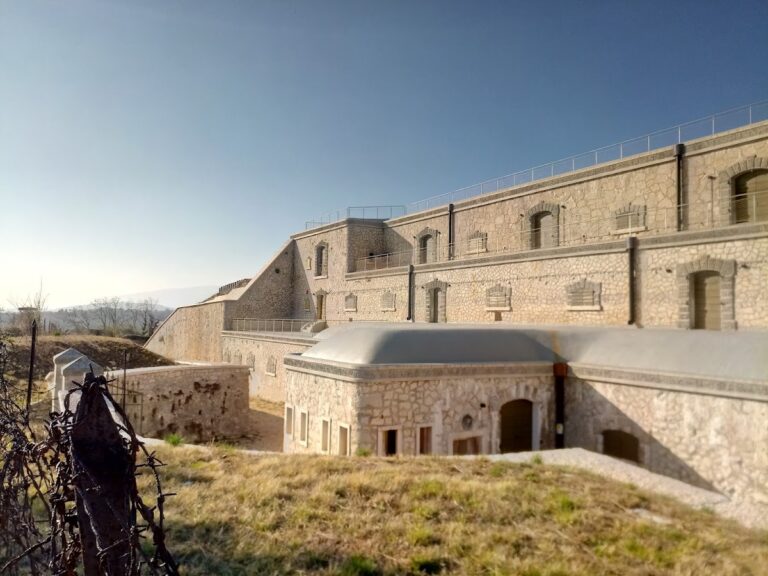
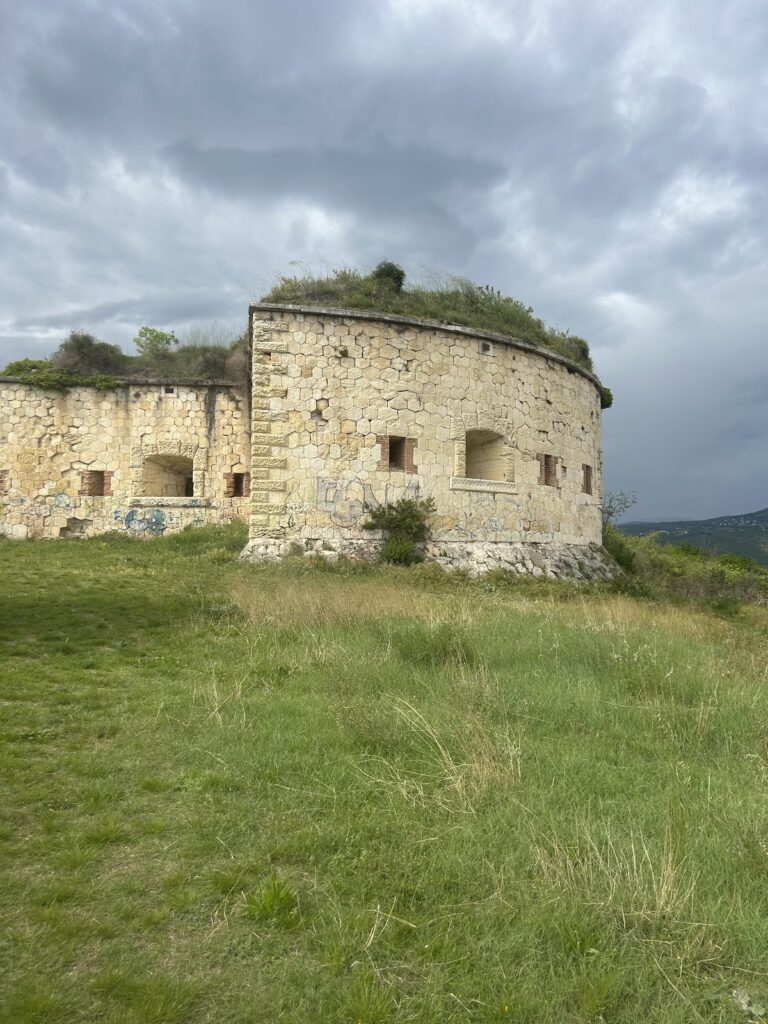
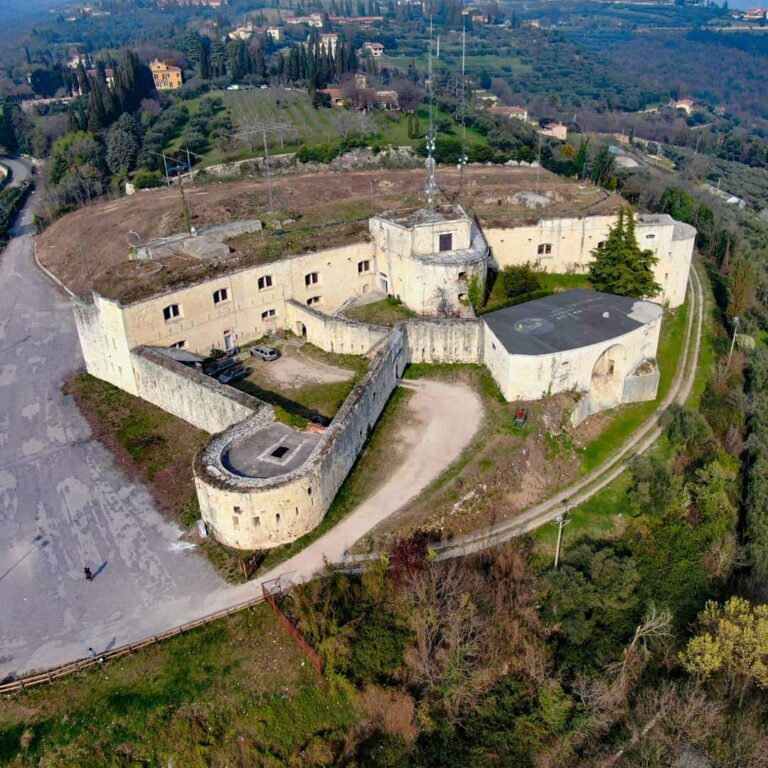
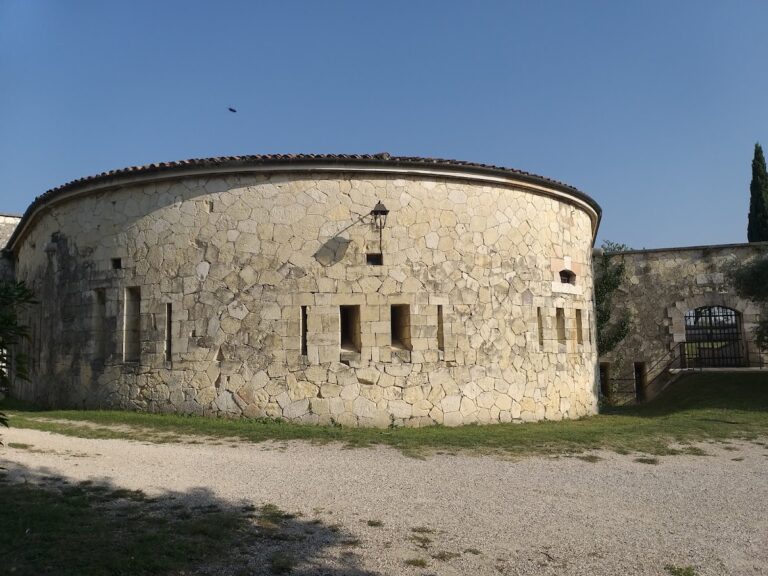
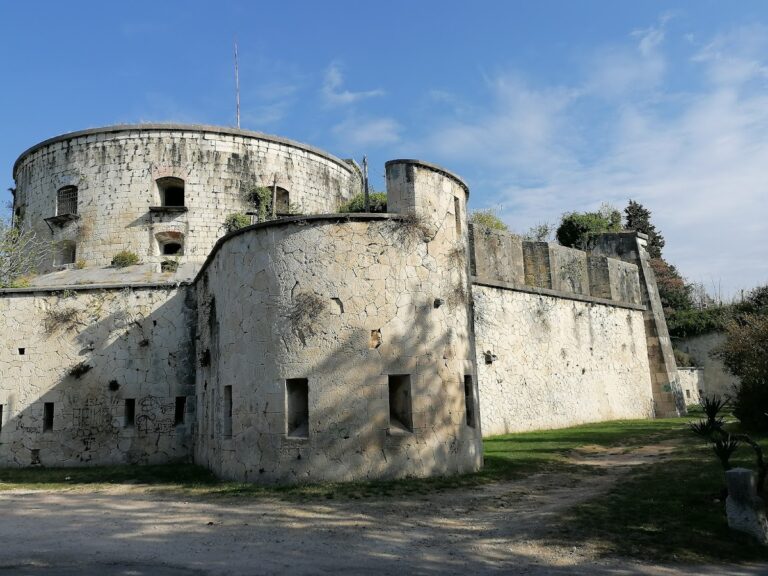
Forte Santa Viola extends across three floors and stands within the Lessinia Regional Natural Park on the mountain near Azzago. Its construction combines concrete with an earth embankment. The front of the fort is buried beneath the embankment, while the exposed rear side, known as the gorge front, faces south. This facade contains loopholes, narrow openings through which firearms could be used from behind cover.
Armament and internal installations
The fort retained four covered gun wells protected by armoured cupolas, which are reinforced housings for guns and their crews. Four 149A guns were mounted in these cupolas, supported by four 87B guns. A telescopic observation post formed part of the defensive equipment. Inside, ventilation equipment, electricity generators, and hoists for lifting ammunition between the floors supported the fort’s operation.
Nearby sites