Fort Wayne: A U.S. Army Fort in Detroit
Site at a Glance
- Country
- United States
- Primary era
- Modern
- Eras represented
- Modern
- Civilizations
- Unclassified
- Site type
- Military
- Remains
- Fort
On this page19 sections
History
Fort Wayne is a United States Army fort on the Detroit River in Detroit, Michigan, in the United States. Built by the U.S. Army from 1842 to 1851, it formed part of a new program to defend the northern border. Improved relations with Britain left the fort without an immediate military role, but it later served as a garrison, supply depot, and museum.
Before Fort Wayne
Human history at the site reaches back at least to AD 750. In 1701, French colonial officer Antoine de la Mothe Cadillac founded Fort Pontchartrain near present-day Hart Plaza, at a different location in Detroit. He reportedly arranged with the Potawatomi, an Indigenous people of the Great Lakes region, for a trading village at the future Fort Wayne site. By 1710, the village was thriving.
The French surrendered Fort Pontchartrain, later known as Fort Detroit, to the British in 1760 during the French and Indian War, the North American theater of the wider Seven Years’ War. The British subsequently built Fort Lernoult elsewhere in Detroit. When the United States took control in 1796, it renamed that fort Fort Shelby.
The War of 1812 and the Treaty of Springwells
On July 4, 1812, Michigan militiamen fired on Sandwich in Upper Canada from near the future Fort Wayne site, before war between the United States and Britain had been formally declared. British General Isaac Brock later crossed the Detroit River at its narrowest point, landed at the site, and advanced on Detroit. During the siege, American General William Hull surrendered Fort Shelby, believing his troops were surrounded and outnumbered. The British later left the fort, and American troops reoccupied it.
After the War of 1812, Fort Shelby deteriorated. Detroit purchased and demolished it in 1826. The future Fort Wayne site had a diplomatic role in the meantime: in 1815, it hosted the Treaty of Springwells, which ended hostilities between the United States and Indigenous nations that had allied with Britain. Territorial governor Lewis Cass and General William Henry Harrison attended.
Construction and early years
Rebellions in Canada in the late 1830s led American volunteers to launch cross-border attacks known as the Patriot War. The U.S. government mobilized troops to stop the volunteers and preserve official neutrality. Concern about the lack of northern-border defenses, including a U.S. counterpart to British Fort Malden at Amherstburg, prompted Congress in 1841 to fund a chain of forts, including one at Detroit.
The Army sent Lieutenant Montgomery C. Meigs to Detroit to obtain a riverfront farm about three miles below the city, at the river’s closest point to Canada. Construction began in 1842 and finished in 1851, at a cost of $150,000. The Army named the fort for Revolutionary War general Anthony “Mad” Wayne, who had taken Detroit from the British in 1796.
Relations between the United States and Britain improved before cannon were installed. Fort Wayne consequently went unused for a decade, watched by a single caretaker. The site may also have served as a final stop on the Underground Railroad, a clandestine network that helped enslaved people escape to freedom. An Irish farmer living beside the fort’s outer river defense operated a small ferry to Canada for extra income. It was the only such ferry in that part of Detroit at the time.
Civil War and garrison service
Fears of a British attack from Canada during the Civil War led to the fort’s defenses being strengthened and rebuilt in 1863. Two weeks after the war began, the Michigan 1st Volunteer Infantry Regiment was mustered there. Fort Wayne continued to muster Michigan troops and provided a place for wounded veterans to recover. Alfred Gibbs, its first occupying commander, served his parole there after Confederate forces captured him.
After the war, the fort became a garrison where regiments from the western frontier rotated in for rest. Detroit annexed part of Springwells Township in 1875, then added the area east of Livernois Avenue, including all land beside the fort, in 1884.
Twentieth-century military uses
During the Spanish-American War, troops stationed at Fort Wayne left for Cuba and the Philippines. The guardhouse also housed southwestern Detroit’s first telephone exchange. In World War I, the fort helped procure cars, trucks, and military spare parts. During the postwar Red Scare, it temporarily held people accused of communism while they awaited trial. In the Great Depression, it housed homeless families and the Civilian Conservation Corps, a federal work-relief program.
Fort Wayne became the Motor Supply Depot during World War II. It directed equipment from Detroit’s automobile factories through a citywide network of storage and staging sites, including the Michigan State Fairgrounds and the Port of Detroit terminal. Tanks, trucks, jeeps, tires, and spare parts sent from Detroit factories to the war fronts passed through the fort. More than 2,000 people worked there, most of them civilian women. Drivers and mechanics for the Red Ball Express, the military truck-transport system, also trained at the site.
Italian prisoners of war captured during the North African Campaign worked at the fort as servants, cooks, and janitors. After Italy surrendered, they could return to Italy, but many chose to remain and settle in Detroit.
Museum, Cold War, and transfer to Detroit
Plans to close Fort Wayne followed World War II. In 1948, the fort and its original barracks passed to the Detroit Historical Commission for use as a military museum. The Detroit Historical Museum operated the Fort Wayne Military Museum from 1949 to 2006. Anti-aircraft guns were installed in the 1950s and later replaced by Nike-Ajax, an early U.S. surface-to-air missile system. During the Korean and Vietnam wars, the fort served as an armed-services entrance station where thousands of enlistees and draftees were sworn in.
After Detroit’s 1967 12th Street Riot, the fort housed displaced families; the last remained until 1971. Detroit took over the property in stages, completing the transfer in 1976 through the Federal Lands to Parks program. Since early 2006, the city’s Recreation Department has operated the fort with assistance from the Historic Fort Wayne Coalition and the Detroit Historical Society. Fort Wayne became a Michigan State Historic Site in 1958, joined the National Register of Historic Places in 1971, and received City of Detroit Historic Neighborhood District status in 2016.
Remains
Setting and layout
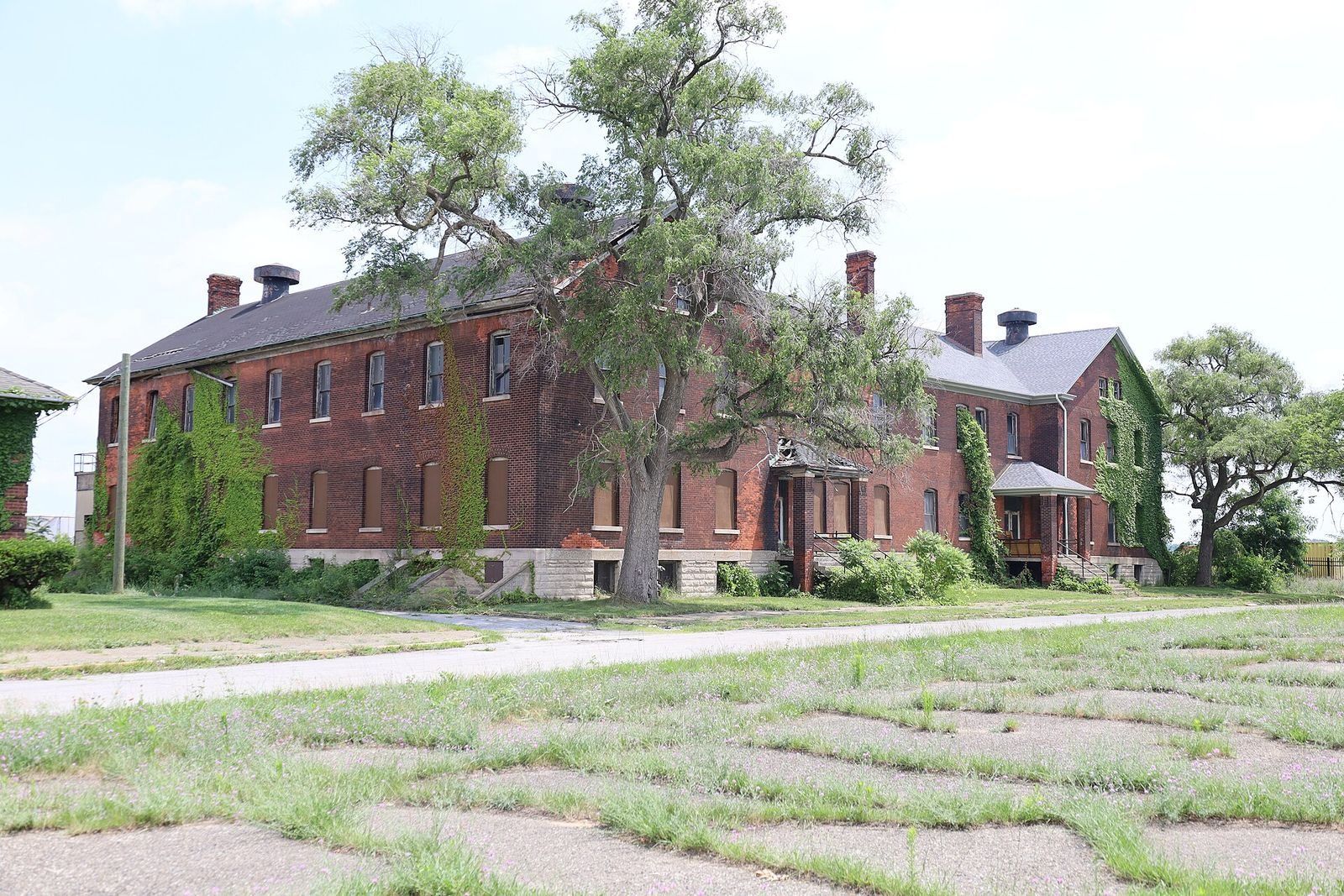
Fort Wayne stands beside the Detroit River, in the Delray neighborhood near the foot of Livernois Avenue and less than half a mile from the Ontario shore. Its original grounds covered 96 acres (39 hectares). Detroit has operated 83 acres (34 hectares), including the original fort and several buildings, since the 1970s; the U.S. Army Corps of Engineers operates the remaining land as a boatyard. The riverside setting included marshy ground, freshwater springs, and a high sand mound.
Fortifications
Plan and construction
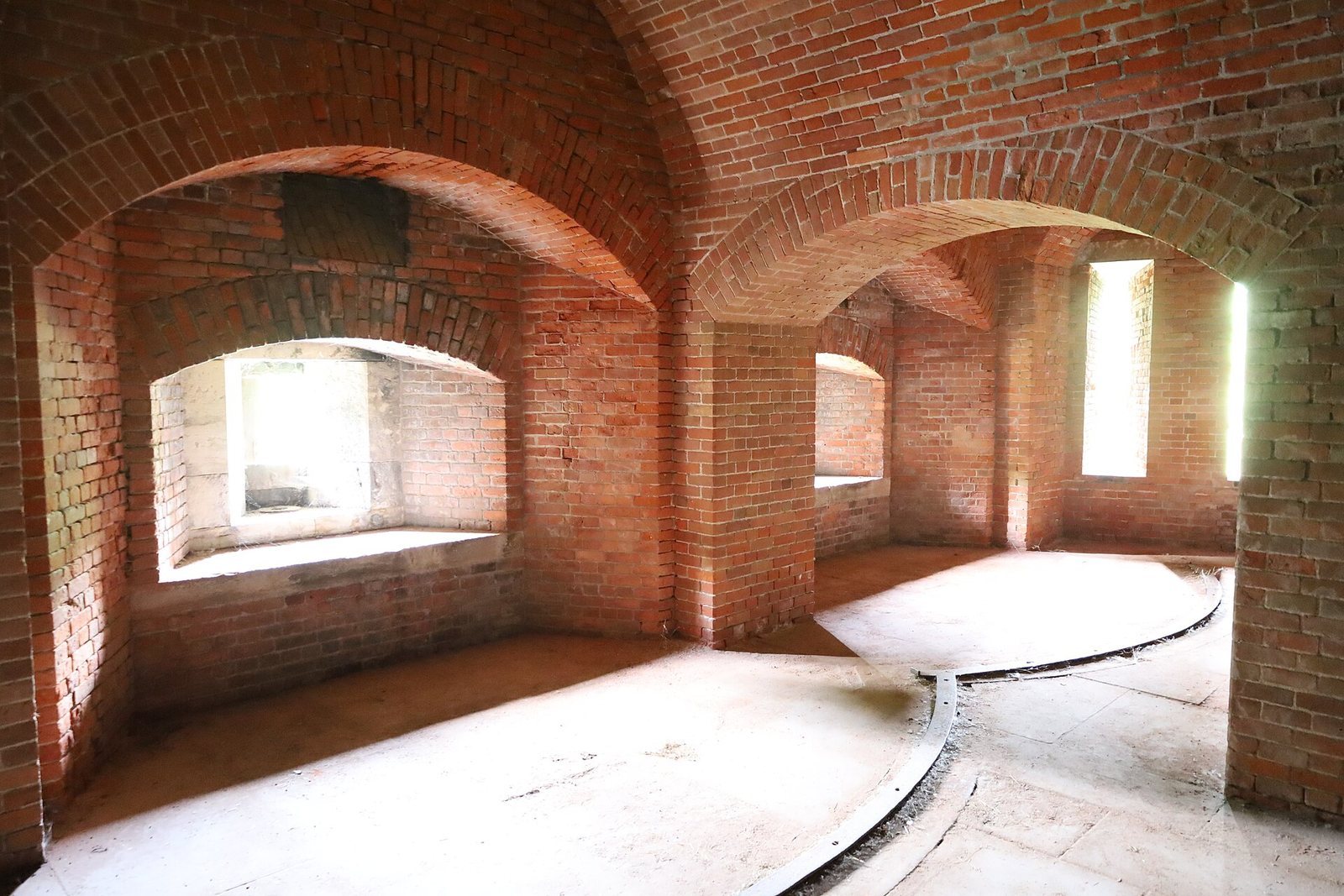
The fort’s plan is a rectangle with bastions, projecting sections that let defenders cover adjoining walls. Cedar-faced earthen ramparts rise over brick casemates, vaulted enclosed spaces within a fortification. Openings in the casemates allowed antipersonnel howitzers to fire along the fort’s flanks and ditches. The design drew on methods developed by French military engineer Vauban and taught at the U.S. Military Academy by Dennis Hart Mahan.
Walls, ditch, and entrances
The fort remains substantially similar to its original design. During the 1863 rebuilding, workers replaced the cedar facing with brick. The new outer wall applied the semi-detached scarp, the fortification face toward the ditch, a concept developed by French engineer Lazare Carnot. Carnot’s ideas also informed the gently sloping counterscarp, the opposite face of the ditch, which was intended to help defenders counterattack during a siege. A dry moat surrounds the fort, and a crescent-shaped detached defense, called a demilune, faces the river.
Platforms atop the walls were designed for 10-inch cannon firing over protective parapets. The original controlled exit, or sally port, in the southeastern bastion survives. A motor gate was added in 1938 as an arched opening through the walls; later alterations enlarged it to admit larger trucks.
Barracks and residential buildings
Original barracks
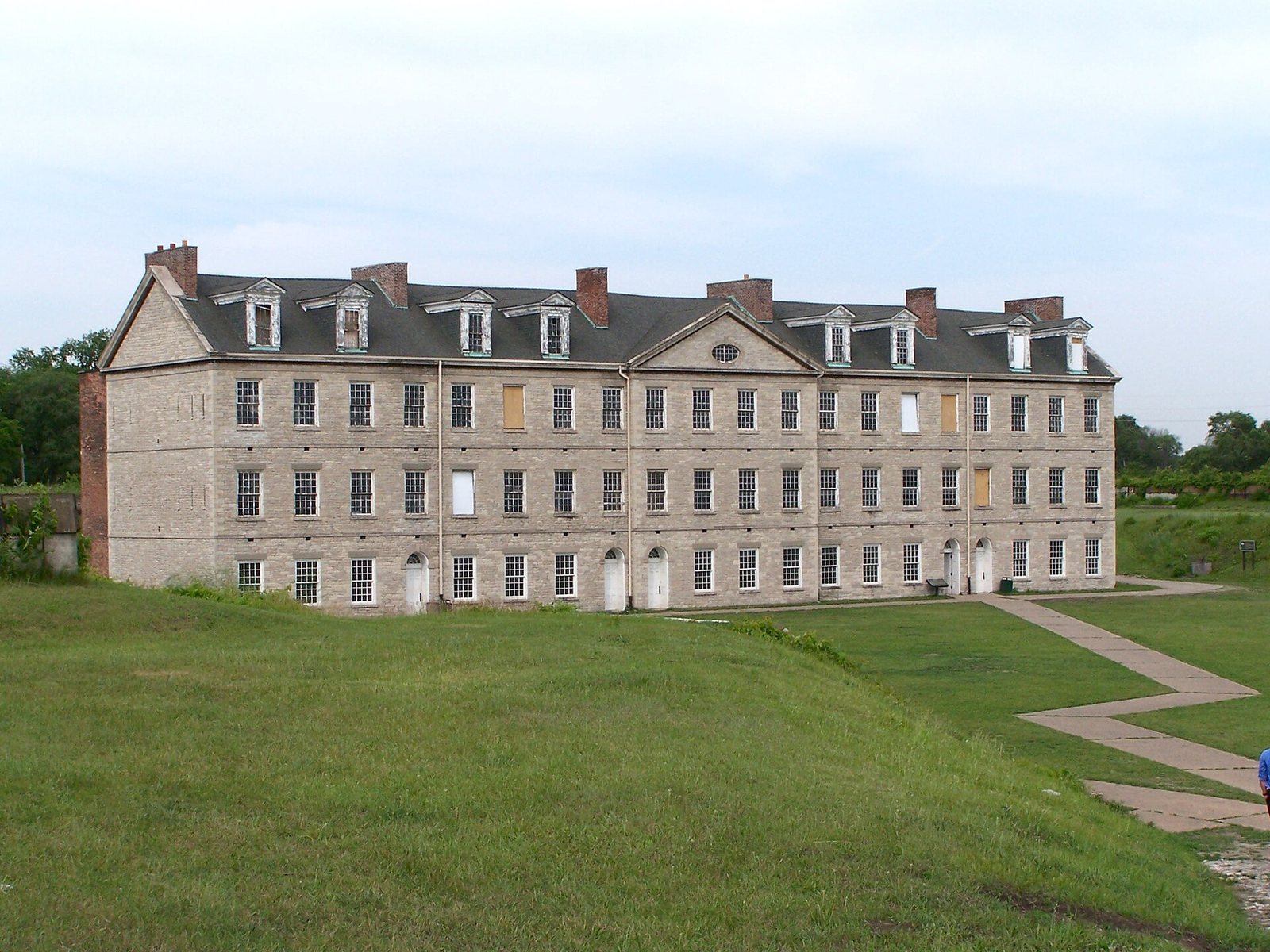
Built in 1848, the original barracks is a three-and-a-half-story limestone building in the Federal style, an American style influenced by classical design. Five adjoining but independent sections were each intended for one company. Each section had a mess on the ground floor, two floors of barrack rooms, and an attic. Brick additions at the rear, added in 1861, provided washrooms and kitchens. A limestone powder magazine, a secure gunpowder store, stands nearby.
Officers’ homes
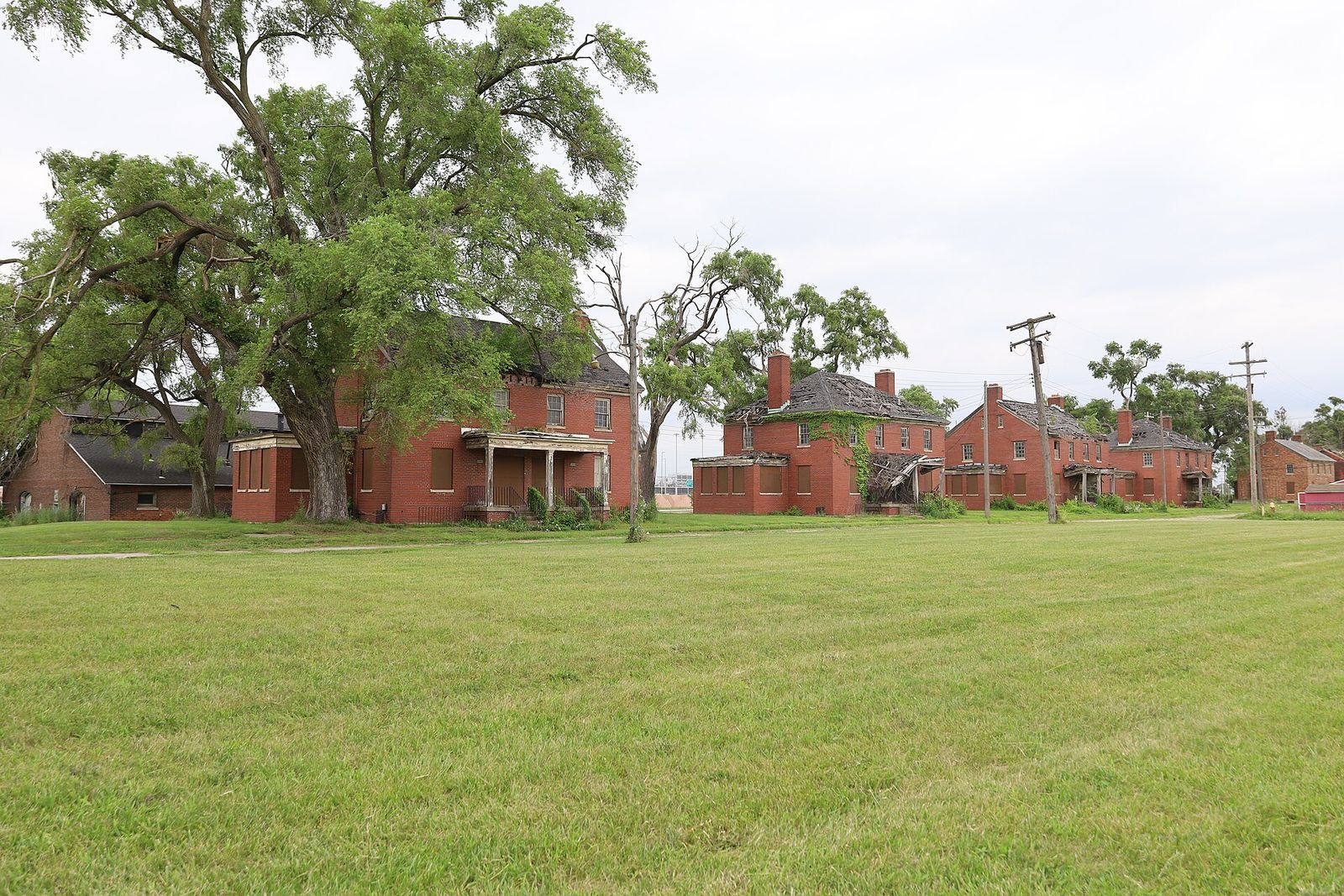
A row of wooden Victorian officers’ homes was built in the 1880s. Works Progress Administration workers, part of a federal employment program, refurbished them and covered them with brick in 1937. One home was restored to its earlier appearance in the 1980s.
Guardhouses
Spanish-American War guardhouse
The guardhouse built in 1889 stands near the center of the grounds. It was restored in 1984.
Gate guardhouse
A separate guardhouse was built near the grounds’ gate in 1905 and remains in use.
Indigenous archaeological remains
About 19 Indigenous burial mounds once stood in the immediate area, with a larger mound at the mouth of the Rouge River. The fort was built atop one mound, and an ancient burial mound remains on the grounds. University of Michigan archaeologists excavated the surviving mound in the early twentieth century. It contained human remains more than 900 years old and distinctive pottery later called “Wayne Ware.”